
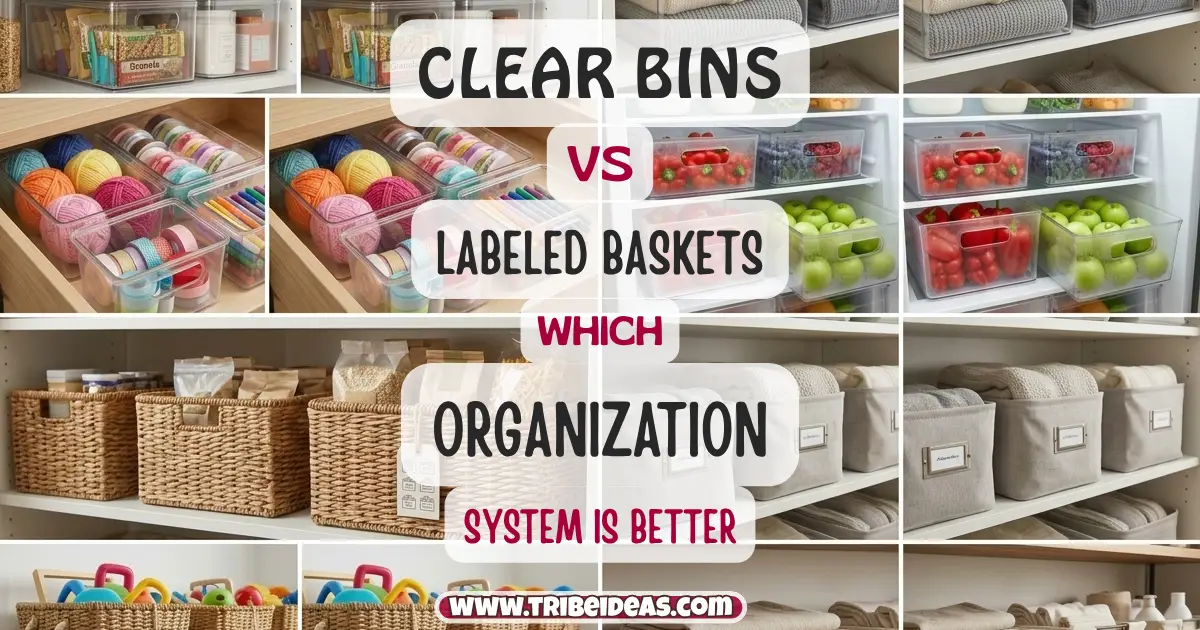
I redid my hallway closet twice in the same year because I couldn’t decide between clear bins and labeled baskets, and I want to save you that specific waste of a Saturday: neither one is universally better, and the answer actually depends on which specific problem you’re solving in which specific spot in your home. I know that’s not the decisive verdict people usually want from a “which is better” post, but it’s the honest one, and I’d rather give you the real trade-offs than pretend one option wins across the board.
The clear bins versus labeled baskets debate comes up constantly in home organization content, and most posts pick a side without acknowledging that these two systems are actually solving slightly different problems. Clear bins are about visibility — seeing contents at a glance without opening anything. Labeled baskets are about categorization with a controlled, tidier look, since the contents stay hidden and the label does the work of telling you what’s inside. Once you frame it that way, the right choice for any given space gets a lot clearer.
I’m going to walk through the real trade-offs by category — visibility and daily use, aesthetics, cost, and which specific rooms and situations favor each option — because the actual answer to “which is better” genuinely changes depending on whether we’re talking about a pantry, a linen closet, or a kid’s playroom.
Visibility and Daily Use: The Core Trade-Off
This is where the real functional difference lives. Clear bins let you see exactly what’s inside without any physical interaction — you glance at a shelf and know immediately whether you’re out of pasta or how many spare batteries are left. This matters enormously for items you check frequently or where running out unexpectedly is a genuine inconvenience, like pantry staples or first aid supplies.
Labeled baskets, by contrast, require you to trust the label rather than see the contents, which works fine for items you access less frequently or where visual clutter matters more than instant visibility — think off-season clothing, extra linens, or craft supplies you use occasionally rather than daily. The label tells you what’s there; you don’t need to see it to know.
Pro tip: For items you check often, clear bins save real time over the course of a year, even though the difference feels trivial in any single instance — the seconds saved by seeing contents instead of pulling out and checking add up meaningfully for daily or weekly-use items.
Aesthetics: Where Labeled Baskets Usually Win
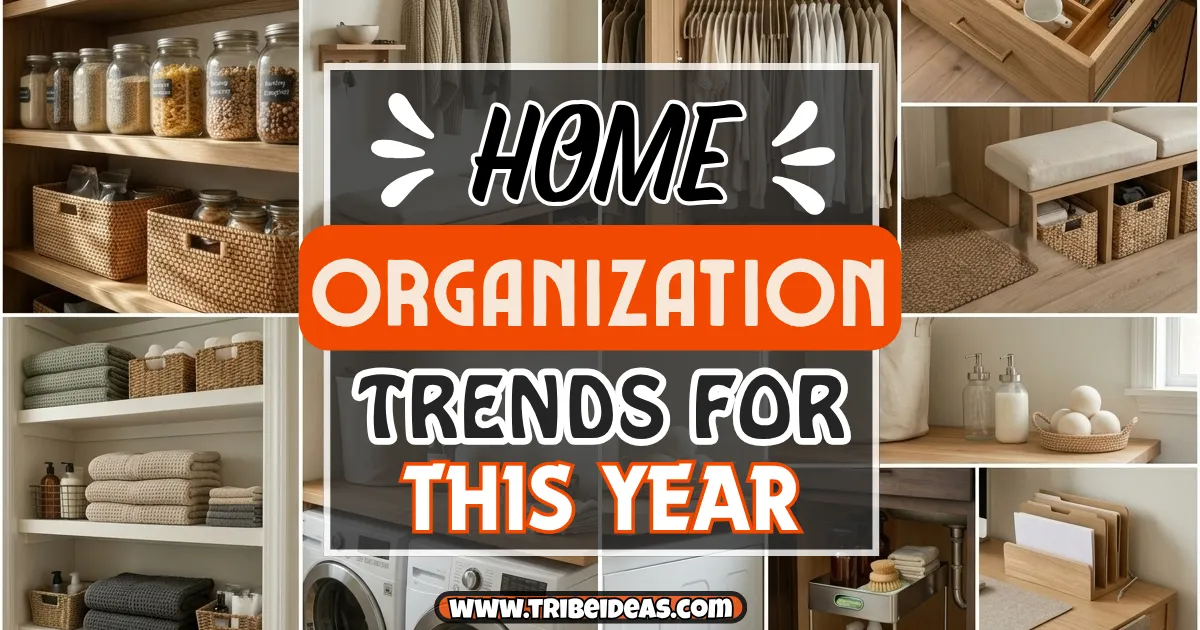
If a cohesive, tidy visual look matters to you — for open shelving, a linen closet with the door often open, or anything visible to guests — labeled baskets generally photograph and look better in person, since the contents are hidden and the exterior stays visually consistent regardless of what’s inside. A shelf of matching woven baskets reads as intentional and calm in a way that even neatly organized clear bins, with their visible contents, sometimes don’t.
My friend Priya switched her open pantry shelving from clear bins to labeled woven baskets specifically because she felt like the visible dry goods, even organized, made the shelves look busy every time she had people over. The baskets gave her the exact same organization with a much calmer visual result.
| Factor | Clear Bins | Labeled Baskets |
|---|---|---|
| Contents visibility | Instant, no interaction needed | Requires reading the label |
| Aesthetic consistency | Contents visible, can look busy | Hidden contents, calmer visual look |
| Best for high-frequency items | Yes | Less ideal |
| Best for low-frequency/seasonal items | Overkill | Ideal |
| Typical cost | Lower to moderate | Moderate to higher, especially woven styles |
| Kid-friendliness | High — visual cue for young kids | Lower unless labels use pictures |
Pro tip: If you want the calm look of baskets but still need some visibility, choose a basket with an open weave rather than a fully solid one — you get partial visibility through the gaps without the fully exposed look of a clear bin.
Cost Comparison: Not as Simple as One Being Cheaper
Basic clear plastic bins are generally the more budget-friendly option at the lower end of the market, but the price gap narrows or even reverses once you compare higher-end versions of each — a premium clear acrylic bin can cost more than a basic woven basket, and a genuinely nice matching basket set can run comparable to a mid-range clear bin set. Cost really depends on the specific material and brand tier you’re comparing, not the category itself.
Pro tip: Mix tiers deliberately rather than assuming you need matching quality throughout — a nicer basket set for visible, guest-facing shelving paired with basic clear bins for a hidden closet gets you the aesthetic payoff where it matters most without paying premium prices for storage nobody but you will ever see.
Kid-Friendliness: A Real, Practical Difference
For households with young kids, clear bins have a genuine practical edge, since kids who can’t read yet, or read slowly, can still identify contents visually and put things away in the right spot based on what they see rather than a label they have to sound out. This matters more for actual independent cleanup than it might seem on paper.
Labeled baskets can work just as well for this purpose if you use picture labels alongside or instead of text — a small printed image of blocks or books on a basket gives young kids the same visual identification that a clear bin naturally provides, just added rather than built in.
Pro tip: For a shared kids’ space, consider clear bins for the most frequently used toy categories and labeled baskets for less-used or off-rotation toys — this uses each system where its specific strength actually matters most for how kids interact with the space daily.
Which Rooms and Situations Favor Each
Clear bins tend to win in pantries, under-sink storage, garages, and any space where quickly identifying contents saves real time or prevents running out of something unexpectedly. They’re also the better default for a beginner building their first organization system, since the visibility means you’re less likely to lose track of what’s actually stored where while you’re still learning your own system.
Labeled baskets tend to win in linen closets, open shelving in living spaces, entryways, and any storage that’s visible to guests or that you want to feel calm and put-together rather than functional-looking. They’re also generally the better choice for less-frequently accessed storage, where you’re fine trusting a label rather than needing instant visual confirmation.
What I’d Actually Choose, Room by Room, If Starting Fresh
If I were setting up a whole home’s organization system from scratch today, knowing everything from both of my hallway closet attempts, I’d use clear bins in the pantry, under bathroom sinks, and in the garage, where visibility and quick access genuinely matter for daily function. I’d use labeled baskets on open living room shelving, in the linen closet, and in the entryway, where the calmer aesthetic and hidden contents matter more than instant visibility.
The real lesson from redoing that closet twice is that “which is better” was the wrong question from the start — the better question is which specific problem you’re solving in that specific spot, and once I started asking it that way instead of trying to pick one system for my entire home, both of my closets stopped needing a third redo.



Leave a Reply