
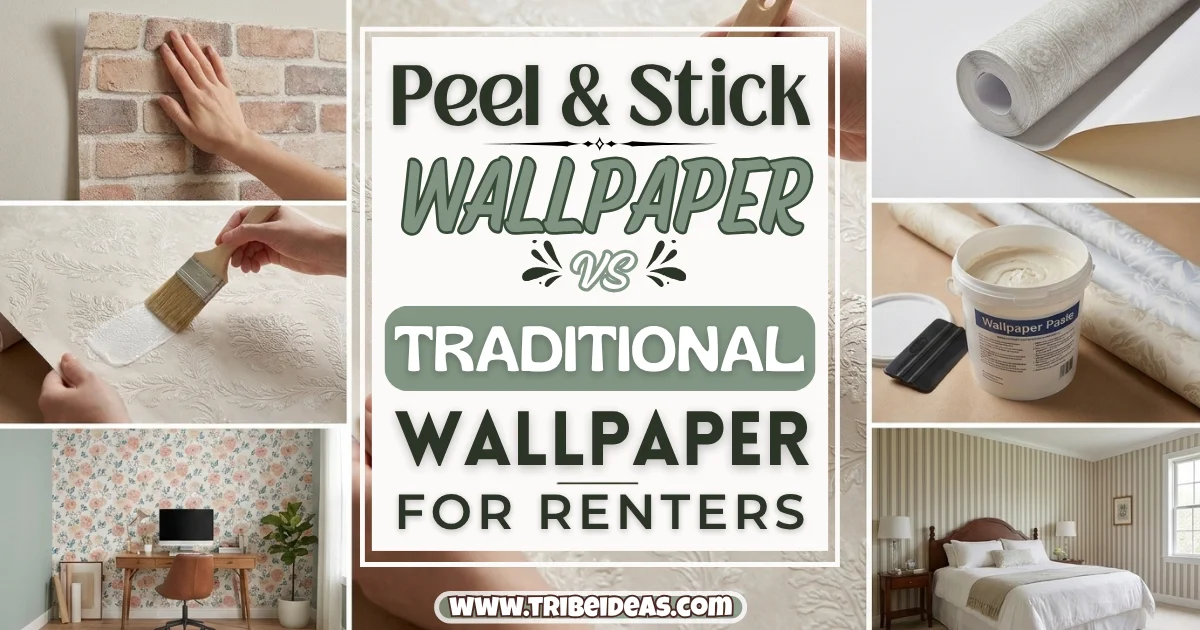
A friend of a friend actually got traditional wallpaper installed in her rental once, paid a professional to do it beautifully, and then found out at move-out that removing it took the top layer of drywall paper off with it, leaving a texture disaster that cost her almost her entire deposit to fix.
I heard that story before I ever considered wallpapering anything myself, and it’s the reason peel and stick wallpaper was never really a question for me as a renter — but it’s worth actually walking through why, rather than just assuming traditional wallpaper is automatically off the table.
The peel and stick wallpaper vs traditional wallpaper decision for renters isn’t really about which one looks better, because a genuinely high-quality version of either can look excellent.
It’s about reversibility, and specifically about what happens to the wall underneath when it’s time to take the wallpaper down, which is the part that actually determines whether you get your deposit back or end up in the same situation as my friend’s friend.
I’m breaking this down by the factors that actually matter for a renter specifically — cost, how hard each one is to install, how long each one realistically lasts, and most importantly, what removal actually looks like for each — because “which is nicer” is a much less useful question than “which one I can actually walk away from cleanly.”
Cost: Closer Than People Assume, But Not Identical
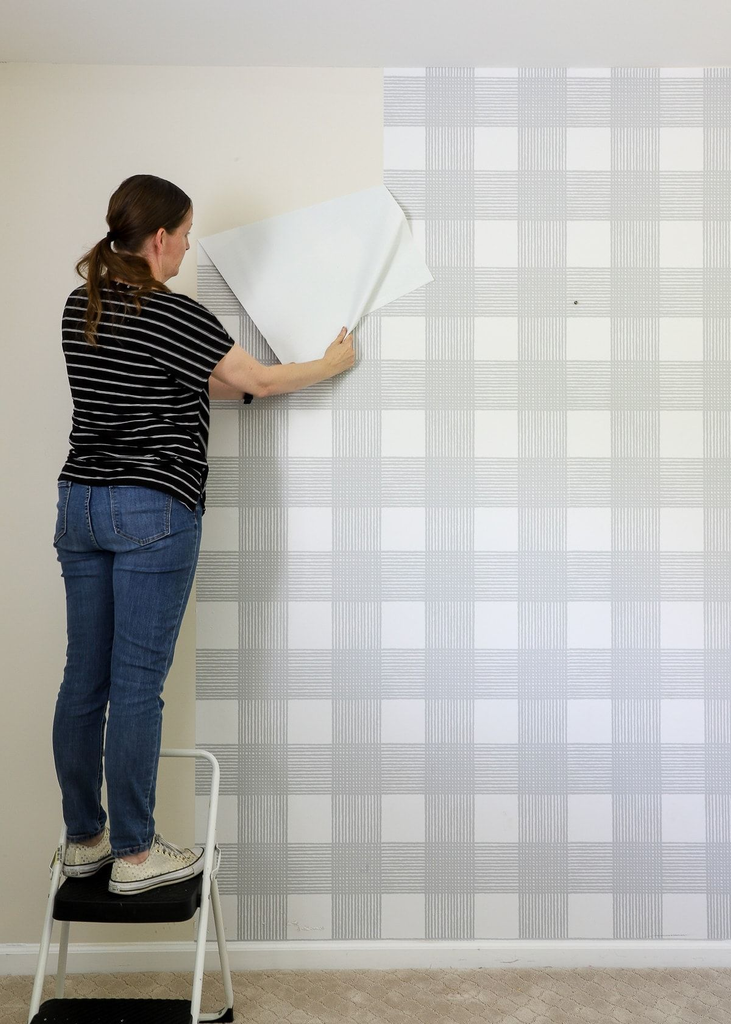
Peel and stick wallpaper generally runs a bit less expensive per roll than high-quality traditional wallpaper, though the gap has narrowed noticeably as peel and stick products have improved in quality over the past several years.
Traditional wallpaper does have an additional cost most people forget to factor in: paste, tools like a smoothing brush and seam roller, and often a paid installer if you don’t want to risk a DIY job on something that’s harder to redo than the peel and stick version.
The real cost difference that matters most for a renter isn’t the material price — it’s the cost of things going wrong. A failed peel and stick installation costs you a roll of wallpaper and an afternoon.
A failed traditional wallpaper removal at move-out, the way my friend’s friend experienced, can cost you a meaningful chunk of your security deposit in wall repair.
Pro tip: Factor in the cost of a drywall repair and repaint as a real, if hopefully unnecessary, line item when budgeting traditional wallpaper in a rental — pricing that risk in from the start makes the true cost comparison much more honest than comparing roll prices alone.
Installation Difficulty: A Real Skill Gap Between the Two
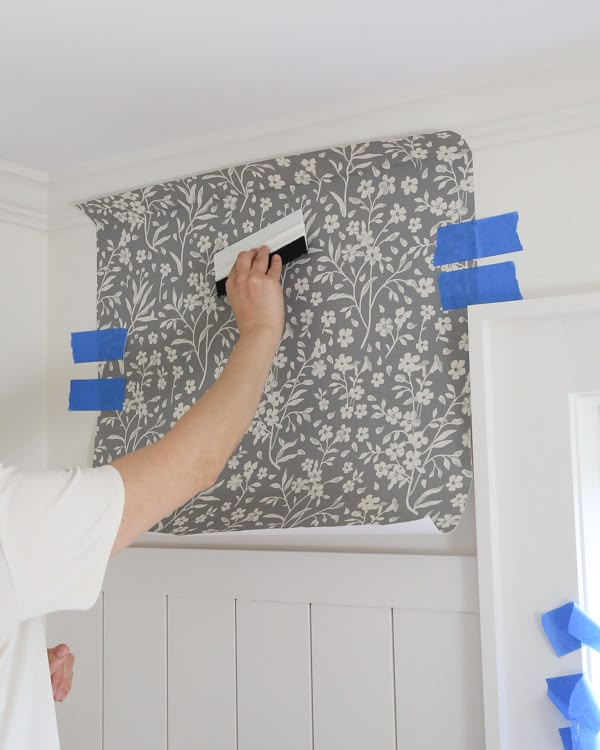
Peel and stick wallpaper has a genuine learning curve, but it’s a forgiving one — you can lift and reposition a section within the first few minutes of application if something’s crooked, and mistakes are generally fixable without wasting the material.
Traditional wallpaper, once pasted and applied, is far less forgiving of adjustment, and getting seams to line up correctly, especially with a patterned wallpaper that needs to match across panels, is a skill that takes real practice to do well.
| Factor | Peel and Stick | Traditional Wallpaper |
|---|---|---|
| Cost per roll | $15-$45 | $25-$80, plus paste and tools |
| Installation skill needed | Low-moderate, forgiving of mistakes | Moderate-high, less forgiving |
| Typical lifespan | 1-3 years before edges may lift | 10-15+ years if properly maintained |
| Removal on rental walls | Clean if applied and removed correctly | High risk of drywall paper damage |
| Best for | Short-term rentals, accent walls | Long-term homeowners, not renters |
Pro tip: If you’re installing peel and stick wallpaper for the first time, practice your seam-matching technique on a small hidden section — the technique for lining up a pattern across two adjacent strips is genuinely different from applying a single strip, and it’s worth a practice run before tackling a full visible wall.
Durability and Longevity: Where Traditional Wallpaper Actually Wins
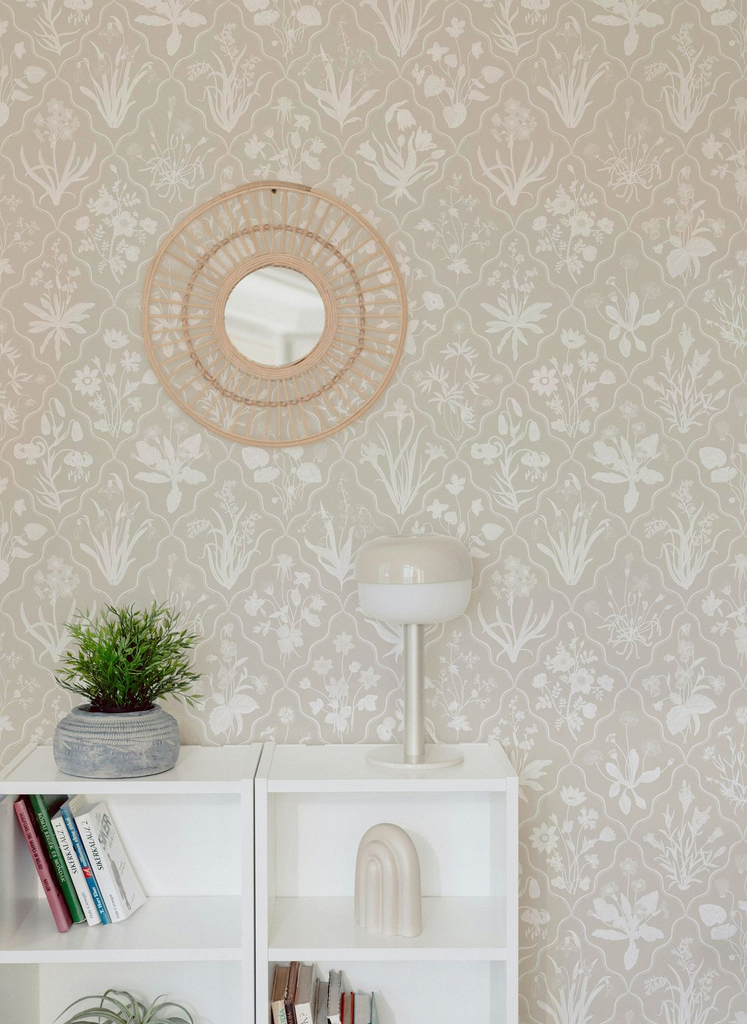
This is the category where traditional wallpaper has a legitimate, meaningful advantage: properly installed traditional wallpaper can last well over a decade without any real degradation, while even good-quality peel and stick wallpaper typically starts showing wear — lifted edges, especially near high-traffic or humid areas — somewhere in the one-to-three-year range, depending on the specific product and how it’s applied.
For a renter, though, this durability advantage matters less than it would for a homeowner, since most rental stays don’t approach the multi-decade lifespan where traditional wallpaper’s durability edge would actually come into play.
The real question isn’t which one lasts longer in the abstract — it’s whether either one needs to outlast your specific lease term, and for most renters, peel and stick’s shorter lifespan is a non-issue.
Pro tip: If you’re in a longer-term rental — a multi-year lease you genuinely expect to renew — budget for reapplying peel and stick wallpaper once during your tenancy rather than expecting a single application to look pristine for the entire time you live there.
Removal: The Category That Actually Decides This for Renters
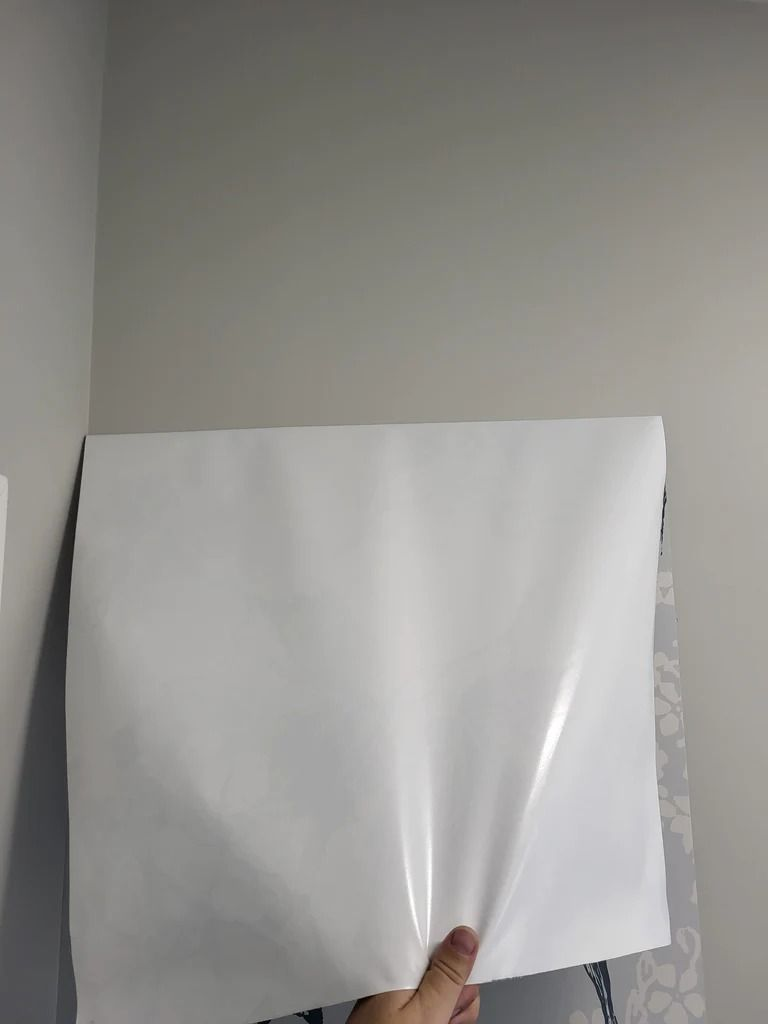
This is genuinely the deciding factor, and it’s not close. Quality peel and stick wallpaper, applied correctly to a properly prepped wall, removes in a clean peel that leaves the underlying paint intact, provided you don’t rush the process or leave it up for years beyond its intended lifespan.
Traditional wallpaper removal, by contrast, frequently pulls up the top layer of drywall paper along with it, especially on walls where the wallpaper was applied directly to drywall rather than over a proper liner, which is exactly what happened in the story that convinced me to never consider traditional wallpaper as a renter in the first place.
Even traditional wallpaper removal done carefully, with a proper steamer and patience, is a bigger, messier project than most renters want to take on right before a move-out inspection, when time and energy for a big DIY repair project are already in short supply.
Pro tip: If you do encounter traditional wallpaper already installed in a rental you’re moving into, don’t attempt to remove it yourself unless your landlord has specifically approved and guided you on the process — in some cases, painting over existing wallpaper with a proper primer is the safer, more reversible-in-spirit option than risking a bad removal on a surface you didn’t install in the first place.
Which One Actually Makes Sense for a Renter
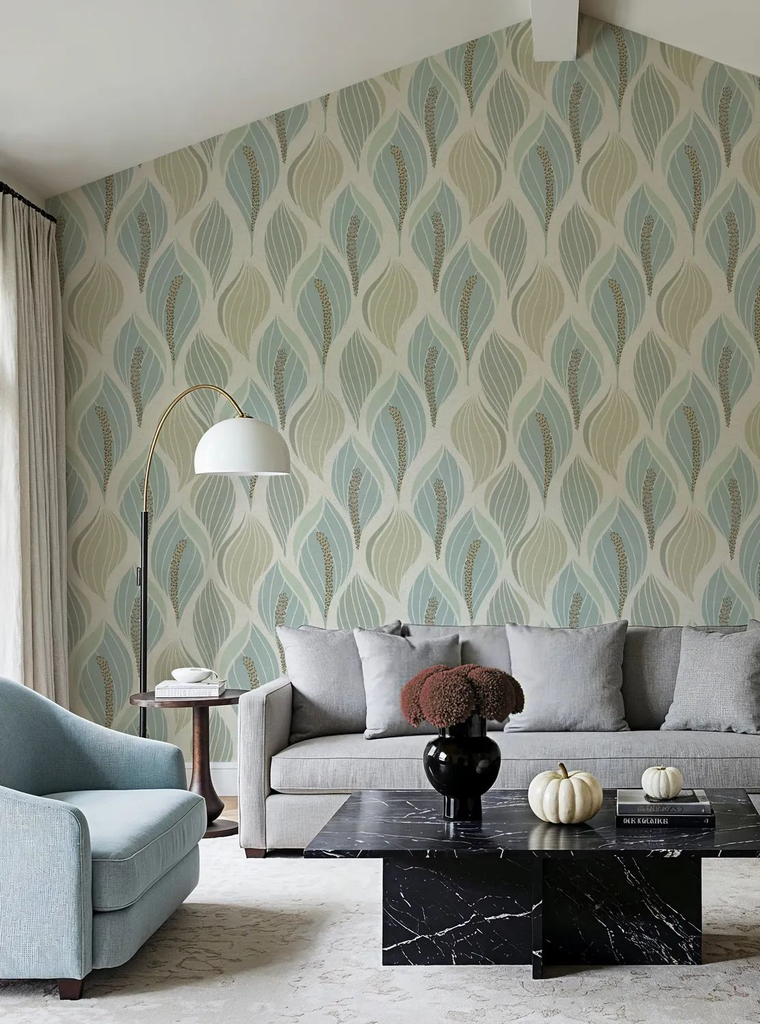
For almost every renter, peel and stick wallpaper is the more sensible choice, specifically because the removal risk with traditional wallpaper is disproportionate to any benefit it offers within a typical lease term.
The durability advantage traditional wallpaper holds only matters over a timeline most renters don’t actually experience in a single unit, while the removal risk is something every renter eventually faces, whether at the end of this lease or the next one.
The one scenario where traditional wallpaper might still make sense for a renter is a genuinely long-term, stable rental situation with an unusually cooperative landlord who’s given explicit written approval and understands the wall will need professional attention at move-out — but even then, it’s a bigger commitment and a bigger risk than most people realize going in, my friend’s friend included.
What I’d Actually Do If I Were Wallpapering a Rental Today
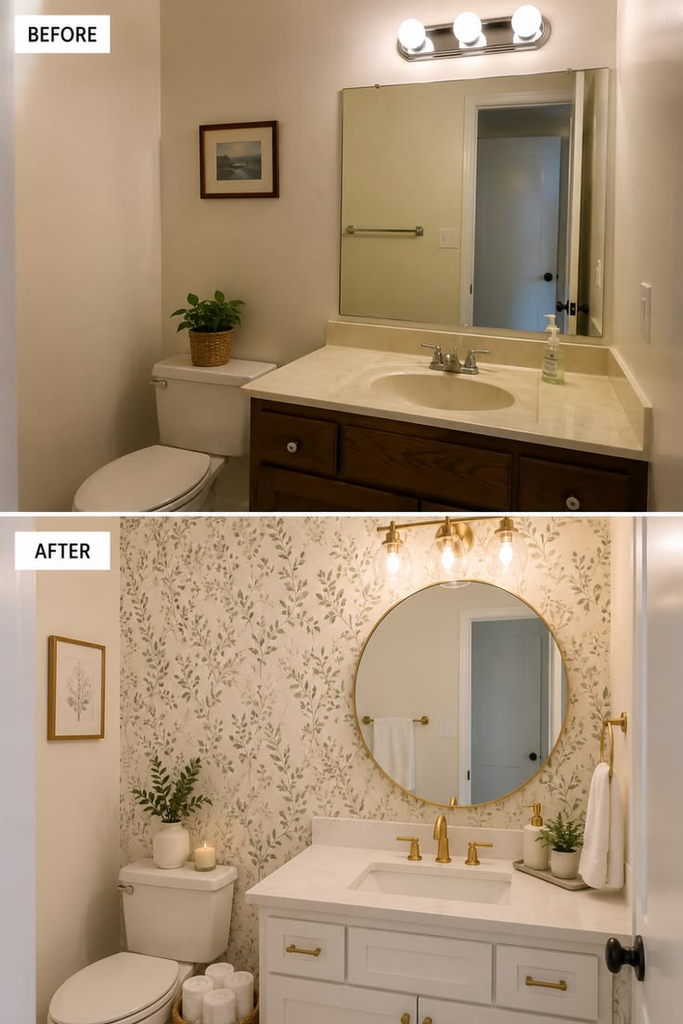
If I were tackling a rental wallpaper project today, I’d go with peel and stick without much hesitation, and I’d spend more of my actual effort on proper wall prep and a careful, patient application than on debating whether traditional wallpaper’s longer lifespan was worth the risk.
A well-applied peel and stick wall, treated with reasonable care, has genuinely surprised me with how long it’s held up in my own apartments.
The story that stuck with me from my friend’s friend’s ordeal isn’t really about wallpaper at all — it’s about how easy it is to underestimate a removal process until you’re the one facing it, right before a move-out walkthrough, with a deposit on the line.
Peel and stick wallpaper exists specifically to remove that particular risk from the equation, and for a renter, that’s worth more than any durability advantage traditional wallpaper could offer.









Leave a Reply