
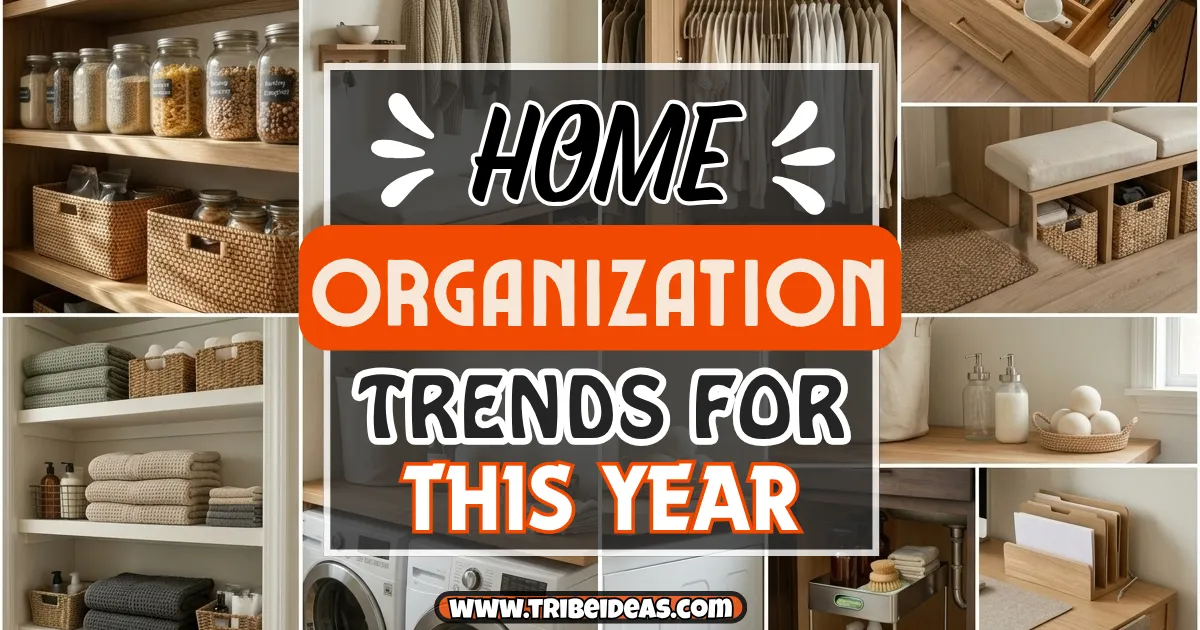
I did a full weekend “declutter everything” binge back in 2023, riding the wave of every viral organizing method at the time, and by month three almost none of it had actually stuck — the bins were still there, but the habits that were supposed to keep them organized never really formed. Home organization trends for 2026 are, honestly, a pretty direct response to that exact failure mode: less about the dramatic one-time overhaul, more about systems designed to actually survive real life past the first few weeks.
What’s genuinely different about this year’s home organization trends compared to a few years back is the shift away from treating organizing as a single event and toward treating it as an ongoing, lower-pressure practice. That sounds like a small distinction, but it changes almost everything about which products and methods are actually gaining traction right now, and it’s a much more forgiving approach for anyone who’s tried and failed at the big weekend overhaul before.
I’m walking through the ten trends I think are actually worth paying attention to this year, with the realistic version of each one and where I think the hype outpaces the practical benefit, because not every trend that’s popular right now is one I’d actually recommend adopting wholesale.
Slow Organizing Over the Weekend Binge
The biggest shift for 2026 is away from the dramatic, all-at-once organizing weekend and toward what’s being called “slow organizing” — tackling one small zone at a time, on an ongoing basis, rather than attempting a full-home overhaul in 48 hours. This trend exists specifically because the binge approach has a genuinely poor track record for long-term results, mine included, and more people are recognizing that a sustainable pace beats a dramatic before-and-after that quietly falls apart within a season.
Pro tip: If you’re drawn to this approach, pick a specific day and time each week — not “whenever I have a free moment” — for your one small organizing task. A vague intention to organize “when I get around to it” tends to never actually happen, while a scheduled fifteen minutes on a specific day genuinely does.
Soft Minimalism and Visible, Curated Storage
Rather than the stark, everything-hidden-behind-closed-doors minimalism that dominated for years, 2026 is leaning toward a softer version where some storage is deliberately visible and curated — open shelving with a handful of well-chosen items, rather than either full clutter or fully concealed storage. This works particularly well for kitchens and living rooms where hiding absolutely everything behind cabinet doors can feel sterile rather than genuinely organized.
My neighbor Priti redid her open kitchen shelving specifically with this in mind, keeping only her nicest everyday dishware and a few plants visible while everything else moved behind closed cabinets, and the shift from “displaying everything” to “displaying a curated few things” made the whole kitchen read as intentional rather than just tidy.
| Trend | Effort to Start | Ongoing Maintenance | Best For |
|---|---|---|---|
| Slow organizing | Very low | Low, ongoing habit | Anyone who’s failed at weekend binges before |
| Soft minimalism / visible storage | Moderate | Low once curated | Kitchens, living rooms, open shelving |
| Micro-zoning | Moderate | Low | Households with recurring specific tasks |
| Modular grid storage | Moderate-high upfront | Very low | Closets, pantries, growing collections |
| Command center hubs | Low-moderate | Moderate, needs daily use | Busy households, families |
Micro-Zoning for Specific Recurring Tasks
Rather than broad categories like “kitchen stuff” or “office supplies,” 2026’s organizing trend leans toward hyper-specific micro-zones built around actual recurring tasks — a dedicated gift-wrapping station, a specific breakfast zone with everything needed for that one routine grouped together, a designated spot just for outgoing mail and packages. This granular approach solves a real problem broader categories don’t: the friction of a recurring task scattered across multiple locations in your home.
Pro tip: Before setting up a micro-zone, actually track how often you do the task it’s built around for a week or two — a beautifully organized gift-wrapping station is wasted effort if you only wrap gifts three times a year, while a breakfast zone you use daily is worth real investment.
Modular, Reconfigurable Grid Storage Systems
Rather than fixed-size bins and shelving, modular grid-based storage systems that let you reconfigure compartment sizes as your needs change are gaining real traction, particularly in closets and pantries where the categories and quantities you’re storing tend to shift over time. This solves the “bought the wrong size bin” problem that plagues a lot of first-time organizing attempts, since the system adapts rather than requiring a full replacement when your needs change.
Pro tip: Start with a smaller modular set than you think you need and expand it over time — buying a large system all at once before you know exactly how you’ll actually use the space tends to result in the same mismatched-size problem modular systems are supposed to solve in the first place.
Command Center Hubs for Busy Households
A single consolidated “command center” — combining a calendar, mail sorting, keys, and a charging station in one wall-mounted or tabletop zone — continues gaining popularity, especially among families juggling multiple schedules. This trend works because it solves several small, scattered friction points (where are my keys, did the mail get opened, whose event is that) with one centralized system rather than several separate small fixes.
Pro tip: Position your command center directly in your home’s actual entry path, not in a spare corner that looks nice but isn’t somewhere you naturally pass through daily — a beautifully designed command center that’s out of your daily walking path gets ignored within a few weeks, no matter how well it’s set up.
Sustainable and Secondhand Organizing Products
Rather than buying a full matching set of new bins and containers, more people are sourcing organizing supplies secondhand or choosing products explicitly marketed as made from recycled materials, which aligns with a broader sustainability shift while also being noticeably cheaper than buying everything new from an organization-specific retailer.
Pro tip: Secondhand glass jars and containers work particularly well for pantry organizing specifically, since food-safe glass holds up well used and doesn’t carry the same hygiene concerns as secondhand fabric bins might for some categories.
Personalized, Handwritten-Style Labels Over Sterile Label-Maker Text
As a mild counter-trend to the extremely uniform, label-maker-everything aesthetic of the past several years, more organizing content in 2026 is embracing slightly more personalized labeling — handwritten tags, colored labels by category, or a mix of styles rather than one uniform font across an entire home. This is a smaller, more aesthetic-driven trend than most of the others on this list, but it reflects the same broader shift away from sterile perfection toward something that feels more lived-in and personal.
One-In-One-Out and Capsule-Style Possession Limits
Rather than a single big declutter, more people are adopting an ongoing “one in, one out” rule for specific categories — clothing, books, kitchen gadgets — where bringing in something new means something existing has to go. This trend treats organization as an ongoing constraint rather than a one-time correction, which fits well with the broader slow-organizing shift happening this year.
Pro tip: Apply this rule to just one or two categories that tend to accumulate fastest in your specific household, rather than trying to enforce it universally across everything you own — a rule applied everywhere at once is harder to actually maintain than one applied consistently to your worst offender category.
Digital-Physical Crossover Organizing
A growing number of organizing systems now explicitly pair a physical storage solution with a digital counterpart — a labeled physical bin that also has a corresponding inventory entry in a phone app, for instance, particularly for higher-value or seasonal items where remembering exactly what’s in a given bin matters more than usual.
Pro tip: Reserve this level of system for genuinely high-value or infrequently accessed categories, like holiday decorations or out-of-season sports equipment — applying a digital tracking layer to every single storage bin in your home adds more maintenance overhead than most categories actually need.
Where I Think the Hype Outpaces the Practical Benefit
Not every trend gaining traction this year is one I’d actually recommend chasing. The digital-physical crossover system, in particular, sounds impressive but adds real ongoing maintenance that most households won’t keep up with for more than a few months unless it’s reserved for a genuinely narrow, high-value use case. Similarly, fully committing to modular grid systems everywhere in your home is a bigger upfront investment than most people need before they’ve even confirmed a simpler, cheaper system wouldn’t have solved the same problem.
What I’d Actually Try First This Year
If I were picking just one or two of these trends to actually adopt, I’d start with slow organizing as the underlying approach for everything else, since it’s genuinely the trend most likely to produce results that last past the first month, unlike my old weekend-binge habit that never actually stuck. After that, I’d add micro-zoning for whichever single recurring task causes the most daily friction in my own household, rather than trying to build out every possible zone at once.
The honest throughline across every legitimately useful trend this year is patience over drama — smaller, more sustainable systems that fit how you actually live, rather than an impressive one-time transformation that photographs well and quietly falls apart a few months later. That’s the lesson my own failed 2023 binge weekend eventually taught me, a few years before it became an actual trend with a name.


Leave a Reply