
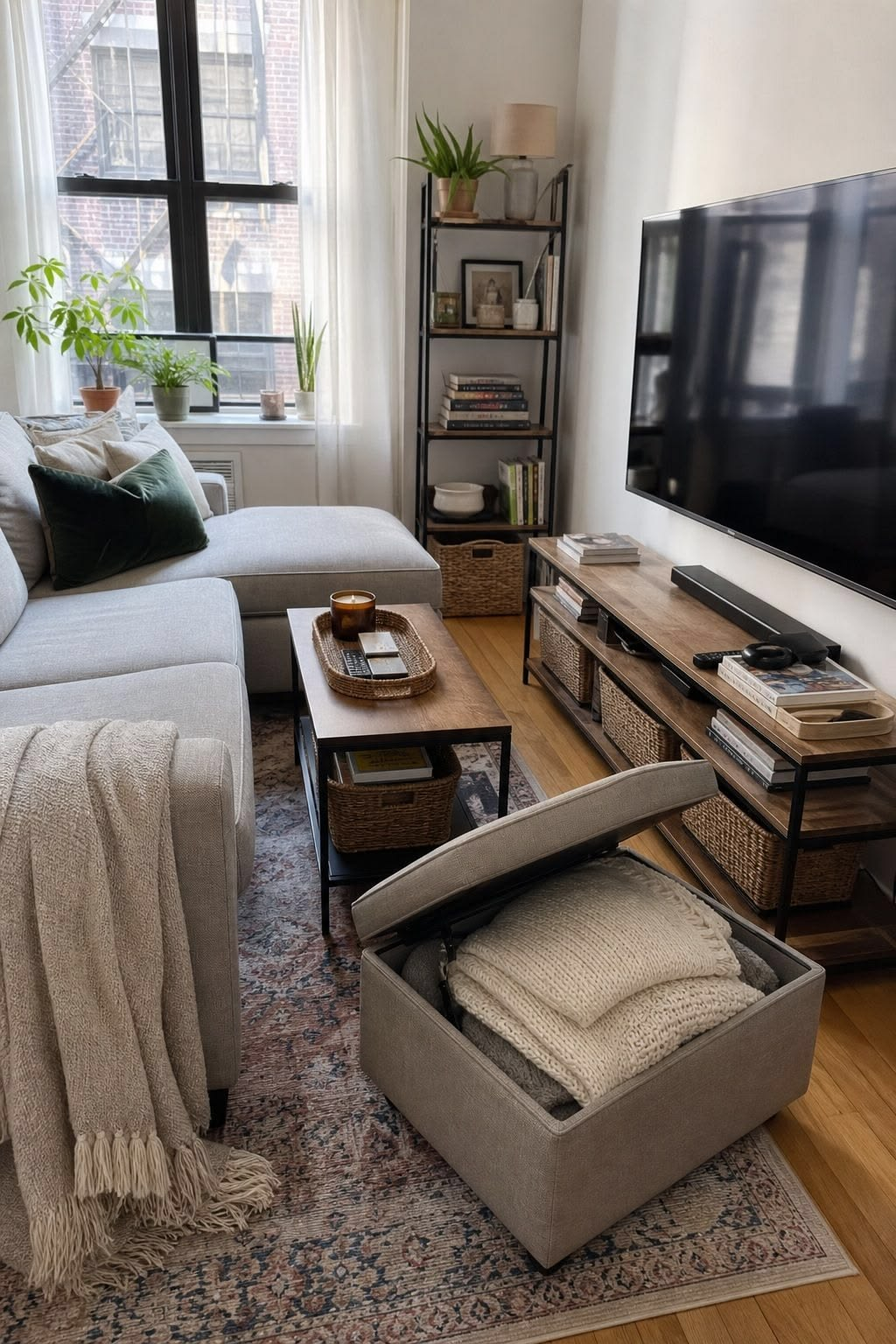
I spent almost four years assuming small apartment living meant either living with the clutter or saving up for “real” furniture solutions — a custom closet system, a proper storage bed, that kind of thing.
What actually changed how my apartment functioned wasn’t any of that. It was a $9 tension rod I bought on a whim to fix a towel problem in my bathroom, and then realized could solve about six other problems in my apartment I hadn’t even connected to each other yet.
That’s the thing about small apartment finds under $50 that nobody really tells you: the cheap stuff is often more useful than the expensive stuff, because it’s designed to solve one annoying, specific problem instead of trying to be a whole furniture category.
A $9 tension rod isn’t trying to be a closet system. It’s just trying to hold something up in a gap where nothing else fits, and it does that one job extremely well.
I’ve grouped these by the type of problem they solve — storage, cords and clutter, and the small comfort or finish upgrades that make a rental feel more like yours — because in my experience, most small apartment frustrations fall into one of those three buckets, and it helps to shop by problem instead of just browsing a random list of products.
Storage Finds That Punch Way Above Their Price
1. A tension rod, or honestly, three or four of them ($8-$15 each)
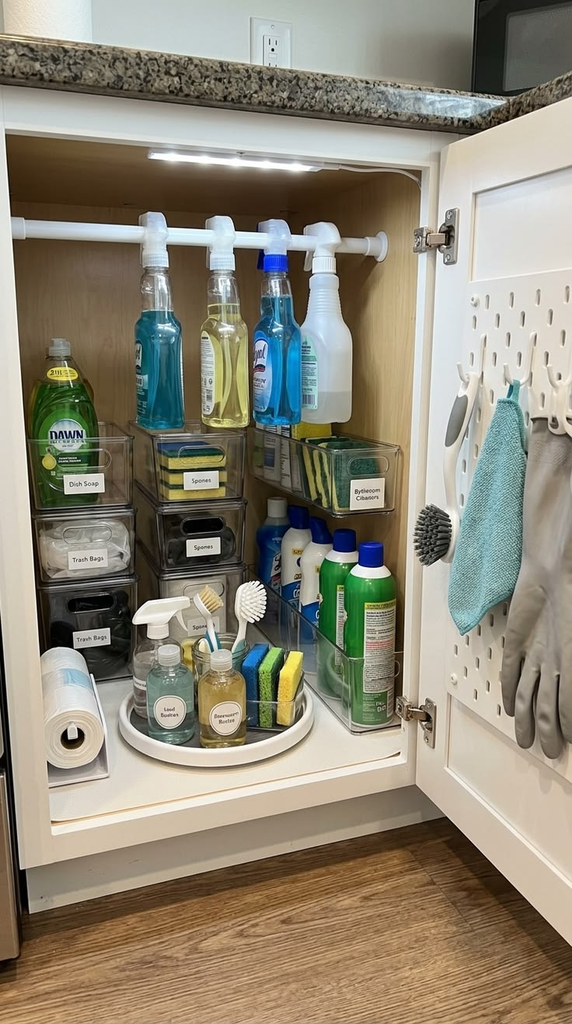
A basic spring-tension rod is the most versatile $10 item I own, and I don’t say that lightly. Under a bathroom or kitchen sink, it creates a second-tier hanging spot for spray bottles. Inside a closet, it doubles your hanging space by adding a lower rod for shorter items like folded pants or skirts.
In a cabinet, it can wedge cutting boards or baking sheets upright so they stop sliding into a pile every time you open the door.
The trade-off is that cheap tension rods can slip if you overload them or if the walls they’re pressing against are slightly uneven, which happens a lot in older rental cabinets. I learned this the hard way when a rod loaded with cleaning spray bottles slid down and dumped everything under my sink at 11pm on a Tuesday.
Pro tip: Buy the rubber-gripped version, not the smooth plastic-tipped kind — it costs maybe two dollars more and holds significantly better weight without slipping, especially in humid spots like under a bathroom sink.
2. An over-the-cabinet-door organizer ($12-$25)
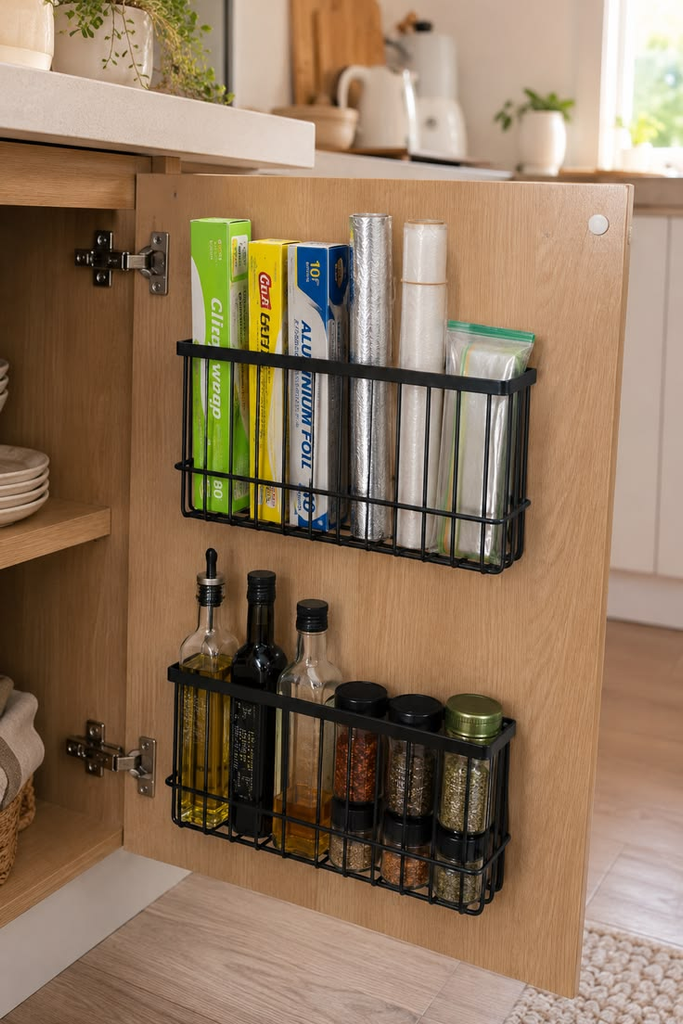
This hangs over a cabinet door and gives you a spot for cleaning supplies, trash bags, or foil and plastic wrap, using space that’s otherwise completely wasted — the inside face of a door you open and close a dozen times a day but never actually use.
It’s one of the highest storage-value-per-dollar items on this whole list because it adds real capacity without touching a single inch of shelf or counter space.
Pro tip: Measure your cabinet door’s actual height before buying — a lot of these organizers are sized for standard kitchen cabinets and can be too tall for a shallow bathroom vanity door, where they’ll hit the shelf below when you close the door.
3. Expandable drawer dividers ($10-$20 for a set)
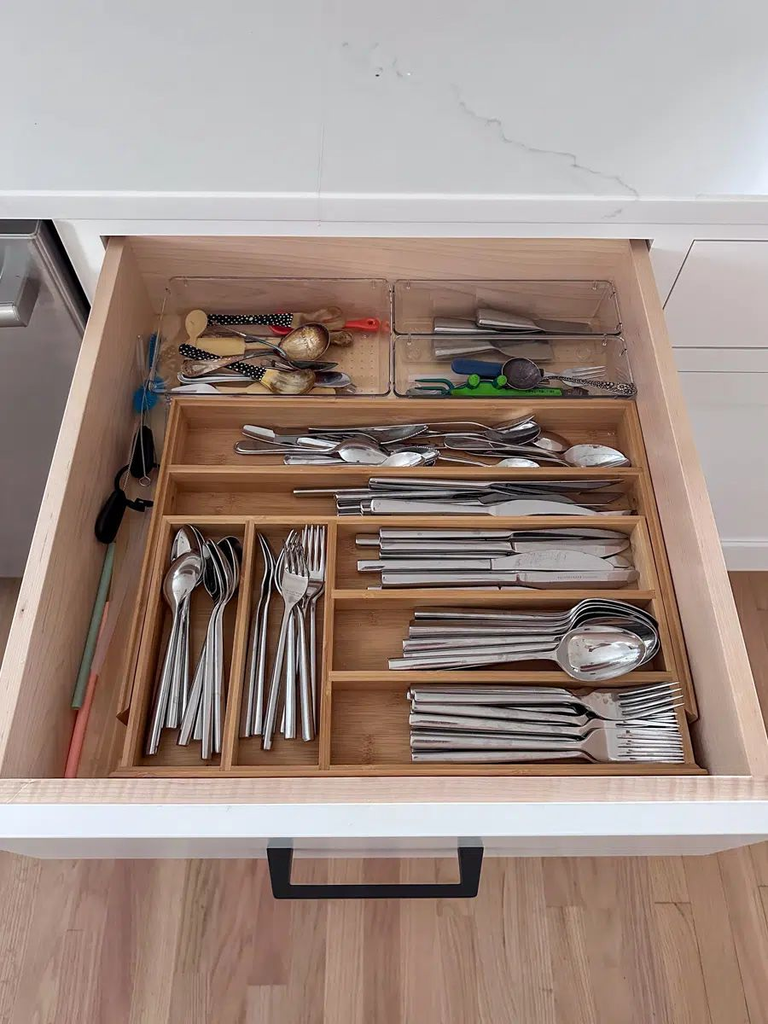
Rather than one fixed-size divider, expandable versions adjust to fit drawers of different widths, which matters in a rental where you didn’t choose the drawer sizes and probably have at least one oddly proportioned one.
They turn a junk drawer into something you can actually find things in, and unlike a lot of organization products, this is one where the cheap version genuinely works as well as the pricier ones.
4. Slim rolling under-bed storage bins ($15-$35 depending on size)
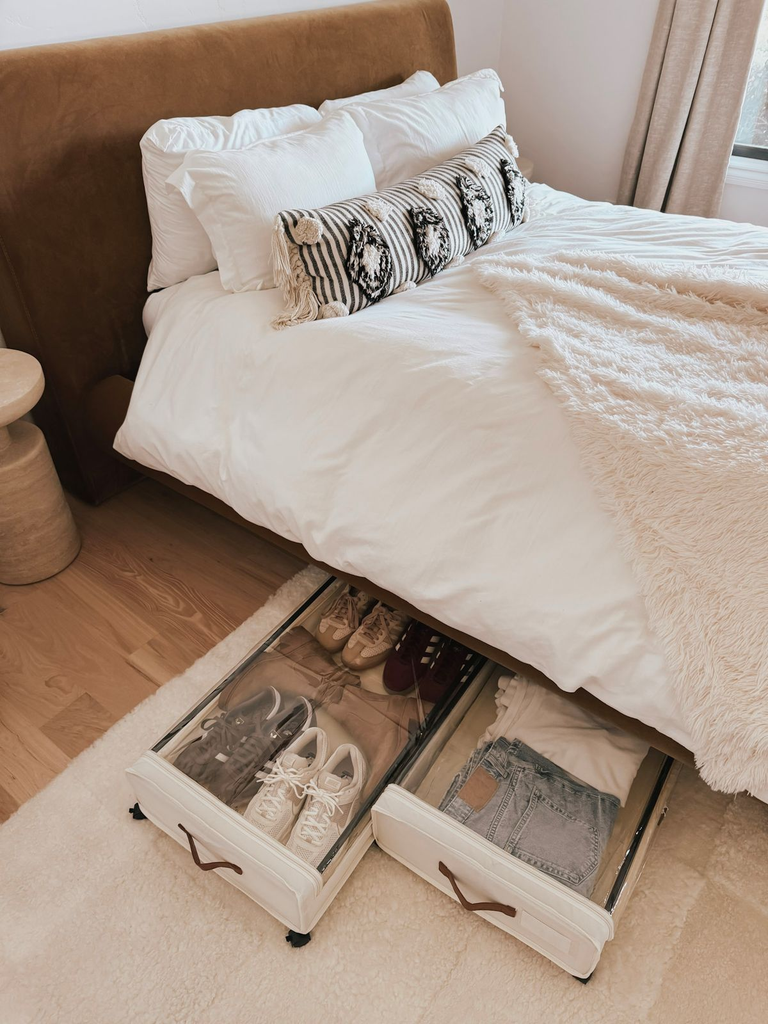
Low-profile bins designed specifically to slide under a bed frame use a section of your apartment that’s otherwise completely dead space — genuinely one of the most underused areas in any small apartment.
Rolling versions with wheels are worth the extra couple dollars over the non-wheeled kind, because pulling a heavy bin out from under a bed by hand, on carpet, gets old fast.
Pro tip: Measure your actual bed clearance before ordering — a lot of bed frames, especially platform beds, have less than the 6-7 inches of clearance most under-bed bins assume, and it’s an easy return to avoid by checking first.
5. Stackable clear storage bins ($6-$18 each)
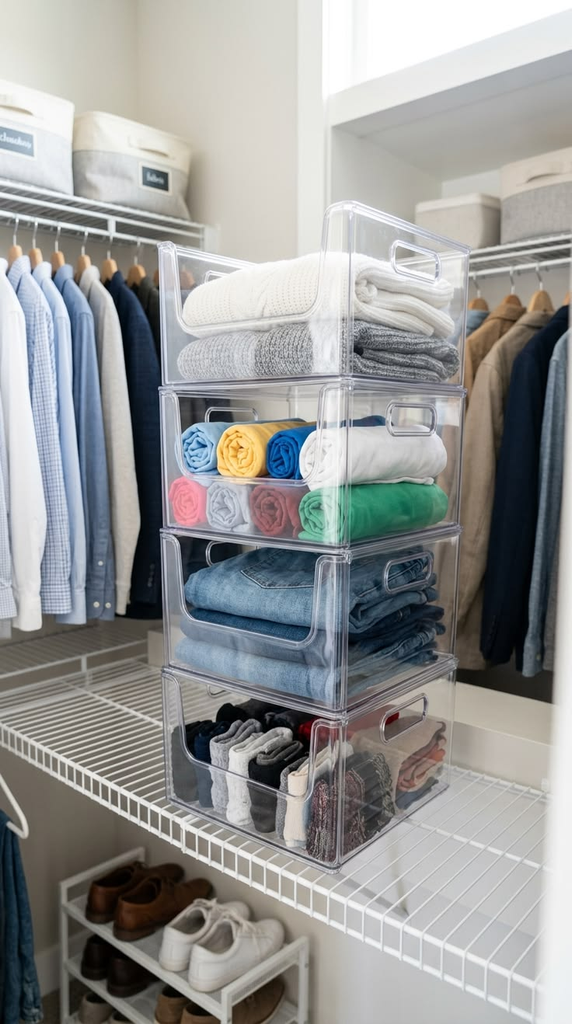
Clear bins let you see what’s inside without opening every single one, which sounds minor until you’re actually looking for something specific in a closet full of identical opaque boxes.
Stackable versions also let you build vertically in a closet instead of spreading storage across floor space you don’t have.
| Bin Type | Price Range | Best For | Watch Out For |
|---|---|---|---|
| Clear stackable bins | $6-$18 | Closet shelving, labeled categories | Can crack if overloaded and stacked too high |
| Fabric storage cubes | $8-$15 | Soft goods, open shelving units | Not stackable, no lid, dust exposure |
| Under-bed rolling bins | $15-$35 | Off-season clothes, extra linens | Low clearance can block wheels |
| Over-door organizers | $12-$25 | Shoes, cleaning supplies | Door weight limits, check hinge strain |
| Vacuum-seal storage bags | $10-$20 (multipack) | Bulky seasonal items like coats | Needs a vacuum to actually compress |
Pro tip: Buy one size of clear bin and stick with it across your whole apartment instead of mixing sizes — uniform bins stack more securely and actually look intentional on a shelf instead of like mismatched storage.
Cord and Clutter Fixes You Don’t Know You Need Until You Have Them
6. A cable management box ($12-$25)
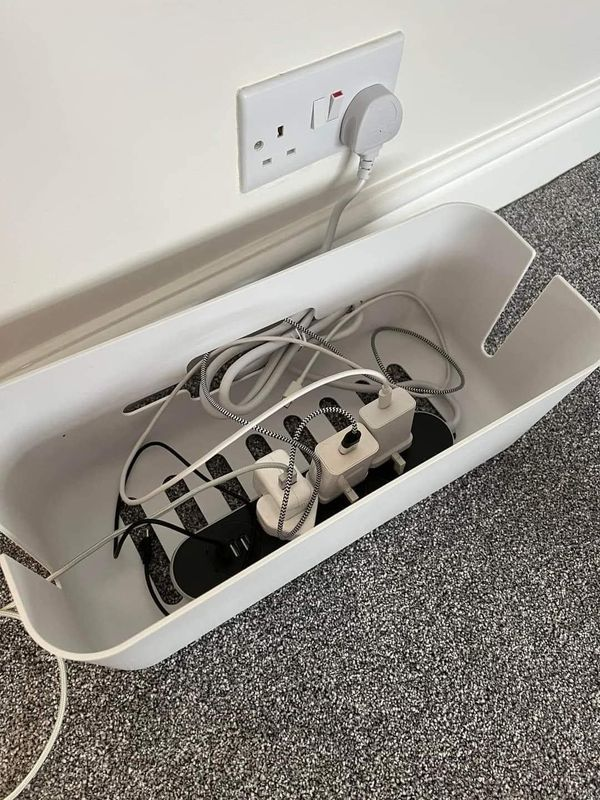
A cable box hides your power strip and the tangle of cords behind your TV or desk inside a single vented enclosure, which does more for how a small space looks and feels than almost any decor purchase you could make in the same price range.
Visual clutter from cords is one of those things you stop consciously noticing over time, but it’s still quietly making a room feel busier and smaller.
My friend Aisha didn’t believe this would make a real difference in her studio until she actually did it — she texted me a photo of her entertainment console an hour later just captioned “why did I wait two years to do this.”
Pro tip: Get one with cord entry points on both the front and back, not just one side — cheaper versions only have back access, which makes it awkward to route cords in without unplugging everything first.
7. Reusable Velcro cable ties ($5-$10 for a pack)
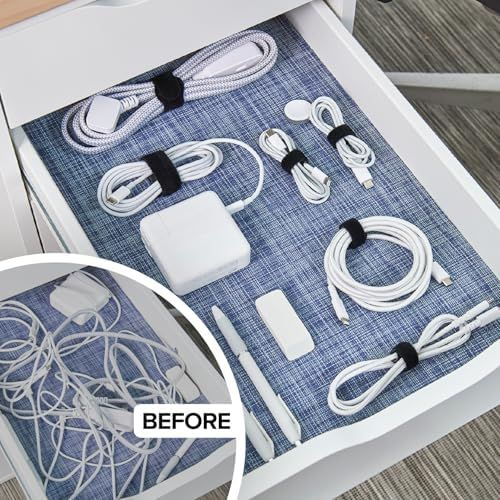
These bundle loose cords together along a wall or under a desk so you’re not looking at a spaghetti pile every time you glance at that corner of the room.
Unlike zip ties, they’re reusable and adjustable, which matters because you will inevitably add or remove a cord from that bundle within a month of setting it up.
8. Adhesive cord clips ($6-$12 for a pack)
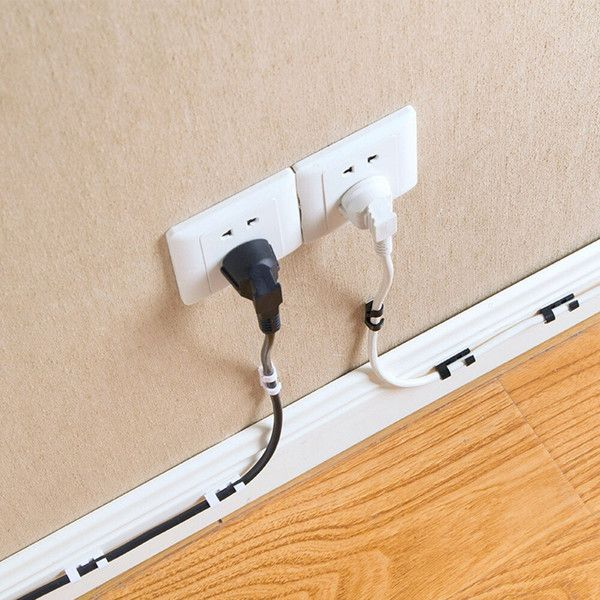
Small adhesive clips let you route a single cord along a baseboard or up a wall instead of letting it dangle or lie across the floor where you’ll eventually trip on it.
This is a genuinely tiny fix, but it’s the kind of thing that makes a rental look more finished without you having done anything permanent to the walls.
Pro tip: Clean the surface with rubbing alcohol before sticking these on — skipping this step is the single biggest reason people say the adhesive “doesn’t work,” when really it’s just dust and oil on the wall preventing a proper bond.
9. Stick-on LED puck lights ($15-$30 for a set)
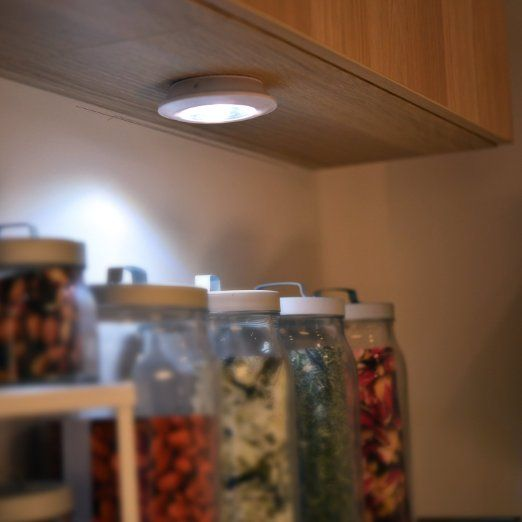
Battery or USB-powered puck lights stick under cabinets, inside closets, or along a dark hallway without any wiring or electrician needed, which is the whole appeal for renters.
They fix the “dark corner” problem that makes small spaces feel smaller, using command-strip-style adhesive that comes off clean at move-out.
Pro tip: Get the version with a remote or app control rather than a manual push-button on each individual light — it sounds like a small upgrade, but turning on six separate puck lights by hand every night gets old within the first week.
Small Comfort and Finish Upgrades That Make a Rental Feel Like Yours
10. A door draft stopper ($8-$18)
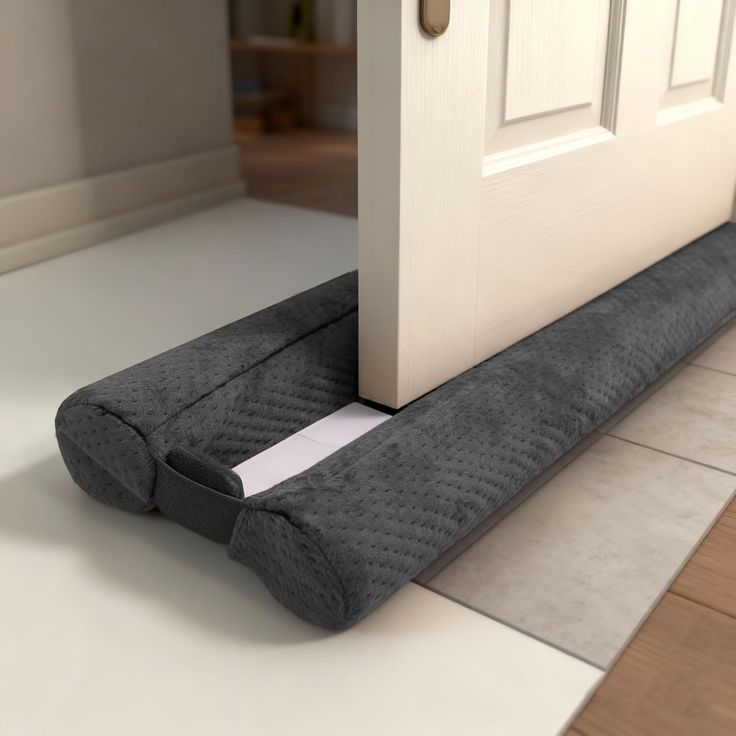
A draft stopper along the bottom of an exterior or drafty interior door blocks cold air and, as a bonus, meaningfully cuts down on street noise leaking in under the door — something almost nobody buys one for but almost everybody notices once they have it.
It’s a two-dollar fix in effort and a genuinely noticeable difference in comfort.
11. A collapsible drying rack ($15-$30)
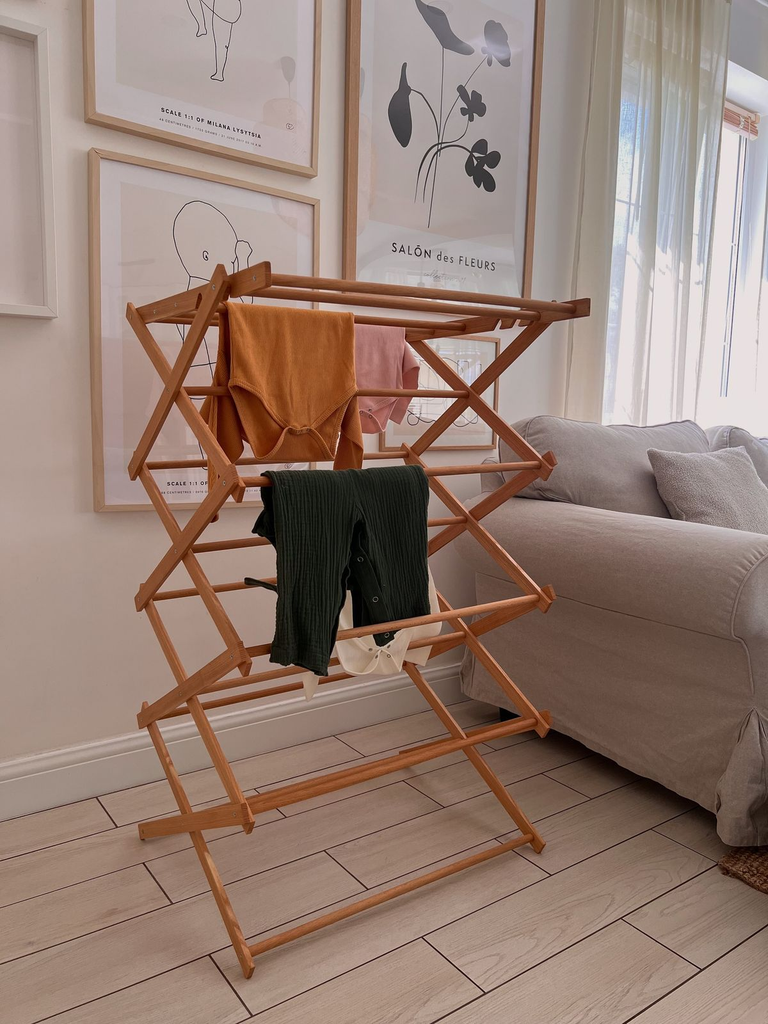
A fold-flat drying rack solves the small-apartment problem of not having room for a permanent laundry setup, since it can be leaned against a wall or slid into a closet gap when it’s not actively holding laundry.
This matters more than people expect if your building doesn’t have in-unit laundry and you’re air-drying delicates regardless.
Pro tip: Look for one with a wing-out side panel rather than a single flat rack — the wings roughly double your drying surface without taking any more floor footprint when it’s set up.
12. A tension shower caddy ($15-$35)
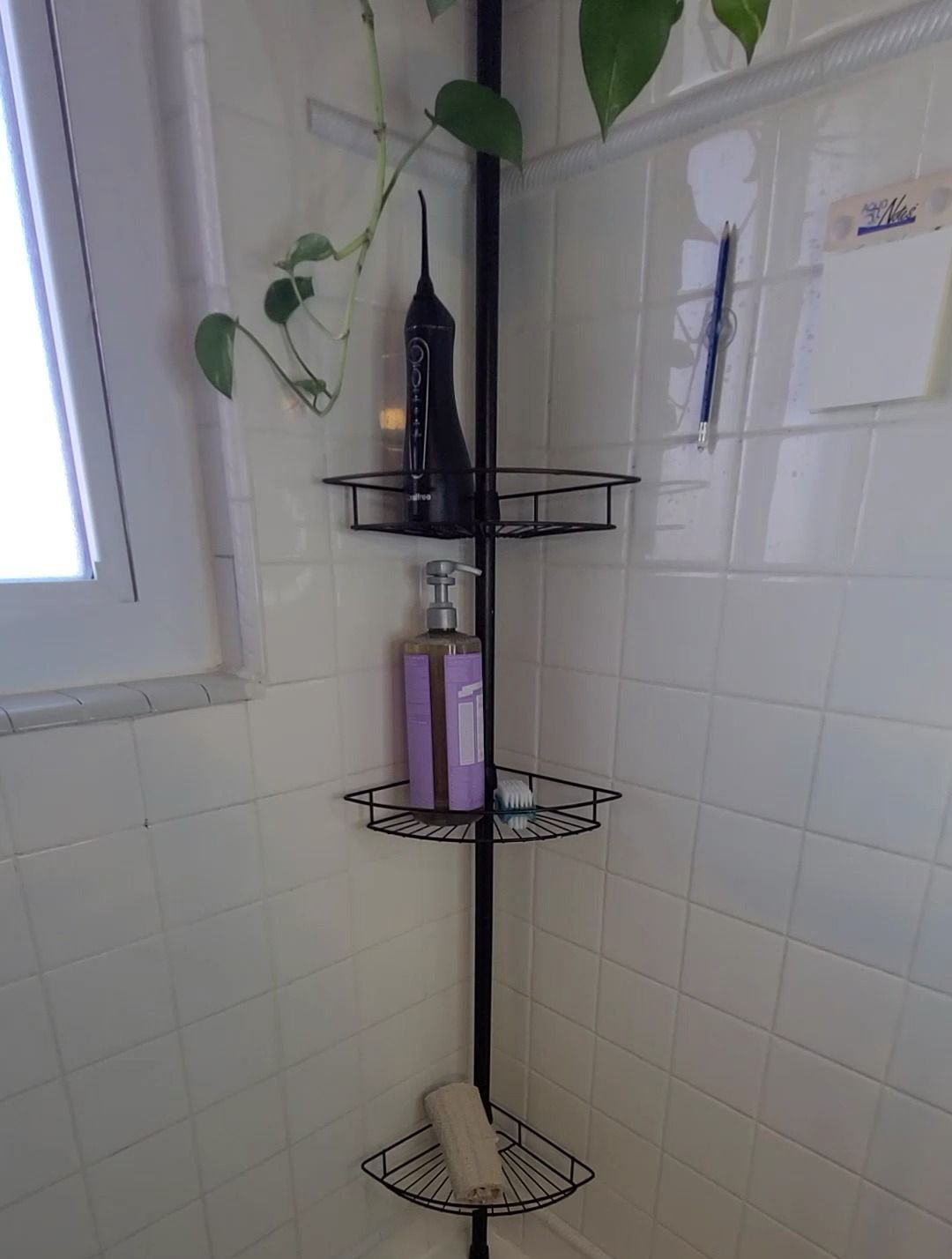
A pole-mounted caddy that wedges between the shower floor and ceiling gives you real shelf storage in a shower with no built-in niche, without drilling a single hole into rental tile.
It holds noticeably more than the suction-cup or hanging alternatives, and unlike those, it won’t fall off the wall at 7am while you’re mid-shower.
Pro tip: Check your ceiling height against the caddy’s expansion range before buying — some models max out around 7.5 feet, which is too short for a lot of older buildings with higher bathroom ceilings.
13. Furniture felt sliders ($6-$12 for a set)
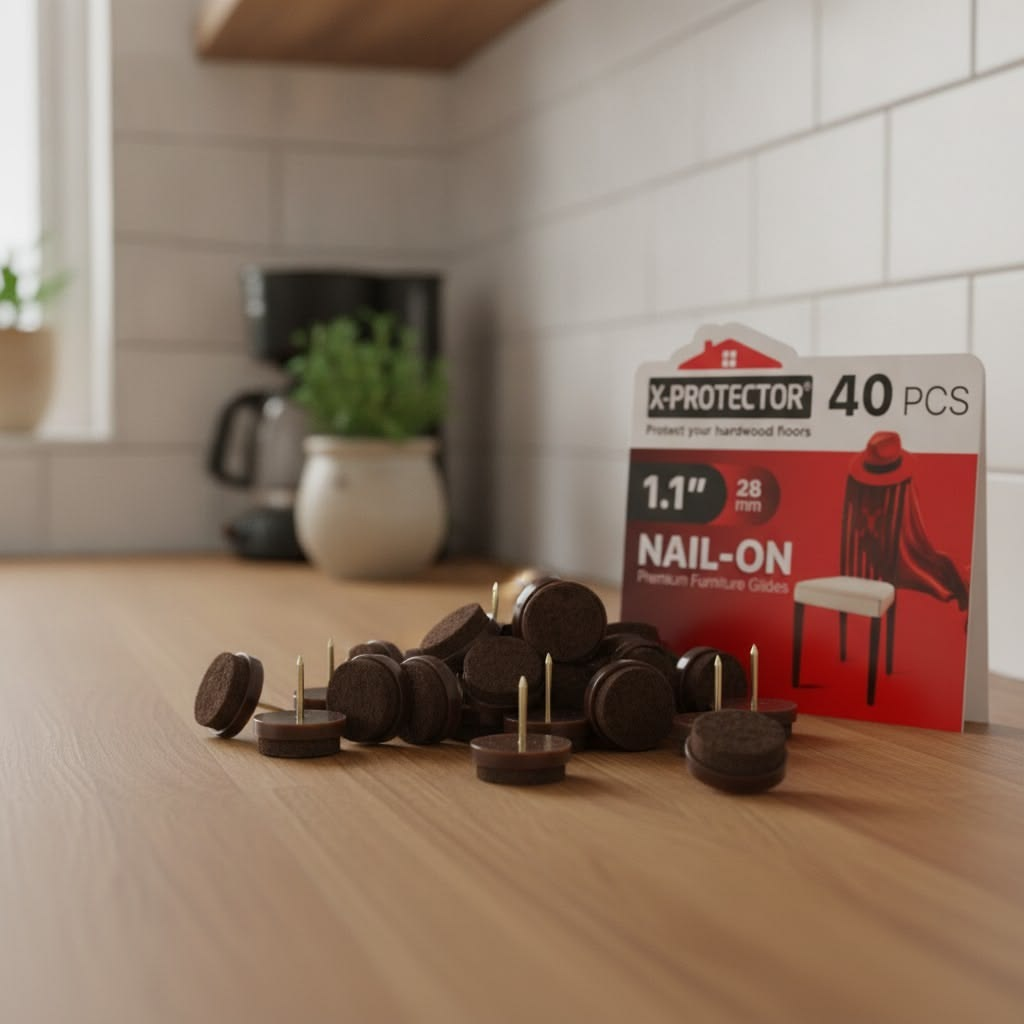
Felt pads on the bottom of chair and table legs let you actually rearrange furniture without scratching rental flooring or straining your back dragging things across the room, which sounds minor until you’re the person trying to nudge a couch three inches to the left by yourself.
They’re also just good for the floor long-term, since scraping legs across hardwood or laminate adds up to visible damage over a year of small adjustments.
14. Over-the-door hooks ($8-$20 for a set)
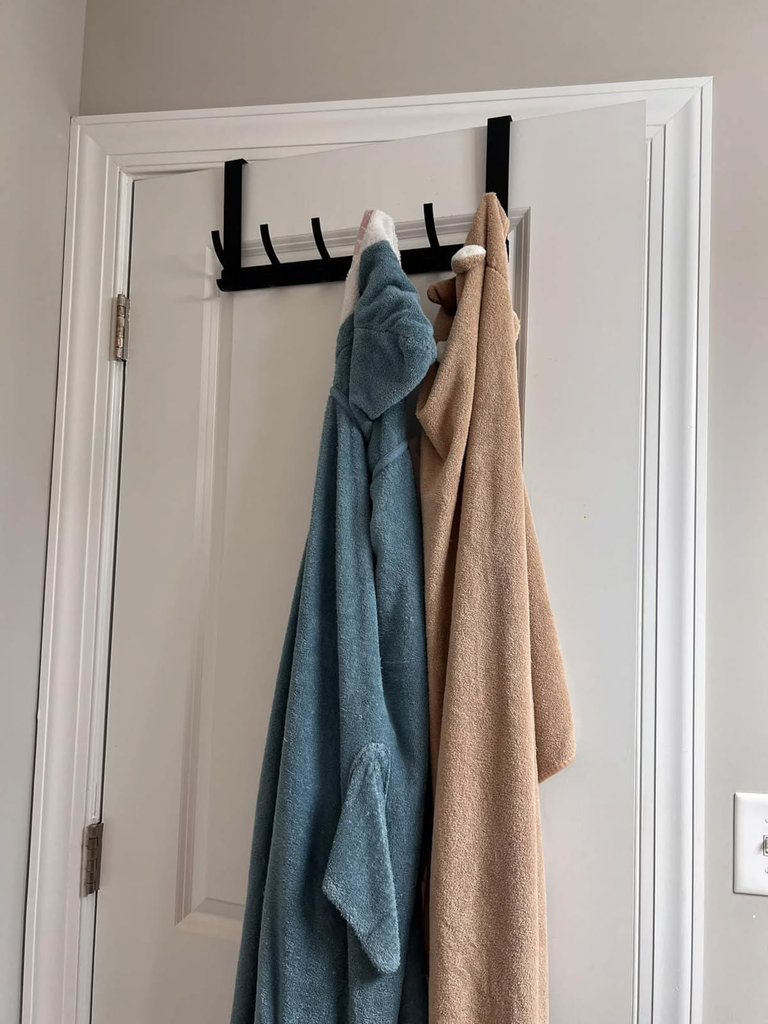
Hooks that hang over the top of a door add coat, towel, or bag storage using zero wall space and zero permanent installation, which makes them one of the easiest wins on this whole list for a strict no-holes-in-the-wall lease.
They work in a bedroom for robes, in a bathroom for towels, or on a closet door for bags and accessories you grab daily.
Pro tip: Check the weight rating before hanging anything heavier than fabric — the cheapest versions are rated for light coats and towels, not a bag stuffed with books or gym gear.
15. Peel-and-stick removable wallpaper, sample size ($15-$40 for a small roll)
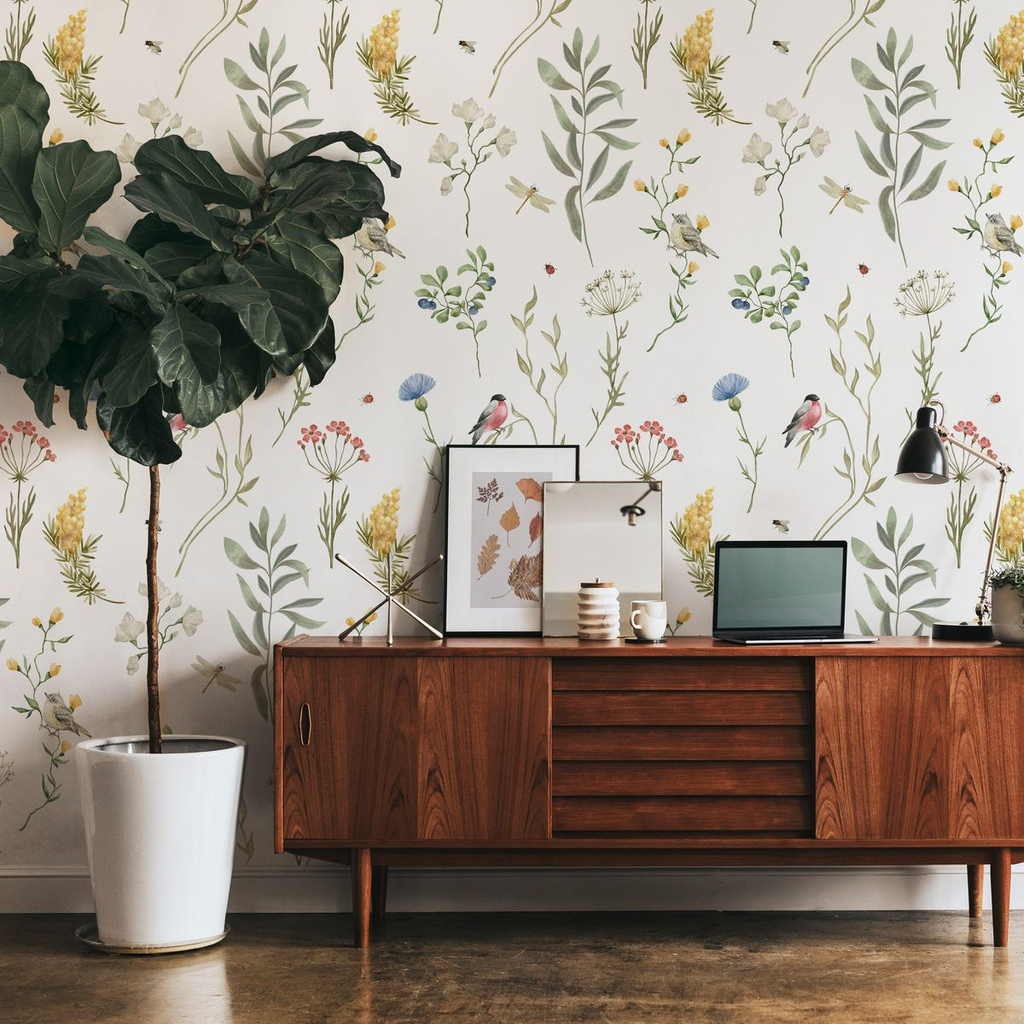
A small roll of peel-and-stick wallpaper, applied to the inside of a closet, the back of a bookshelf, or a small accent area, gives you real color and pattern without committing to painting an entire wall or risking your security deposit.
Doing a small, contained area is also far more forgiving for a first attempt than trying to wallpaper an entire feature wall, which is genuinely fiddly even for people who’ve done it before.
I did this on the back panel of an open bookshelf in my last apartment for about $18, and it’s consistently the thing people ask about first when they see photos of that corner — more than any piece of actual furniture in the room.
Pro tip: Buy a sample-size roll and test it on a small hidden spot, like inside a closet, before committing to a full accent wall — some peel-and-stick brands look different once applied than they do in the product photos, and a hidden test spot means a mistake doesn’t cost you a visible wall.
What I’d Buy First If I Were Starting From Scratch
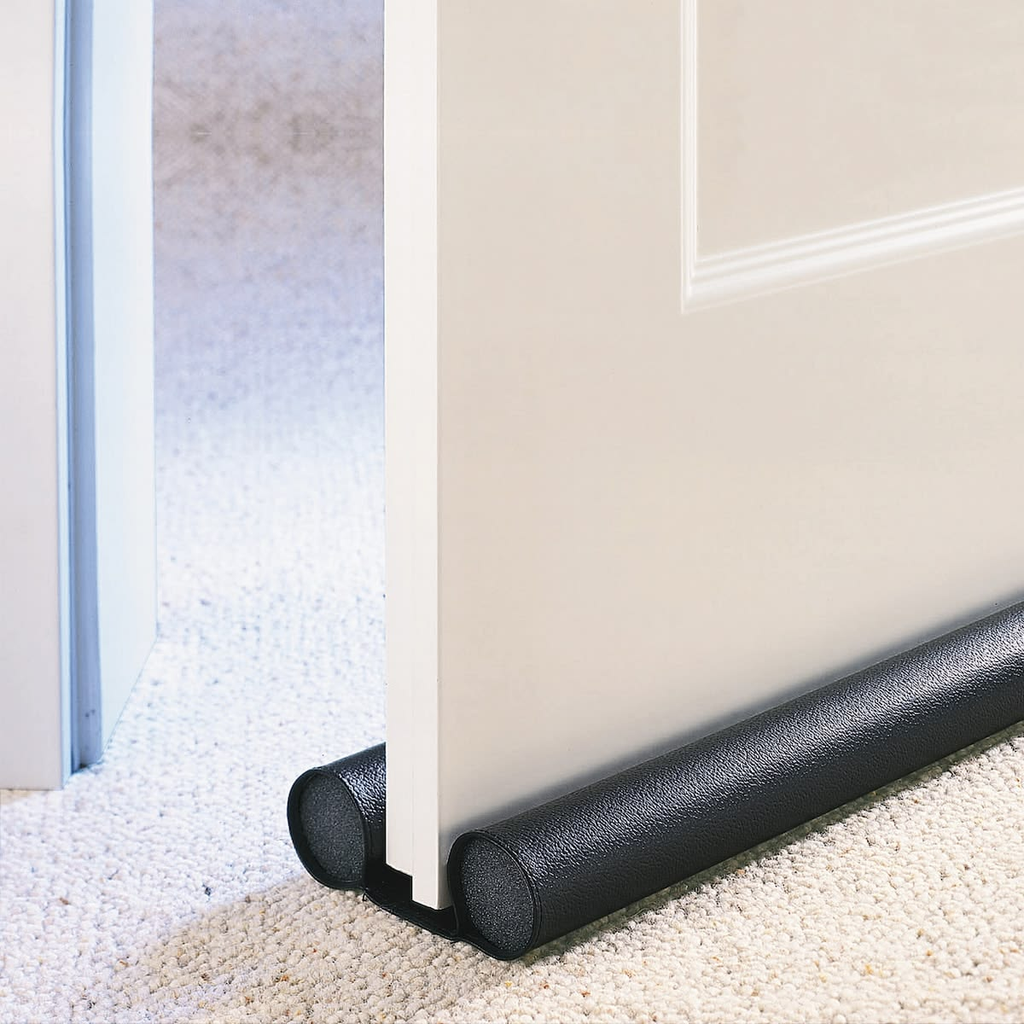
If I had to rebuild my small apartment toolkit from nothing and could only grab a handful of these, I’d start with the tension rods, the cable management box, and the door draft stopper, in that order.
None of them cost more than $25 individually, and together they solve the three problems that made my early apartments feel the most chaotic — wasted storage gaps, visible cord clutter, and a drafty, noisy front door.
The bigger thing I’ve taken from years of buying small apartment finds under $50 is that the cheap stuff is rarely a placeholder for the “real” solution you’ll buy later. A lot of it — the tension rods especially — has outlasted actual furniture I’ve owned and moved between three apartments now. Sometimes the ten-dollar fix really is the fix.


Leave a Reply