
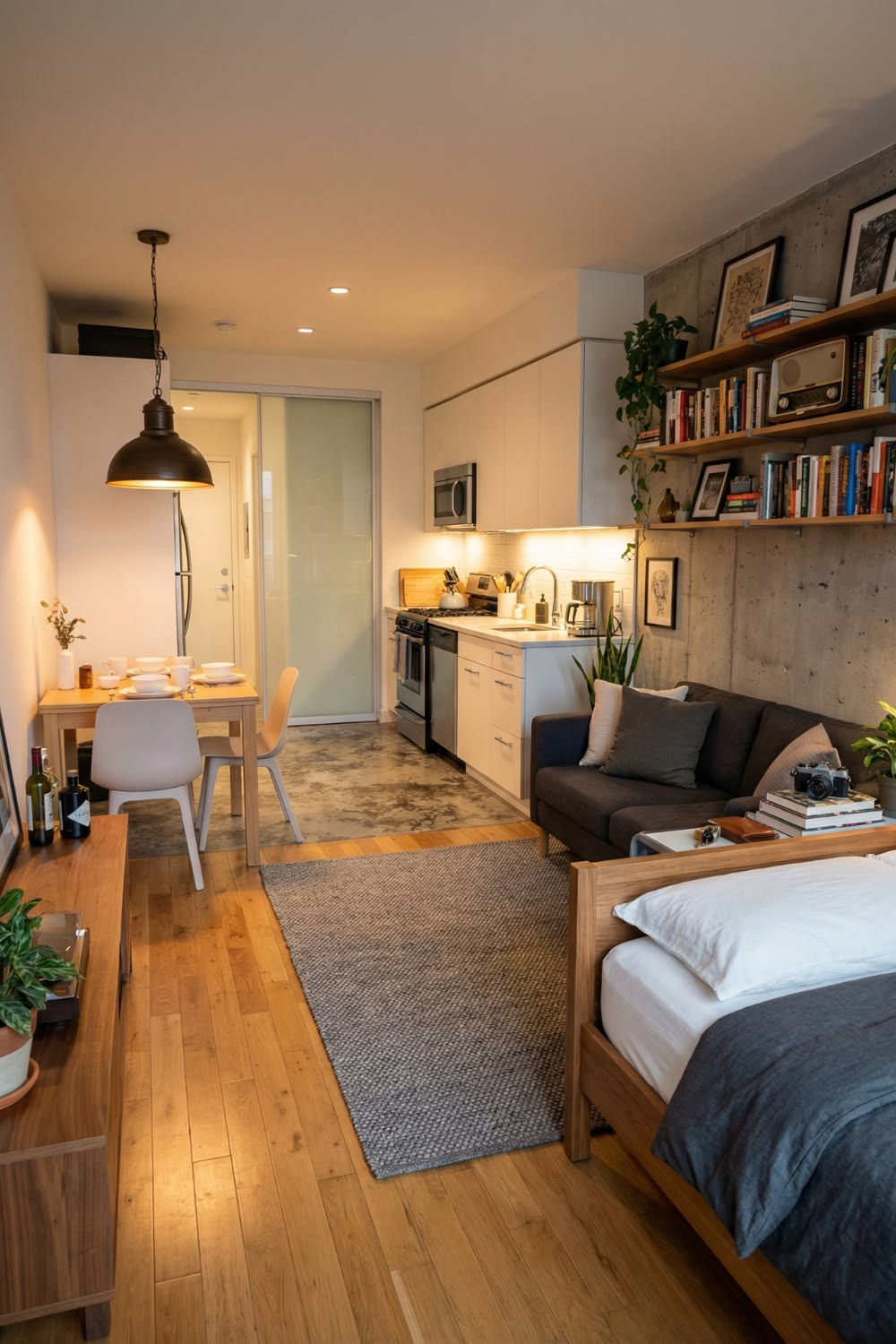
The first time I measured my studio apartment with an actual tape measure instead of just eyeballing it, I found out my “living room” was 9 feet wide, wall to wall, including the doorway swing. That number changed how I shopped completely.
I stopped asking “is this cute” and started asking “does this actually fit,” because in a studio, every single piece of furniture is competing for the same 9 feet as everything else you own — your bed, your desk, your kitchen table, all of it sharing one room with no walls to hide behind.
Space-saving furniture for studio living isn’t the same category as multi-functional furniture, even though people mix the two up constantly. Multi-functional is about a piece doing two jobs. Space-saving is specifically about physical footprint — depth, width, how much floor it visually and literally occupies — regardless of how many jobs it does.
A slim console table that only ever holds your keys is still a great studio piece if it’s 10 inches deep instead of 18. That’s the lens for this list: every item here earns its spot because of its actual dimensions, not just its versatility.
I’m grouping these by the specific footprint problem they solve — seating, sleeping, storage, and the small surfaces that quietly eat more floor space than people expect — because in a studio, thinking room by room doesn’t really work when there’s only one room.
Seating That Doesn’t Eat Your Walking Path
1. Armless slipper chairs instead of a chair with arms
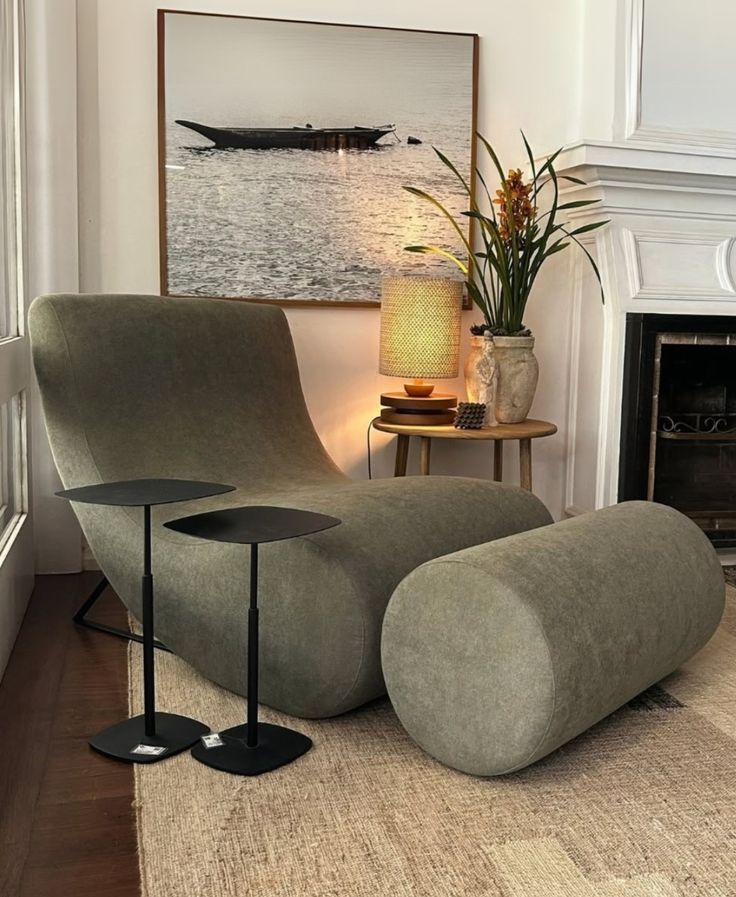
An armless accent chair, sometimes sold as a “slipper chair,” can be four to six inches narrower than the same style with arms, which sounds small until you’re trying to fit two chairs and a walking path into a 9-foot-wide room.
I swapped one armed accent chair for an armless version in my old studio and picked up almost half a foot of usable floor space for basically zero cost difference.
The trade-off is real: armless chairs are less comfortable for lounging with a book for an hour, since you lose the place to rest your elbow. I keep one armed chair — my one splurge comfort piece — and make everything else in the room armless to balance it out.
| Seating Type | Typical Width | Comfort Level | Best For |
|---|---|---|---|
| Slipper chair (armless) | 24-28″ | Moderate | Extra seating in tight corners |
| Standard armchair | 30-36″ | High | One statement comfort piece |
| Backless stool | 14-18″ | Low | Quick extra seating, tucks under a table |
| Floor pouf | 16-24″ round | Low-moderate | Flexible, can be pushed anywhere or stacked |
| Folding chair (slim profile) | 16-19″ | Low | Guests, stores flat when not needed |
Pro tip: If you need extra seating for guests only occasionally, a pair of floor poufs beats a second chair almost every time — they can be pushed under a console table or stacked in a closet when you don’t need them, which a chair never can.
2. Backless counter stools that tuck fully under a surface
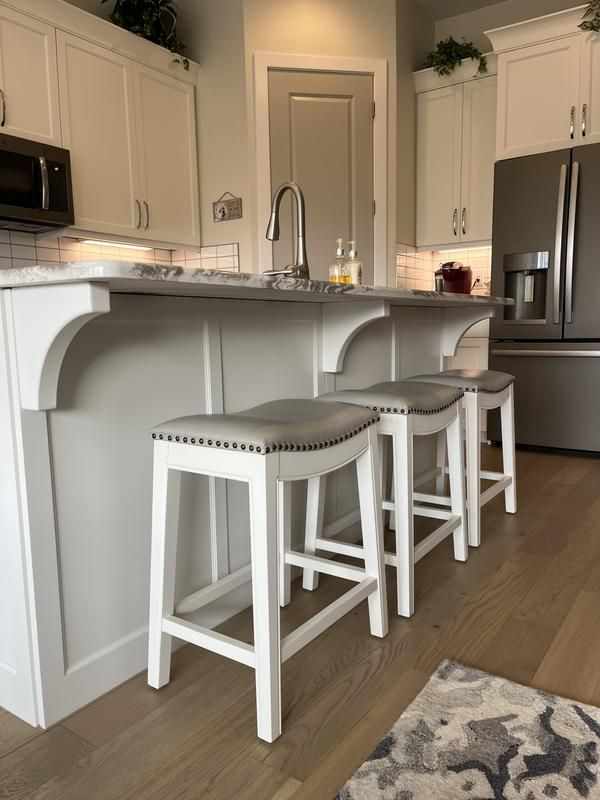
A stool without a back can slide completely under a console table, a kitchen peninsula, or a narrow desk, disappearing when you’re not using it.
A chair with a back almost always leaves at least a few inches sticking out, which in a studio is the difference between a clear walking path and one you’re navigating around daily.
Pro tip: Measure the stool’s height against the surface you’re tucking it under before buying — a stool that’s an inch too tall to slide fully under a table defeats the entire purpose and just becomes another obstacle.
Sleeping Setups That Don’t Dominate the Room
3. A low-profile platform bed with no bulky frame or footboard
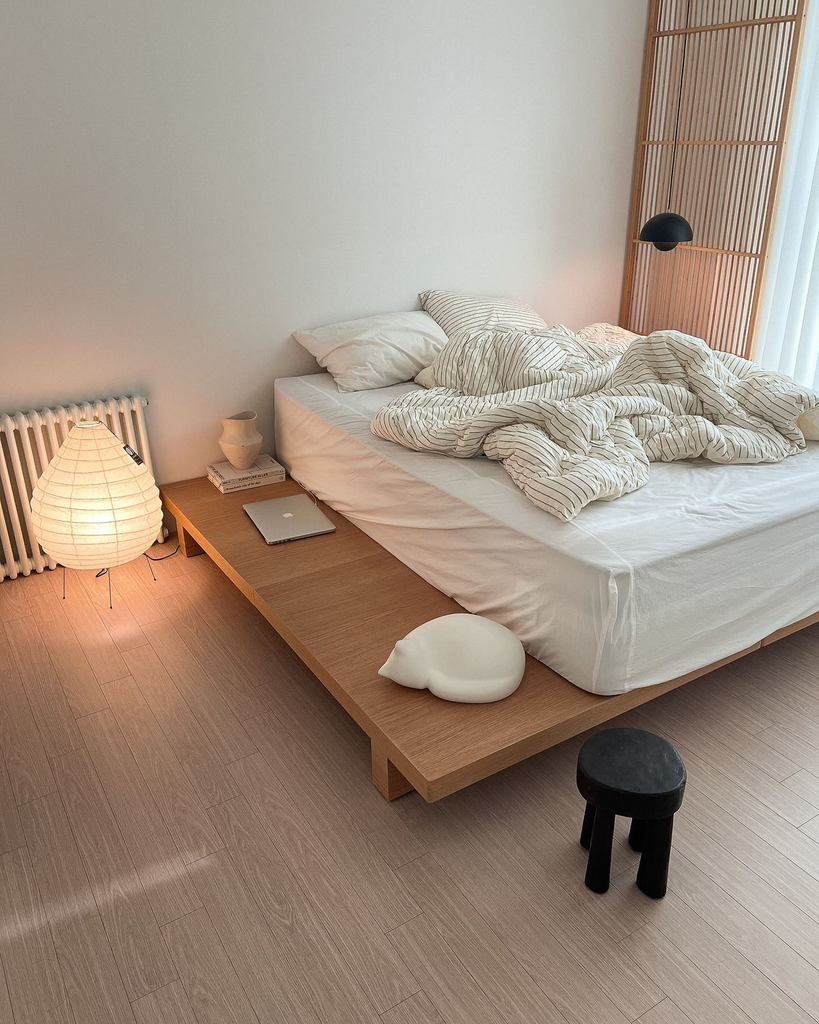
A platform bed sits lower to the ground and skips the boxy frame and footboard that a traditional bed set includes, which makes the whole sleeping area read as smaller and less dominant in a room where the bed is often the single largest object.
Lower beds also visually “shrink” against the ceiling height less than a tall traditional frame does, which matters more in a studio than people expect.
My friend Jordan switched from a traditional bed frame to a platform frame in his 350-square-foot studio in Denver purely because the old frame’s footboard was catching his shin every morning in the tight gap between the bed and his dresser.
The platform frame with no footboard solved the actual physical obstacle, not just the visual bulk.
Pro tip: Pair a platform bed with a headboard-free setup and lean a large piece of wall art or a fabric hanging behind it instead — you get the visual “anchor” of a headboard without the extra depth a real one adds to the room.
4. A daybed instead of a standard bed frame
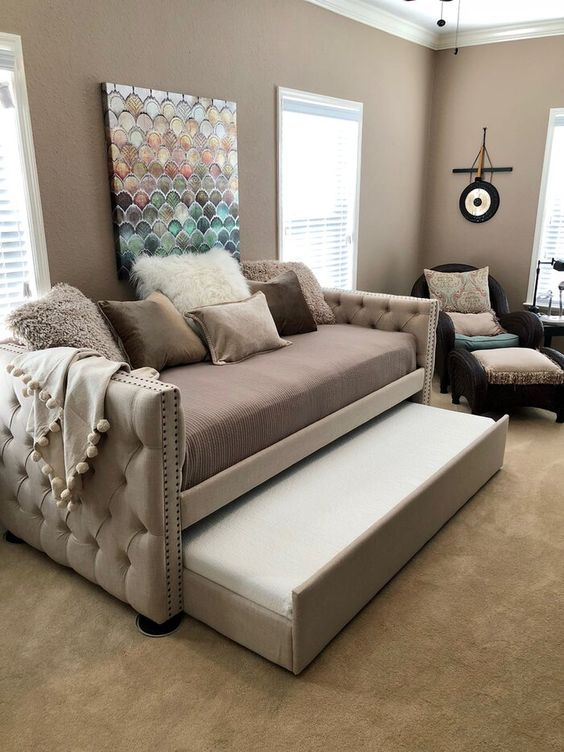
A daybed, styled with bolster pillows against a wall, does double duty as your sleeping surface and the closest thing you’ll have to a couch, without needing the floor space for both a bed and a sofa in the same room.
It’s narrower than a full sofa and narrower than a queen bed, splitting the difference in footprint between the two.
The honest limitation: most daybeds are twin-sized, so this is a better fit for someone sleeping solo than for two people sharing a studio permanently.
5. A wall-mounted folding bed for genuinely tiny footprints
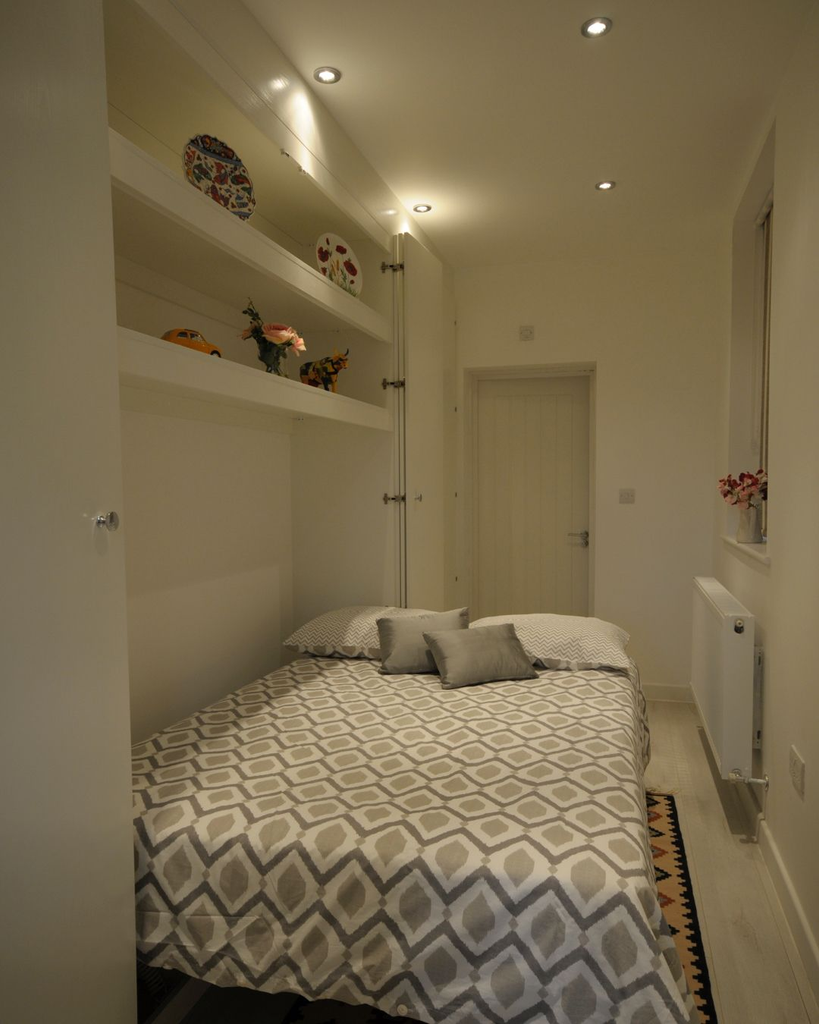
For studios under 300 square feet, a wall-mounted folding bed frame — the budget cousin of a full Murphy bed installation — folds flat against the wall during the day and takes the sleeping area’s floor space down to zero when you’re not using it.
It’s a bigger investment and installation project than most items on this list, but it’s the only real answer when the room genuinely can’t fit a permanent bed and anything else.
Pro tip: Confirm your lease allows wall-anchored installations before buying — this is one of the few items on this list that isn’t a simple return if it turns out you can’t install it.
Storage That Goes Up, Not Out
6. A tall, narrow bookshelf instead of a short, wide one
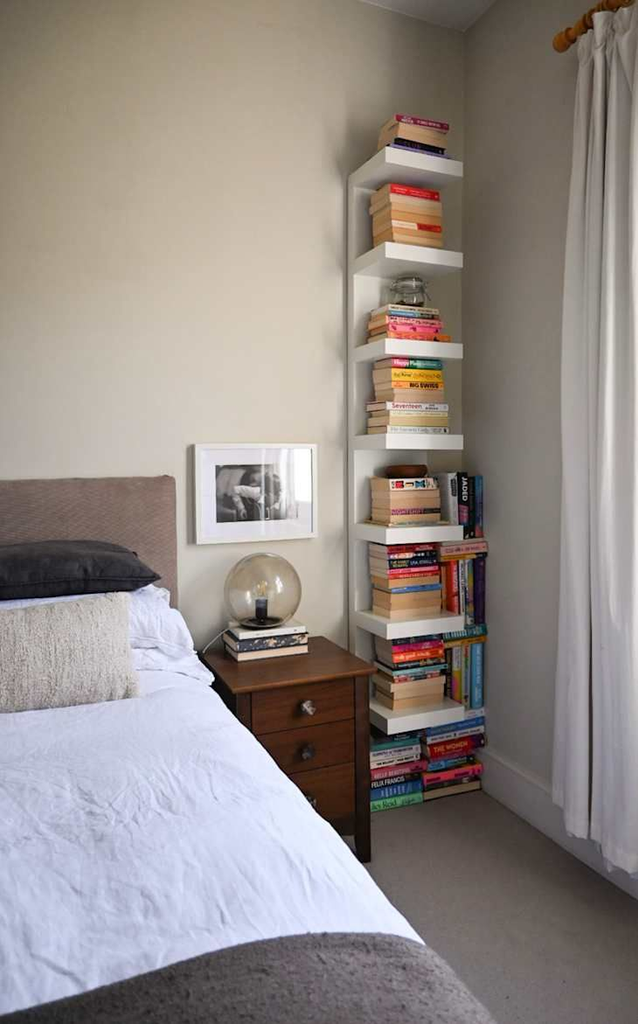
The same amount of storage capacity can come in a bookshelf that’s 24 inches wide and 6 feet tall, or one that’s 48 inches wide and 3 feet tall — and in a studio, the narrow-and-tall version almost always wins, because floor footprint is the scarce resource, not wall height.
Going vertical instead of horizontal is one of the simplest space-saving furniture swaps that people overlook because the wide version often looks more “put together” in photos.
Pro tip: Anchor tall, narrow bookshelves to the wall with the included anti-tip hardware, especially if you have pets or live in an older building with uneven floors — a top-heavy narrow shelf is more of a tipping risk than a short, wide one.
7. A slim console table behind the sofa or bed
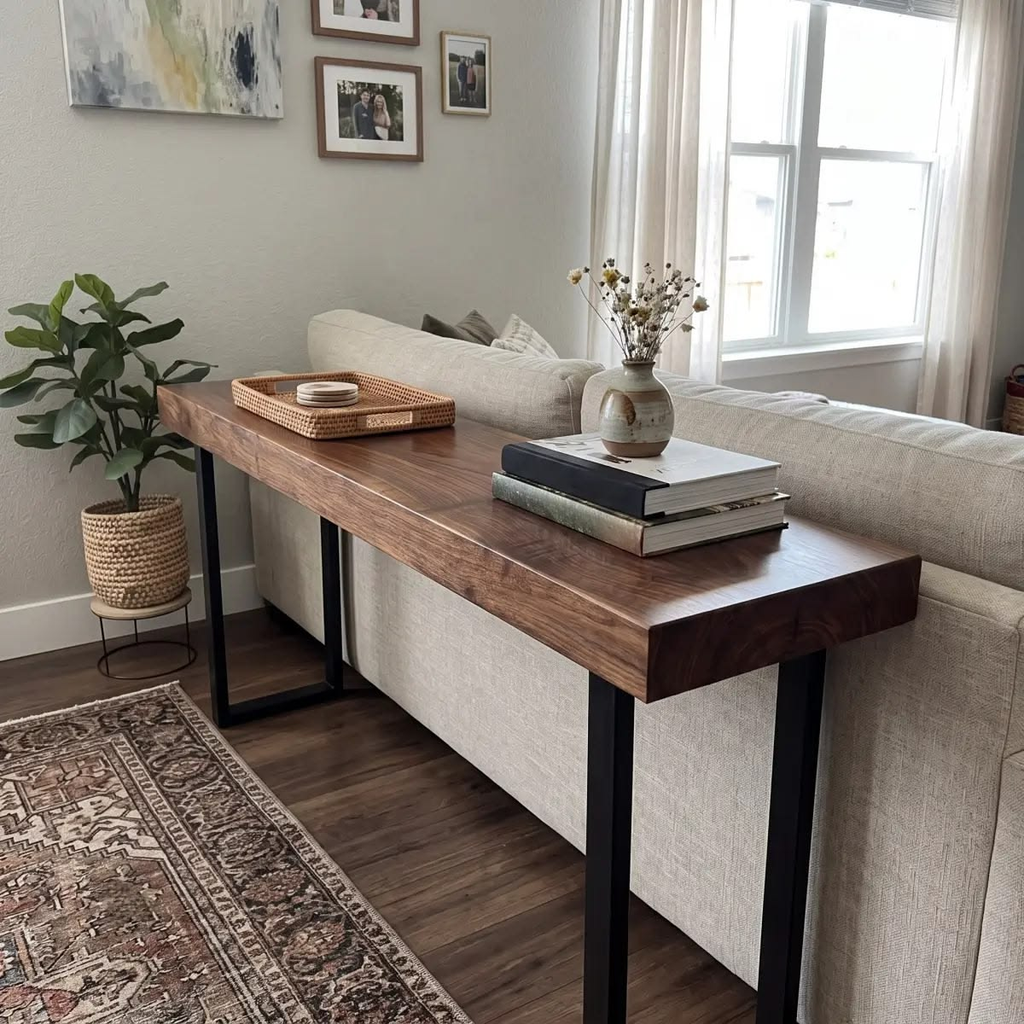
A console table as shallow as 10-12 inches deep can run the length of a sofa back or the foot of a bed, adding a surface for lamps, books, or a small tray of things you use daily, without adding meaningful depth to the room.
It’s one of the few pieces of furniture that adds real function while eating almost no floor space, since it sits flush against something you already have.
Pro tip: Choose one with at least one drawer or a shelf underneath rather than a completely flat top — the extra storage costs you nothing in footprint since the depth doesn’t change, and it keeps small items off the visible surface.
8. An over-the-door storage rack or shoe organizer
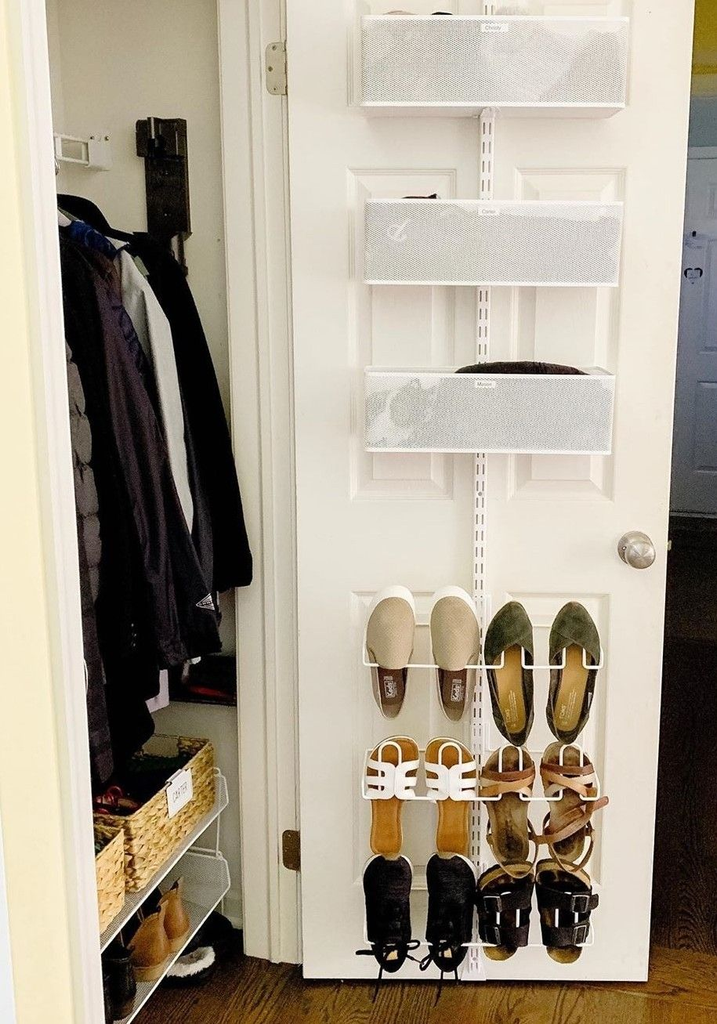
Hanging storage on the back of a closet or entry door uses zero floor space and zero wall space beyond a door you already have, which makes it one of the purest space-saving pieces on this list.
It’s best for shoes, cleaning supplies, or accessories — anything that doesn’t need to sit perfectly flat.
I’ll be honest that not every over-the-door product is worth it — I tried a flimsy wire version years ago that bent under the weight of a few pairs of boots within a month, so it’s worth spending slightly more for a rack with a solid frame if you’re storing anything heavier than sneakers.
9. A fold-flat clothing rack for closet overflow
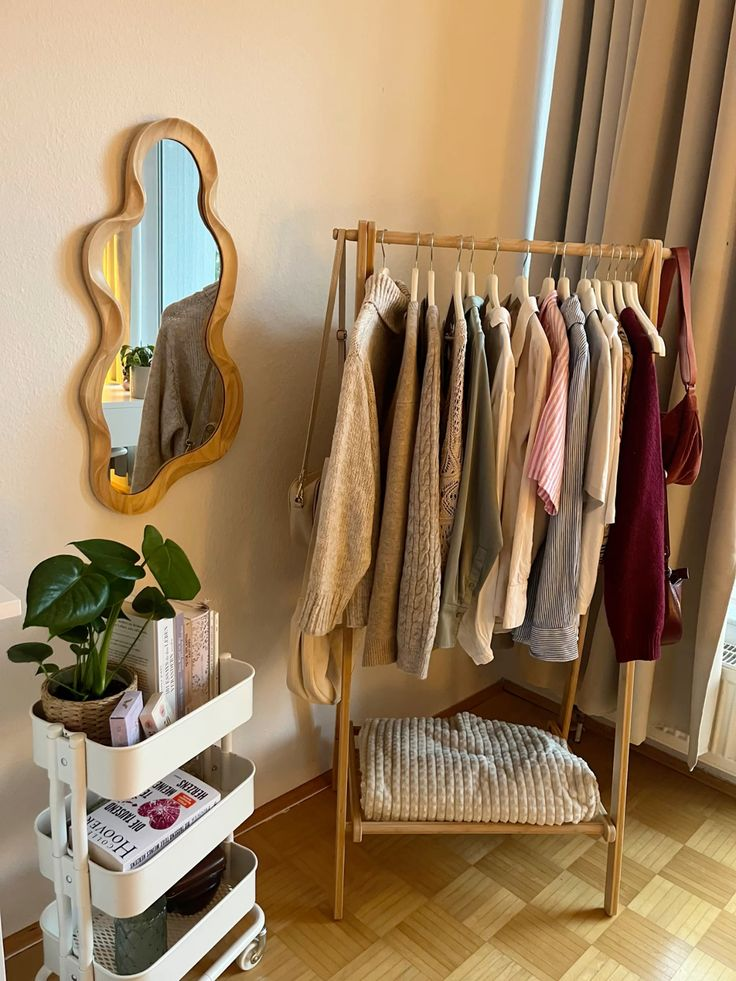
A rolling or fold-flat garment rack solves overflow closet storage without permanently occupying floor space, since most versions fold down to a couple inches thick when empty and can slide behind a door or under a bed.
It’s a better studio solution than a second dresser for someone whose wardrobe outgrows a single small closet, which is nearly everyone in a studio.
Pro tip: Get one with locking wheels if you’re using it as a semi-permanent second closet — an unlocked rolling rack in a small space has a way of drifting a few inches every time you brush past it, which adds up over a few weeks into it blocking a path you didn’t expect.
The Small Surfaces That Quietly Take Up More Room Than You Think
10. A round pedestal dining table instead of a rectangular one
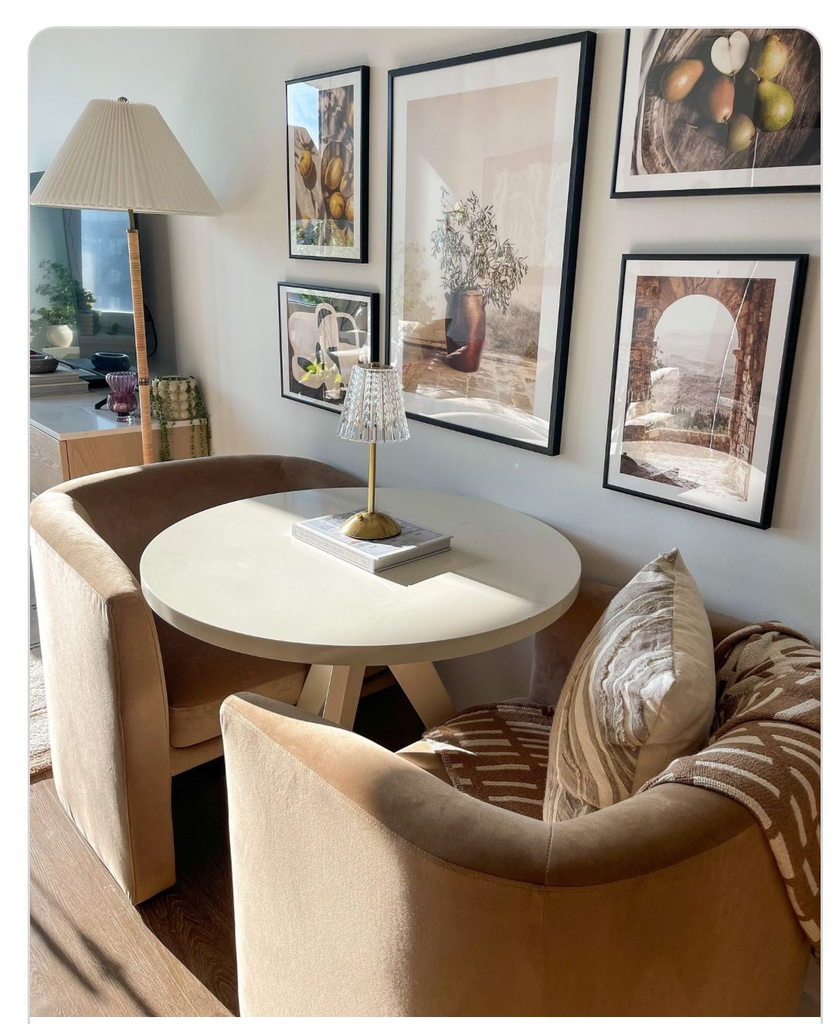
A round table with a single center pedestal leg, rather than four legs at the corners, lets you tuck chairs in closer and lets people walk past a corner of the table without bumping a table leg, which matters enormously in a studio where the dining area often blends directly into a walking path.
Round tables also don’t have “sharp” corners jutting into a room the way a rectangular table’s corners do.
Pro tip: A 36-inch round table comfortably seats four in a pinch, which is smaller than the rectangular table most people default to for the same seating count — measure your actual space before assuming you need a rectangle.
11. A slim arc floor lamp instead of a table lamp plus side table
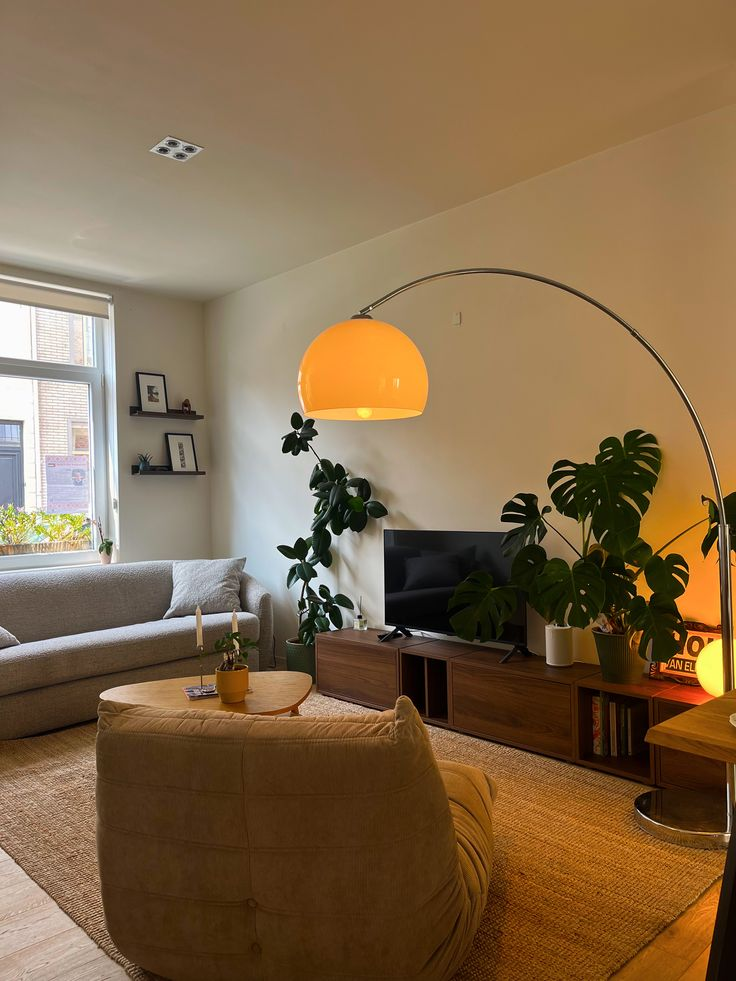
An arc floor lamp has a small footprint at its base but arches out over a seating area, which means you get overhead-style light without needing a side table to hold a table lamp at all.
This quietly eliminates an entire piece of furniture — the side table — that you’d otherwise need just to have a light source next to your seating.
Pro tip: Check the base footprint specifically, not just the overall height — some arc lamps look slim in profile photos but have a wide, heavy base for stability that ends up taking more floor space than a small side table would have.
12. A wall-mounted floating nightstand or shelf
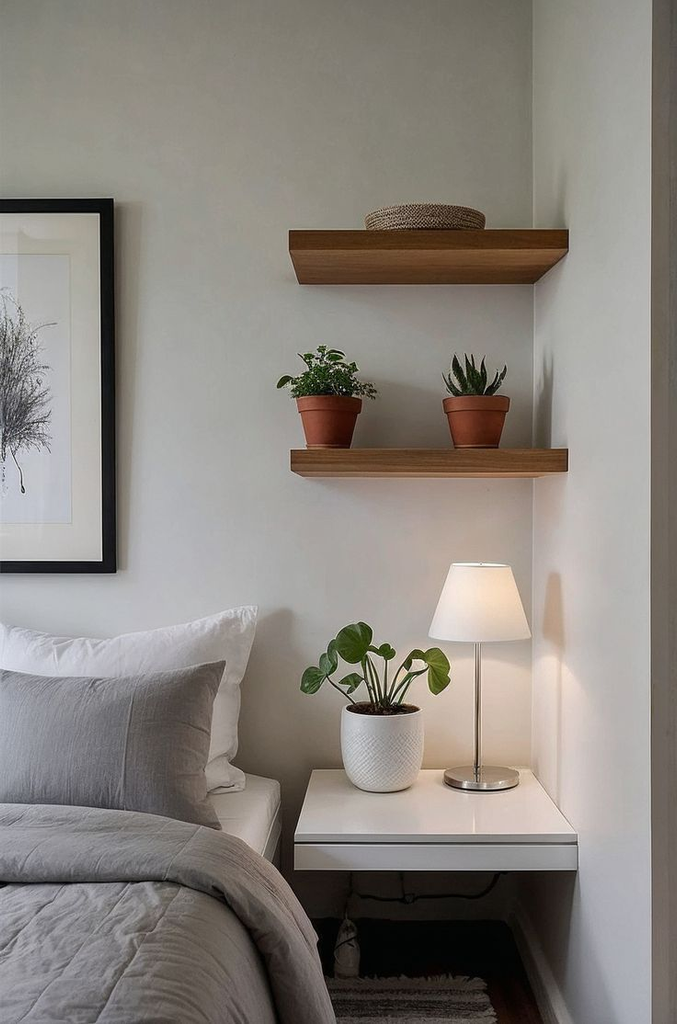
A floating shelf beside your bed does the job of a nightstand — somewhere for a lamp, a glass of water, your phone charger — without any legs or base touching the floor, which keeps the area underneath completely open for a vacuum, storage bins, or just visual breathing room.
It’s a small swap, but in a studio where the bed often sits close to a wall shared with a walking path, every inch of reclaimed floor along that wall matters.
Pro tip: Mount it into a stud if you plan to rest anything heavier than a lamp and a phone on it — the anchors that come with most floating shelves are rated for light, everyday bedside items, not a stack of books and a full water glass.
What I’d Buy First for a Genuinely Tiny Studio
If I were furnishing a studio from zero again, I’d start with the platform bed, since the bed is almost always the single largest footprint decision in the room and everything else gets arranged around it.
After that, I’d go straight to the tall narrow bookshelf over a wide one, because vertical storage is the cheapest, lowest-effort space-saving decision you’ll make in the entire apartment, and it’s the one people skip most often simply because the wide version is what’s usually in stock at eye level in a store.
The real shift for me wasn’t any single piece of furniture — it was measuring everything before buying it, every time, instead of trusting my eye. A tape measure is the least glamorous item on this entire list, and it’s done more for how my studio feels than half the furniture I’ve bought.


Leave a Reply