
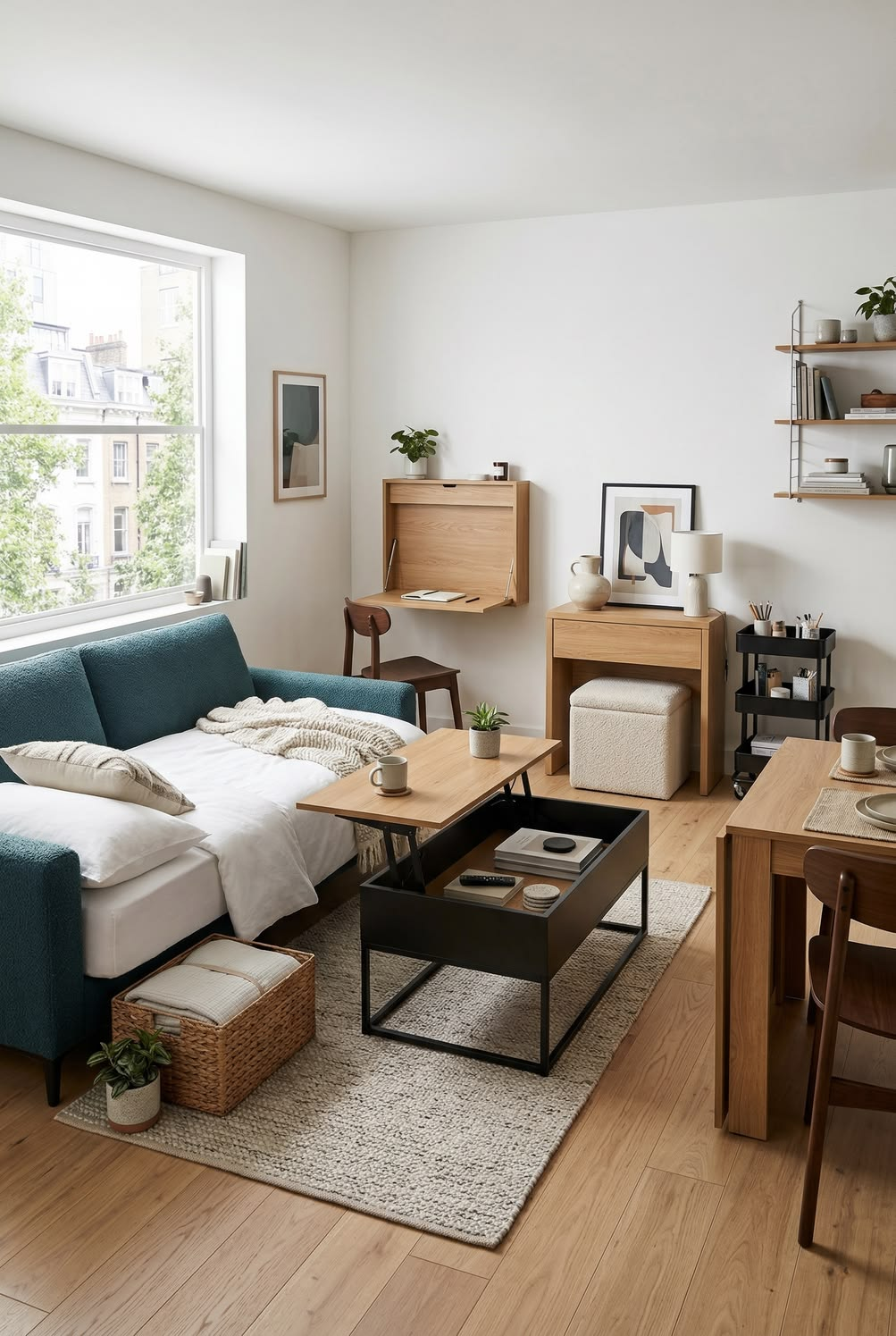
My first apartment on my own was 480 square feet, and I furnished it exactly the way you’re not supposed to — one piece at a time, whatever looked cute, zero plan. Six months in I had a coffee table, a side table, a bar cart, and a console I never used, and I still didn’t have anywhere to put guests’ coats or a place to actually sit and eat dinner that wasn’t my bed.
That apartment taught me the thing I now tell every friend who’s moving into a small space: in under 600 square feet, every piece of furniture you buy should be doing at least two jobs, or it’s taking up rent-paying square footage for one job it could’ve shared with something else.
Multi-functional furniture for small apartments isn’t really about “clever” or “cute,” even though that’s how it gets marketed. It’s about math — how many square feet a piece needs versus how many problems it solves for you. A storage ottoman that’s also your coffee table and your extra seating is doing three jobs in the footprint of one.
A sofa that’s also somewhere overnight guests can sleep saves you from ever needing a guest room you don’t have. That’s the lens I used to pick these 14, and I’ve either owned, tested, or had a friend live with every single one of them long enough to know the actual trade-offs, not just the marketing photos.
I’ve grouped these loosely by where they solve the biggest problem — living room, bedroom, dining/entry, and workspace — because most small apartments have one or two rooms doing triple duty, and it helps to think room by room rather than just scrolling a flat list.
Living Room: Where Multi-Functional Furniture Earns Its Keep Fastest
1. A storage ottoman that replaces your coffee table
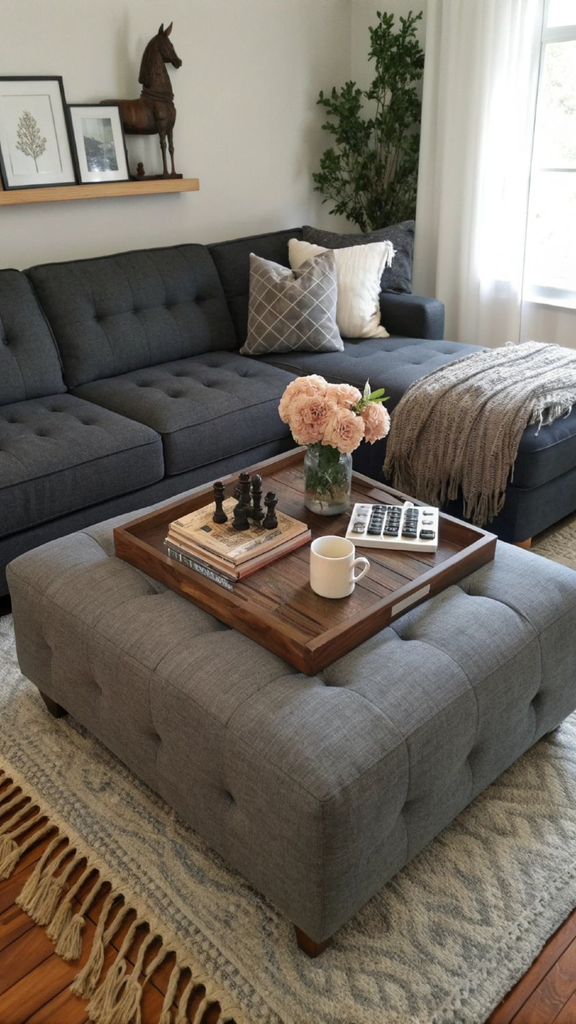
This is the single highest-value piece on this whole list, and it’s usually the first thing I tell people to buy.
A storage ottoman with a lift-off or hinged top does the job of a coffee table, extra seating when you have people over, and a home for blankets, remotes, or the stuff that otherwise ends up in a pile on the floor.
The trade-off nobody mentions: a soft-top storage ottoman is more comfortable to put your feet on, but it’s a worse surface for actually setting down a drink or a laptop.
If you use your coffee table as a real work surface, look for one with a tray-style hard top that lifts off completely, not just a padded lid you have to move aside every time.
Pro tip: Measure the depth of the storage cavity before buying, not just the outside dimensions — a lot of storage ottomans have a shallow false bottom that looks deep in photos but only actually holds one thin blanket.
2. A sleeper sofa (not a pull-out — an actual sleeper)
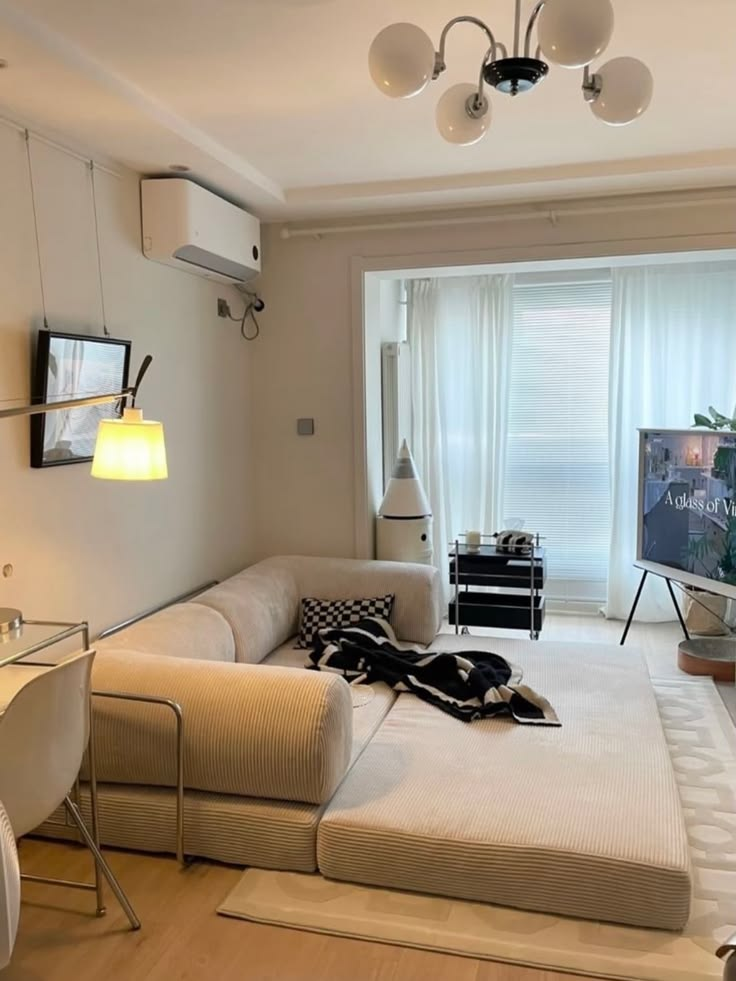
There’s a real difference between a cheap pull-out sofa bed with a metal bar that digs into your back, and a proper sleeper sofa with a real mattress built into the mechanism.
If you have overnight guests more than a couple times a year, the second one is worth the extra cost, because a bad sleeper sofa is a piece of furniture people quietly dread using, and a good one is one your friends actually ask to stay over for.
My friend Dana bought the cheapest pull-out she could find for her one-bedroom in Chicago and regretted it within a month — her sister visited and slept on the floor instead of the pull-out because the bar was that bad.
She replaced it two years later with a mid-range sleeper with a real innerspring mattress insert, and it changed how often people actually stayed with her.
Pro tip: Sit on any sleeper sofa you’re considering for at least ten minutes in the store, as a regular couch, before you even think about the mattress mechanism — a lot of sleeper sofas sacrifice everyday couch comfort to make the fold-out mechanism work, and you’ll be using it as a couch every single day and a bed occasionally.
3. Nesting tables instead of one fixed coffee table + side table
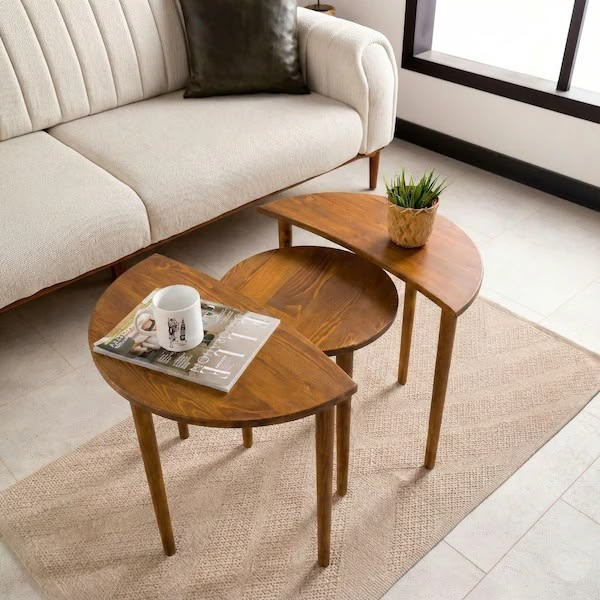
A set of two or three nesting tables gives you the surface area of multiple end tables when you need it — movie night, game night, extra drink space — and tucks down to almost nothing the rest of the time.
This is the piece I recommend most for apartments under 400 square feet where even a small side table permanently eats into your walking path.
The honest trade-off: nesting tables are lighter-duty than a single solid coffee table, so they’re not the move if you want somewhere to put your feet up regularly or set down anything heavy. Think of them as “surface area on demand,” not a coffee table replacement.
4. A storage coffee table with a lift top
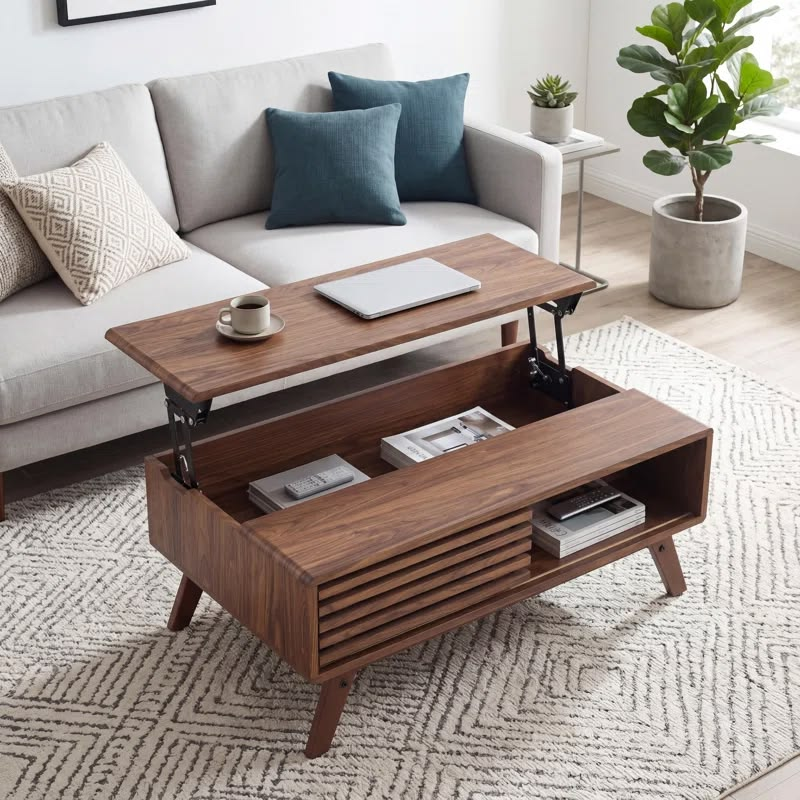
If you do need a real work-or-eat surface at couch height, a lift-top coffee table gives you that adjustable height for working on a laptop or eating without a tray, plus storage underneath for board games, cords, or the stuff you don’t want visible.
It’s a step up from the storage ottoman if you want a hard surface as the default, not the exception.
Pro tip: Check the weight limit on the lift mechanism before buying if you plan to eat meals at it regularly — the cheaper mechanisms can start to sag or stick after a year of daily lifting with a full plate and laptop on top.
Bedroom: Solving the “One Room, Three Jobs” Problem
5. A Murphy bed if your bedroom doubles as literally anything else
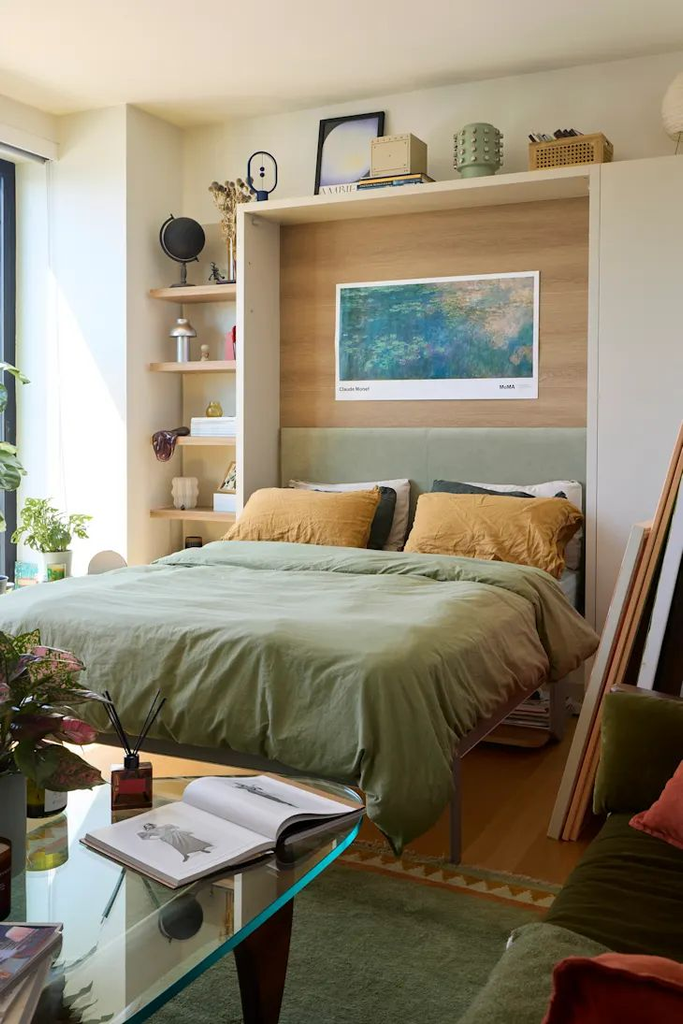
If your bedroom is also your home office, or your bed sits in the corner of your studio’s main living space, a Murphy bed is the single biggest floor-space reclaim you can make. Folding the bed away during the day turns a bedroom back into a functional room for hours you’re not sleeping in it.
The catch is real, though: Murphy beds are a bigger investment than almost anything else on this list, and if you rent, you need actual permission and usually professional installation, since most versions anchor into wall studs.
This isn’t a weekend DIY project the way most of this list is.
Pro tip: If a full Murphy bed is out of budget or not allowed in your lease, a Murphy-style daybed frame that just tilts up against the wall (no wall-mounted hardware) gets you 70% of the benefit for a fraction of the cost and zero landlord approval needed.
6. A daybed with a pop-up trundle
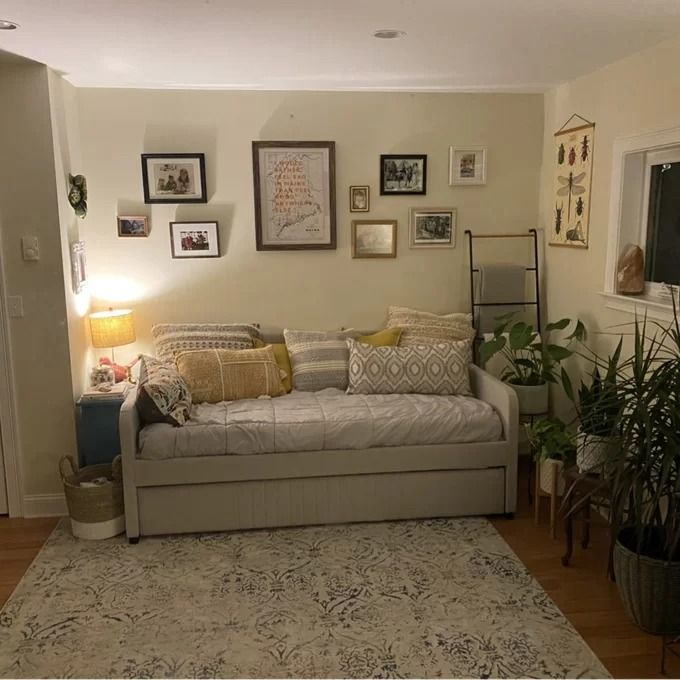
A daybed functions as a couch during the day and a bed at night, and the trundle underneath pops up to a second full-height bed when you have a guest — which means you’re getting a sofa, a bed, and a guest bed out of one footprint.
This is the move for studio apartments where the “living room” and “bedroom” are the same 200 square feet.
I’ll be honest about the downside: a daybed with trundle is a firmer, more compact sleep than a real bed, and if you’re using it as your actual nightly bed rather than a guest option, some people find the width limiting after a while. It’s a better primary-bed solution for someone who sleeps alone than for a couple.
7. A bed frame with built-in storage drawers
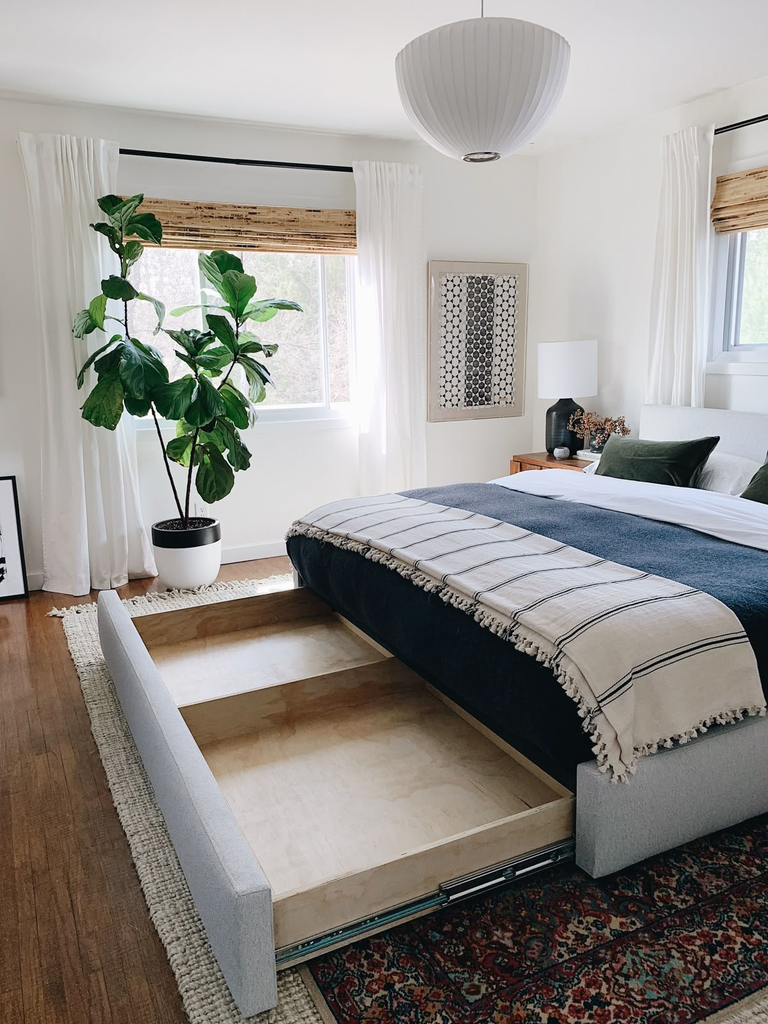
Instead of relying on under-bed storage bins you have to slide out manually, a bed frame with built-in drawers turns dead under-mattress space into actual accessible storage for off-season clothes, extra linens, or luggage.
It’s a quieter, less “hack-y” version of under-bed storage that also looks intentional rather than like you’re hiding boxes.
Pro tip: Measure your remaining floor clearance on the side you open the drawers from before buying — some models need 18-24 inches of clearance to fully open a drawer, and in a genuinely tight bedroom that space might not exist.
Dining and Entry: The Rooms People Forget to Optimize
8. An extendable or drop-leaf dining table
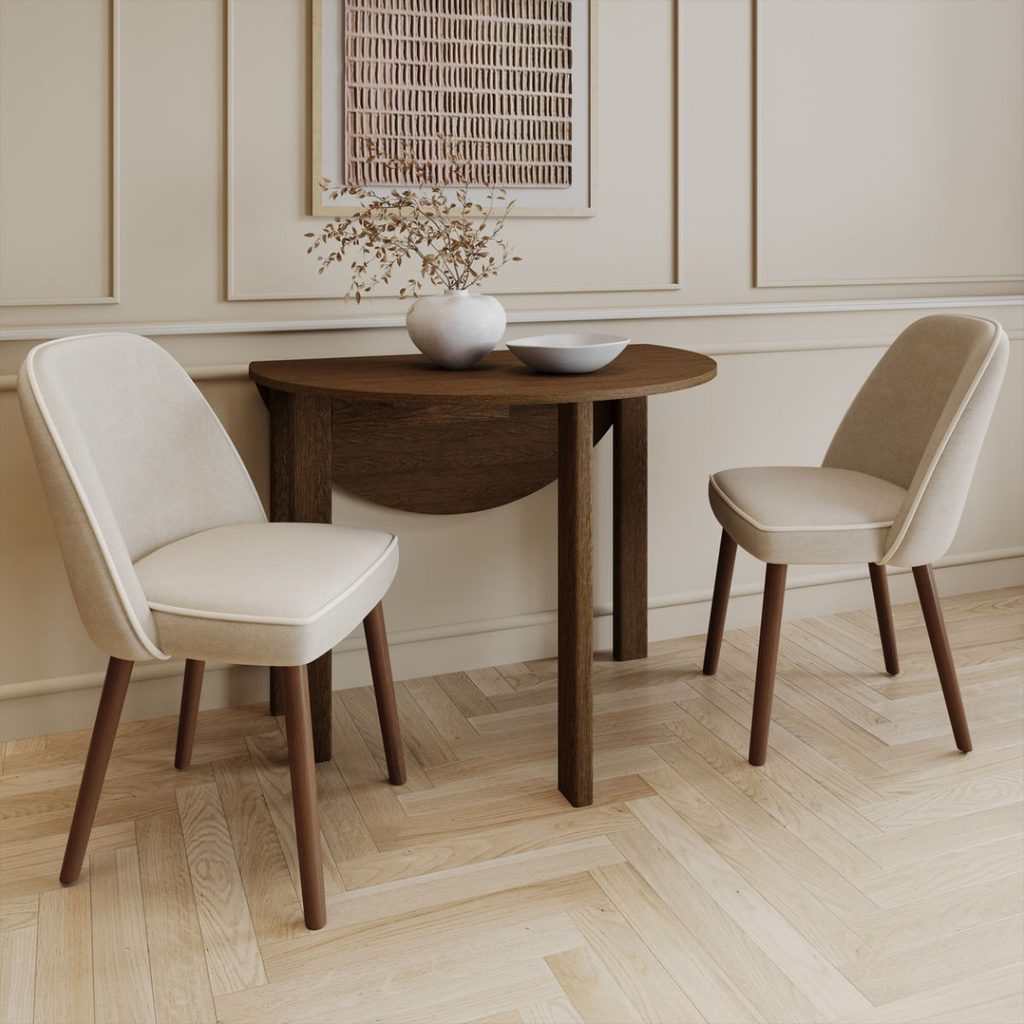
A drop-leaf or extendable dining table can live small day-to-day — pushed against a wall, folded down to a narrow console-like footprint — and expand out for the rare dinner party or holiday meal.
This solves the specific small-apartment problem of needing seating for six twice a year and seating for one or two every other day.
| Table Type | Everyday Footprint | Expanded Seating | Best For |
|---|---|---|---|
| Drop-leaf table | 20-30″ wide against a wall | 4-6 people | Studios, narrow dining nooks |
| Extendable (leaf insert) | Standard 4-seat size | 6-8 people | Apartments with a dedicated dining area |
| Folding wall-mounted table | Flush to wall when folded | 2-4 people | Tiny kitchens, dorm rooms |
| Console table that flips to dining table | 12-18″ deep against wall | 4-6 people | Entryways doubling as dining space |
Pro tip: If you go with a drop-leaf, actually practice raising and lowering it in the store or right after delivery — some mechanisms need real force or a specific hand position, and you want to know that before you’re doing it one-handed while holding a casserole dish.
9. A storage bench for the entryway (or end of bed)
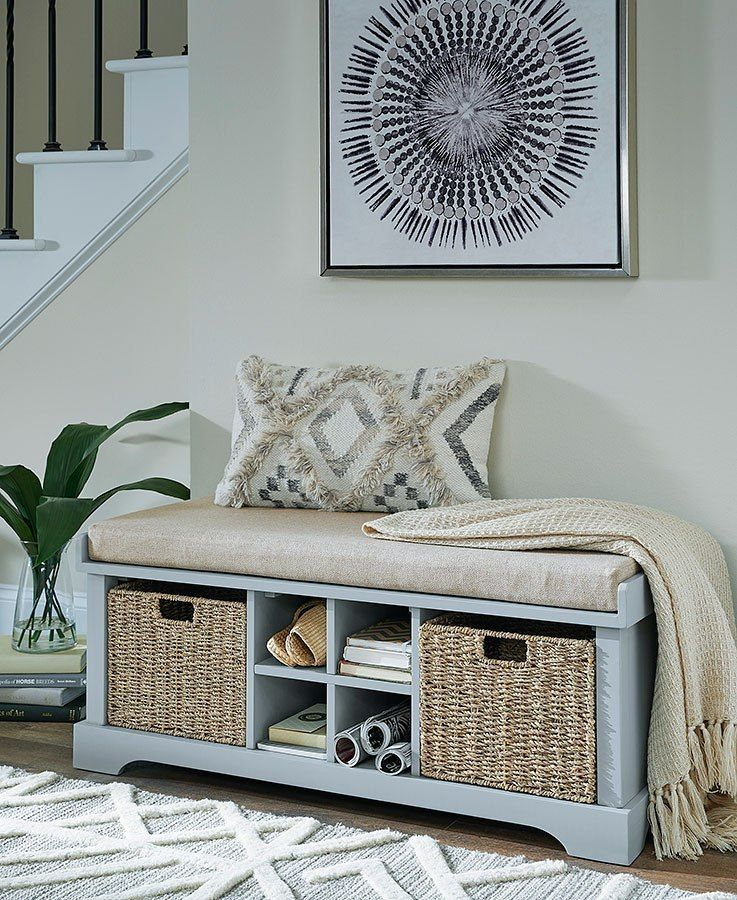
A bench with a lift-up seat or built-in cubbies gives you somewhere to sit while putting on shoes, plus a home for the shoes themselves, instead of a shoe pile by the door that every small-apartment dweller knows too well.
It works equally well at the end of a bed if your entry is too narrow for one.
Pro tip: Look for a bench with both open cubbies and a closed lift-top section — the open cubbies are actually faster to use daily for shoes you wear constantly, while the closed section is for the stuff you don’t want visible, like off-season boots or a toolkit.
10. A console table with drawers that doubles as your entry catch-all and a desk
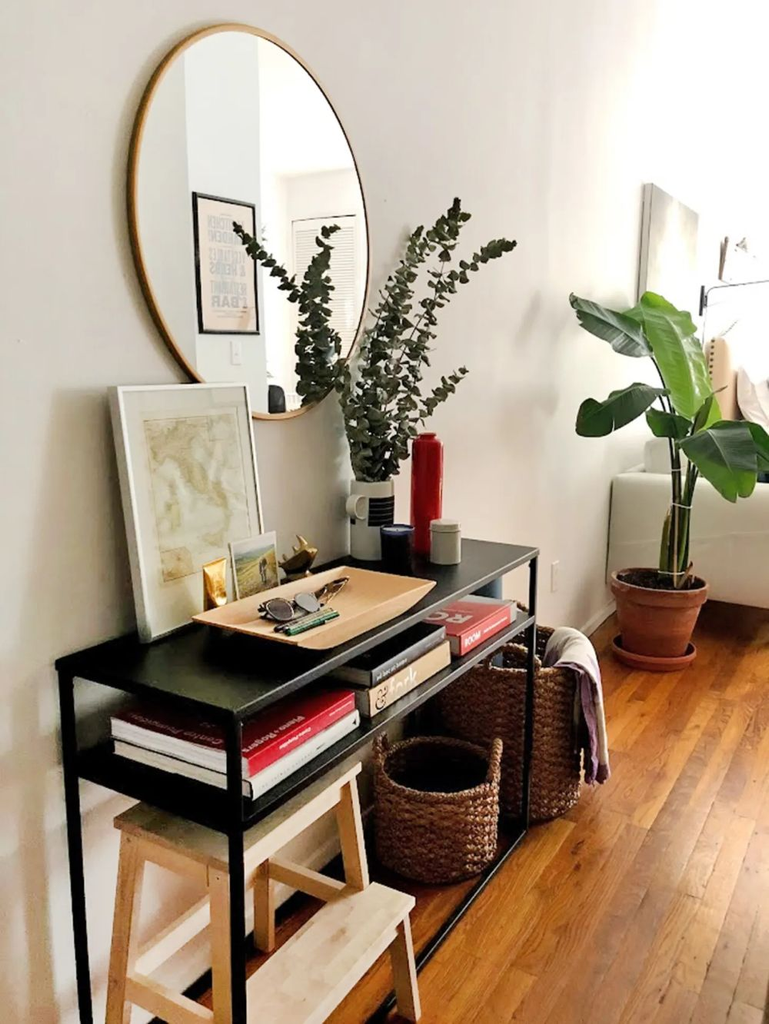
A narrow console table against an entry wall or behind a couch can absorb your keys, mail, and bag storage, and with the right height and a chair pulled up, it moonlights as a desk when you need one.
This is a good option specifically for apartments too small for a dedicated home office corner but where you still occasionally need a real surface to work at.
Workspace and Guest Solutions: The Pieces People Skip and Regret
11. A wall-mounted, fold-down desk (a “murphy desk”)
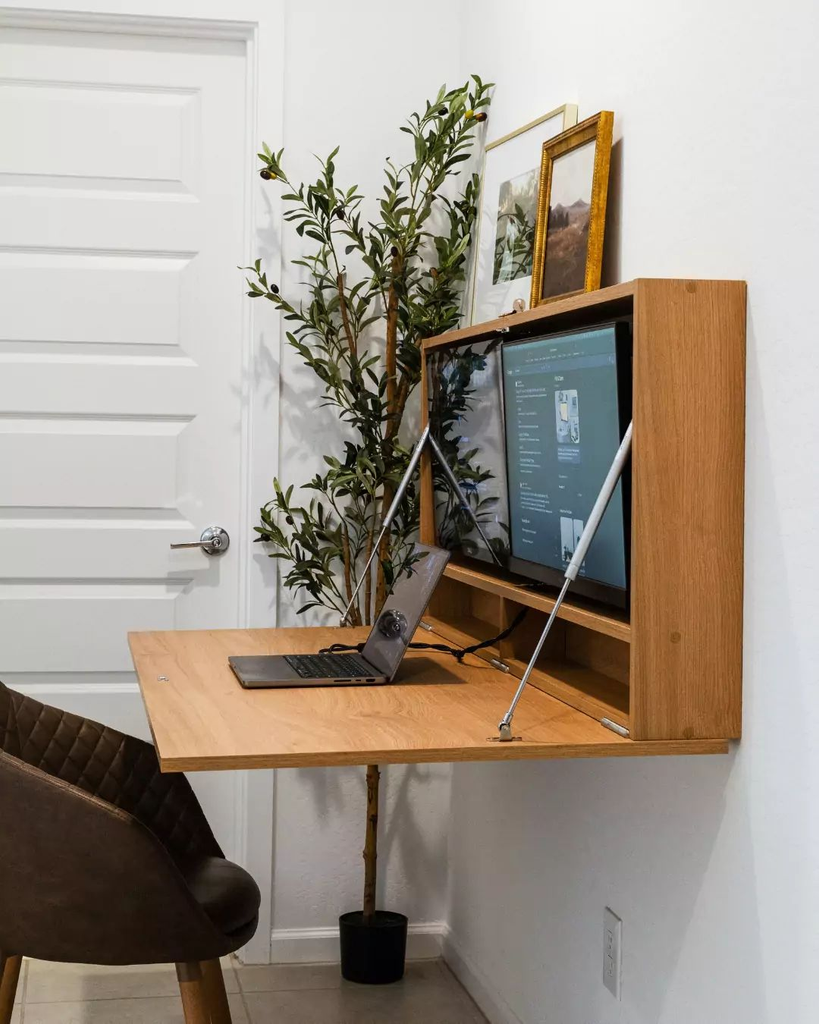
A fold-down desk that mounts to the wall and tucks flat when not in use gives you a real work surface without permanently sacrificing floor space in a studio or a shared bedroom-office.
It’s the closest thing to a “free” home office in an apartment that genuinely doesn’t have room for one.
The honest limitation: most fold-down desks aren’t rated for heavy daily use with a large monitor setup — they’re better suited to a laptop-only workspace or occasional use than a full-time WFH desk that needs to hold a monitor arm and a dock.
Pro tip: Install it at a height that also works as a standing desk if you can — you get a second function out of the same wall-mounted piece without any extra cost or space.
12. A loft bed with a desk or seating built in underneath
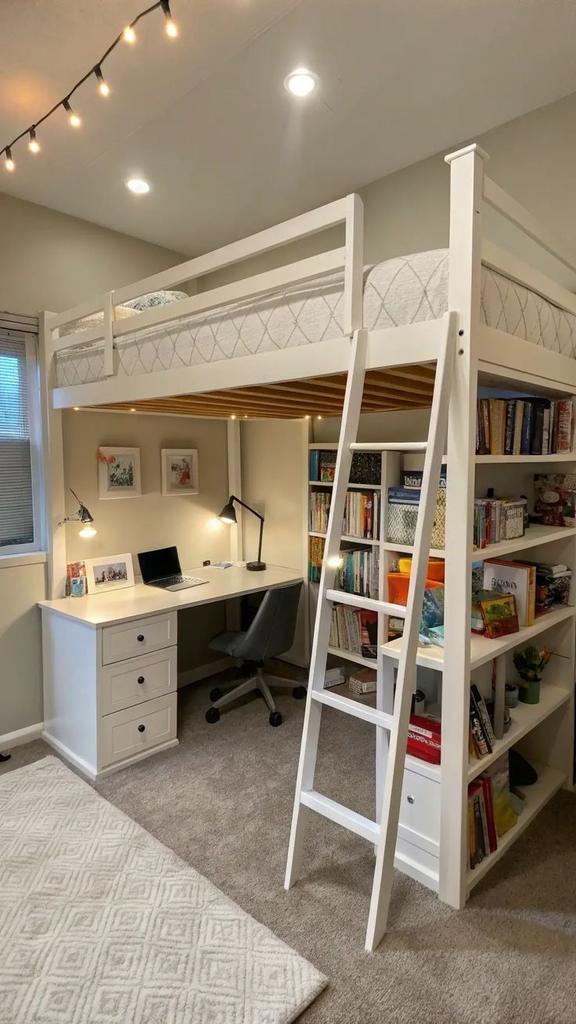
Popular in dorm rooms for a reason, a loft bed frees up the entire footprint under the mattress for a desk, a small couch, or even a compact wardrobe.
It’s most useful for anyone in a genuinely small bedroom, a shared space, or a dorm where floor space is the single scarcest resource you have.
Pro tip: Check the ceiling height clearance above the loft bed itself, not just under it — a lot of people focus on whether they’ll have room to sit up under the bed and forget to check if they’ll have room to sit up comfortably in the bed itself.
13. A modular storage cube system that doubles as a room divider
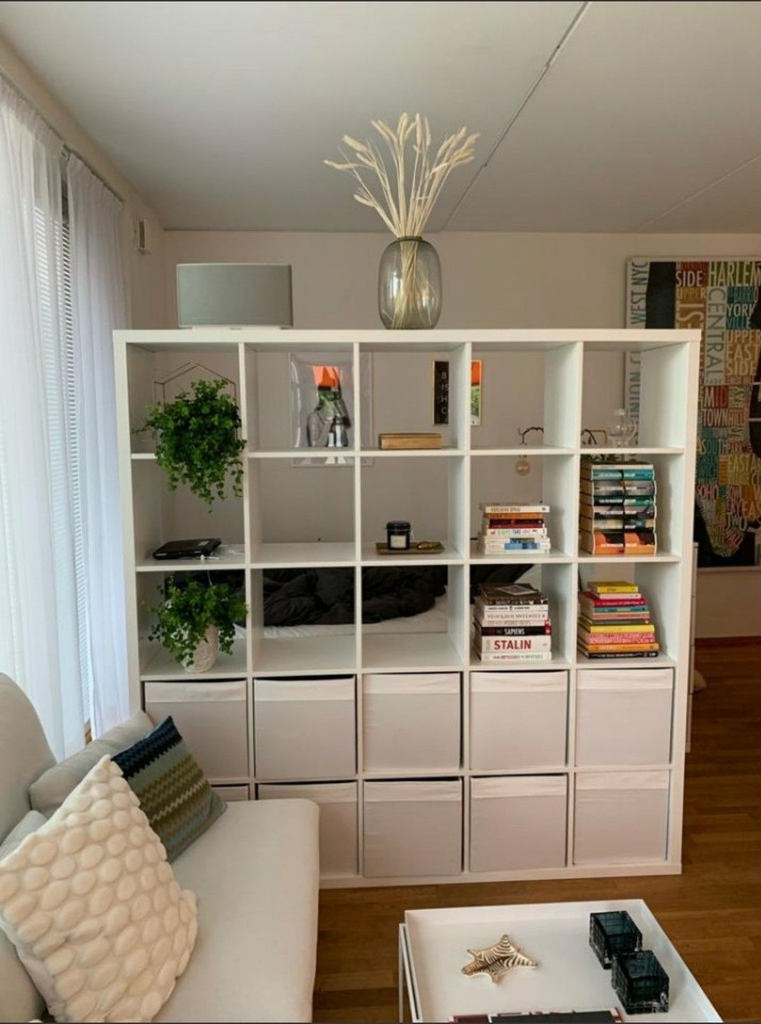
A set of open cube shelving units can store books, bins, and folded clothes while also visually dividing a studio into a “bedroom zone” and a “living zone” without a permanent wall.
This is one of the more underrated pieces on this list because most people think of it purely as storage and miss the zoning function entirely.
Pro tip: Load the bottom cubes with your heaviest items and use the top cubes for lighter, more decorative storage — not just for stability, but because a divider that’s top-heavy visually reads as unstable and cluttered even when it’s perfectly safe.
14. A bar cart that isn’t just for drinks
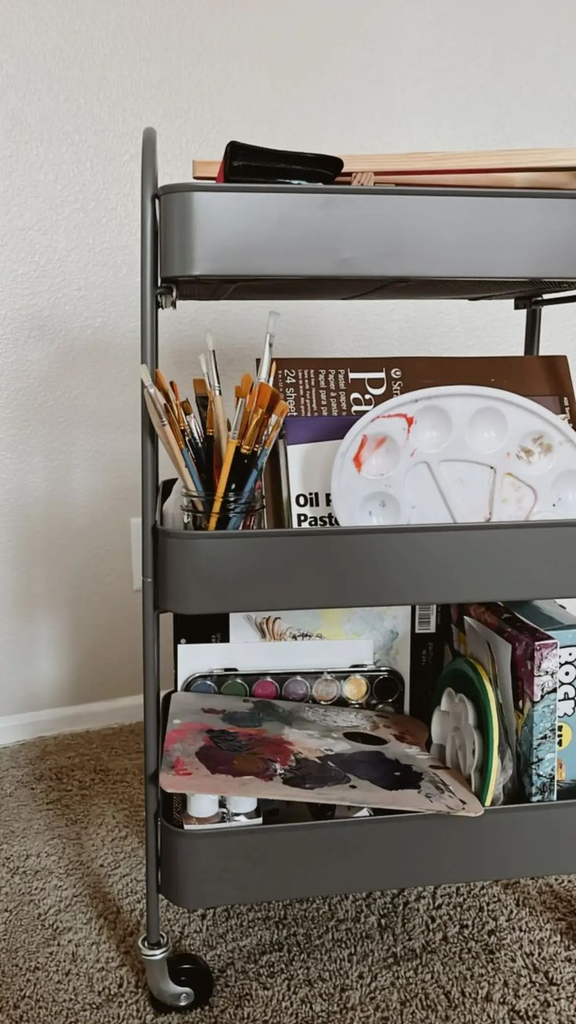
A rolling bar cart is genuinely one of the most flexible pieces you can own in a small apartment, because the “bar” branding undersells how useful mobile, tiered, wheeled storage actually is.
I’ve used mine as a plant stand, a printer station, extra kitchen counter space during holiday cooking, and yes, occasionally an actual bar cart — all in the same six months.
Pro tip: Prioritize a cart with locking wheels over one with fancier materials — the flexibility of this piece depends entirely on being able to move it around without it rolling away mid-task, and that’s the detail most people don’t think to check before buying.
What to Buy First If You’re Starting From Nothing
If you’re furnishing a small apartment from scratch and can only justify two or three multi-functional pieces right away, I’d go storage ottoman first, since it replaces two pieces of furniture you’d otherwise need to buy separately.
After that, either the sleeper sofa or the storage bed frame, depending on whether guests or your own closet space is the bigger pain point in your life right now. Everything else on this list solves a real problem, but those first two or three solve the problems almost everyone in a small apartment actually has, regardless of layout.
The bigger lesson from my own too-many-single-purpose-pieces apartment is that multi-functional furniture isn’t a downgrade from “real” furniture — it’s usually the smarter buy even if you eventually move somewhere bigger.
I still have that storage ottoman five years and two apartments later, and it’s done its two jobs in every single one of them.


Leave a Reply