
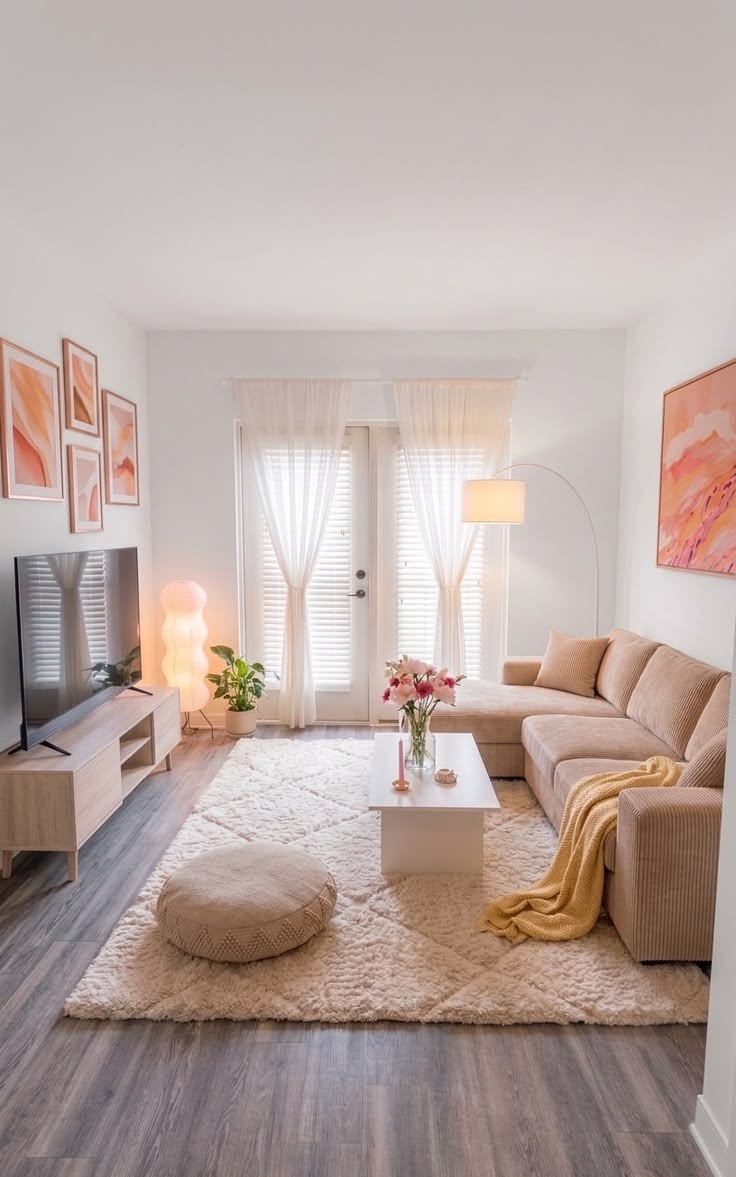
I moved into my first apartment with a full bedroom set from my childhood room, a couch I’d been given for free, and absolutely no plan, and within about three weeks I couldn’t get from my front door to my kitchen without turning sideways.
Nobody sits you down before you sign a lease and explains that small apartment living is genuinely a different skill than living in a house or a big apartment — it’s not just “the same stuff, less of it.” The rules change. What worked in your parents’ house or a roomy college rental actively works against you in 500 square feet.
This is the guide I wish someone had handed me that first week, back when I was googling things at 11pm trying to figure out why my apartment felt so much smaller than the square footage on my lease suggested it should. Small apartment living for beginners isn’t really about tricks or hacks, even though that’s how it gets marketed constantly.
It’s about a handful of actual principles — around furniture, layout, storage, and what you buy first — that, once you understand them, you can apply to literally any small space you ever live in again, not just this one apartment.
I’m going to walk through this the way I’d explain it to a friend who just signed their first lease and has no idea where to start: the mindset shift first, then furniture, then layout, then storage, then budget, and then the mistakes I see beginners make over and over, including the ones I made myself.
The Mindset Shift Nobody Explains
Square footage isn’t the number that matters — usable footage is
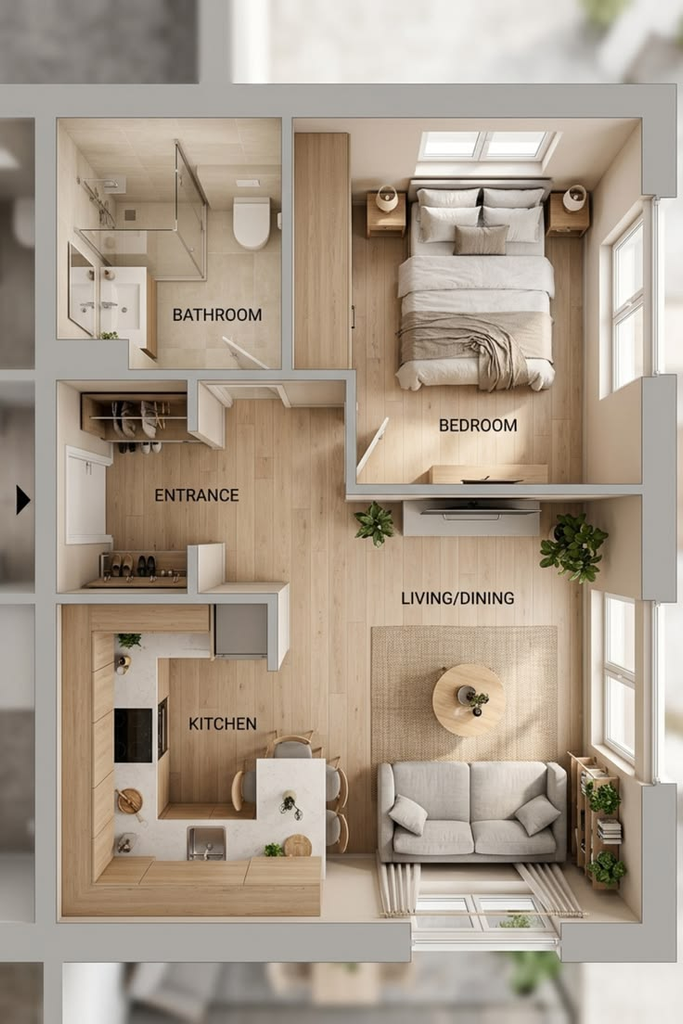
Two apartments can both be listed as 500 square feet and function completely differently, because the real number that matters is how much of that space is actually usable once you subtract awkward corners, a doorway swing, radiators, or a weirdly placed structural column.
I learned this comparing my first apartment, a “500 square foot” studio with a giant closet and an oddly deep entryway, to my friend Nadia’s apartment of the exact same listed size that felt twice as spacious because her layout didn’t waste space on dead corners.
Before you even think about furniture, walk your actual apartment with a tape measure and figure out your real usable footprint — where a door swings, where a radiator or vent eats wall space, where a support column sits. That number, not the one on your lease, is what you’re actually designing around.
Every purchase should answer “what does this replace or solve”
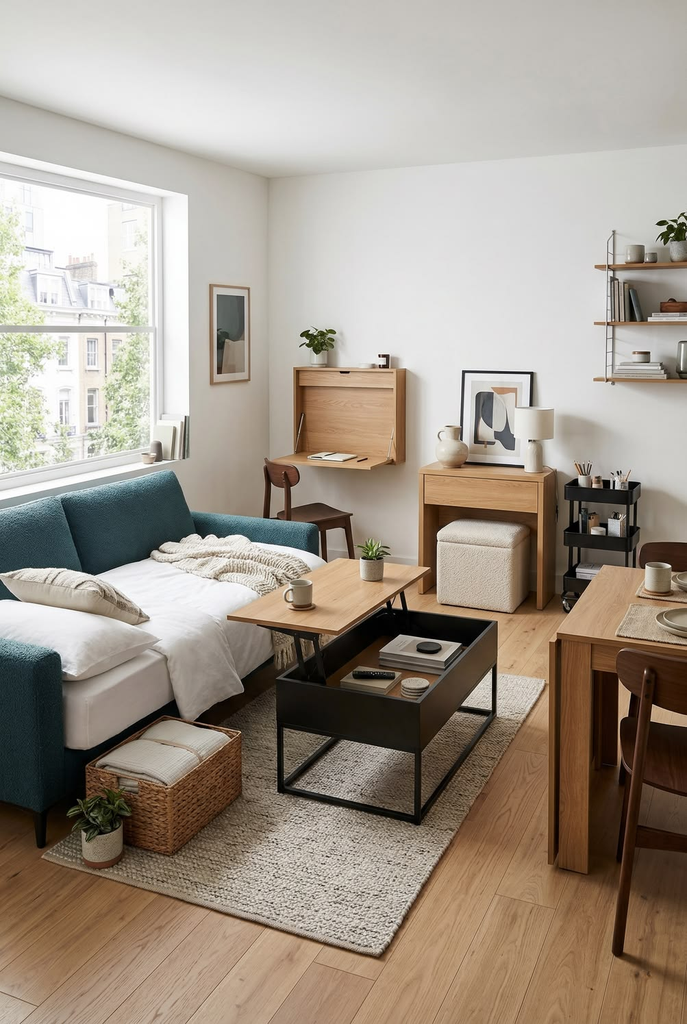
The single biggest shift in how I approach small apartment living now versus my first year on my own is that I don’t buy furniture because it’s cute anymore — I buy it because it answers a specific question.
What is this replacing? What problem is it solving that nothing else in my apartment currently solves? If I can’t answer that, I don’t buy it, because in a small space, an item that doesn’t earn its footprint is actively working against you, not just neutral.
Pro tip: Before buying anything for a new apartment, live in it empty-ish for at least a week or two if you can manage it. You’ll notice the actual problems — where you keep tripping, where light is bad, where you have nowhere to put your keys — faster than you’d guess from a floor plan alone, and it saves you from buying furniture that solves a problem you don’t actually have.
Furniture Rules for a Small Apartment
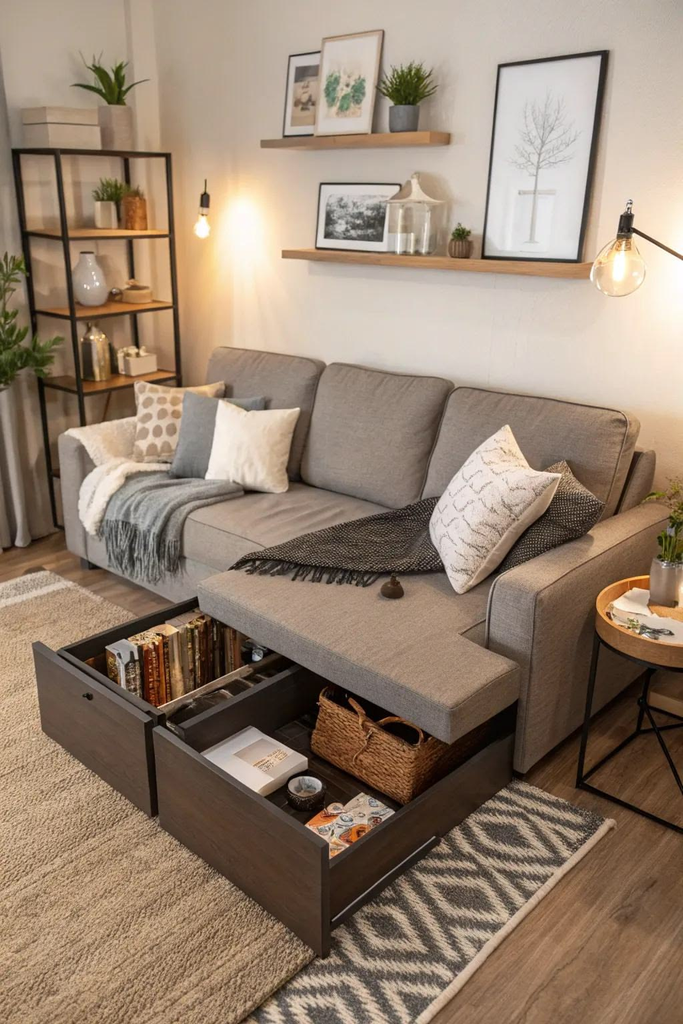
Buy for scale, not just for size
A “small” loveseat can still be wrong for a small apartment if its arms, legs, or back height are chunky and heavy-looking, because visual weight matters as much as physical footprint.
A slim-profile piece with exposed legs reads as smaller and lighter in a room than a boxy piece with the exact same square footage of floor space, because your eye registers bulk, not just dimensions.
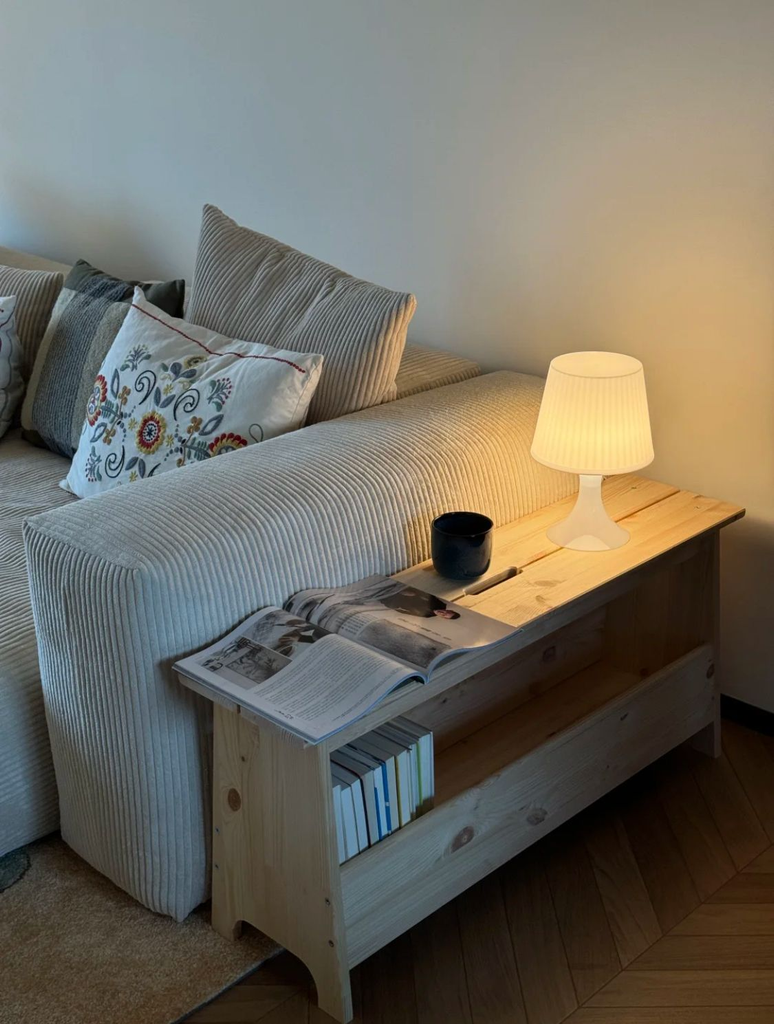
Pro tip: Look at the leg style before anything else when furniture shopping for a small space — exposed, tapered legs let light and floor show through underneath, which makes a room read as more open than the same piece sitting on a solid base or skirt.
Multi-functional pieces earn double the footprint
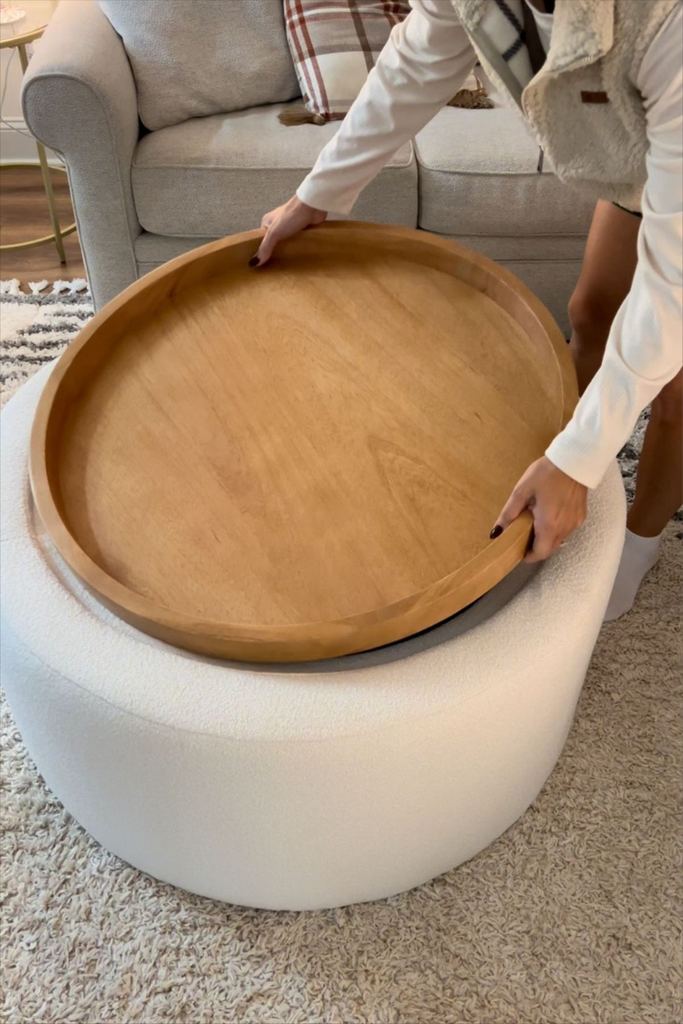
In a small apartment, furniture that does two jobs — a storage ottoman that’s also a coffee table, a daybed that’s also your couch — is almost always a better buy than two single-purpose pieces, even if the multi-functional version costs a bit more upfront.
This is one of the areas where beginners overspend without realizing it, buying a coffee table and a separate storage bench when one storage ottoman would’ve done both jobs in half the floor space.
Measure everything before you fall in love with it
This sounds obvious and it is still the mistake I see most often. A piece of furniture that looks reasonably sized in a big-box store showroom, which has 12-foot ceilings and wide-open floor plans specifically designed to make furniture look smaller than it is, can be shockingly oversized once it’s actually in your apartment.
My friend Colin bought a sectional that looked totally normal in the store and had to have it partially disassembled and re-angled just to get it through his apartment door, and even then it ate almost his entire living room.
| Furniture Decision | What to Measure | Common Mistake |
|---|---|---|
| Sofa/sectional | Doorway width, hallway turns, actual room depth | Looks small in a big showroom, overwhelms a small room |
| Dining table | Clearance for chairs to pull out, walking path around it | Buying based on seat count instead of actual room fit |
| Bed frame | Clearance to open closet/dresser drawers nearby | Frame with a footboard eating hallway space |
| Bookshelf | Ceiling height for a tall unit, wall width for a wide one | Going wide instead of vertical, wasting floor space |
| Coffee table | Height relative to your sofa cushions, walking clearance | Table too tall or too bulky at eye level while seated |
Layout Principles That Actually Change How a Room Feels
Don’t push everything against the walls
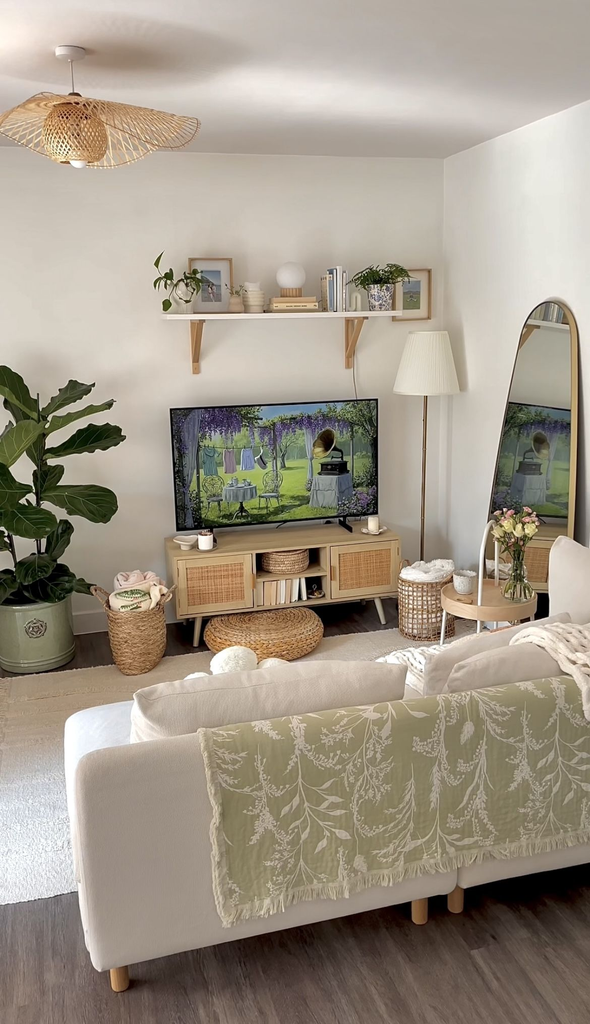
The instinct in a small apartment is to line every piece of furniture up against a wall to “open up the middle,” and it usually backfires, creating a moat of unused space in the center of the room that doesn’t actually make the room feel bigger, just emptier.
Pulling your main seating into a slightly more clustered arrangement, even if it technically uses a few inches of what would’ve been open floor, tends to make a small room feel more intentional and, paradoxically, more spacious.
Define zones even without walls
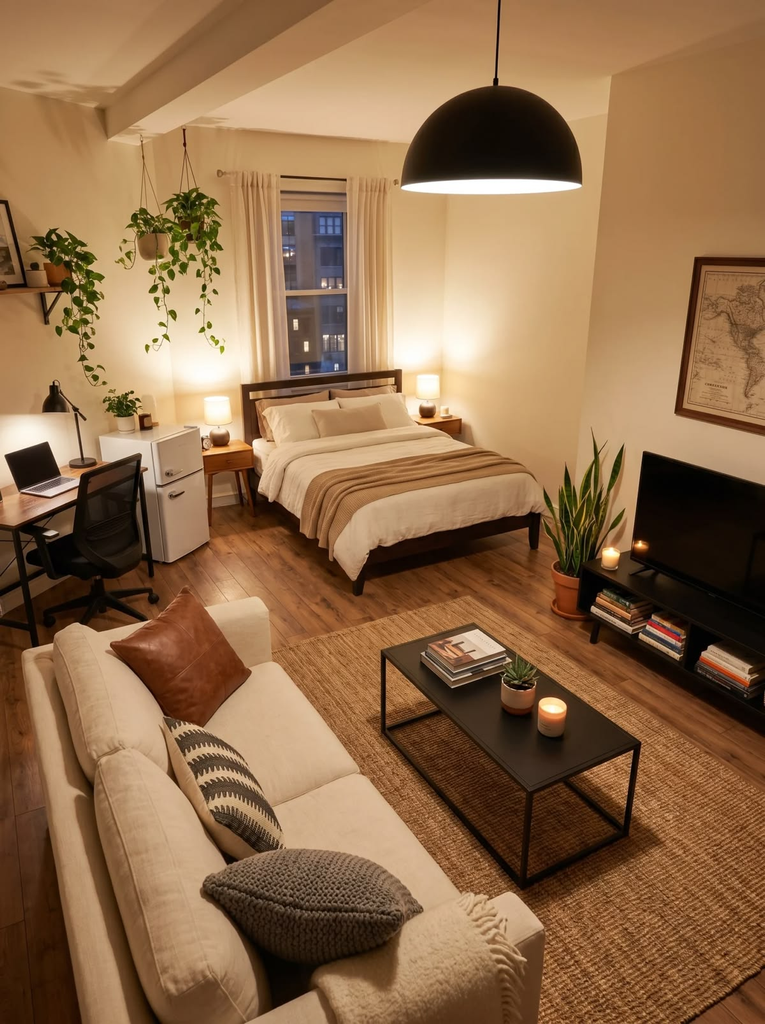
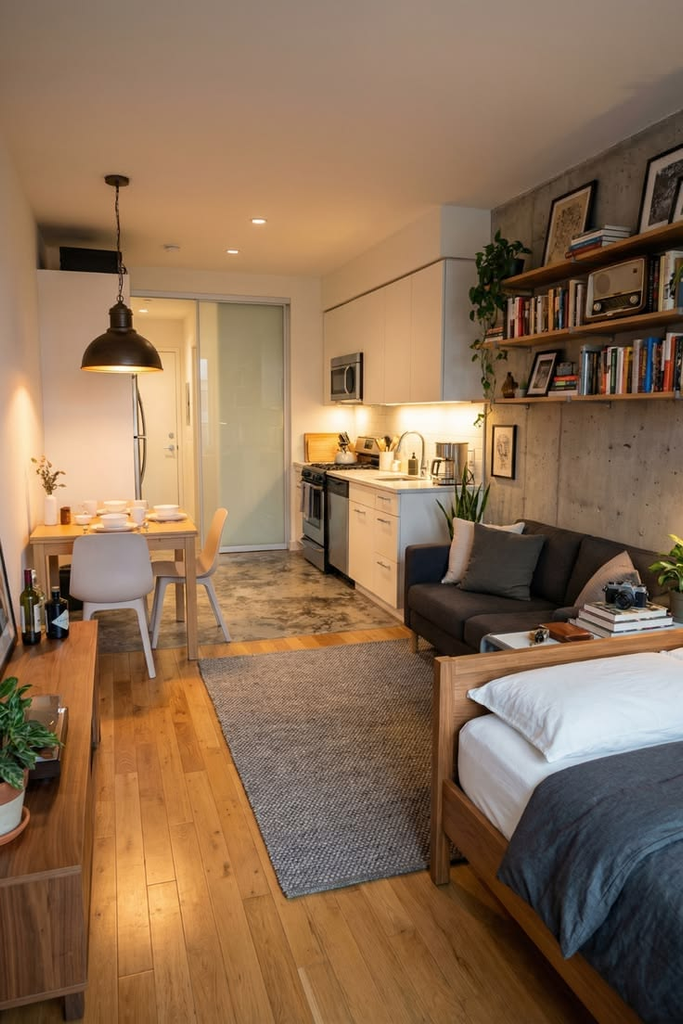
If your apartment is a studio or has any multi-purpose room, using a rug, a bookshelf, or even just a change in lighting to visually separate a “sleeping zone” from a “living zone” makes the space feel more organized and larger than treating it as one undivided room.
Your brain reads a zoned space as having more going on and more square footage than an identical space with no visual breaks at all.
Pro tip: A rug is the cheapest zoning tool you have. Put one under your seating area and leave the rest of the floor bare, or use a different rug entirely for a “bedroom” zone within a studio — the color and texture change alone is often enough to signal a boundary without a single piece of furniture moved.
Light changes how big a room feels more than furniture does
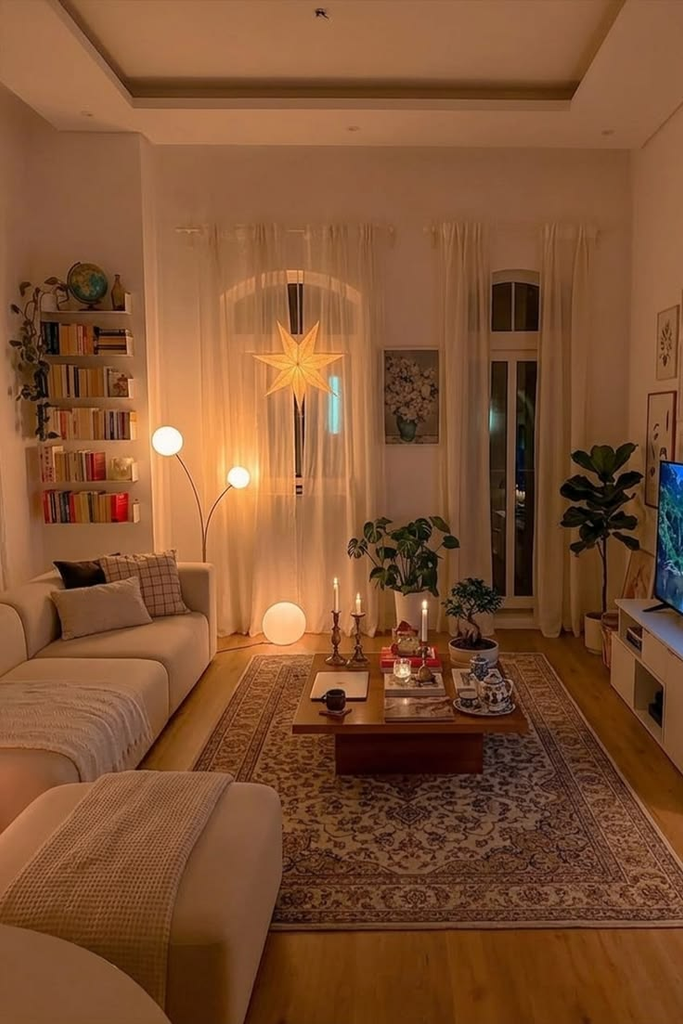
A dim room with perfect furniture placement will still feel smaller than a well-lit room with mediocre furniture placement, because shadowed corners visually disappear and your brain can’t map the actual size of a space it can’t fully see.
Beginners consistently underspend on lighting relative to furniture, when lighting is often the higher-impact, lower-cost fix.
Storage: The Problem Nobody Budgets For Until It’s Too Late
Vertical storage is your most underused resource
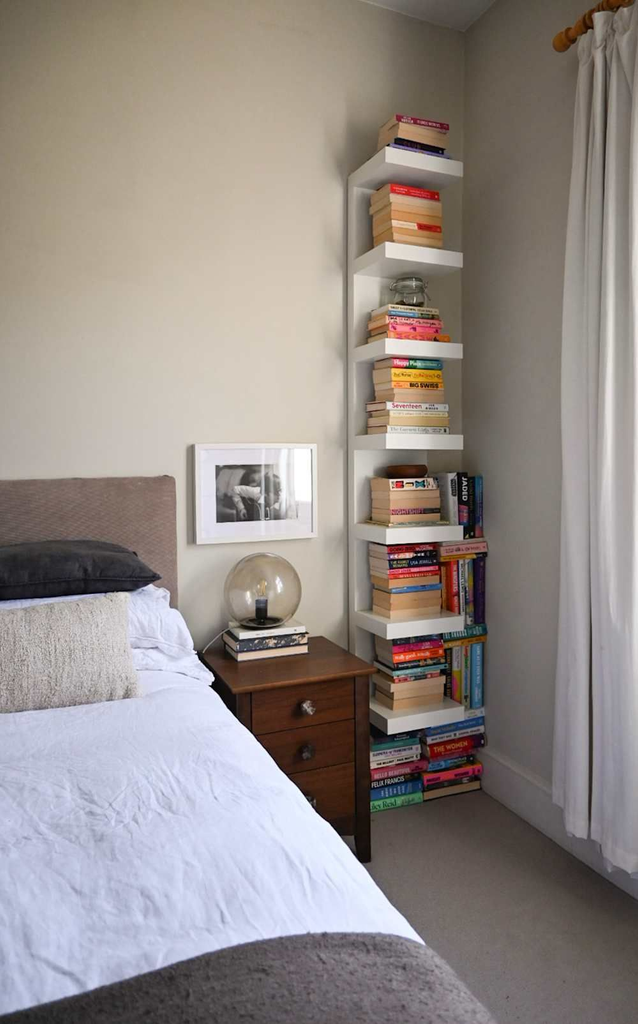
Almost every small apartment has more usable wall height than usable floor space, and beginners consistently default to wide, low storage furniture because it’s what’s easy to find and what looks “normal,” when a tall, narrow option holding the same capacity would free up meaningfully more floor space.
This is one of the single easiest mental shifts that changes how a small apartment functions.
Under-bed and over-cabinet space are not optional extras — plan for them from day one
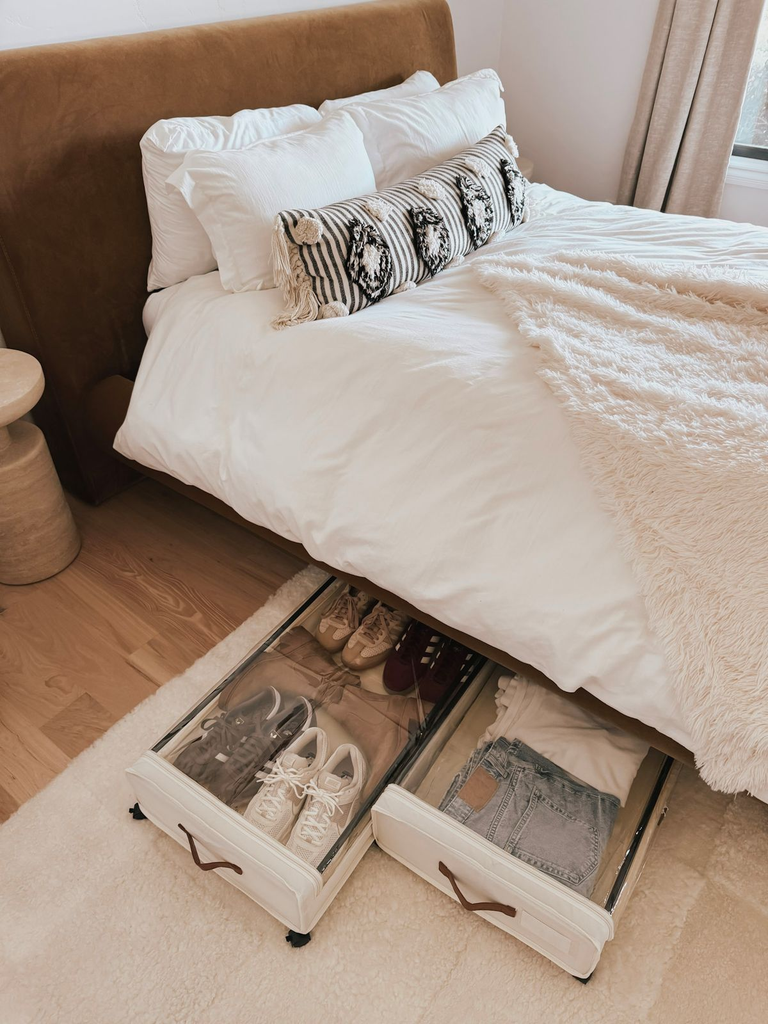
The space under your bed and above your kitchen cabinets is often the single largest chunk of unused storage in a small apartment, and it’s genuinely surprising how much beginners ignore it simply because it’s not at eye level and doesn’t get considered during the initial furniture-shopping phase.
Bins, slim rolling storage, or a bed frame with built-in drawers can turn that dead zone into a meaningful chunk of your total storage capacity.
Pro tip: Measure your actual bed clearance before buying any under-bed storage — platform beds especially can have far less clearance than people assume, and it’s a frustrating discovery after you’ve already bought bins that don’t fit.
A junk drawer or catch-all spot is not a failure — it’s a feature
Beginners often feel like needing a designated spot for loose, unsorted stuff — mail, chargers, random small items — means they’re bad at organizing, when actually a small, contained catch-all spot is what keeps clutter from spreading across every other surface in a small apartment.
The goal isn’t zero clutter anywhere; it’s clutter that’s contained to one drawer or bin instead of scattered across your one counter, your one table, and your one entryway.
Budget: What to Actually Spend Money On First
The highest-ROI purchases for a first small apartment
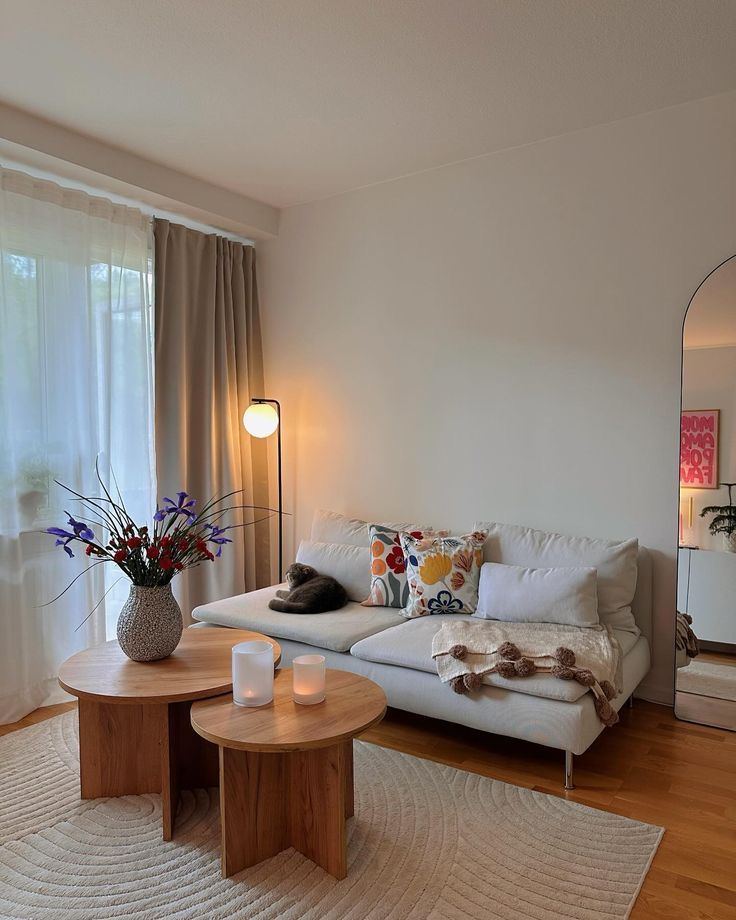
If you’re furnishing a small apartment for the first time on a real budget, the order I’d prioritize spending in is: a properly sized mattress and bed setup first, since sleep quality affects literally everything else about how you function; then a couch or seating that’s actually comfortable, since you’ll use it daily; then lighting, since it’s the cheapest fix with the biggest visual impact; and storage solutions last, since you can add these incrementally as you figure out where your actual clutter problems are, rather than guessing upfront.
Don’t buy your “forever” furniture in your first apartment
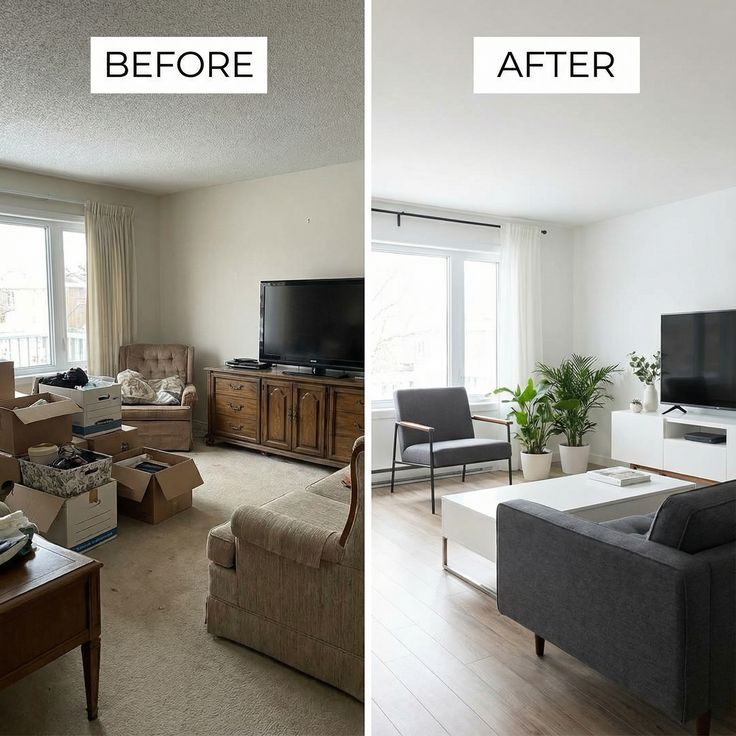
This is advice I wish someone had given me directly: your first small apartment is not the place to invest in expensive, hard-to-move furniture you plan to keep for a decade, because you don’t yet know your own patterns, your next apartment’s layout, or even really what you like once you’re the one making every decision.
Buy solid, decent-quality, but replaceable furniture for your first year or two, and save the real investment pieces for once you’ve lived in a couple of small spaces and know what you actually use versus what just seemed like a good idea in a store.
Pro tip: Secondhand marketplaces are genuinely the best place to furnish a first small apartment, not just for cost but because you can often find higher-quality furniture than you’d get new at the same price point, from people who are upgrading and just want it gone quickly.
The Mistakes Almost Every Beginner Makes
Filling the apartment too fast
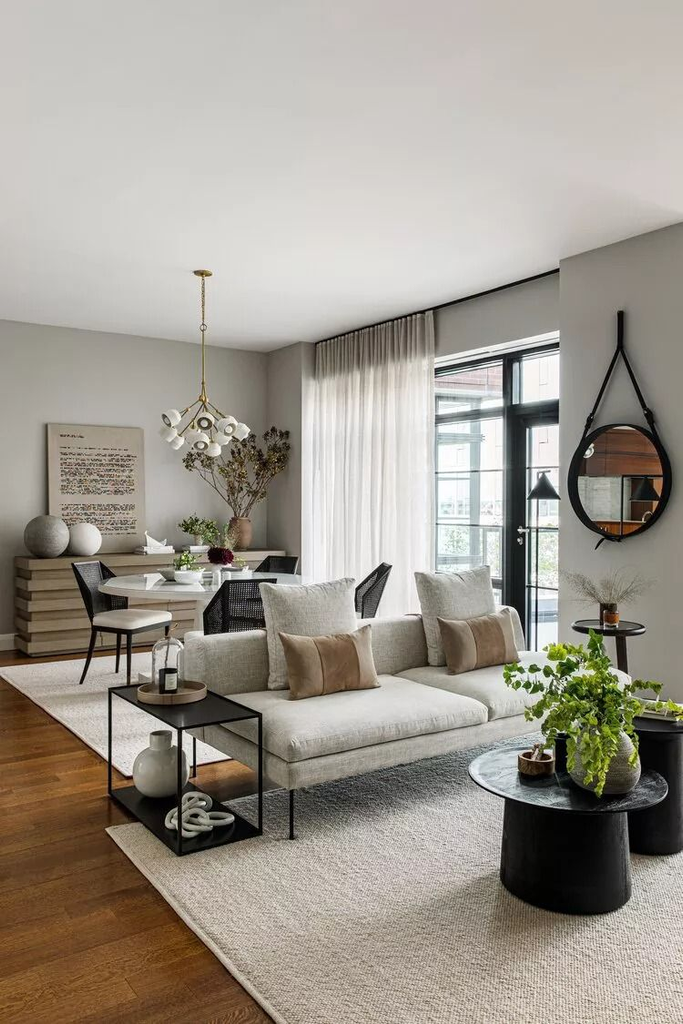
There’s a strong urge to have every room “done” within the first month of moving in, and it leads to buying decor and furniture reactively just to fill visual gaps, rather than living in the space long enough to know what it actually needs.
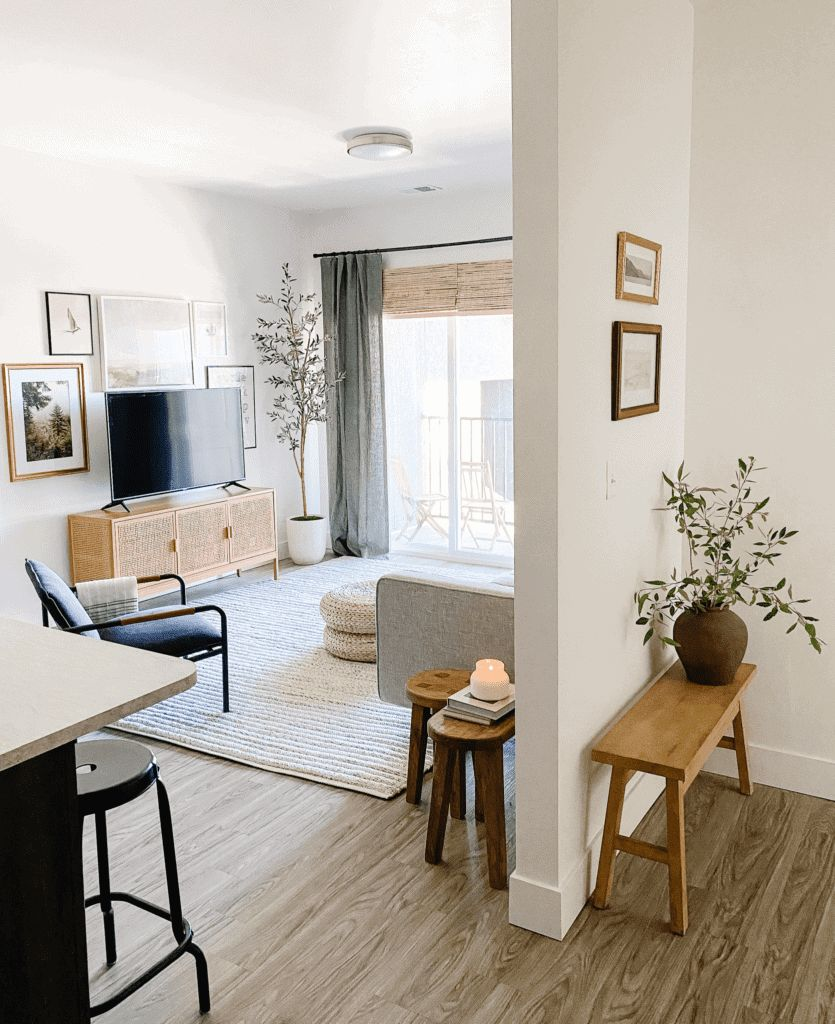
An apartment that takes six months to fully furnish, based on real observed needs, almost always ends up more functional than one that was fully decorated in the first week.
Ignoring vertical sightlines
Beginners tend to think about a room at eye level and forget to consider how a space reads from floor to ceiling — tall furniture crowding a low ceiling, or short furniture leaving a huge amount of visually “empty” wall space above it, both make a small room feel more cramped than a layout that considers the full vertical sightline.
Treating every square foot the same
Not every part of a small apartment needs the same level of “design” attention.
The entryway you pass through in three seconds doesn’t need the same investment as the spot you sit in for four hours a night, and beginners often spread their budget and effort evenly across the whole apartment instead of concentrating it where they’ll actually notice and benefit from it daily.
Not asking what the room needs to physically clear
Doors need to open. Drawers need room to slide out. Closet doors need swing clearance.
Beginners measure a piece of furniture against a wall and forget to check whether anything near it — a door, another piece of furniture, a walking path — needs its own clearance that the new piece might block.
This is the single most common reason people end up returning or reselling furniture within the first few months.
What I’d Tell Myself on Move-In Day
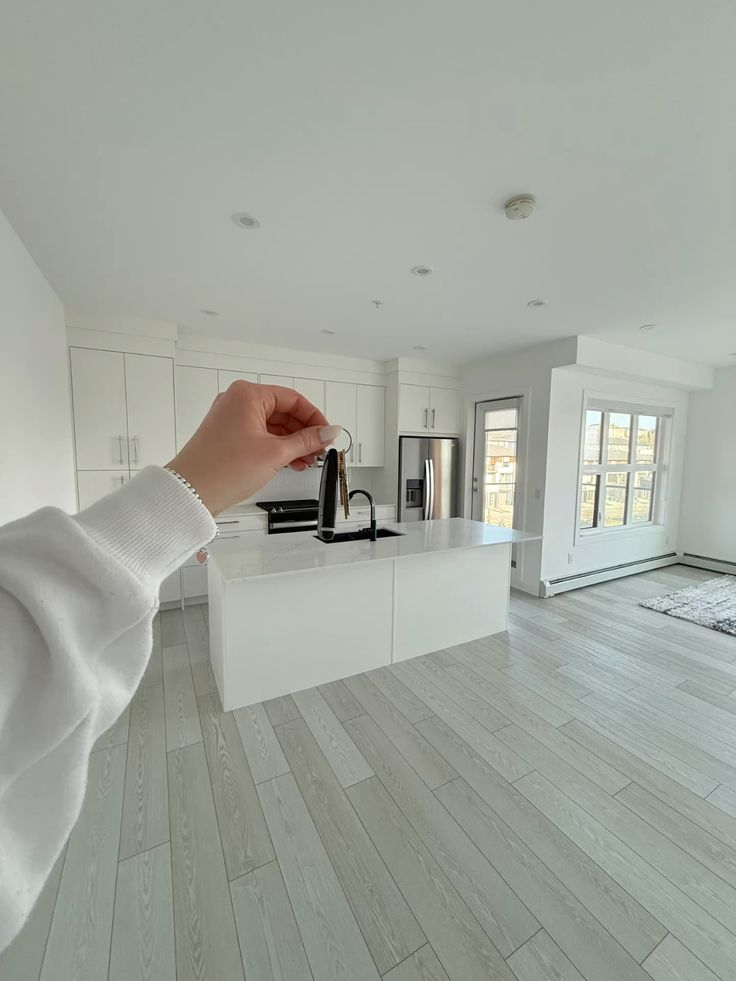
If I could go back and redo my first small apartment, I’d skip almost everything I actually bought in that first month and instead spend two weeks just living in the space, paying attention to where I actually tripped, where light was bad, and what I genuinely reached for daily versus what just seemed necessary on paper.
Small apartment living isn’t a problem you solve once with the right furniture haul — it’s a set of principles about scale, light, zoning, and restraint that you get better at applying every time you move, including into your very first place.
The apartment that finally felt right wasn’t the one where I’d spent the most money. It was the one where every single thing in it was there because it was solving an actual problem I had, and nothing was there just because it looked good in a photo somewhere else.


Leave a Reply