
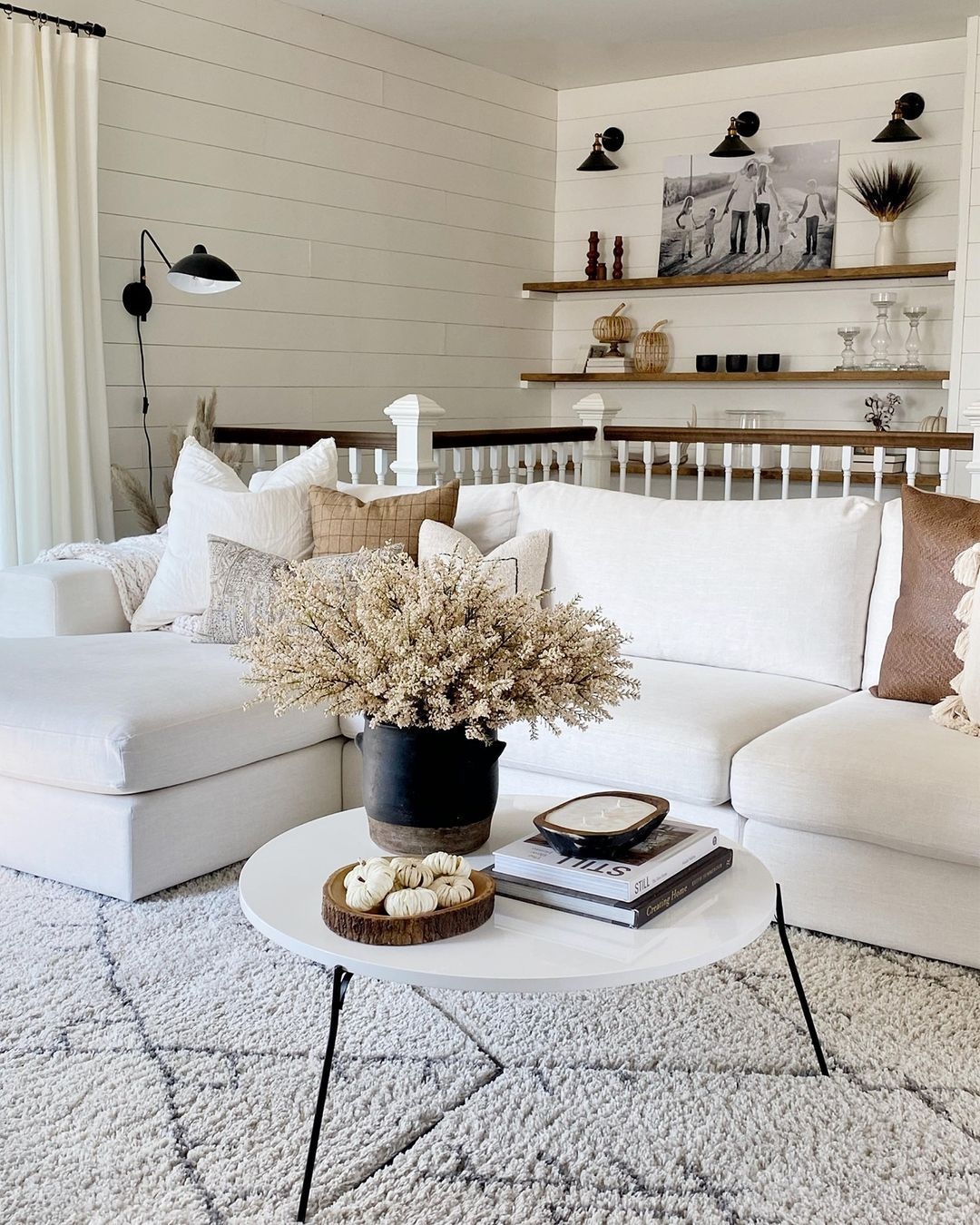
I moved into my first apartment with a mattress on the floor, one folding chair, and a genuine belief that I’d “figure out decorating” within the first couple weekends.
Four months later I still had the folding chair, plus a random assortment of stuff I’d bought because it looked good online, none of which actually worked together, and a living room that somehow felt both cluttered and empty at the same time.
I didn’t lack taste, exactly — I lacked a starting point, which is a completely different problem, and nobody had ever actually told me what order to do things in.
Learning how to start decorating a small apartment with no experience is mostly a sequencing problem, not a taste problem. Almost everyone who’s decorated a place before has some version of an internal order of operations they follow without thinking about it — what to figure out first, what to buy first, what to hold off on.
If you’ve never done it, you’re missing that internal checklist entirely, which is why the process can feel so much more overwhelming than it should, even for a genuinely small space.
This is the order I wish someone had actually walked me through before that first apartment, built from what went wrong for me and from watching a handful of friends go through the exact same thing since. I’m not assuming you know anything going in — if you’ve never decorated a room before in your life, this should still make sense.
Step 1: Live in the Empty Space for a Week Before You Buy Anything
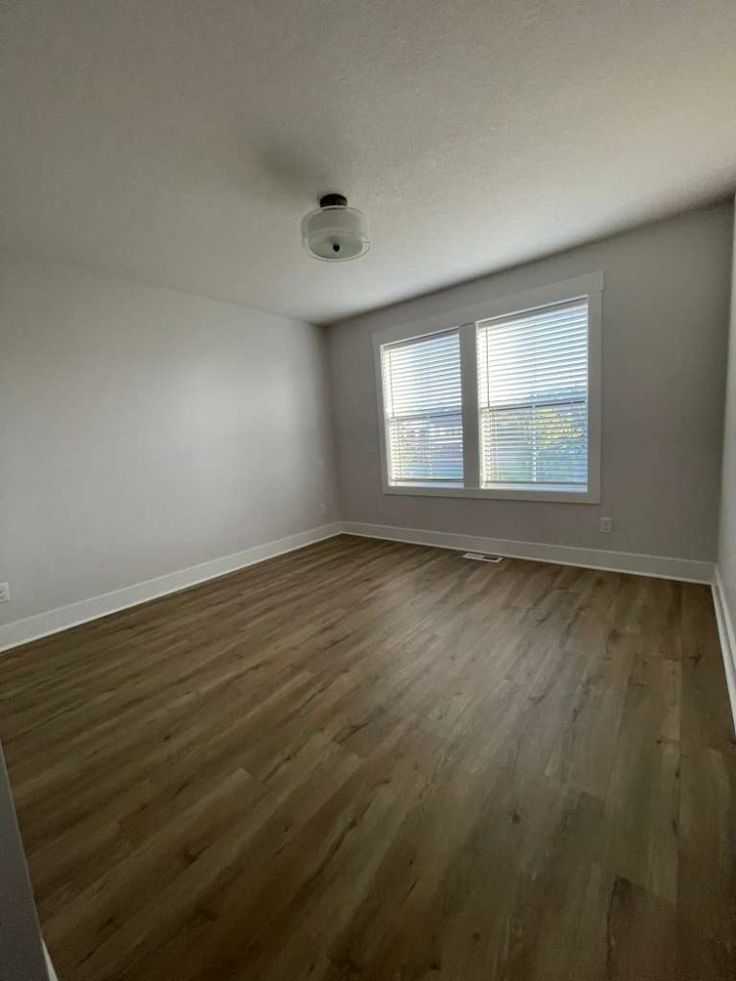
This is the step almost everyone skips, and it’s the one I’d go back and fix first if I could redo my own first apartment. Before you buy a single piece of furniture or decor, spend at least a few days — ideally a full week — just living in the empty or minimally furnished space and paying attention to how you actually move through it.
Where do you naturally drop your keys. Where do you end up sitting to eat, even without a table there yet. Which spot gets the most natural light in the afternoon, which matters more than you’d think for where you’ll want to read or work.
Decorating a small apartment with no experience usually goes wrong at this exact step, because the instinct is to fill the space as fast as possible so it stops feeling unfinished. But buying based on how you assume you’ll live, instead of how you actually move through the room once you’re in it, is how you end up with furniture in the wrong spot within the first month.
Pro tip: Take photos of the empty room from a few different angles during that first week, at different times of day — you’ll notice things in photos, like where the shadows fall or how a doorway actually swings, that you stop consciously seeing once you’re used to walking through the space every day.
Step 2: Sort Out Function Before You Think About Aesthetic at All
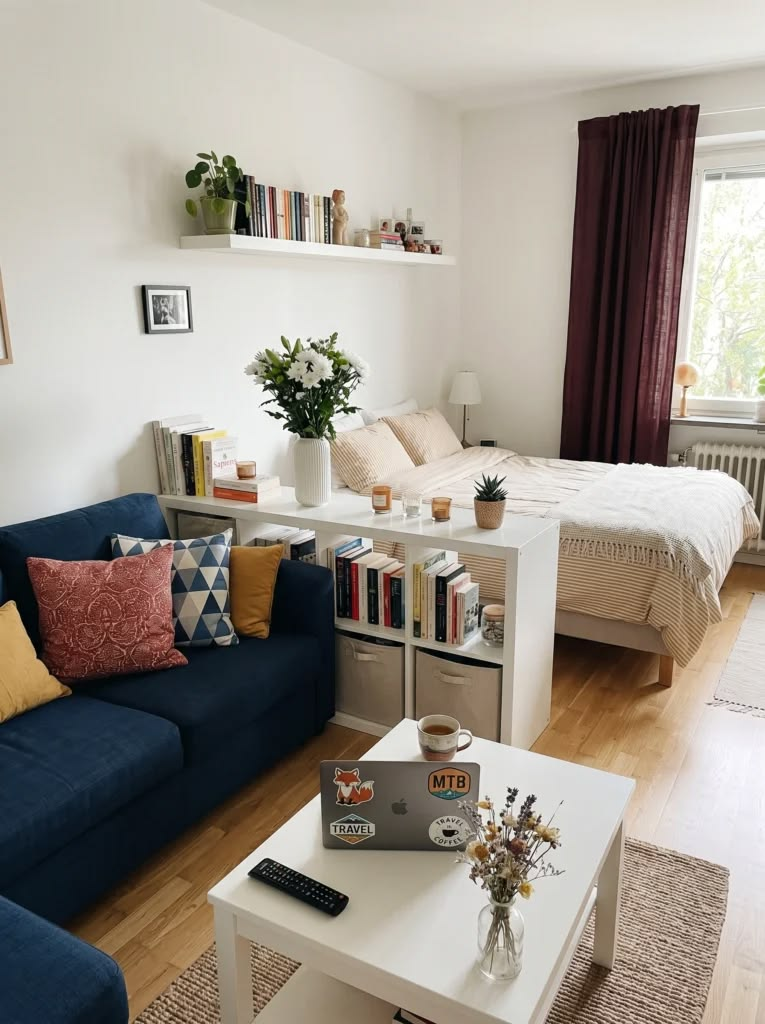
Once you’ve got a feel for how you actually use the space, the next step is listing out what the room genuinely needs to do functionally, completely separate from what you want it to look like.
A living room might need to double as a workspace, a dining area, and somewhere guests occasionally sleep, all in the same 200 square feet. Figuring that list out before you open a single Pinterest board keeps you from buying something gorgeous that has no actual job in your life.
This is the step where a lot of first-time decorators, myself included, get the order backwards. I found a specific aesthetic I liked before I’d figured out that I actually needed my “living room” to also function as a home office three days a week, and I ended up buying decor for a room that didn’t yet have anywhere to actually put a laptop.
Pro tip: Write your function list down as plainly as possible — “eat dinner here,” “work from home two days a week,” “somewhere for a friend to crash occasionally” — rather than skipping straight to a style word like “cozy” or “minimalist,” which describes a look but tells you nothing about what the room needs to actually do.
Step 3: Set a Rough Budget Split Before You Buy Your First Piece
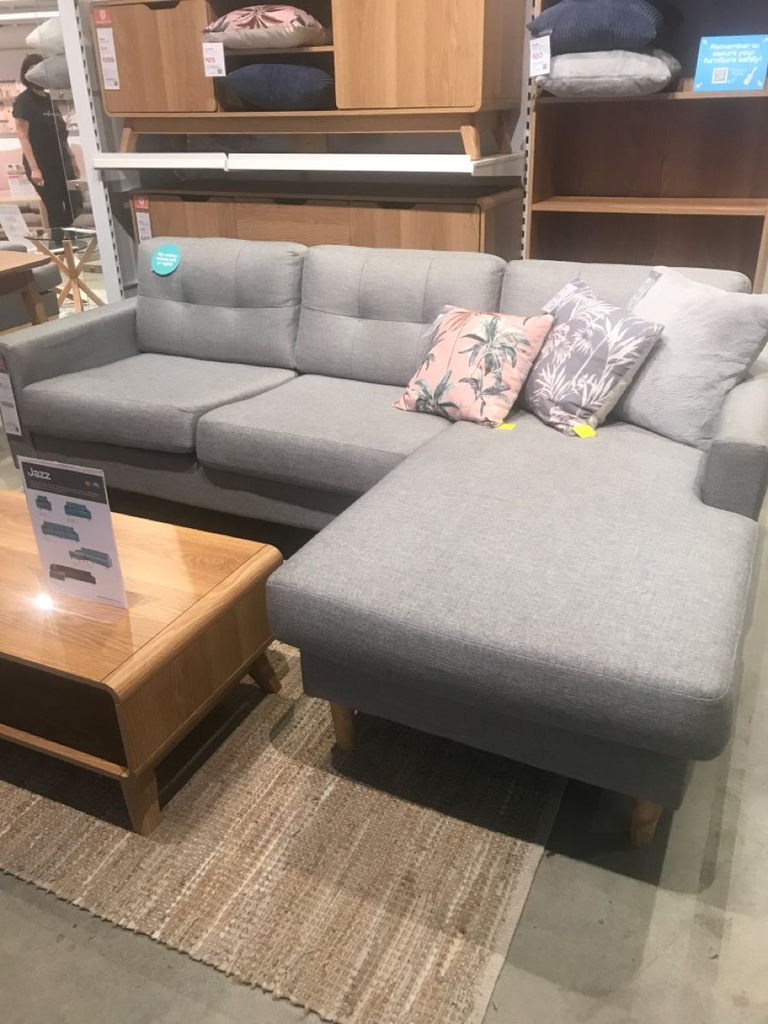
Before shopping starts, it helps to have even a loose sense of where your money is going to go, because small apartments have a specific budgeting trap: it’s easy to spend most of your budget on decor and small accessories because they’re cheap and satisfying to buy one at a time, and then run short on the bigger functional pieces that actually needed the money more.
A rough split that’s worked for me and for friends I’ve talked through this with is putting the majority of your budget toward the one or two big anchor pieces — a bed, a sofa — and treating decor, art, and small accessories as the smaller remaining slice, even though those are the purchases that feel the most fun and immediate.
| Budget Category | Rough Share of Total | Why |
|---|---|---|
| Anchor furniture (bed, sofa, dining table) | 50-60% | These are used daily and hardest to replace later |
| Storage and organization | 15-20% | Solves function first, prevents clutter before it starts |
| Lighting | 10-15% | Often skipped, disproportionately changes how a room feels |
| Decor, art, small accessories | 15-20% | Add last, and gradually, once the rest is settled |
Pro tip: If your budget is genuinely tight, it’s better to buy your anchor pieces secondhand in good condition than to buy new decor and settle for a lower-quality anchor piece — the sofa and bed get used every single day, while a piece of wall art gets glanced at.
Step 4: Measure the Room Before You Buy a Single Piece of Furniture
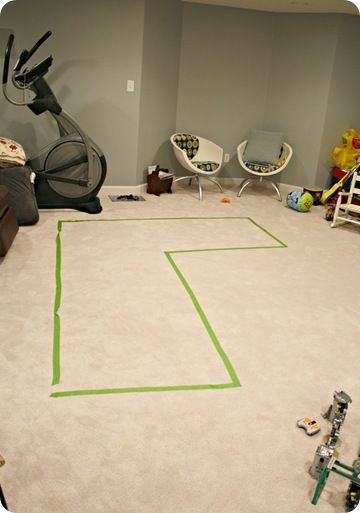
This step gets skipped constantly by first-time decorators because it feels like a formality rather than a necessary step, and it’s the source of more furniture-return headaches than almost anything else.
Measure your actual room — width, length, doorway width, and importantly, ceiling height if you’re considering anything tall — before you fall in love with a specific piece online.
Tape out furniture footprints on your actual floor with painter’s tape before buying anything you’re not sure about. It takes ten minutes and it’s the single easiest way to avoid discovering, after delivery, that a couch that looked “medium” online is actually going to block your walking path entirely.
Pro tip: Measure your stairwell, elevator, and doorways too, not just the room — a piece that fits the room perfectly does you no good if it can’t physically get through your front door, which is a more common problem than people expect in older apartment buildings.
Step 5: Buy Your Anchor Pieces First, and Only Your Anchor Pieces
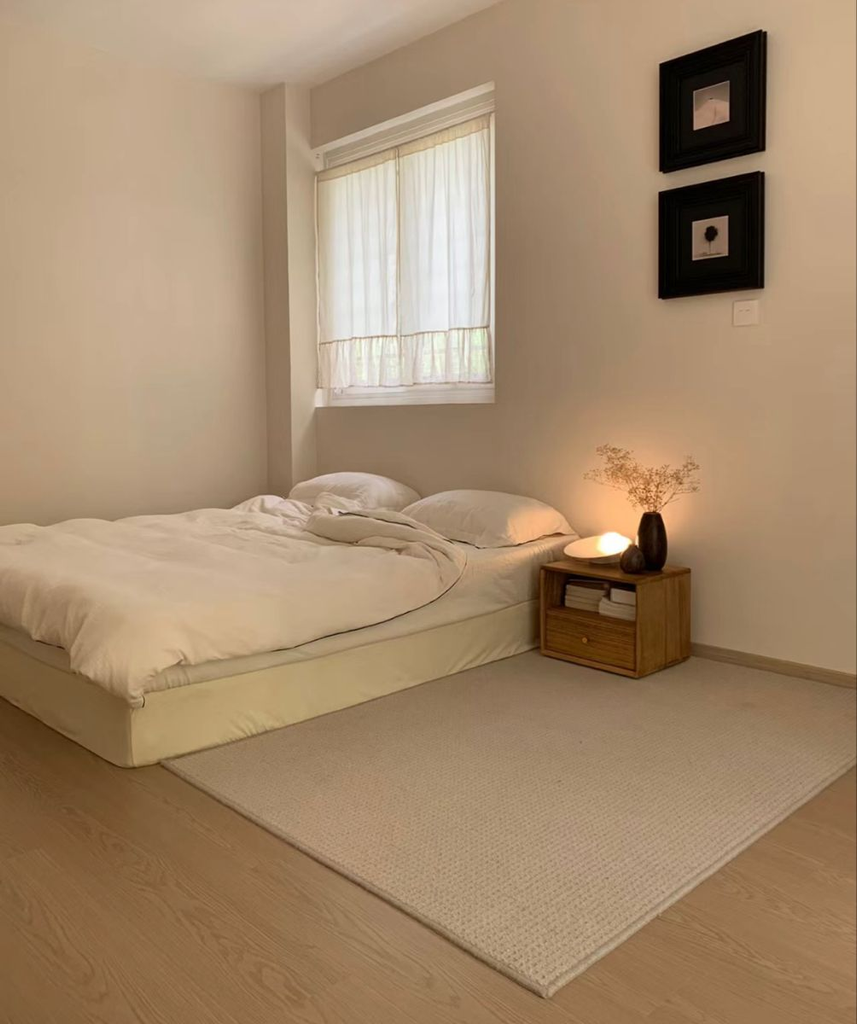
Once you know your budget split and your actual measurements, the next step is buying the one or two largest functional pieces the room needs — your bed, your sofa, your dining table if you have room for one — and stopping there for now.
Resist buying decor, art, or small accessories at this stage, even if you’re in the store and see something cute, because it’s much easier to style a room around anchor pieces you already own than to buy decor first and then discover it doesn’t work with the furniture you pick later.
This is genuinely the hardest step to follow through on if you have no decorating experience, because an empty room with just a bed and a couch in it can feel unfinished and a little sad, and the instinct to fill that feeling with a fast decor purchase is strong. Hold off anyway — the next two steps exist specifically to fix that “unfinished” feeling in a more durable way than a quick decor buy would.
Step 6: Add Your Lighting Layer Before Any Decorative Styling
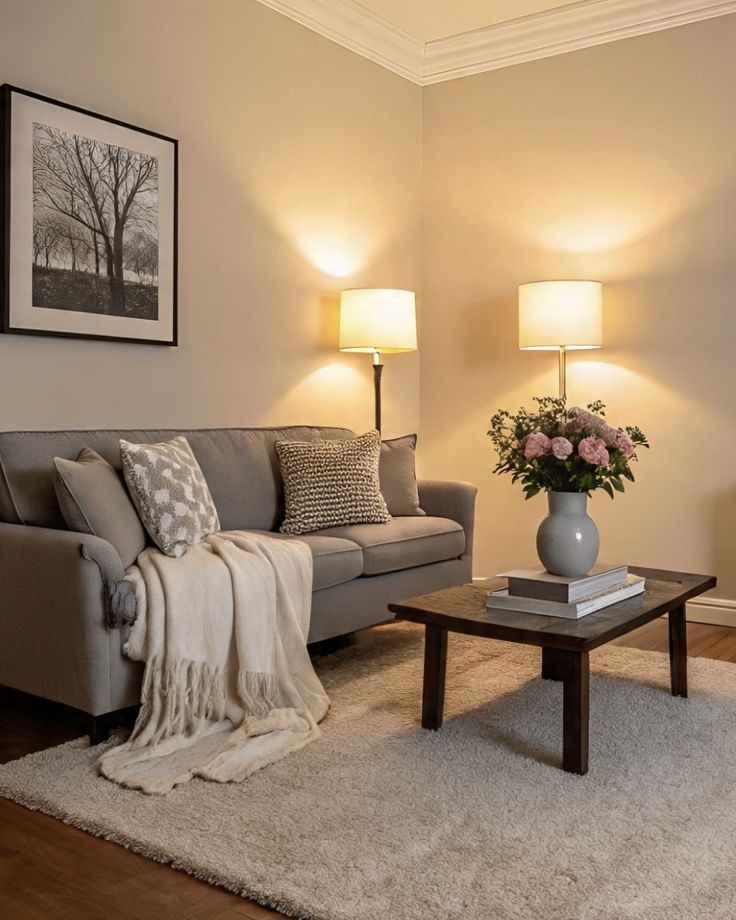
With your anchor furniture in place, lighting is the next thing to sort out, and it’s the step that changes how “finished” a room feels more than almost anything else on this list, which is exactly why it’s worth doing before decor rather than after.
Most apartments start with a single overhead fixture, and relying on just that one source leaves corners dim and the whole room reading as flatter and less inviting than it could.
Add at least one additional light source — a floor lamp or table lamp for general ambient light — and ideally a second smaller one aimed at whichever corner of the room tends to stay darkest.
This is a genuinely low-cost step; a single $25-35 floor lamp placed in the right spot can change how a whole room feels more than most decor purchases twice that price.
Pro tip: Choose warm white bulbs (2700-3000K) over cool white for a small apartment specifically — cool white light tends to read as clinical and can make an already-small space feel more exposed rather than cozier, which is usually the opposite of what a first apartment is going for.
Step 7: Layer In Decor and Personality Slowly, Not All at Once
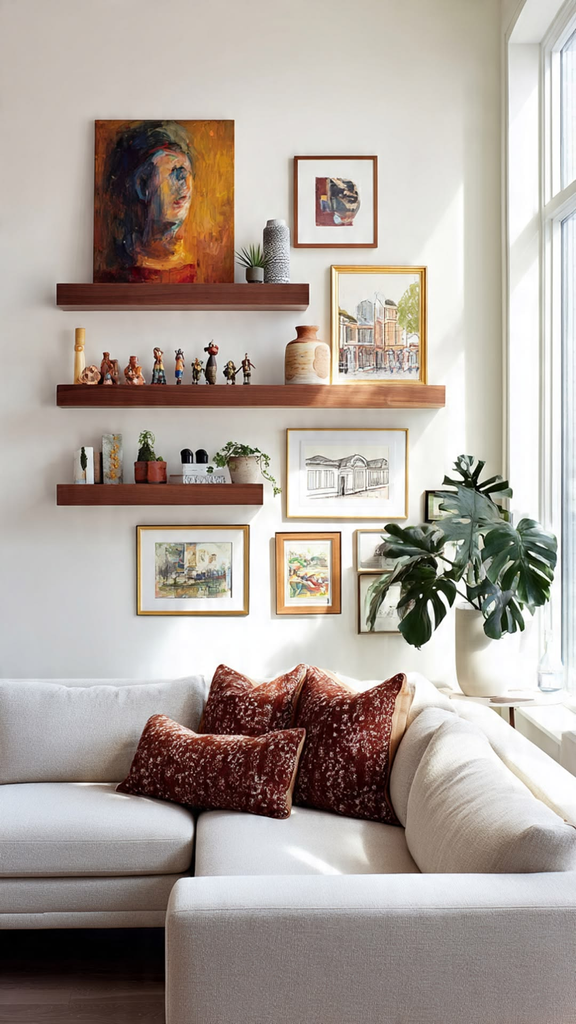
This is the step people with no decorating experience usually try to rush, because a room with just anchor furniture and lighting can still feel a little bare, and the instinct is to fill every remaining surface immediately.
Resist that instinct. Decor added slowly, one or two pieces at a time over the following weeks and months, tends to result in a more cohesive, intentional-feeling space than a single big decor haul that fills every surface in one afternoon.
My roommate freshman year of “real” apartment life, Rosa, furnished her whole room from a single online cart in one sitting and told me a year later she regretted at least half of it, because none of it had been chosen with the others in mind — it was just a pile of separately cute things bought under one impulse.
The pieces she kept and still uses years later were almost all things she added gradually, after living with the room for a while and noticing an actual gap.
Pro tip: Give yourself an actual waiting period — even just 48 hours — between seeing a decor piece you like and buying it. It’s a small habit that filters out a surprising number of purchases that feel exciting in the moment but wouldn’t have actually fit the room you’re building.
Step 8: Do a Final Walkthrough and Fix the Small Stuff
Once the big pieces, lighting, and a first round of decor are in place, do a genuine walkthrough of the space the same way you did in step one — moving through it like you actually live there, not just glancing at it from the doorway.
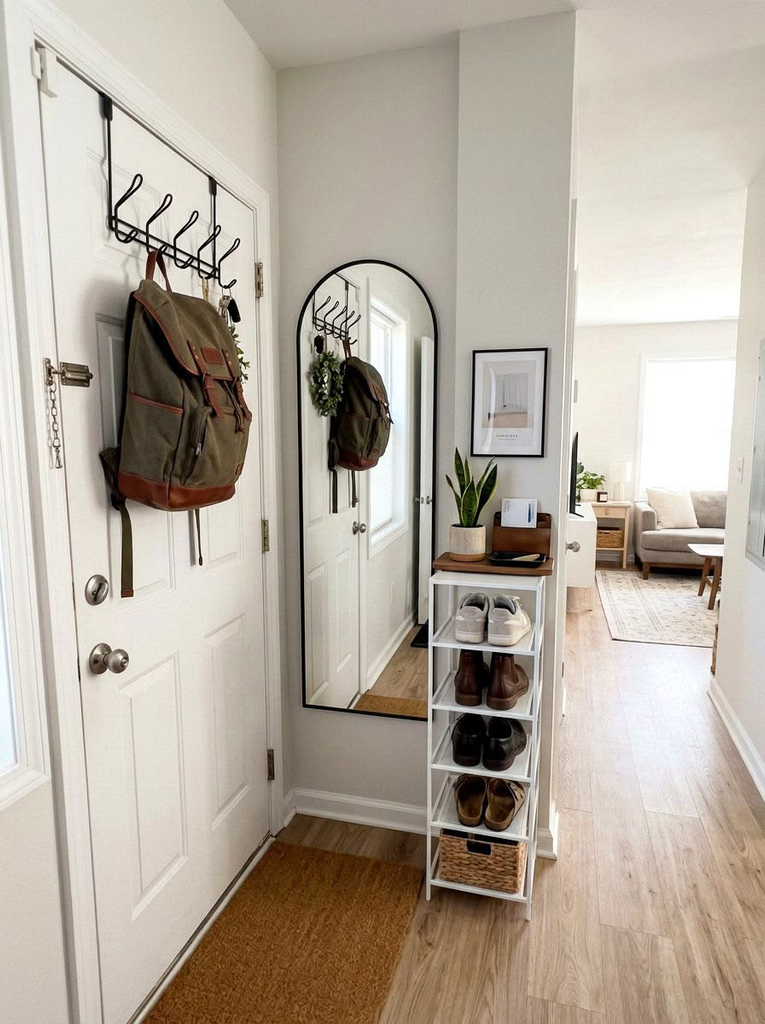
This is when you’ll notice the small remaining friction points: a lamp cord you’re tripping over, a drawer that won’t fully open because of what’s stacked next to it, a spot by the door that’s become a shoe pile because there was never an actual landing zone set up for it.
These small fixes are usually the cheapest and fastest part of the entire process, but they’re also the ones that make a space feel genuinely done rather than just furnished.
A $15 cord clip or a small tray by the door solves a problem that’s been quietly annoying you for weeks, and it’s worth doing this walkthrough specifically, rather than assuming you’ll just notice these things naturally over time.
What I’d Tell Myself on Day One of That First Apartment
If I could go back to that first apartment with the mattress on the floor and one folding chair, I’d tell myself that the slow, boring order of operations — live in it first, function before aesthetic, anchor pieces before decor — actually gets you to a place you love faster than trying to make it look finished in one weekend ever will.
It felt counterintuitive at the time to wait on the fun part.
The apartment I have now took about eight months to feel fully “done,” built slowly in roughly the order laid out here, and it’s the first place I’ve lived where I don’t look around and think about what I’d change.
My first apartment, decorated in a single overwhelmed month with no real order to any of it, never really got there, no matter how much more I kept adding to try and fix that feeling.


Leave a Reply