
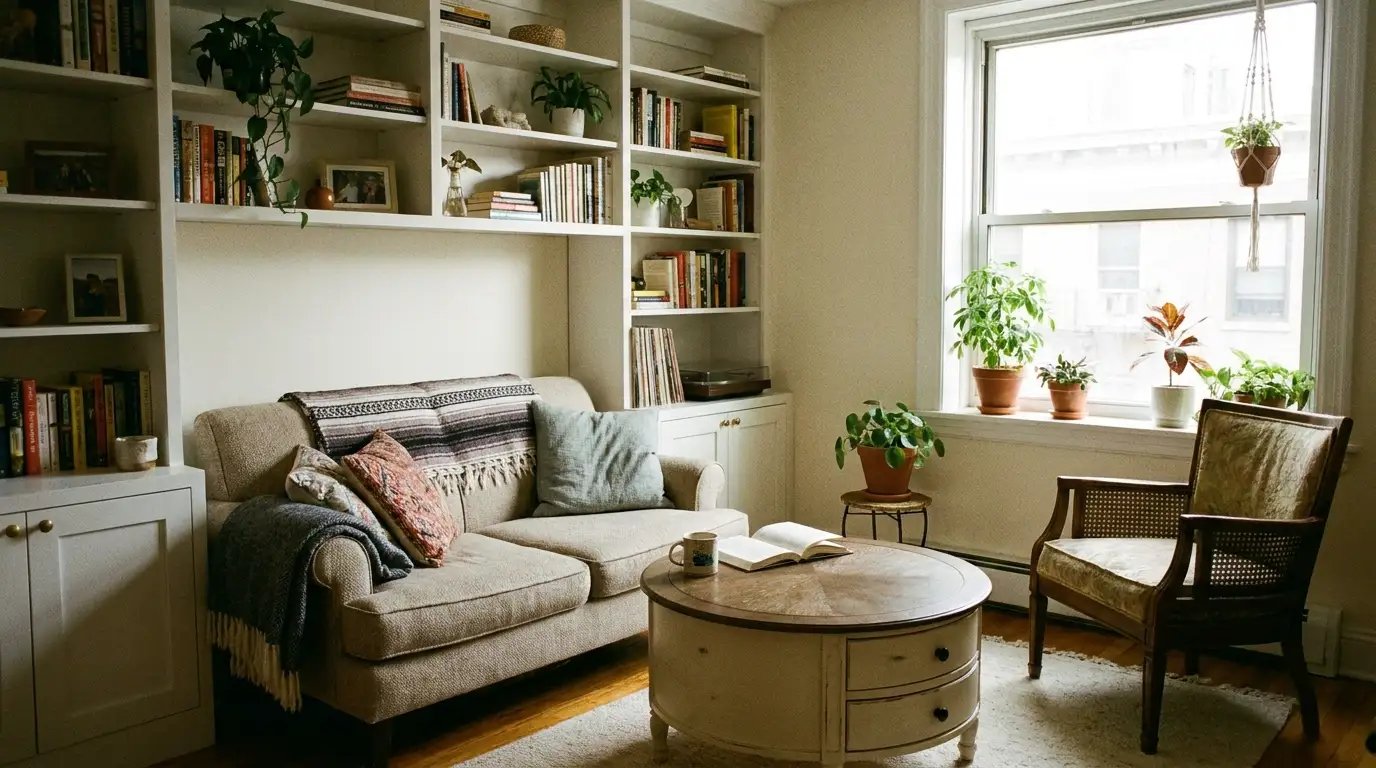
I used to avoid having people over. My living room is 11 by 13 feet — I know because I measured it three separate times, convinced I’d done the math wrong the first two — and for the first year I lived there, it looked like a furniture store had thrown up in a shoebox.
A sectional that was too big, a coffee table I couldn’t walk around, and a TV stand that ate the one wall that actually got natural light.
If your living room feels like it’s working against you instead of for you, I promise it’s not a “you just need less stuff” problem. It’s almost always a scale-and-flow problem, and once you fix that, a small room stops feeling small and starts feeling intentional.
That’s the difference nobody tells you about — a cramped room and a cozy room can have the exact same square footage.
I’ve redone this room twice now, helped my sister redo hers (she’s in a 400-square-foot one-bedroom in Chicago, so she’s basically the final boss of small-space living), and paid attention to what actually held up versus what looked good in a photo and fell apart in real life. Here’s what actually works.
1. Float your furniture instead of pushing it against the walls
This is the one that surprises people the most, and it’s the one I got wrong for a full year. Pushing every piece against the wall feels like the “safe” small-space move, but it actually makes a room read as smaller because you’re left with one big dead zone in the middle.
Pulling your sofa even 6 to 8 inches off the wall, and angling a chair or two toward the center, creates a defined seating area instead of a room that looks like a waiting room. It sounds counterintuitive to give up floor space on purpose, but the visual effect is that the room reads as “arranged” rather than “crammed.”
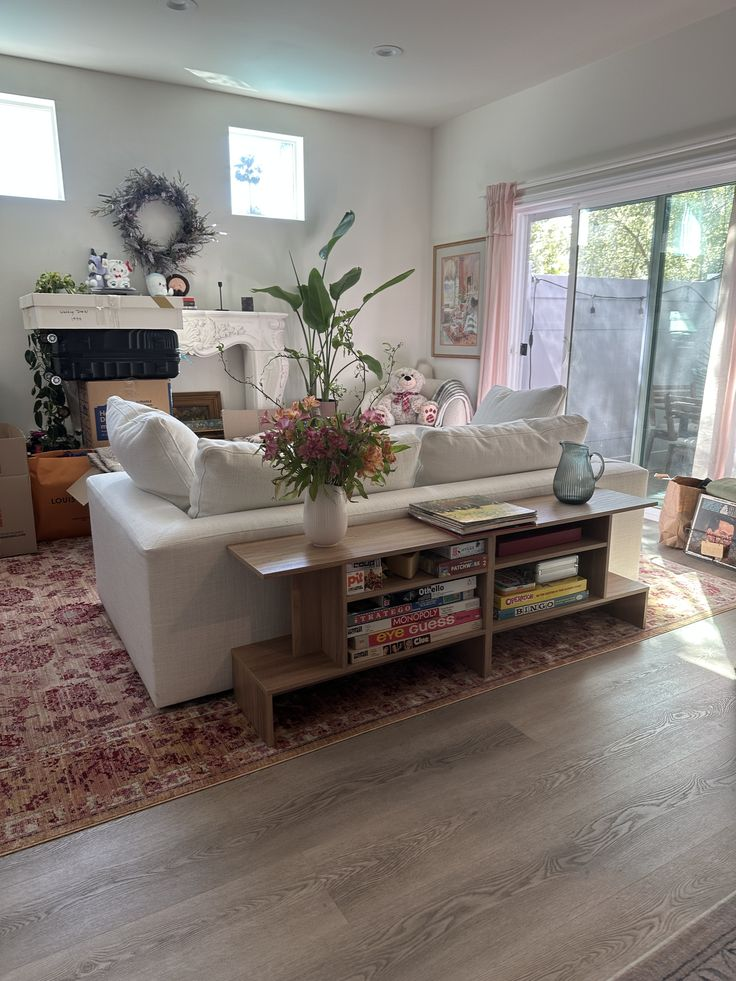
Pro tip: if 6 inches feels too tight to lose, a slim console table or a stack of books behind the sofa fills the gap and doubles as a spot to drop mail and keys instead of feeling like wasted space.
2. Pick one large rug, not a few small ones
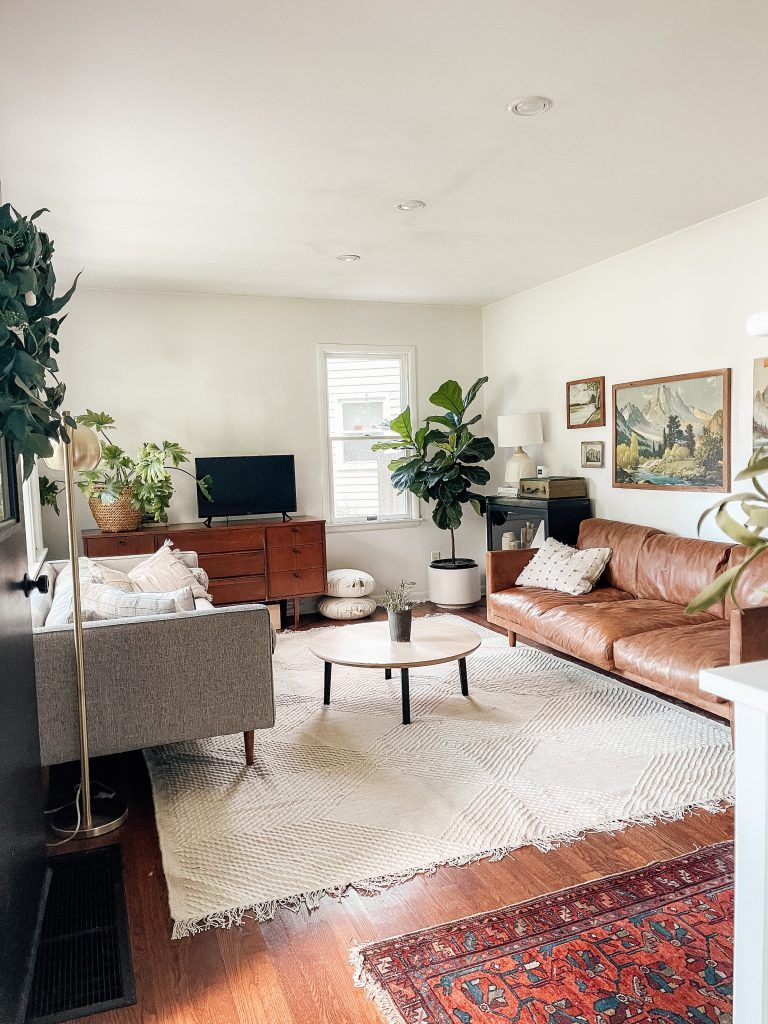
My first apartment had two small rugs — one under the coffee table, one by the door — and it chopped the room into pieces. A room reads bigger when the floor reads as one continuous surface.
The rule of thumb that’s held up for me: at minimum, the front two legs of your sofa and chairs should sit on the rug. If you can afford it, all four legs on all your seating is even better. It’s a bigger upfront cost, but it’s the single change that made my room feel the most “finished” for the least effort.
| Rug Size | Best For | Approx. Cost Range |
|---|---|---|
| 5×7 ft | Very small rooms, rug floats in front of sofa only | $80–$200 |
| 8×10 ft | Most small-to-medium living rooms, front legs on rug | $150–$500 |
| 9×12 ft | Open-concept or slightly larger rooms, all furniture legs on rug | $300–$900 |
3. Go with a loveseat or a smaller sectional instead of a standard sofa
I know a full sectional feels like the “cozy” choice because that’s what’s all over Pinterest right now, but in a genuinely small room, an oversized sectional is the number one thing that makes a space feel like it’s bursting at the seams.
My friend Priya bought an L-shaped sectional for her one-bedroom before actually measuring her doorway — it didn’t fit through, and she had to return it and eat a $75 restocking fee.
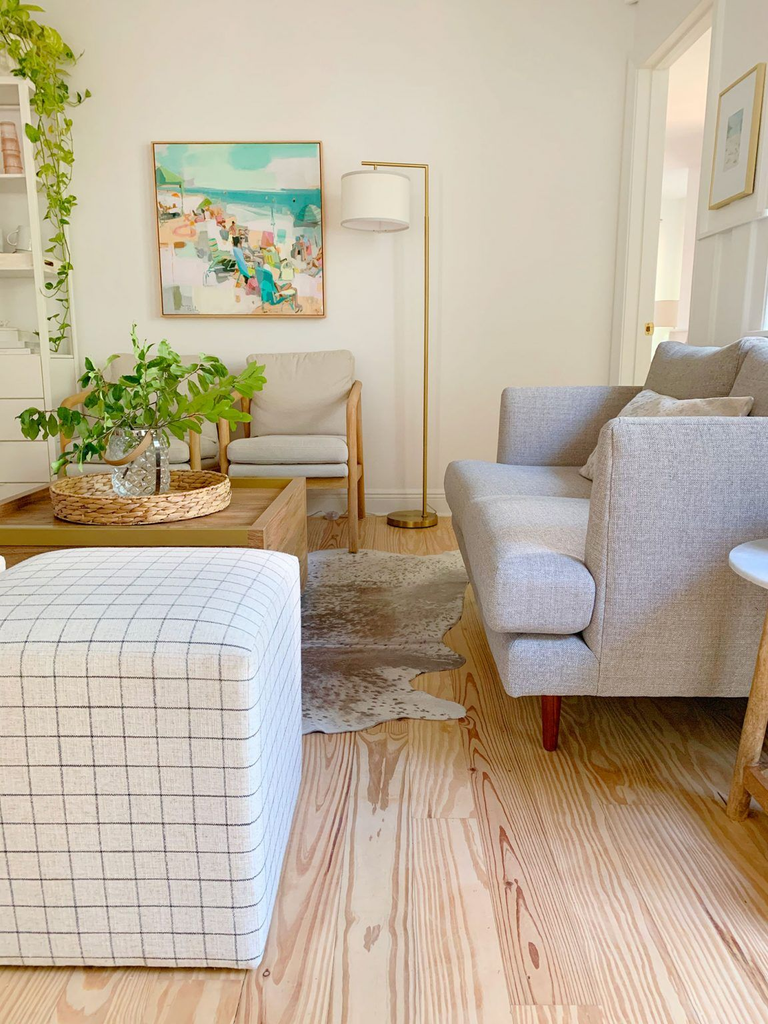
A loveseat plus one or two accent chairs gives you the same seating capacity as a sofa but breaks the visual weight into smaller pieces, which reads as less bulky.
If you genuinely need a sectional for a family, look at ones with a chaise that can tuck into a corner rather than one that juts into the walking path.
Pro tip: measure your doorways, stairwells, and elevator before you buy anything upholstered. Sofa dimensions online are almost never the “will it turn the corner” dimensions you actually need.
4. Use a round or oval coffee table
Sharp corners on a rectangular coffee table are the thing I’ve bruised my shins on more times than I want to admit in a small room, and beyond the physical hazard, hard corners visually “stop” the eye and make a space feel boxier.
A round or oval table softens the traffic flow and — this is the part people miss — actually takes up less visual real estate than a rectangular one of a similar surface area, because there’s no corner sticking out into your path.
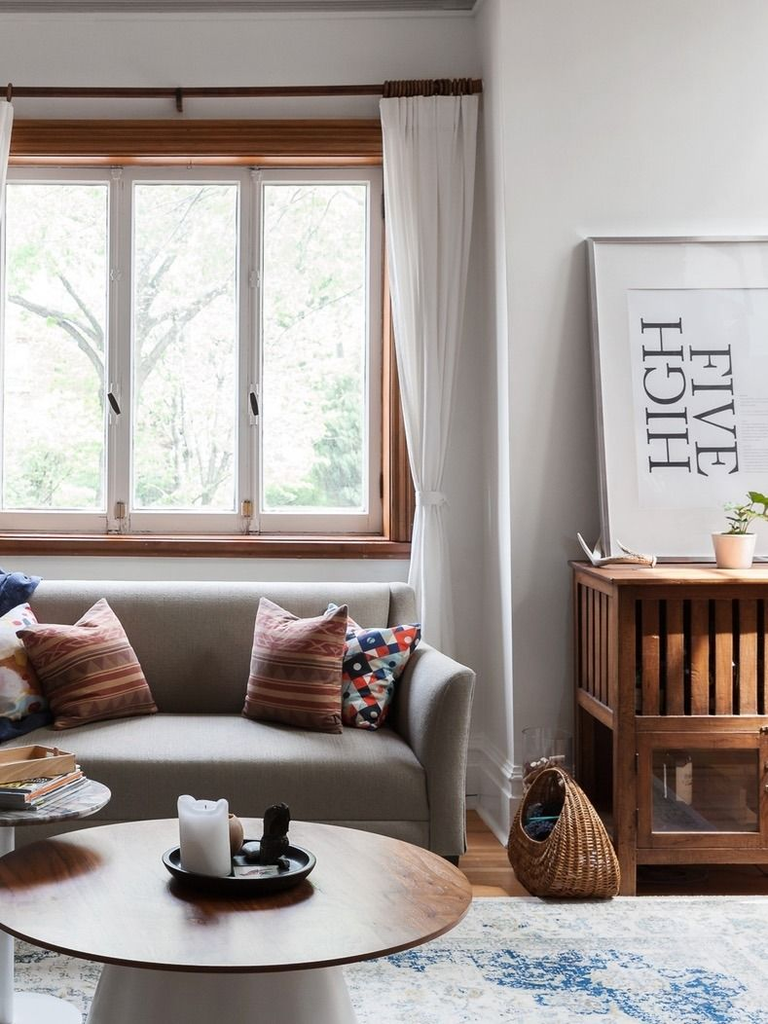
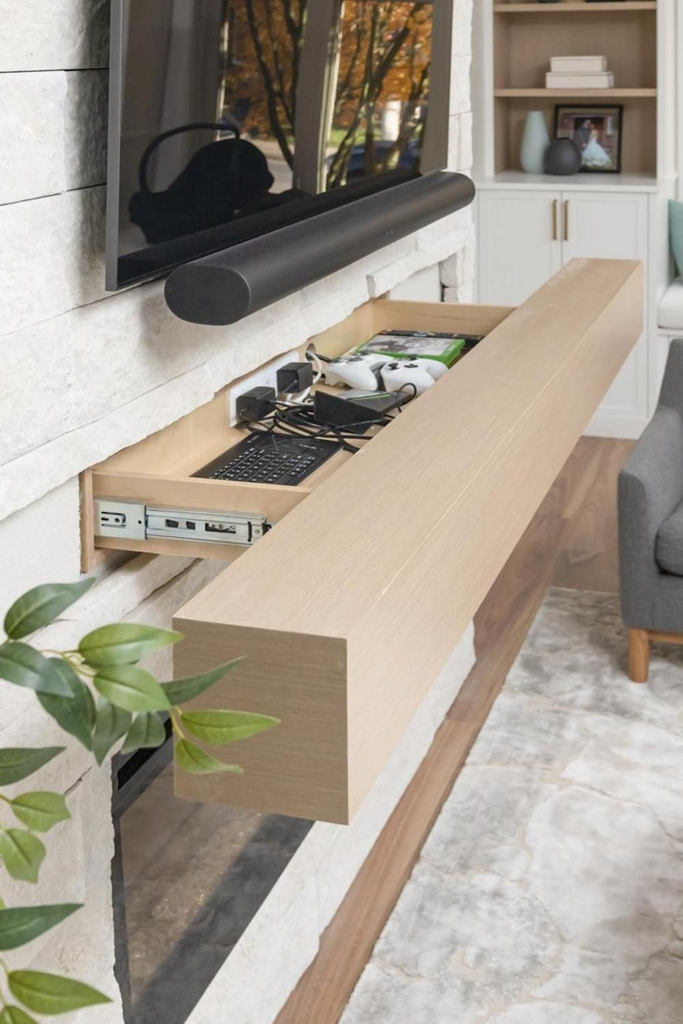
5. Mount your TV instead of using a TV stand
A TV stand is one of the biggest floor-space eaters in a small living room, and most of what’s stored in one (game consoles, cable boxes, DVDs nobody watches anymore) can live somewhere less prominent. Wall-mounting the TV reclaims that entire footprint.
If you’re in a rental and can’t drill into the wall, there are no-stud mounting kits and even adhesive mounts rated for lighter TVs — I used one of the latter for two years in a rental and it held up fine, though I wouldn’t trust it with anything over 40 inches.
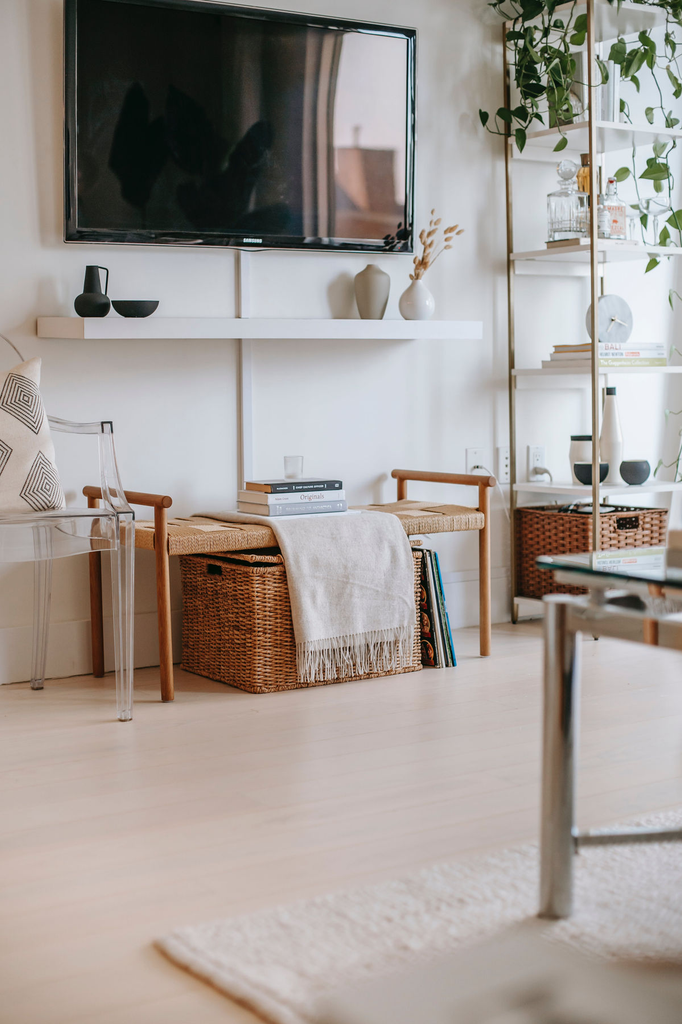
6. Use vertical storage, not floor storage
Floor space is the scarcest resource in a small living room, but wall space almost always has room to spare. Floating shelves, a tall narrow bookcase, or a wall-mounted media unit all store the same stuff a low, wide cabinet would, without eating your walking path.
My rule for myself: anything I’m tempted to buy that’s under 30 inches tall and wider than it is tall gets a hard no unless it’s genuinely doing double duty as seating.
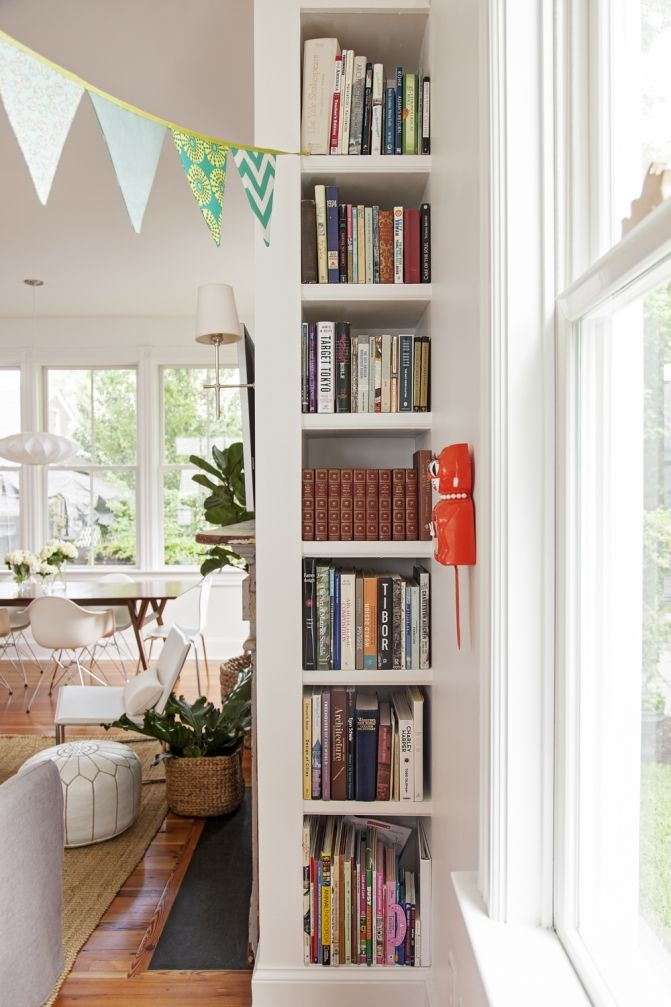
7. Choose furniture with visible legs over furniture with skirted or solid bases
This is such a small detail but it changes a room more than you’d expect. A sofa or chair with slim, visible legs lets your eye see the floor continue underneath it, which reads as more open space even though the actual footprint hasn’t changed.
A skirted sofa or a low platform-style piece blocks that sightline and makes the floor feel like it “stops” at the furniture.
If you already own a skirted piece and aren’t ready to replace it, this is a good one to keep in mind for your next purchase rather than something to panic-fix today.
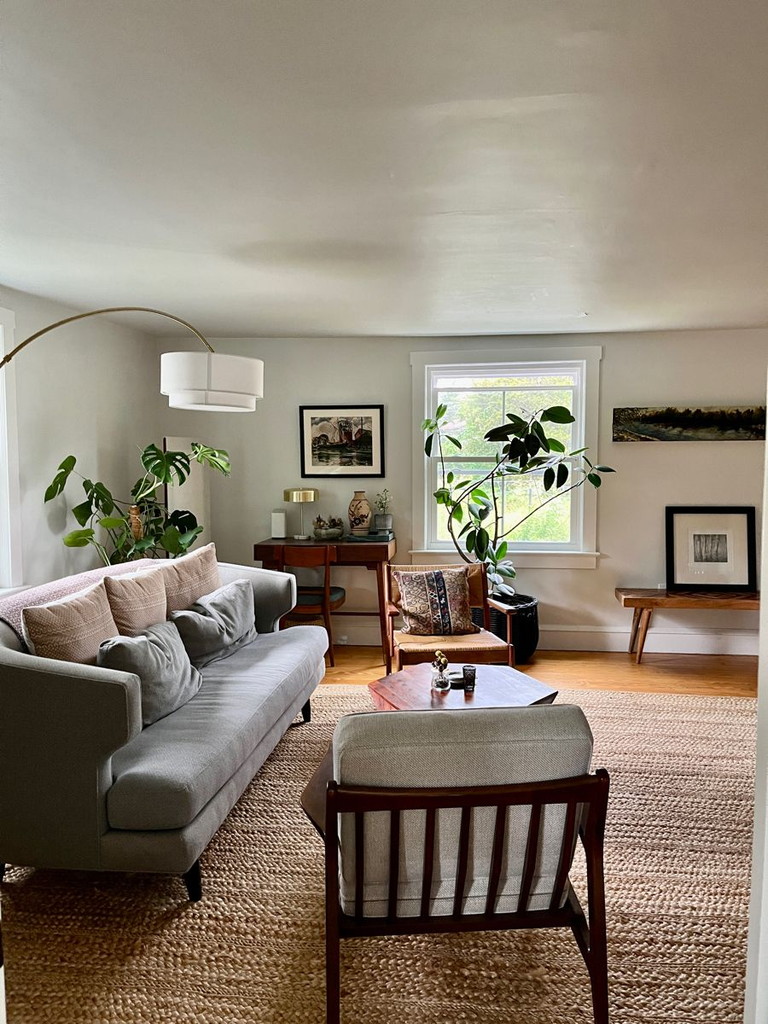
8. Hang curtains high and wide, not at the window frame
I skipped this one for way too long because I assumed curtain rods had to sit right above the window. Mounting the rod 4 to 6 inches above the window frame, and extending it a few inches past the frame on each side, makes the window — and by extension the wall and the room — read as taller and wider than it is.
It’s one of the cheapest fixes on this list. A longer curtain rod is a $15–$20 upgrade over a standard one, and it’s the kind of detail that makes people ask “did you redo your windows?”
9. Stick to a light, cohesive color palette — but don’t be afraid of one dark accent
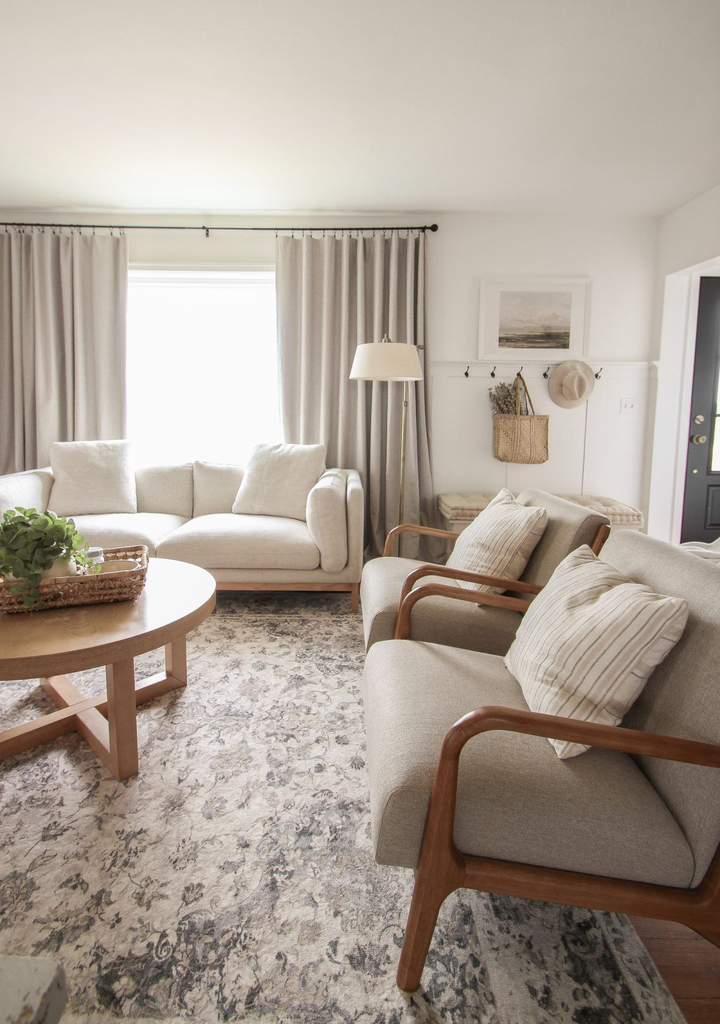
Everyone knows “light colors make small rooms feel bigger,” and that’s true, but the version of this advice nobody follows through on is cohesion. A room with white walls, a beige sofa, a gray rug, and a mix of wood tones that don’t relate to each other still reads as busy, even though every individual piece is “light.”
Pick one undertone — warm or cool — and stick to it across your big pieces. Then, if you want personality, add one genuinely dark element: a black-framed mirror, a dark green accent chair, a navy throw pillow set.
One dark note against a light, cohesive backdrop reads as intentional. Several competing tones reads as cluttered, regardless of how light any single piece is.
10. Use mirrors, but place them where they actually reflect something worth doubling
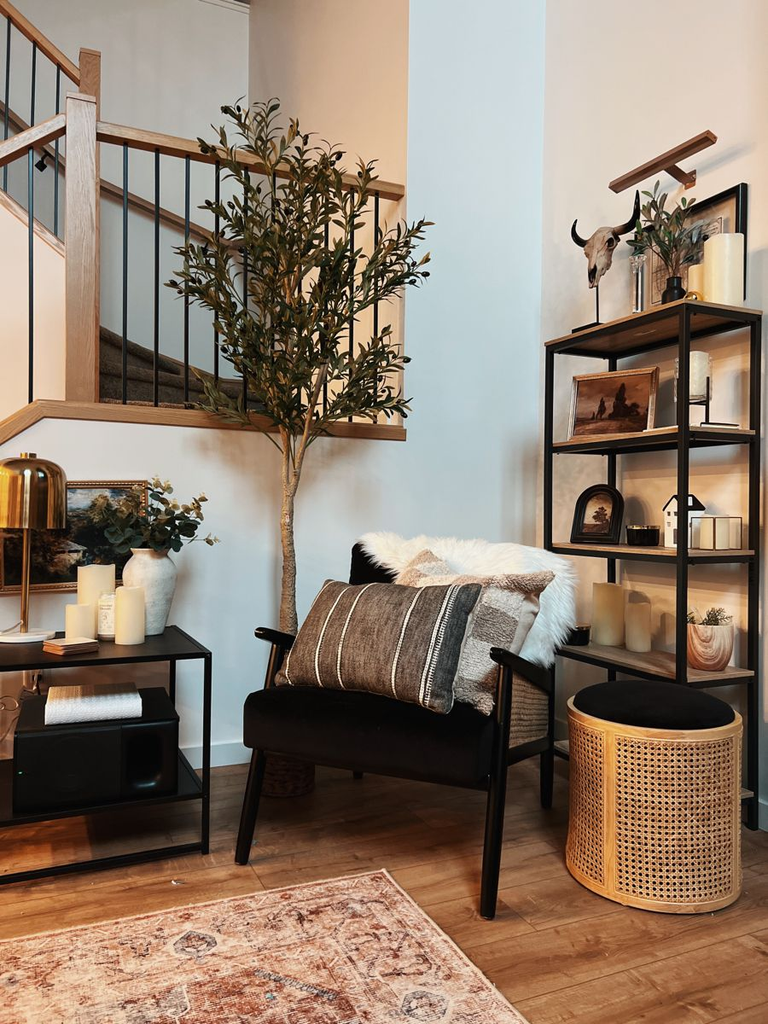
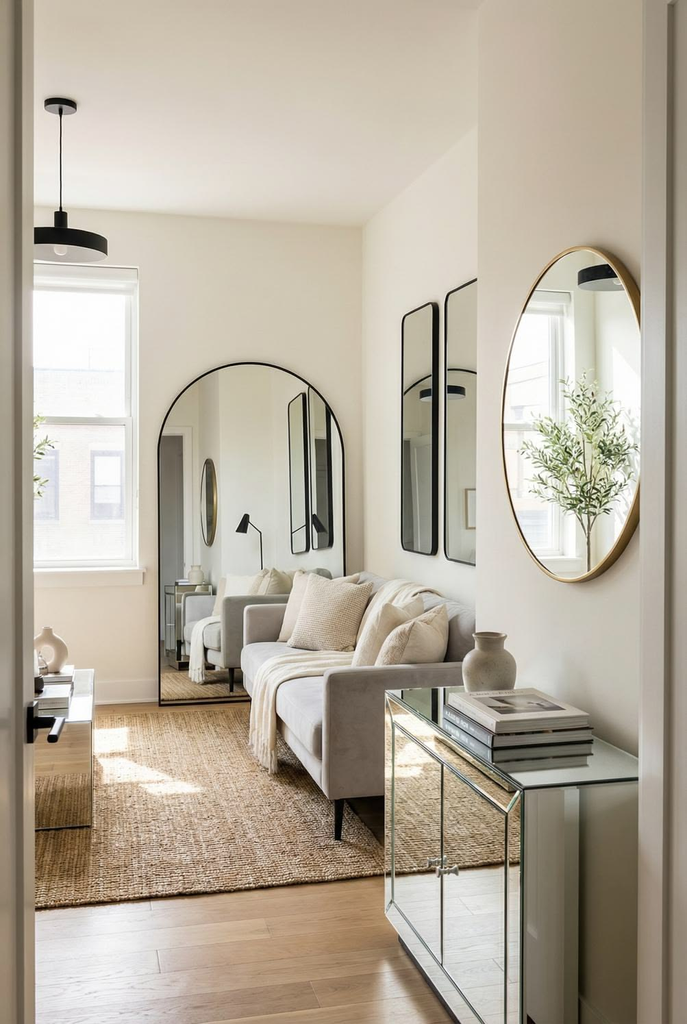
The “mirrors make rooms feel bigger” advice is true, but a mirror reflecting a blank wall doesn’t do much. The trick is positioning a mirror to reflect a window, a light source, or an interesting piece of art — something that actually adds visual depth when doubled.
My sister hung a large mirror directly across from her one window in her Chicago apartment, and it genuinely changed how bright the room felt at 4pm in winter, not just how big it looked.
11. Use multi-functional furniture — but pick pieces that don’t look like a hack
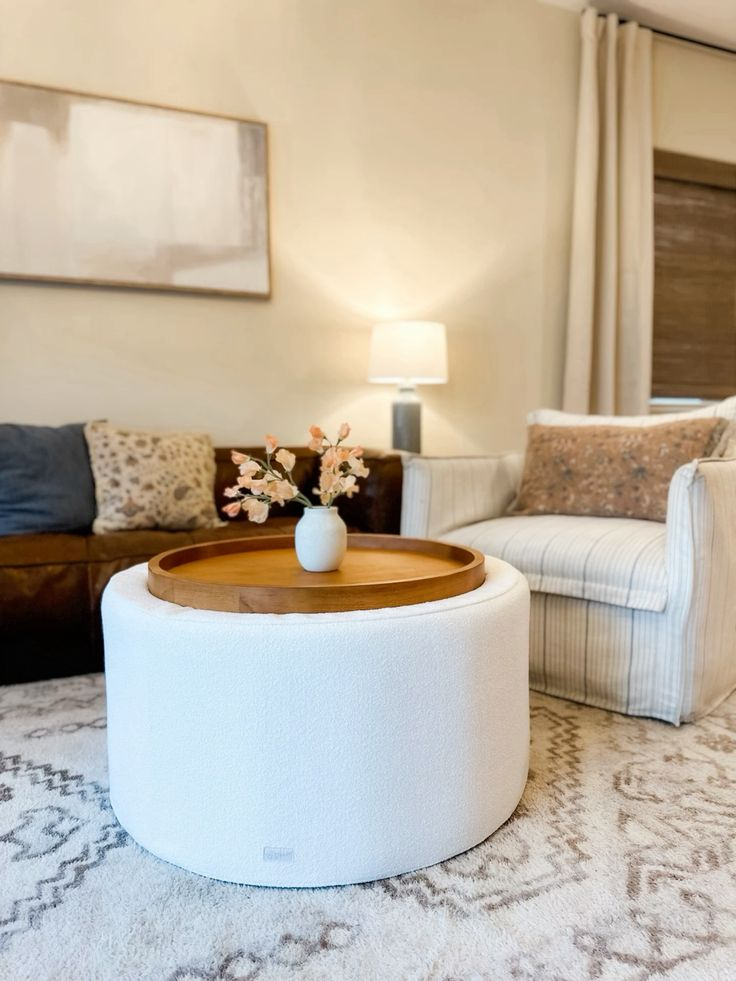
This is where a lot of small-space content goes wrong: a coffee table that flips open into a desk, a storage ottoman, a bench with cubbies. All genuinely useful. But cheap versions of these often look like exactly what they are — a compromise — and that undercuts the “put-together” feeling you’re going for.
I’ve had good luck with a storage ottoman that doubles as a coffee table and extra seating; the one I bought was $89 and has held up for three years of actual daily use, including my dog using it as a launching pad onto the sofa. A cheaper $30 version I tried before that started sagging within four months.
| Multi-Function Piece | Space It Saves | What to Watch For |
|---|---|---|
| Storage ottoman | Coffee table + toy/blanket storage + extra seat | Check weight limit if it’ll double as seating |
| Nesting tables | Side table + extra surface for guests | Buy solid wood or metal, not particleboard — they wobble fast |
| Daybed | Sofa + guest bed | Needs a proper mattress, not just cushions, for actual overnight use |
| Wall-mounted drop-leaf table | Console table + dining/work surface | Confirm your wall can support the bracket weight |
12. Layer your lighting instead of relying on one overhead fixture
A single overhead light in a small room creates flat, harsh lighting that makes every wall and corner visible at once — which, counterintuitively, makes the room feel smaller because there’s nowhere for the eye to rest. Layering in a floor lamp, a table lamp, and maybe a plug-in wall sconce creates pools of light and shadow that add depth.
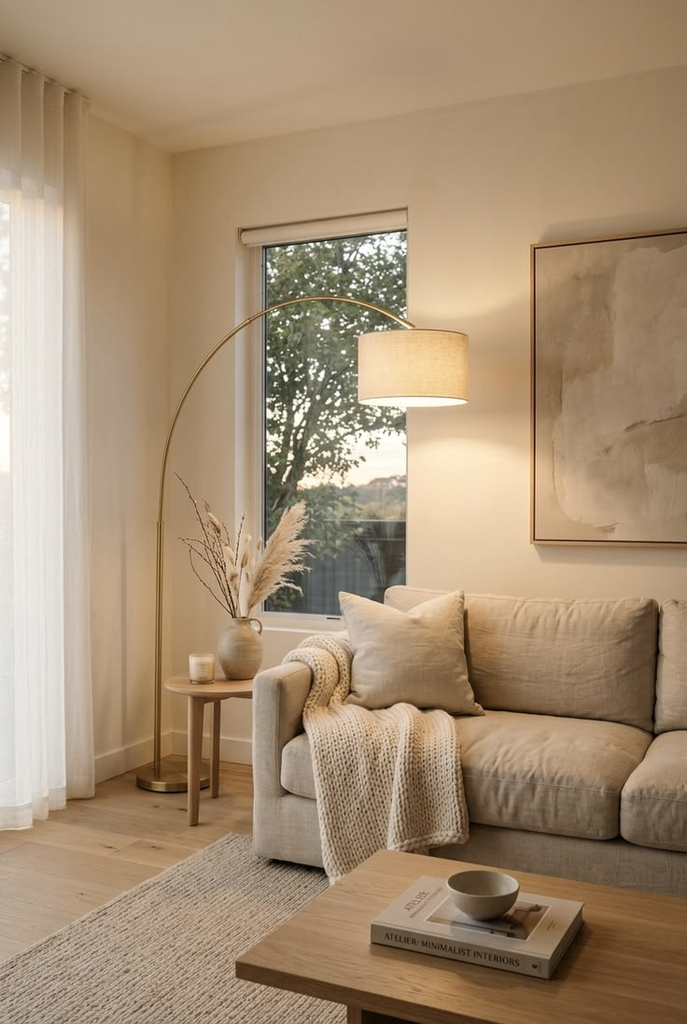
Pro tip: put at least one lamp on a dimmer or a smart plug. The same room at 100% brightness versus 40% brightness in the evening feels like two different spaces, and it’s a five-dollar smart plug to get there if your lamp doesn’t already have a dimmer switch.
13. Use a slim console or bar cart instead of a full media console behind the sofa
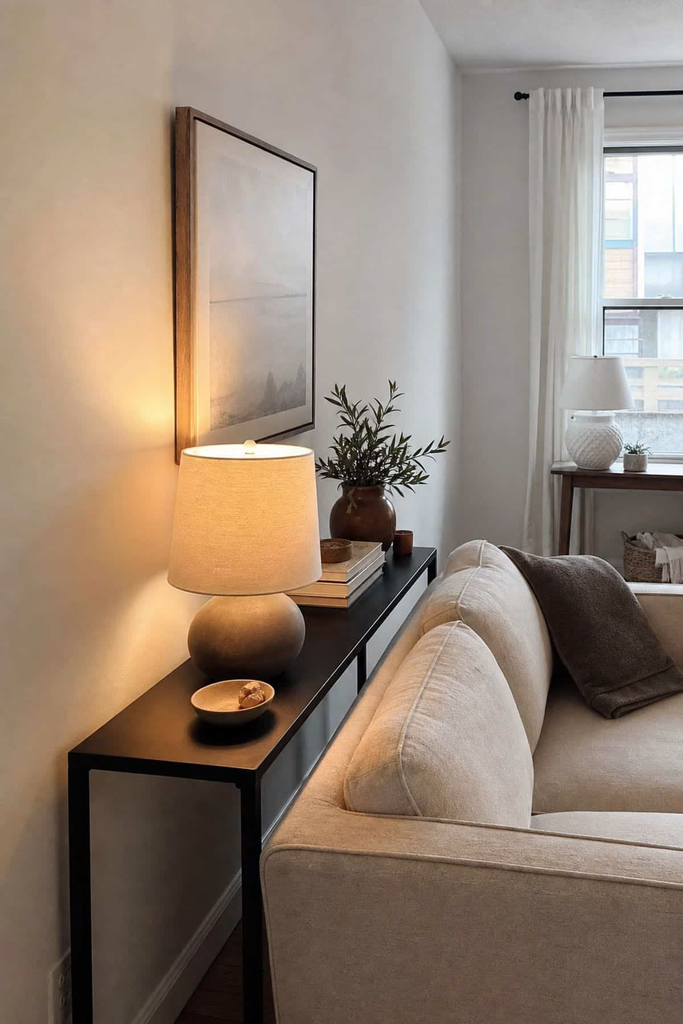
If your sofa floats in the middle of the room (see #1), the space behind it can feel exposed without something anchoring it. A console table that’s 12 to 14 inches deep does that job without eating the walking path a standard cabinet would.
A bar cart works for this too, and it’s one of the only pieces on this list that can move rooms with you if you relocate — something worth thinking about if you’re renting and might not stay put for years.
14. Don’t skip window treatments just because the room is small
I get why people skip curtains in a tiny living room — it feels like one more thing crowding the space.
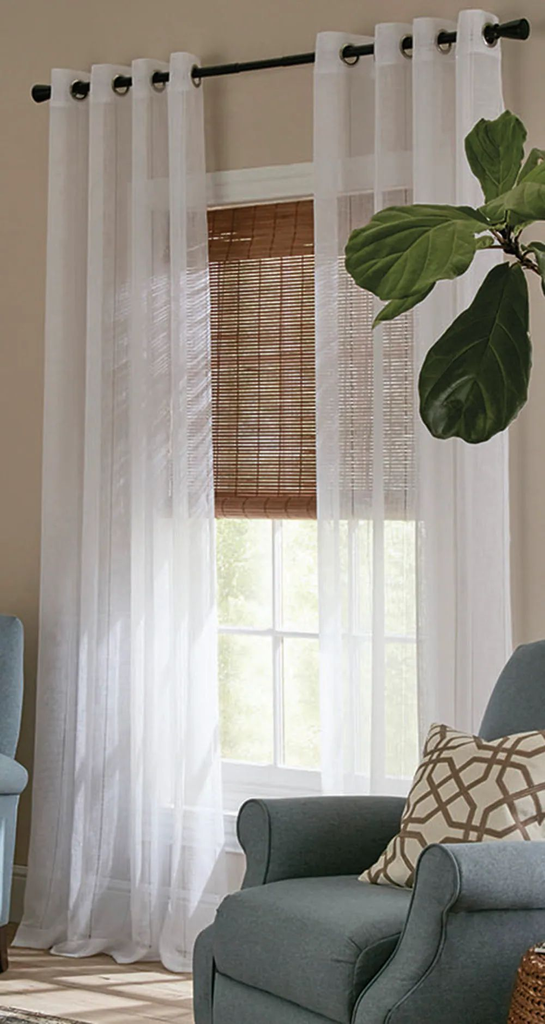
But bare windows in a small room usually make it feel more exposed and unfinished, not more open. Sheer or lightweight curtains, hung correctly (see #8), add softness without bulk.
If you’re worried about a heavy curtain closing in the room, go sheer, or choose a curtain that stacks compactly to the side of the window when open rather than one with heavy pleating that stays bulky even pulled back.
15. Anchor the room with one statement piece, not five small ones
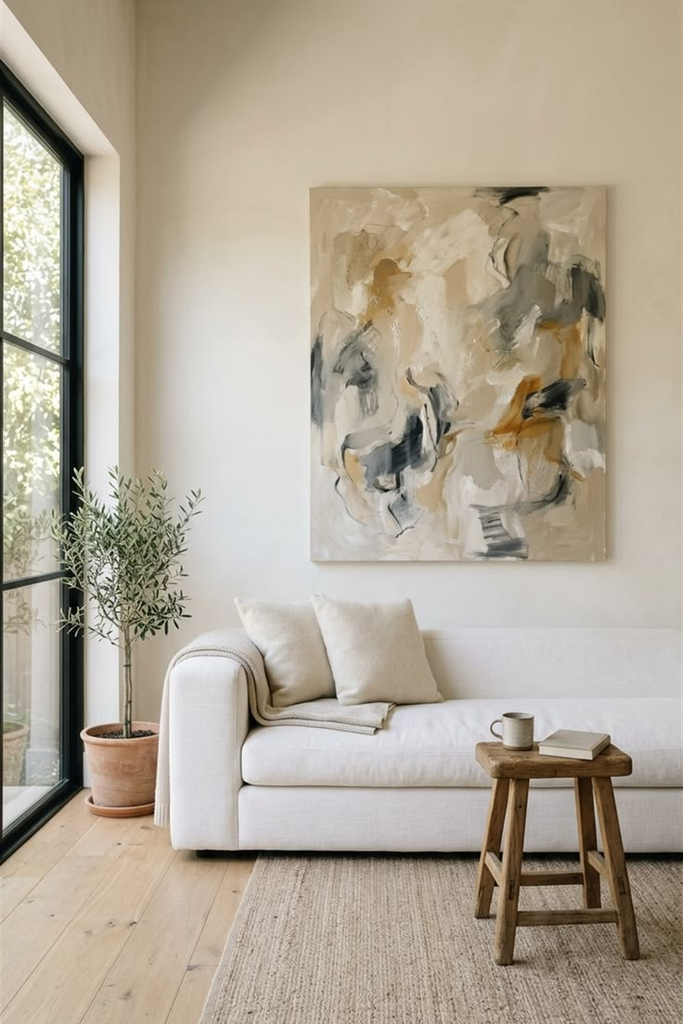
A small room with ten small decorative objects — candles, little frames, a few knickknacks — reads as cluttered no matter how nice each individual item is. One larger piece, whether that’s a big piece of art, an oversized plant, or a bold accent chair, gives the eye a place to land and actually simplifies the room visually.
This was the hardest one for me personally because I like collecting small things, but moving most of my little decor items to a bookshelf in my bedroom and keeping just one large framed print in the living room made a noticeable difference within a day.
16. Keep your cord and cable situation actually invisible
Visible cords running along the floor or up the wall behind the TV are such a small detail, but they read as visual noise in a way that’s disproportionate to their actual size, especially in a room where every surface is doing double duty.
A $12 cord cover channel that matches your wall color, or a simple cable box tucked behind furniture, cleans this up in under 20 minutes.
17. Use a gallery wall to add visual interest without using floor space
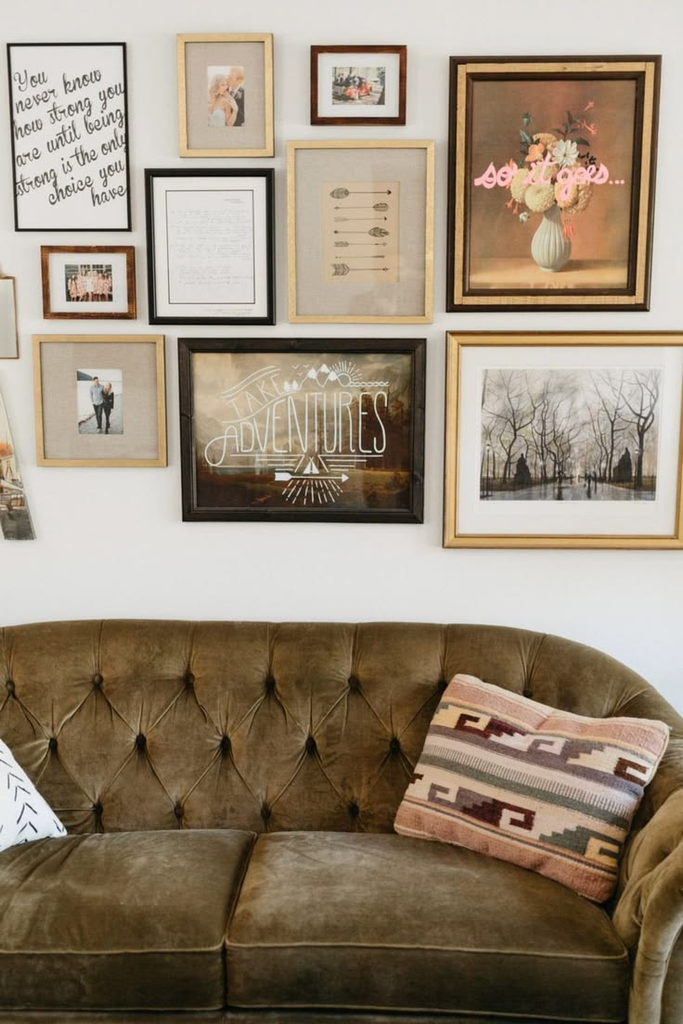
If you want personality in the room but don’t have surface space for it, a gallery wall does that job vertically instead of horizontally.
The trick that keeps it from looking chaotic in a small room: stick to 2–3 frame colors max and leave at least 2–3 inches between frames so it reads as curated, not crammed.
18. Choose a smaller-scale pattern if you’re using pattern at all
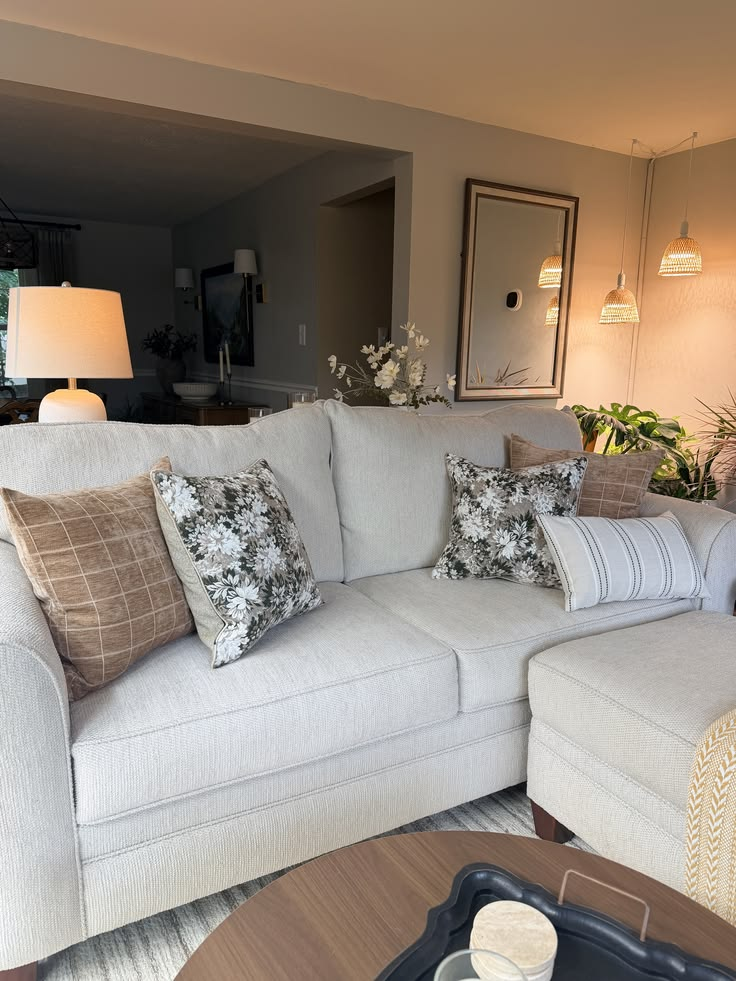
Bold, large-scale patterns — big florals, oversized geometric prints — can visually shrink a small room because the pattern repeat is so large you only see a fraction of it at once, which reads as busy.
If you love pattern, a smaller-scale print on one piece (a pillow, a chair) adds interest without overwhelming the room the way a patterned sofa or an accent wall with a huge print would.
19. Leave breathing room around your biggest pieces
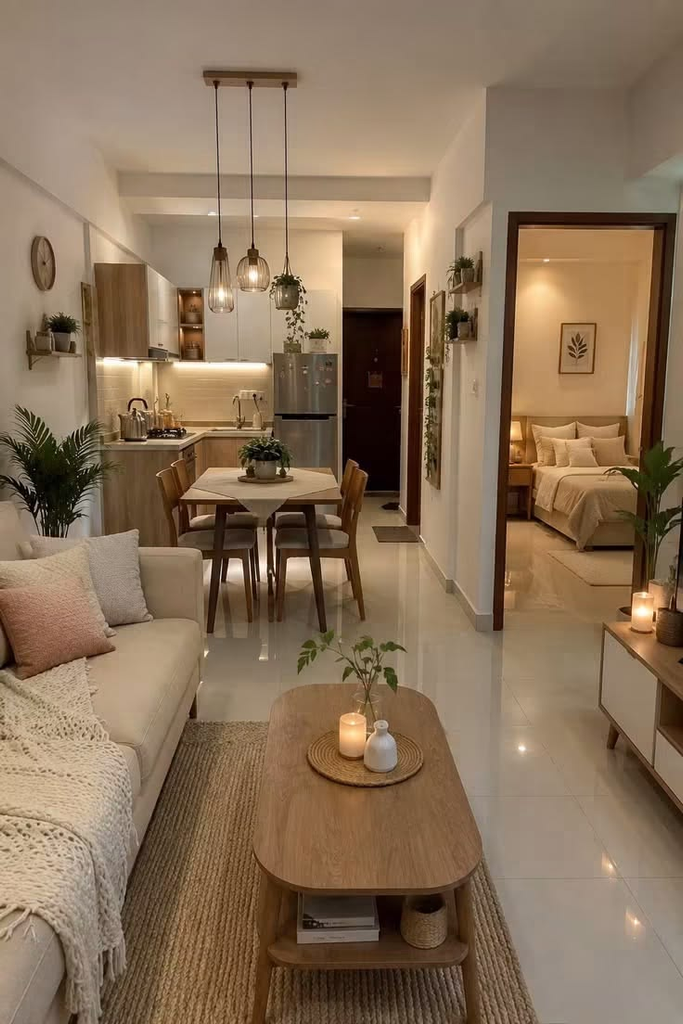
It’s tempting to push your sofa right up against your bookshelf or your chair right up against your TV stand to “save space,” but furniture with zero breathing room around it reads as crammed even in a photo, let alone in person.
Leaving even a few inches of visible floor or wall between major pieces lets the room read as arranged rather than wedged together.
20. Edit ruthlessly before you buy anything new
The single biggest small-living-room mistake I made wasn’t a design choice — it was buying new furniture to “fix” the room before removing anything. A room that already has too much in it will look crowded no matter how well the new piece is chosen.
Before adding anything, take everything non-essential out for a week (extra side tables, that second lamp, the plant that’s really too big for the corner it’s in) and see how the room feels. You’ll often find you don’t need to buy the fix — you just needed less.
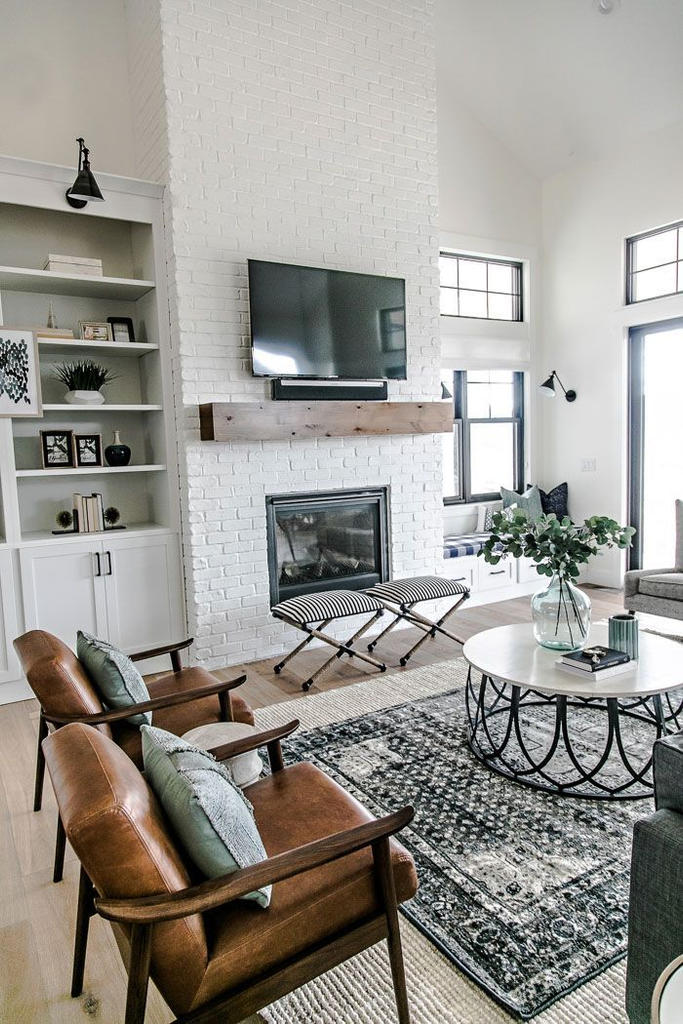
What I’d do first if I were starting over
Honestly? Rug first, then float the furniture. Those two changes cost me the least and did the most — more than any single piece of furniture I bought. Everything else on this list is worth doing eventually, but if you only have a weekend and a small budget, start there and see how different the room feels before you spend money on anything bigger.
A small living room isn’t a problem to solve once and forget — it’s a room you’ll keep adjusting as your stuff and your life change.
Mine still isn’t “done,” three years in, and I’ve made my peace with that. It just works now, which is really all a small room needs to do.










Leave a Reply