
Last spring I spent forty minutes looking for a can opener in my own kitchen. It was in the drawer the whole time, buried under a whisk, three takeout chopsticks, and a birthday candle shaped like the number 4. That was the day I stopped telling myself I’d “get to” my drawers eventually.
Since then I’ve bought, returned, and re-bought more drawer organizers than I’d like to admit. A few were great. Some were the wrong size by half an inch, which is the most annoying way to be wrong. One collapsed the first time I closed the drawer with any enthusiasm.
This post covers the 13 types I’d actually put in a home, grouped by room, with what they cost, what they’re good at, and where they let you down. Before you buy anything, measure the inside of your drawer, not the front. I’ll repeat that, because it’s the mistake behind most returns.
How to Choose Drawer Organizers Before You Buy Anything
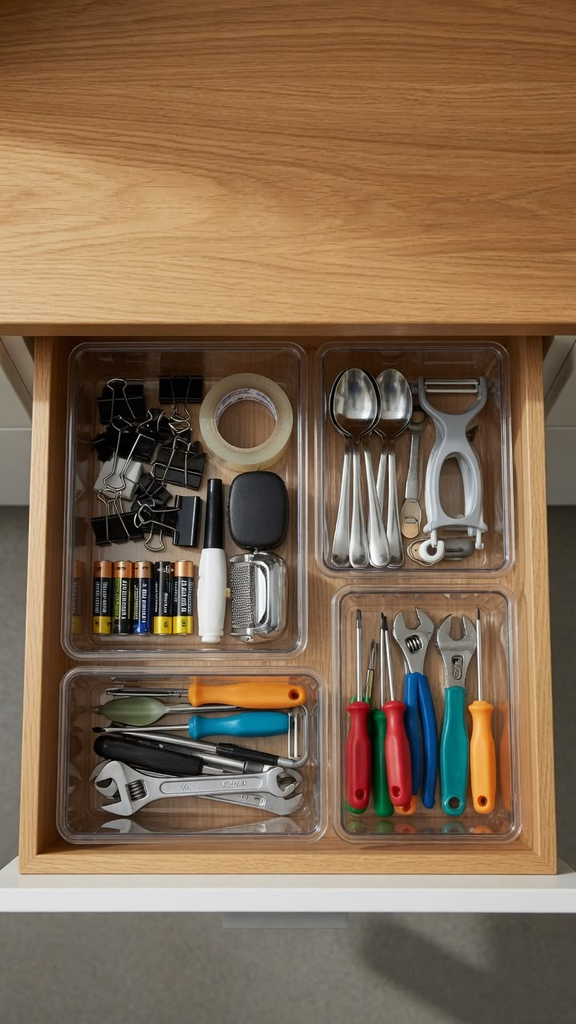
Drawer organizers come in four main materials, and each one behaves differently once it’s in a real drawer with real stuff in it.
| Material | Typical Price | Best For | Downside |
|---|---|---|---|
| Bamboo / wood | $15–$40 | Kitchen utensils, cutlery, desk drawers | Can warp near sinks; pricier per piece |
| Plastic (clear or opaque) | $8–$25 | Bathrooms, junk drawers, kids’ rooms | Can crack; cheap sets look cheap |
| Acrylic | $15–$45 | Makeup, jewelry, skincare | Shows fingerprints; slides without grip liners |
| Fabric (honeycomb dividers) | $10–$20 | Socks, underwear, scarves, baby clothes | Doesn’t hold up to sharp or heavy items |
Pro tip: Buy one organizer first and live with it for a week. Sets look like better value, but I’ve ended up with two unused trays in almost every set I bought. The exception is a set of modular bins where you can reconfigure the layout, and I’ll flag those below.
Best Kitchen Drawer Organizers
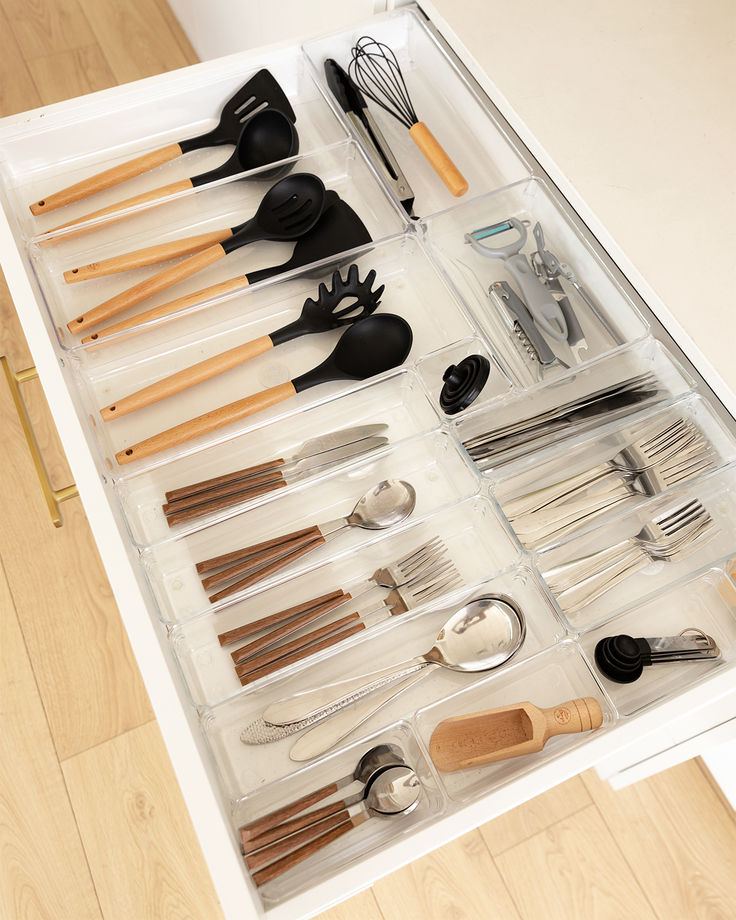
The kitchen is where drawer chaos costs you the most time, because you open these drawers mid-recipe with wet hands. If you’re going to start anywhere, start here.
1. Expandable Bamboo Utensil Tray
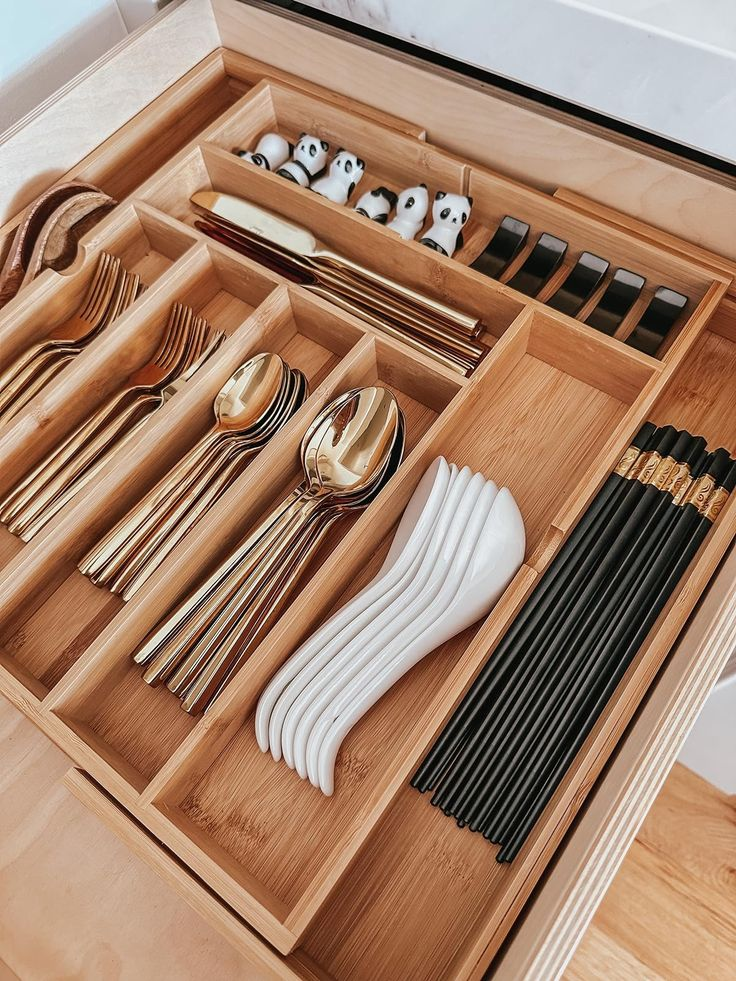
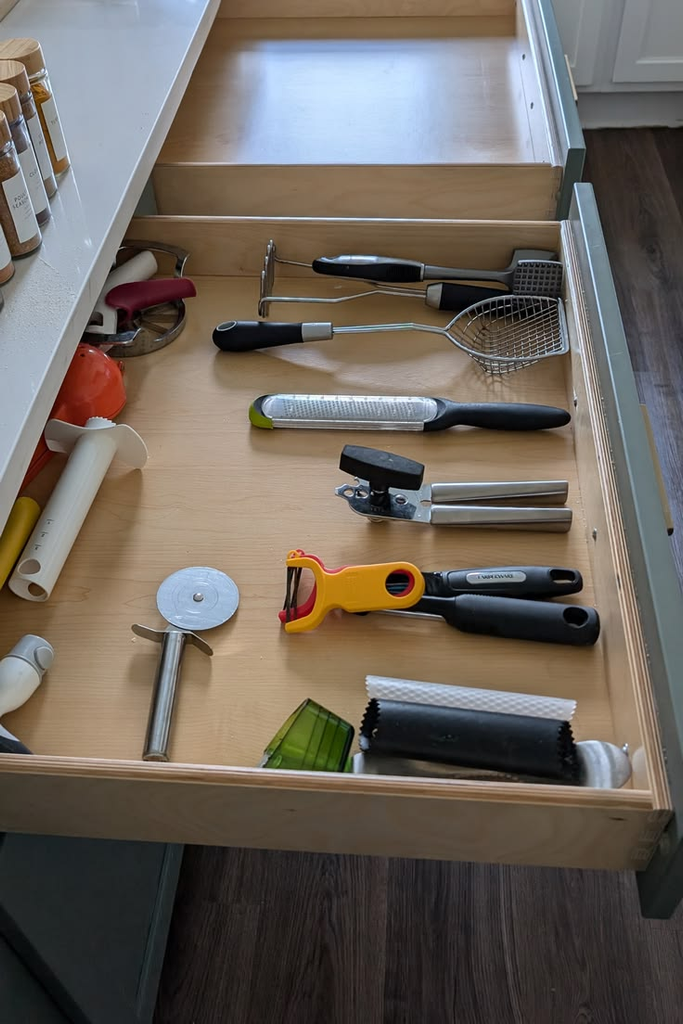
Utensil drawers fail because everything lands in one heap and you dig for the spatula every time. An expandable bamboo drawer organizer fixes this with adjustable side arms that stretch to fit your drawer width, so there are no dead gaps for things to slide into.
Pull the arms out until the tray sits snug, then sort by how you cook rather than by type. Spatulas and tongs go together, and measuring spoons live near the flour drawer if you have room. It usually costs $20 to $35 for a decent one.
The trade-off is that bamboo doesn’t love standing water. If your drawer is next to the dishwasher and gets steamy, a coat of food-safe mineral oil every few months keeps it from splitting.
2. Non-Slip Flatware Tray
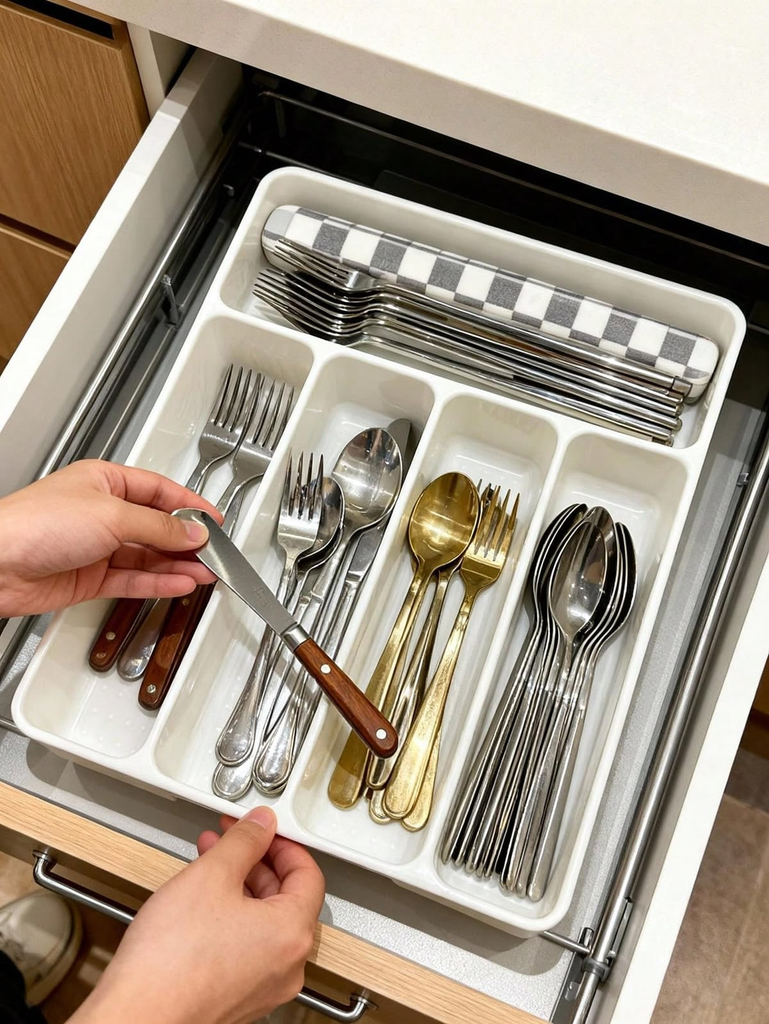
A separate cutlery tray matters because forks and spoons are the items you touch daily. A flat tray with five or six compartments and a rubber-lined base keeps them from migrating every time you yank the drawer open.
My sister Noor bought a smooth plastic tray and swore it was “haunted” because the compartments shifted a little each morning. It wasn’t haunted. It had no grip. A $4 roll of non-slip shelf liner underneath solved it, and that’s the cheapest fix in this whole post.
If you have deep drawers, get a tray with a lid-style raised rim so knives can’t slide out. Shallow drawers do better with a flat, low-profile tray.
3. In-Drawer Knife Tray
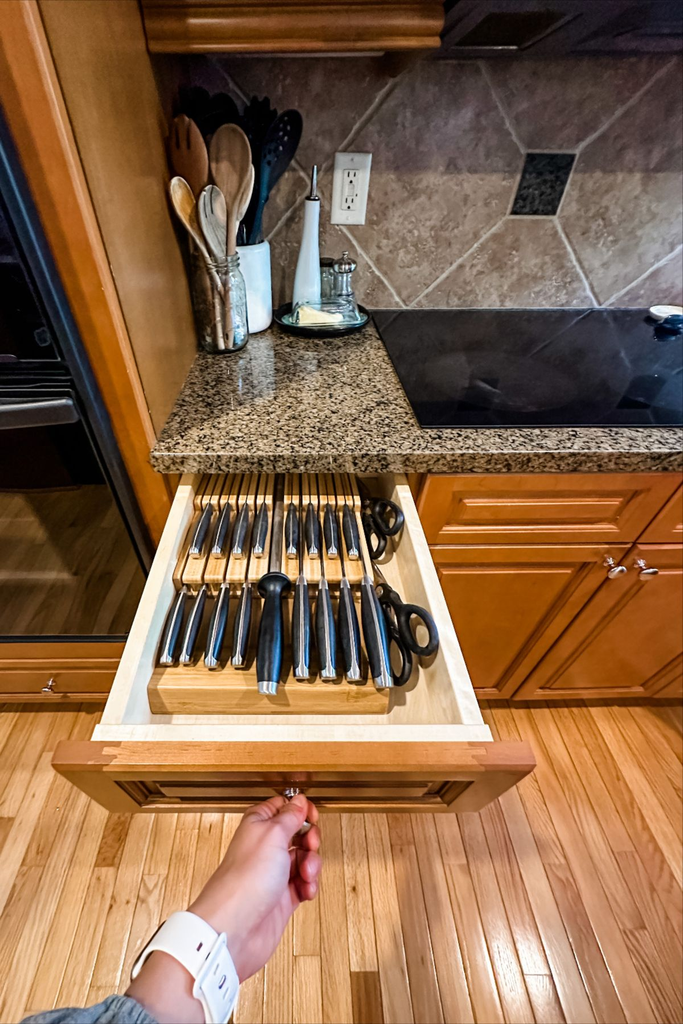
Loose knives in a drawer are a genuine hazard, and they dull each other. An in-drawer knife organizer holds each blade in its own slot so you can see and grab the right one safely. Most run $25 to $50 in bamboo or wood.
The catch is that these trays are sized around standard chef and paring knives. If you own an oddly long bread knife (mine is 14 inches), check the inside length first. I learned that the slow way.
Pro tip: If you’d rather not buy a tray, a magnetic strip on the wall does the same job for $10 and frees the drawer. It only works if you’re okay with knives being visible.
4. Adjustable Tension Dividers for Deep Drawers
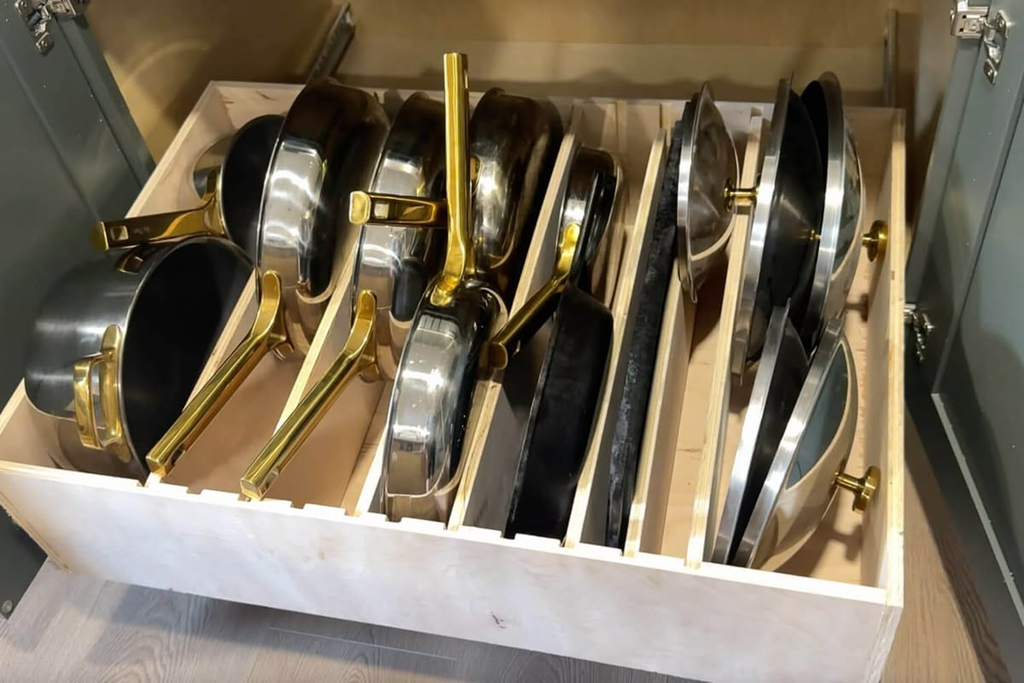
Pots, pans, and mixing bowls turn deep drawers into landslides. Adjustable drawer dividers are spring-loaded bars that press against the drawer walls with no drilling and no tools. You can stand pans vertically like files, so you can grab one without lifting the stack.
Space them a hair wider than the item you’re dividing. If they’re too tight, you’ll be wrestling a lid out at 6 p.m. while something burns. Expect to pay $15 to $30 for a pack of two to four.
The limitation is that tension dividers can slip if the drawer sides are slick, or if the drawer is very wide. Rubber end caps help, and a small dab of removable poster putty at the contact points helps more.
5. Modular Bins for the Junk Drawer
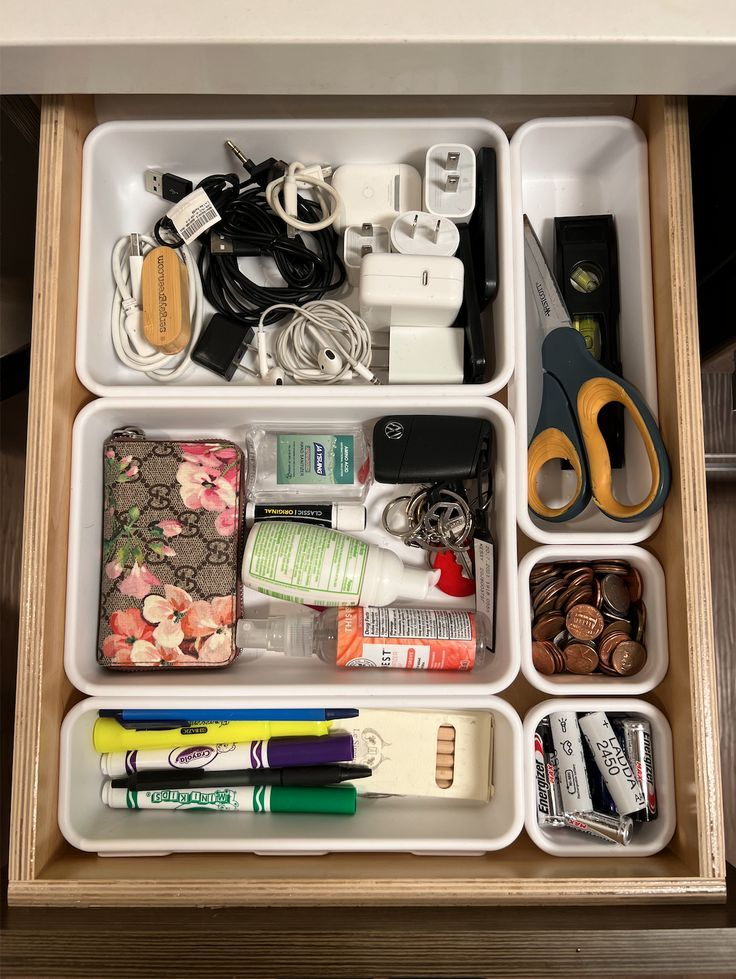
Everyone has one, and everyone pretends it’s fine. Real junk drawer organization isn’t about making it pretty, it’s about giving each category of clutter a fixed home so it stops multiplying.
A set of small interlocking bins in different sizes works best because junk drawers are all different shapes. Sort into batteries and light bulbs, tape and scissors, takeout menus and coupons, and one bin for “I don’t know but I’m scared to throw it out.” I keep that last one small on purpose.
A reader named Dana commented on an older post that she sets a timer for ten minutes and only sorts, no buying anything, before she shops for bins. It’s a good rule. You often discover you need two bins, not eight.
Best Bedroom Drawer Organizers
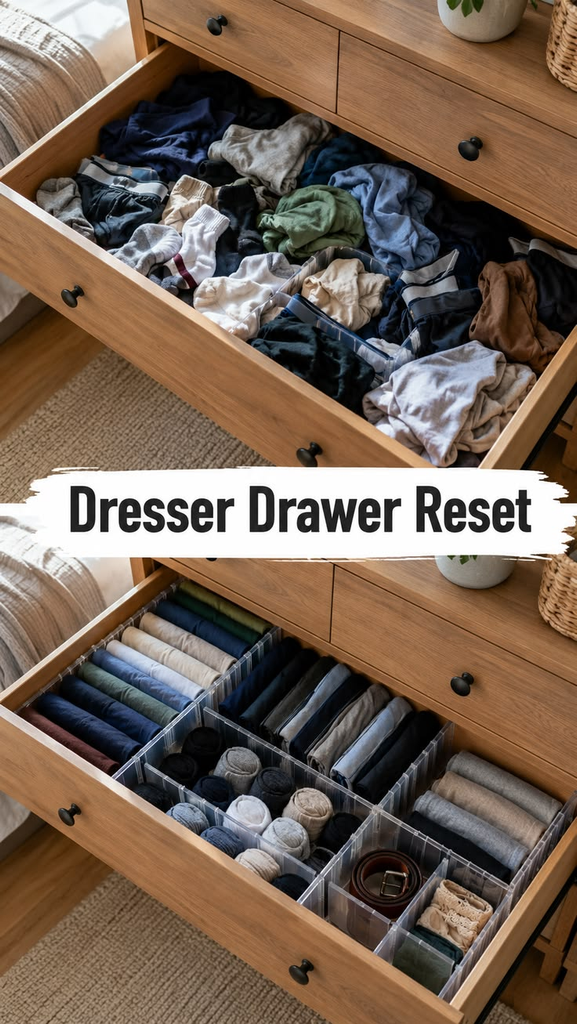
Bedroom drawers are about daily speed. You’re grabbing socks half awake, so the system has to work without your full attention.
6. Honeycomb Fabric Dividers for Socks and Underwear
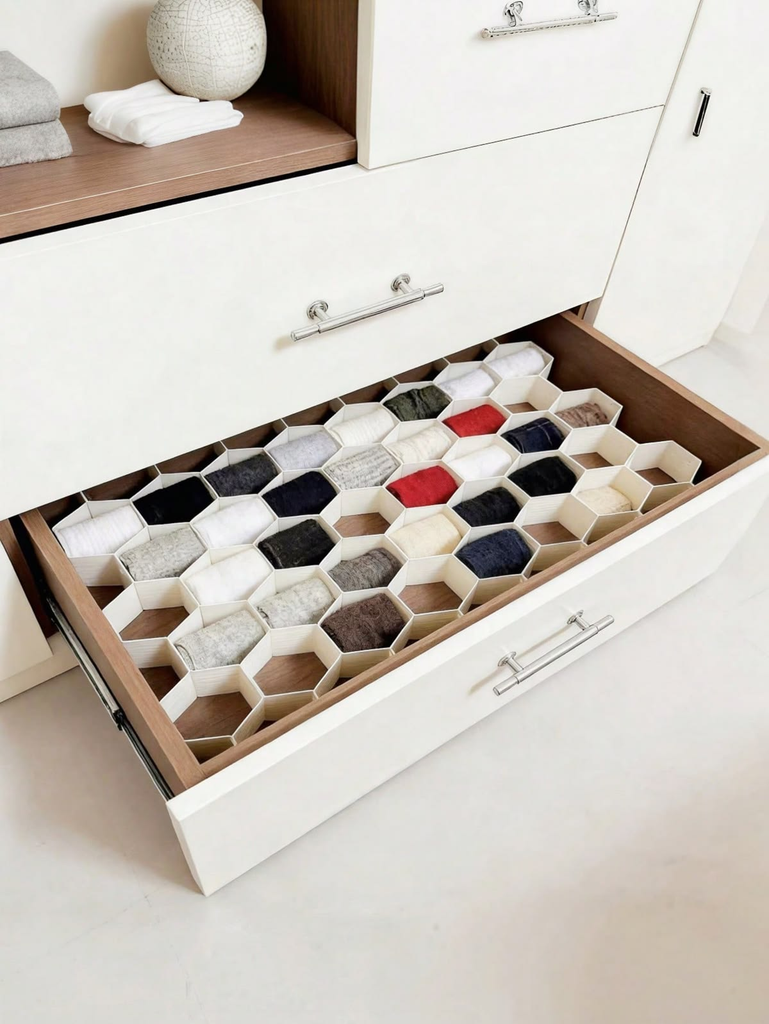
Honeycomb dividers are collapsible fabric grids with square cells, usually sold as sets of 4 to 8 for $10 to $20. They work because they contain small items without needing a hard tray, so they fit almost any drawer shape.
Fold socks into their own cell rather than balling them, and you’ll see everything at a glance. Pairs stay together, and you stop finding solo socks at the back of the drawer.
The trade-off is that fabric dividers can sag if you overfill them. Leave a little breathing room. Also, don’t put anything heavy or sharp in them, like belts with big buckles.
Pro tip: Use one cell as a “waiting room” for socks that lost their partner. If the mate doesn’t turn up in a month, they go into the rag bag. It sounds silly, but it actually clears the odd-sock backlog.
7. Jewelry Drawer Tray With Felt Inserts
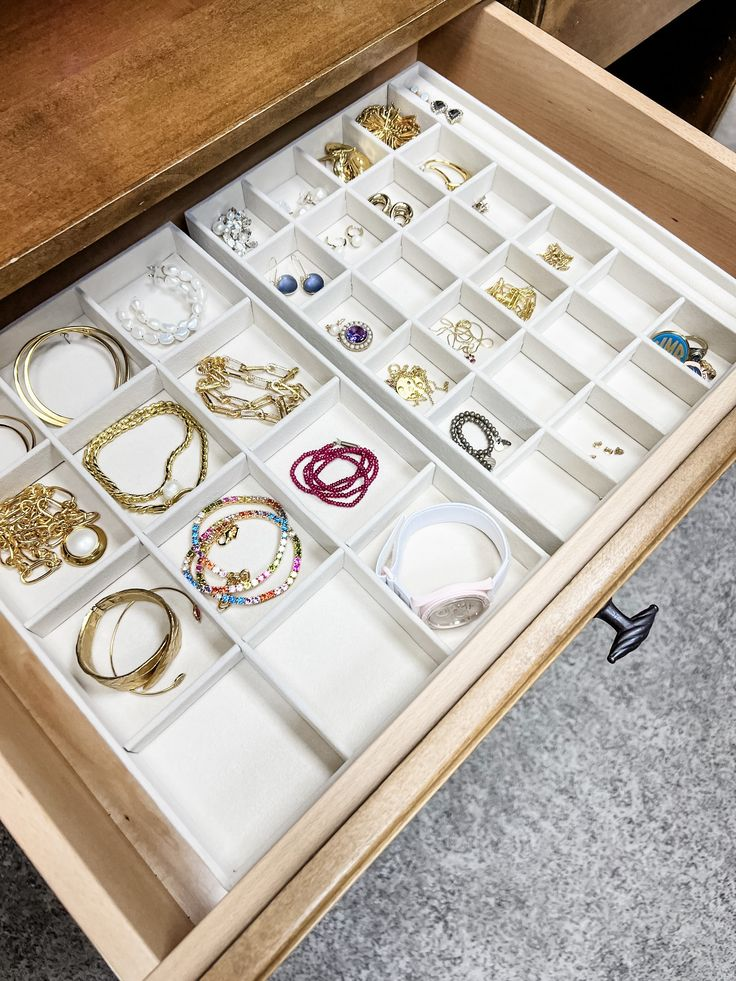
If your necklaces tangle and your earrings vanish, a shallow jewelry tray with felt-lined compartments solves both. Look for adjustable inserts so you can fit rings, studs, and chains in the same tray. Prices run $18 to $40.
Felt matters more than you’d think, since it stops metal from scratching and keeps pieces from clinking around. I skipped it once and ended up with a scratched gold bracelet.
Necklaces are the weak point of any tray. Give long chains their own shallow compartment laid flat, or hang them on a wall hook and use the drawer for everything else.
Best Bathroom Drawer Organizers
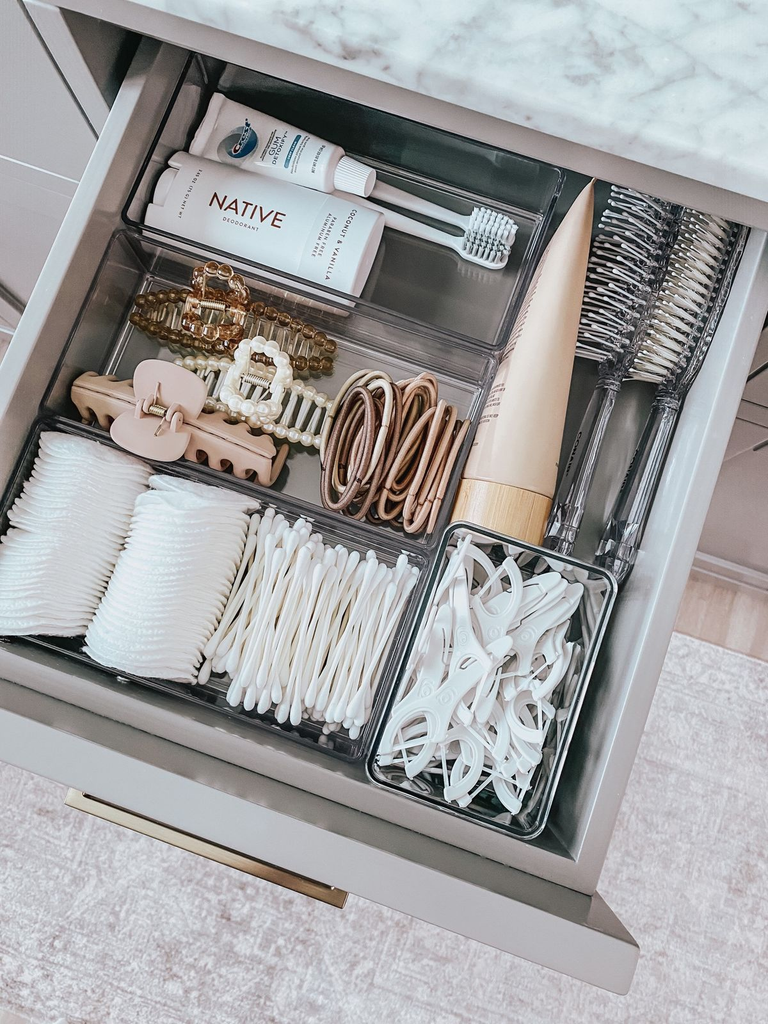
Bathroom drawers deal with humidity, spills, and a strange mix of tiny and awkward items. That means water resistance matters more here than in any other room.
8. Acrylic Makeup Drawer Organizer
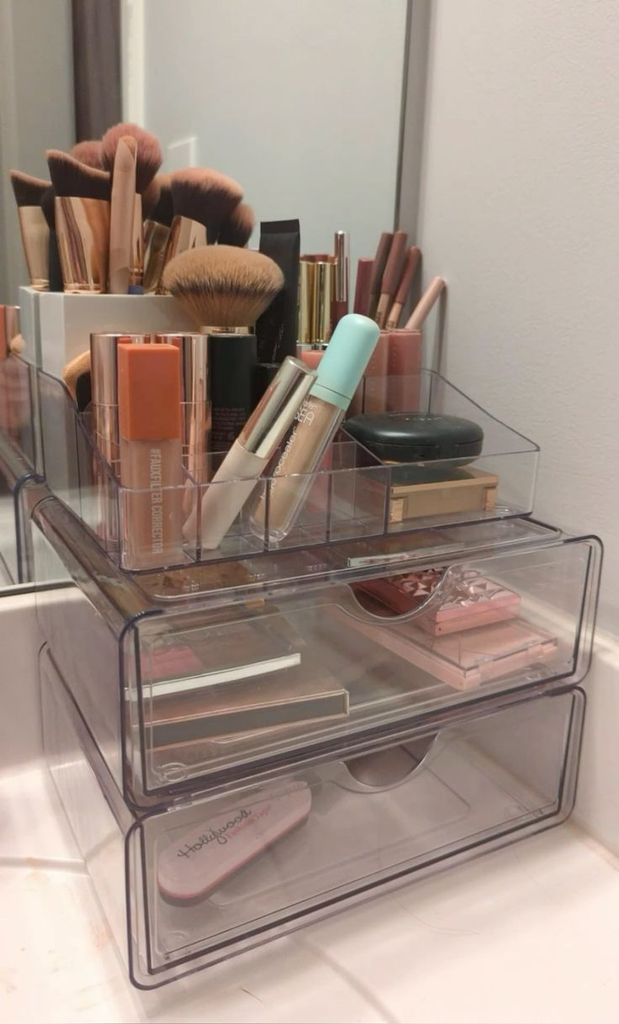
A makeup drawer organizer in clear acrylic lets you see your whole collection without pulling anything out. Tiered trays keep lipsticks angled toward you, and small square bins hold pencils, brushes, and compacts. Budget $20 to $45.
The clear-tray-by-category look is the one Pinterest trend I’ve watched hold up for a couple of years now, and it does so because it’s genuinely useful. You can see what you own, so you stop buying your fourth nude lip liner.
The downside is fingerprints and product dust, which show up immediately on acrylic. A microfiber cloth and thirty seconds a week is all it takes, but you’ll notice if you skip it.
9. Stackable Clear Bins for Hair Tools and Skincare
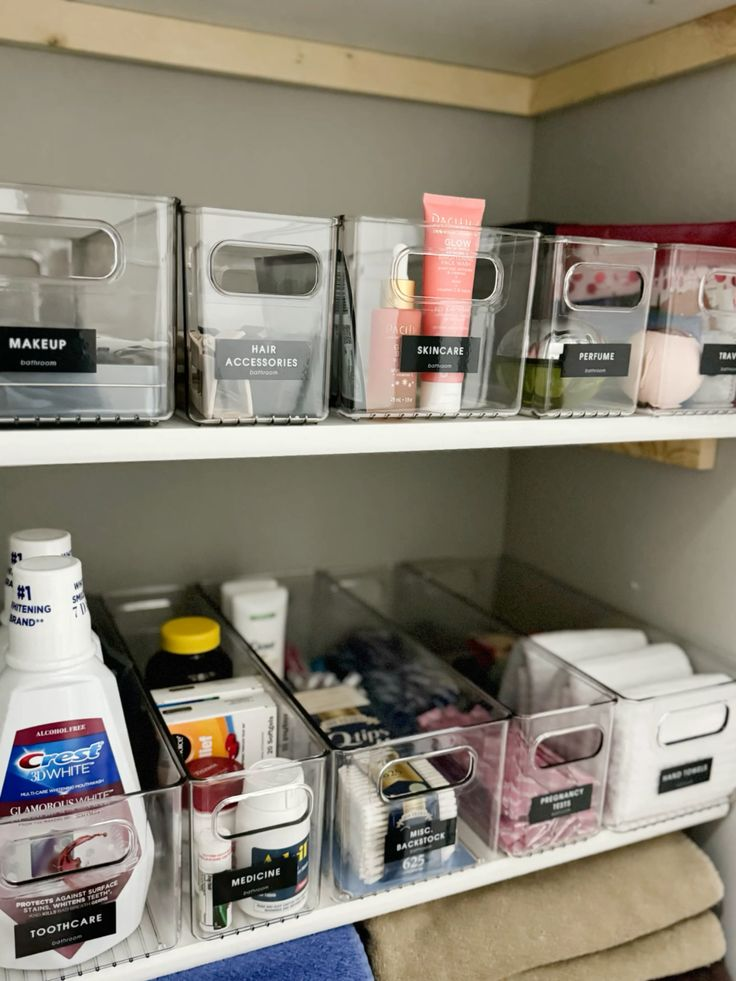
Bathroom drawers are usually deep enough for stacking, and stackable bins take advantage of that. Put hair ties, clips, and brushes in one, and skincare and first aid in another. Plastic is ideal here because it wipes clean when a serum bottle inevitably leaks.
I use a shallow bin turned sideways to corral flat items like sheet masks and dental floss picks. Nothing fancy, and it costs about $12.
Pro tip: Don’t store heat tools right after using them. Let a flat iron cool fully before it goes into a plastic bin, or you’ll warp the bin. I know this because I have a bin with a slight dent shaped like a straightener.
Best Office and Desk Drawer Organizers
Home offices tend to be squeezed into a corner of another room, so desk drawers end up holding a lot more than papers.
10. Desk Drawer Tray for Pens, Sticky Notes, and Supplies
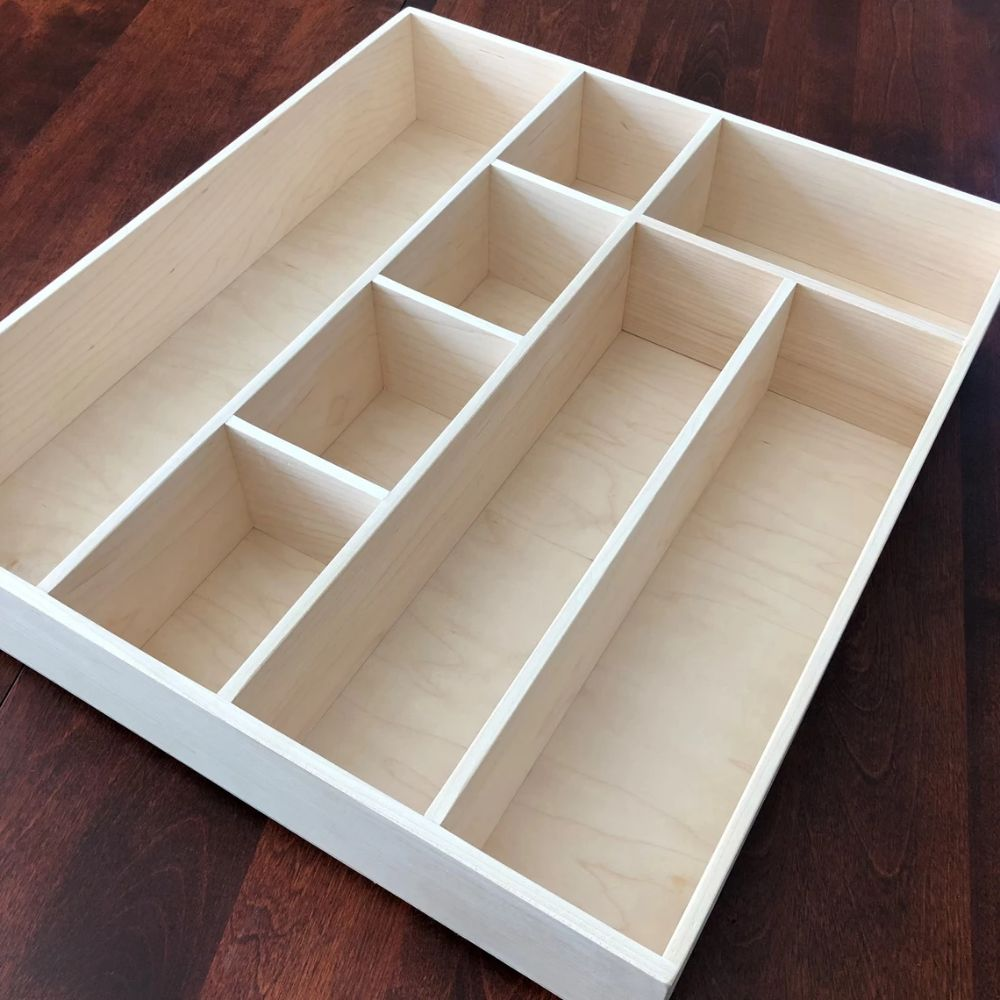
A shallow multi-compartment tray gives your pens, paper clips, and sticky notes a permanent address. The best ones have one long compartment for pens and rulers plus several small squares. Plastic versions cost $8 to $15, bamboo $20 to $30.
Most desk drawers are shallower than people expect, so measure the interior depth before you buy. A tray that leaves less than half an inch of clearance means the drawer sticks.
The trade-off is that a tray encourages hoarding, since a full compartment looks like a system. Do a quick purge of dried-out pens before you fill it.
11. Cable and Charger Organizer
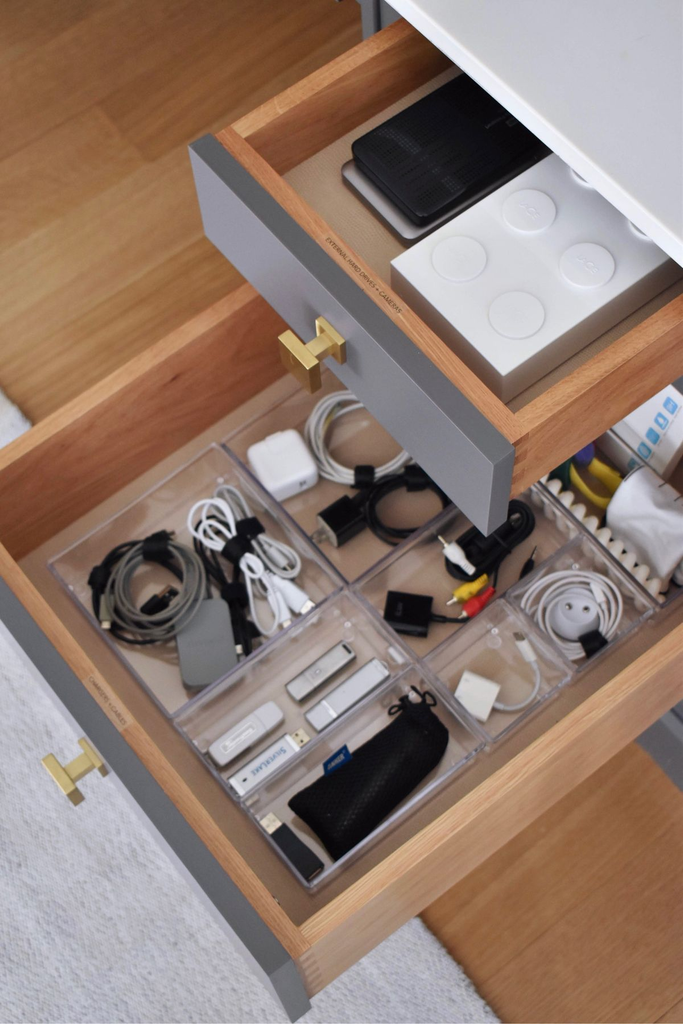
A drawer full of tangled chargers is a very modern kind of misery. Look for organizers with small dividers and a channel for winding cords. Some have silicone slots that hold cables upright. These run $10 to $25.
Label the cords with a tiny piece of masking tape when you sort them. You’ll thank yourself when you’re hunting for the specific charger that fits that one old camera. My own drawer has a tape label reading “Kindle?? maybe” that I’m still not sure about.
If you’ve got a lot of tech, stash the rarely used cords in a labeled zip pouch at the back and keep only daily chargers in the tray.
Best Organizers for Entryways and Kids’ Rooms
These are the drawers that pile up because everyone in the house uses them.
12. Entryway Drawer Organizer for Keys, Mail, and Leashes
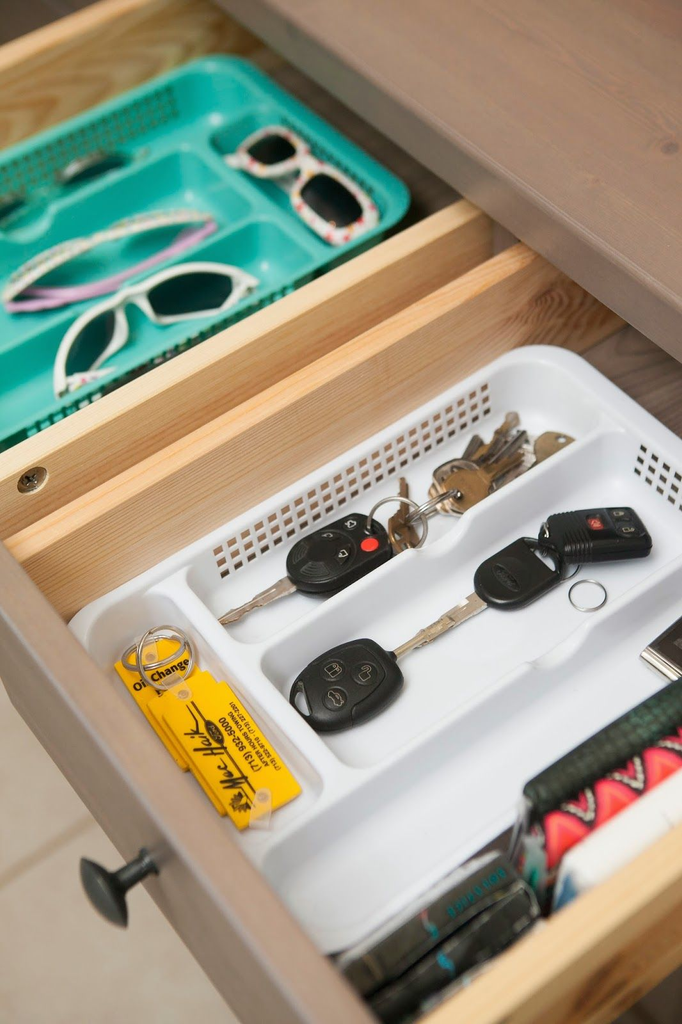
An entryway console drawer is the last thing you touch before leaving, so it needs to work at speed. A tray with a large section for mail, a small one for keys, and a slot for sunglasses handles most households. Expect $12 to $25.
My neighbor Ricardo keeps a dedicated compartment for his dog’s leash and waste bags, and I stole the idea immediately. It cut his “where’s the leash” scramble to zero.
Give mail a hard rule: sort it standing over the tray. Anything that isn’t actionable goes straight in the recycling.
13. Adjustable Dividers for Nursery and Kids’ Drawers
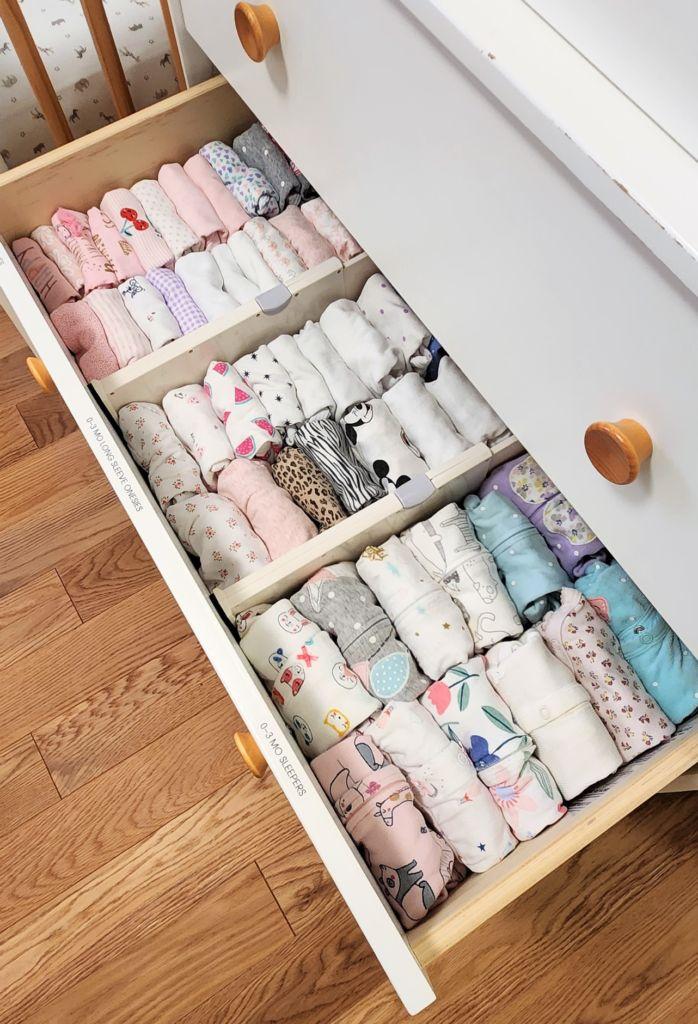
Baby clothes are small, numerous, and constantly changing sizes, so a flexible system beats a fixed one. Adjustable fabric or bamboo dividers let you resize sections as your kid grows out of one size and into the next. Sets cost $12 to $25.
Sort by type first (onesies, sleepers, socks), then by size within each. Label the front of the drawer with the size range, so a tired parent at 3 a.m. isn’t guessing.
Fabric dividers are gentle on delicate items. Skip any organizer with sharp corners or splinter-prone edges in a nursery, and check that everything is easy to wipe clean.
Pro tip: Keep one drawer as a hand-me-down holding zone, labeled with the next size up. It saves you from buying duplicates when a relative offers a bag of clothes.
Quick Guide: Which Drawer Organizers to Buy First
| Room | Start With | Approx. Cost | Why It Comes First |
|---|---|---|---|
| Kitchen | Expandable utensil tray | $20–$35 | Used daily, biggest time saver |
| Bedroom | Honeycomb dividers | $10–$20 | Cheap, fits any drawer |
| Bathroom | Stackable clear bins | $10–$25 | Handles humidity and spills |
| Office | Shallow desk tray | $8–$20 | Instant clutter control |
| Entryway | Key and mail tray | $12–$25 | Stops the morning scramble |
How to Measure Drawers (So You Don’t Return Everything)
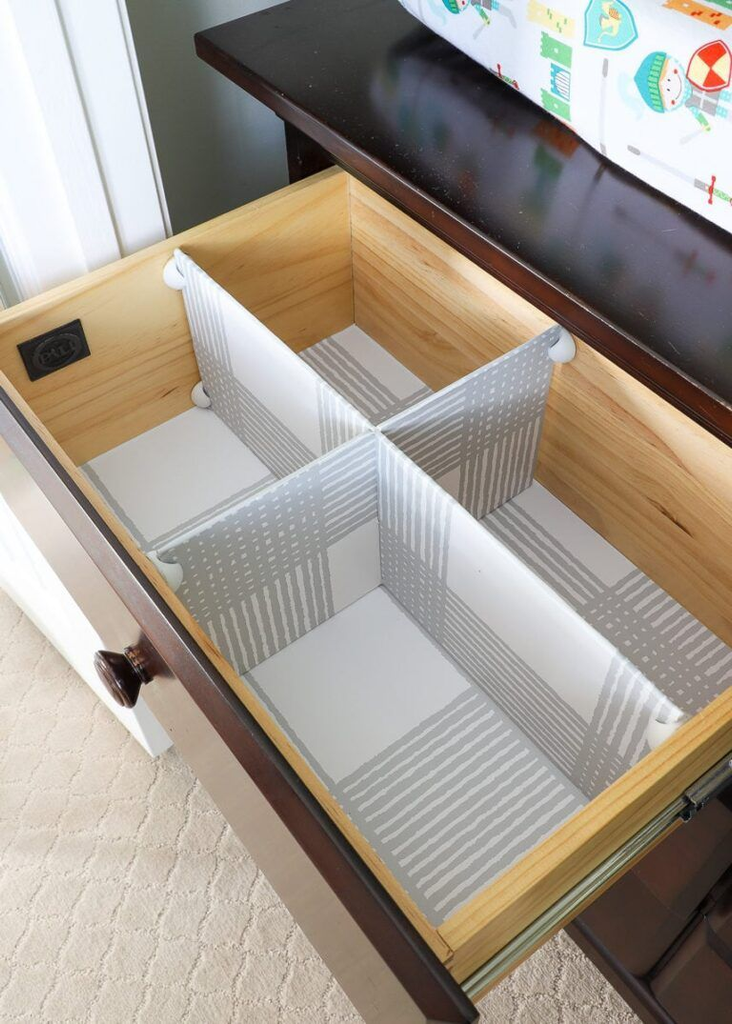
Measure the inside width, depth, and height of each drawer, and write the numbers in your phone’s notes app. Pay attention to the height. A tall organizer might fit the width perfectly and still stop the drawer from closing.
If your drawer has a curved front or a track underneath, measure at the narrowest point. And when a product listing says “fits most drawers,” treat that as a hopeful suggestion rather than a promise.
What I’d Do First If I Were Starting Over
I’d skip the sets and the Pinterest-perfect makeovers and start with the junk drawer, because the payoff is immediate. Ten minutes of sorting, one small set of modular bins, and you’ll actually notice the difference the next time you need a battery.
Then I’d measure every drawer in the house and only buy what I could match to a real problem. The best drawer organizers are the ones you barely think about, because they’ve quietly stopped the digging.









Leave a Reply