
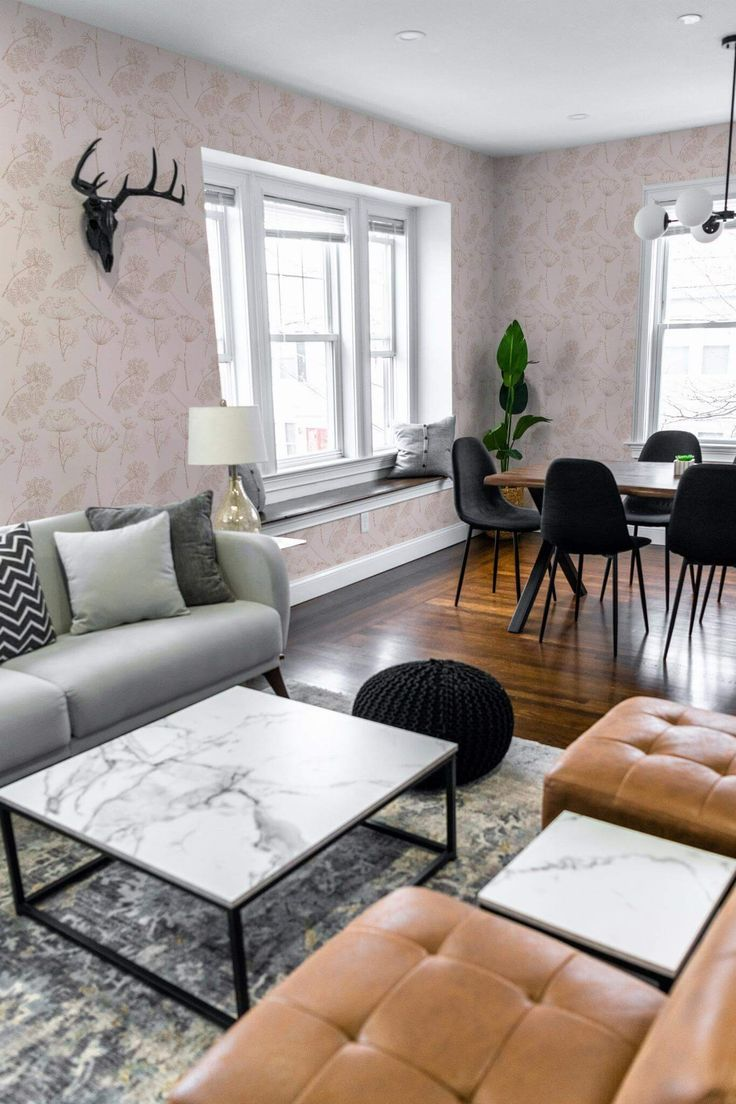
I used to think temporary wallpaper meant one thing: a single accent wall in a living room, the same botanical print everyone on Pinterest was using around 2021. It wasn’t until I papered the inside of a closet almost as a joke, just to use up a leftover half-roll, that I realized temporary wallpaper is actually one of the most flexible tools in a renter’s decorating kit, and most people are only using it in the one most obvious spot in their entire apartment.
The appeal of temporary wallpaper for renters is pretty simple — real pattern, color, and texture, with a peel-and-stick or removable application that comes off clean at move-out, no paint required and no security deposit risk.
What’s less obvious is how many actual spots in a rental can benefit from it beyond the standard living room accent wall, and how differently it performs depending on where you’re putting it, since a bathroom’s humidity and a closet’s tight corners are very different applications than an open living room wall.
I’m going room by room here, because temporary wallpaper genuinely behaves and gets used differently depending on the space — what works great in a bone-dry closet interior isn’t necessarily the right call for a steamy bathroom, and a kids’ room has different practical concerns than a home office.
By the end, you’ll have specific ideas for basically every room in your place, not just the one wall everyone already knows about.
Living Room: Beyond the One Obvious Accent Wall
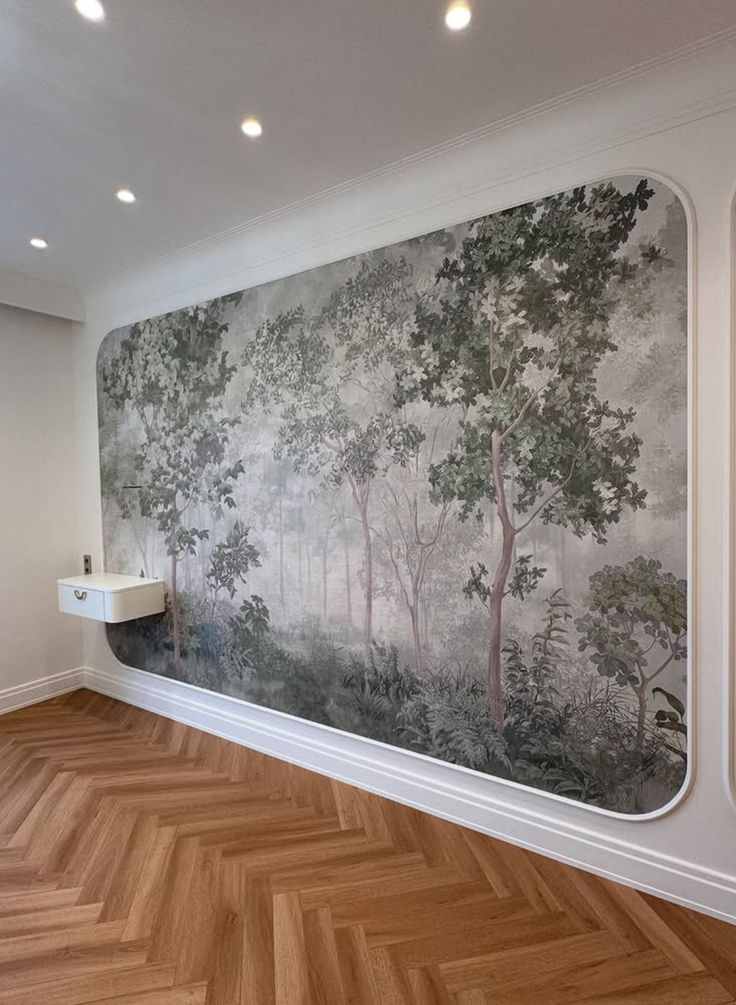
1. The wall behind your TV or media console
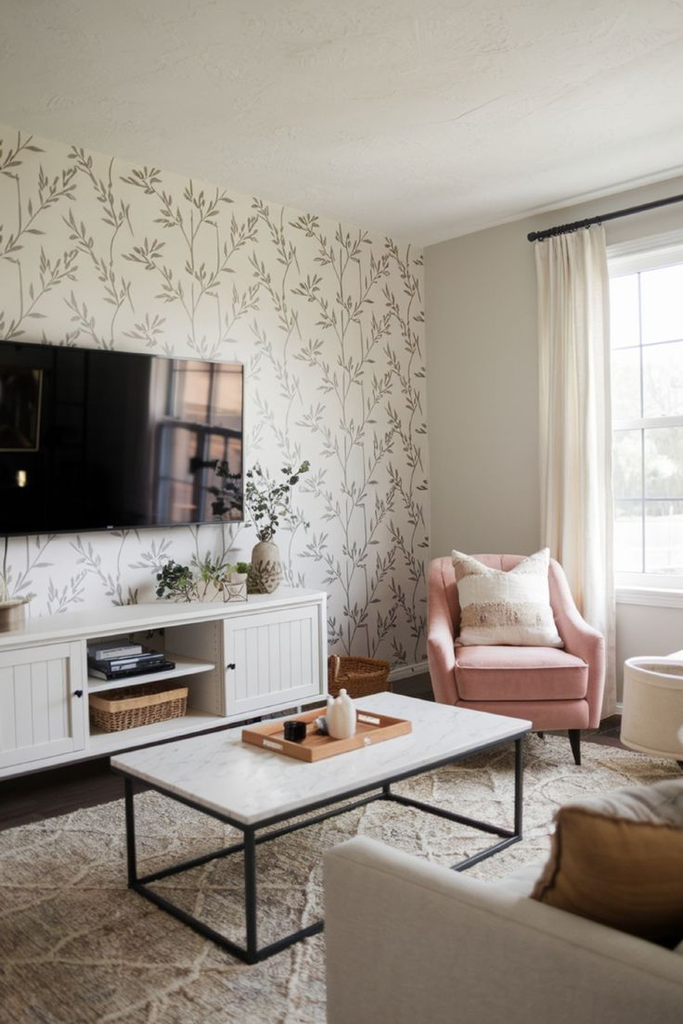
This remains the classic temporary wallpaper spot for a reason — it’s usually the wall you look at most while sitting in the room, and a patterned or textured wallpaper here gives your whole living room a focal point without any furniture rearranging required.
It’s also one of the more forgiving walls to wallpaper since furniture typically covers the bottom third, hiding minor application imperfections near the floor.
Pro tip: Choose a pattern or texture with some visual weight if your TV is mounted directly on the wall — a subtle, busy pattern can actually make the TV blend in and disappear more than a plain wall would, which is a nice side effect if you don’t love staring at a black rectangle when it’s off.
2. The back panel of open or built-in bookshelves
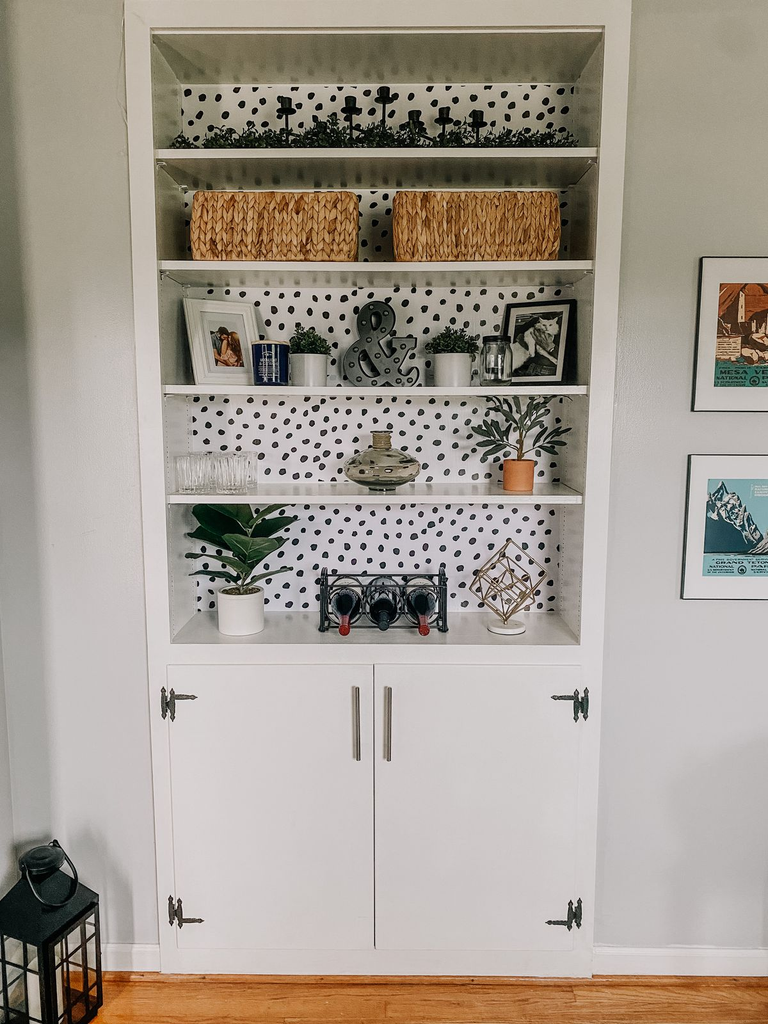
Wallpapering just the back panel of a bookshelf, rather than an entire wall, gives you a bold pattern in a genuinely low-commitment amount of space, since most of it ends up partially hidden behind books and decor anyway.
This is a great spot to experiment with a much bolder or brighter pattern than you’d be comfortable committing to on a full wall.
My friend Alicia used a deep navy pattern on her bookshelf backing that she said she never would have put on an actual wall, and it turned an otherwise plain bookshelf into the first thing people notice in her living room.
3. A fireplace surround or mantel wall
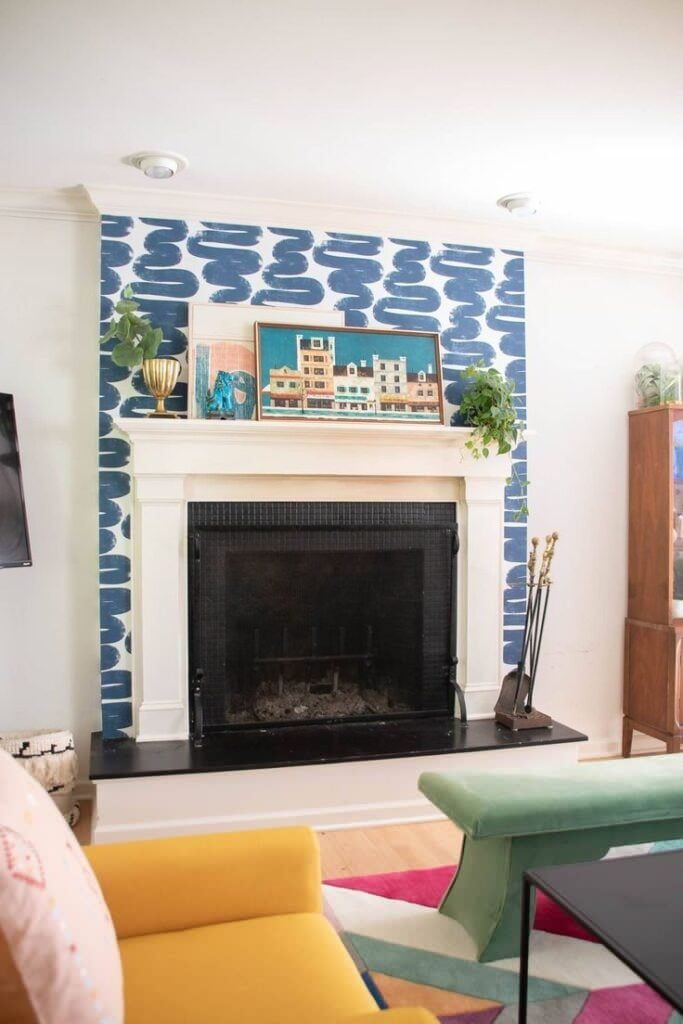
If your rental has a non-functional or decorative fireplace, wallpapering the surrounding wall or the section above the mantel creates a genuine focal point in a room that might otherwise lack one entirely.
This works particularly well because a fireplace already draws the eye, so the wallpaper is reinforcing an existing visual anchor rather than competing for attention.
Bedroom: Headboards, Ceilings, and Closets
4. A headboard-shaped wallpaper accent
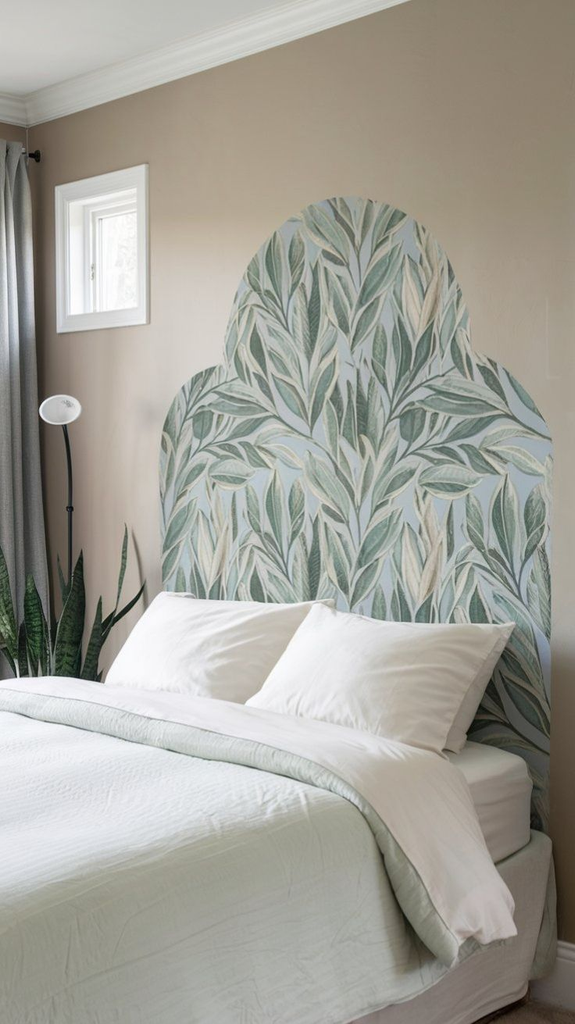
Rather than papering the whole wall behind your bed, applying wallpaper in a headboard shape — a rectangle, an arch, or any defined form — gives the visual effect of a statement headboard without buying an actual piece of furniture.
This is a smart move specifically if your actual bed frame doesn’t have a real headboard, since it fills that visual gap for a fraction of the cost.
Pro tip: Use painter’s tape to map out your headboard shape on the wall before applying any wallpaper — it’s much easier to adjust tape lines a few times than to reposition an already-applied sheet of wallpaper once you realize the proportions look off.
5. A ceiling “canopy” effect over the bed
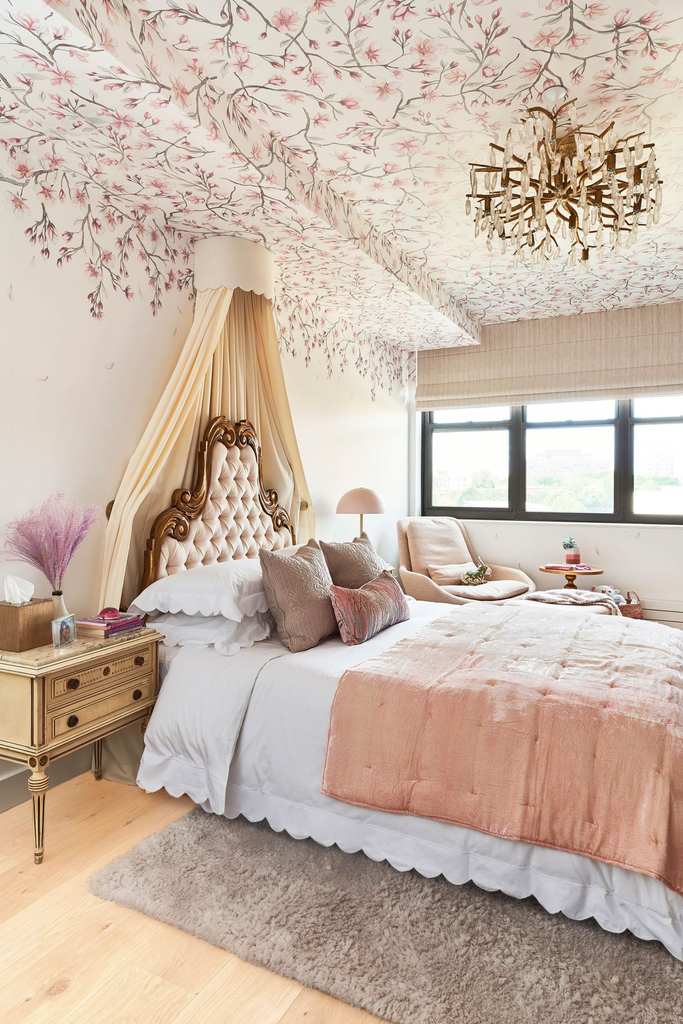
Applying wallpaper to the ceiling directly above your bed, rather than a wall, creates a canopy-like effect that feels more dramatic and unexpected than another accent wall.
Ceilings are genuinely underused as decor surfaces in general, and a bedroom ceiling specifically is something you look at every single night before falling asleep, which makes it a strangely high-value spot for a small design investment.
The trade-off is that ceiling application is physically harder than wall application — you’re working against gravity the whole time, and it’s much easier to get air bubbles or uneven seams overhead than on a vertical surface.
Pro tip: Get a second person to help hold and position the wallpaper for a ceiling application — this is one temporary wallpaper project that’s genuinely difficult to do well solo, unlike almost everything else on this list.
6. The interior of a bedroom closet
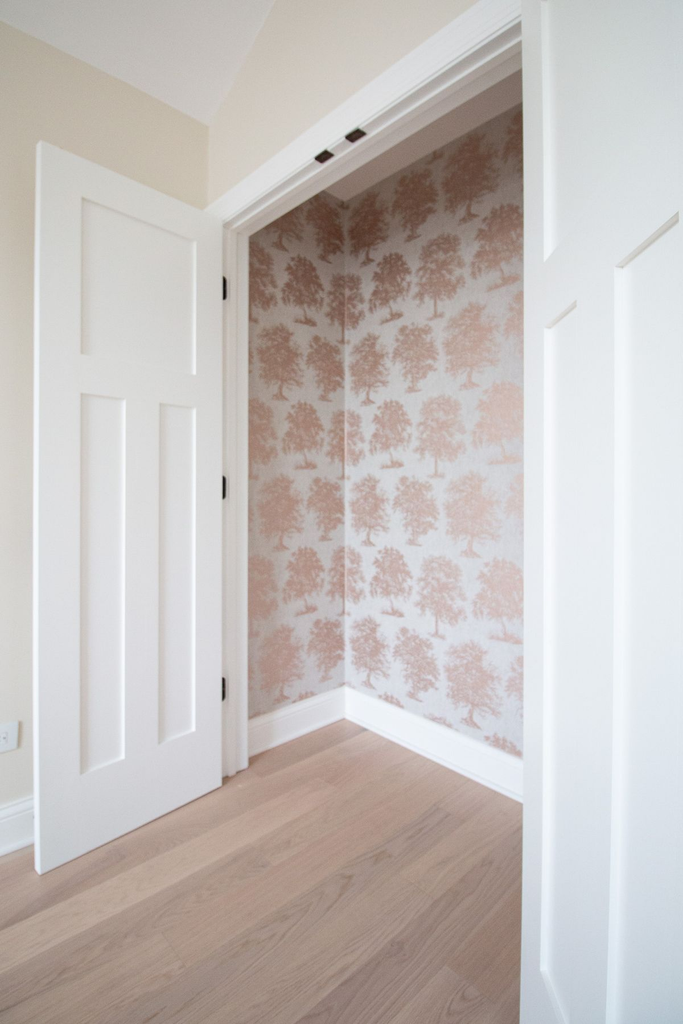
Papering the inside back wall of a closet gives you a small, low-stakes spot to use up a leftover partial roll from another project, or to try a pattern you’re not fully sure about before committing to a bigger wall elsewhere in your home.
It’s also just a nice surprise every time you open the closet door, turning a purely functional space into something with a little personality.
Bathroom: Working Around Humidity
7. A half-wall or wainscoting-height treatment
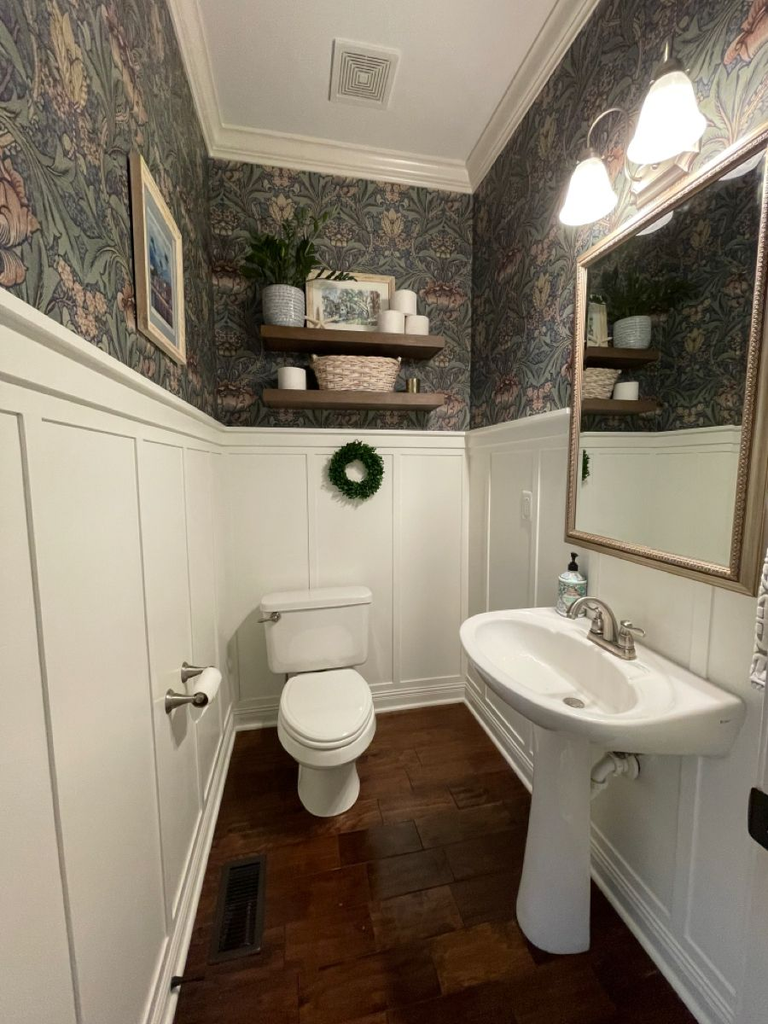
Rather than papering a full bathroom wall, applying wallpaper only to the lower half, in a wainscoting-style treatment with a chair rail or simple trim line marking the transition, reduces the total surface area exposed to bathroom humidity while still delivering real visual impact.
This is a smart compromise for a room where full-wall wallpaper carries a higher risk of peeling over time.
Pro tip: Look specifically for a wallpaper labeled water-resistant or bathroom-rated rather than a standard peel-and-stick product — regular wallpaper can bubble or lift within a few months in a bathroom with regular hot showers, even if it looked fine the day you applied it.
8. Around a vanity mirror
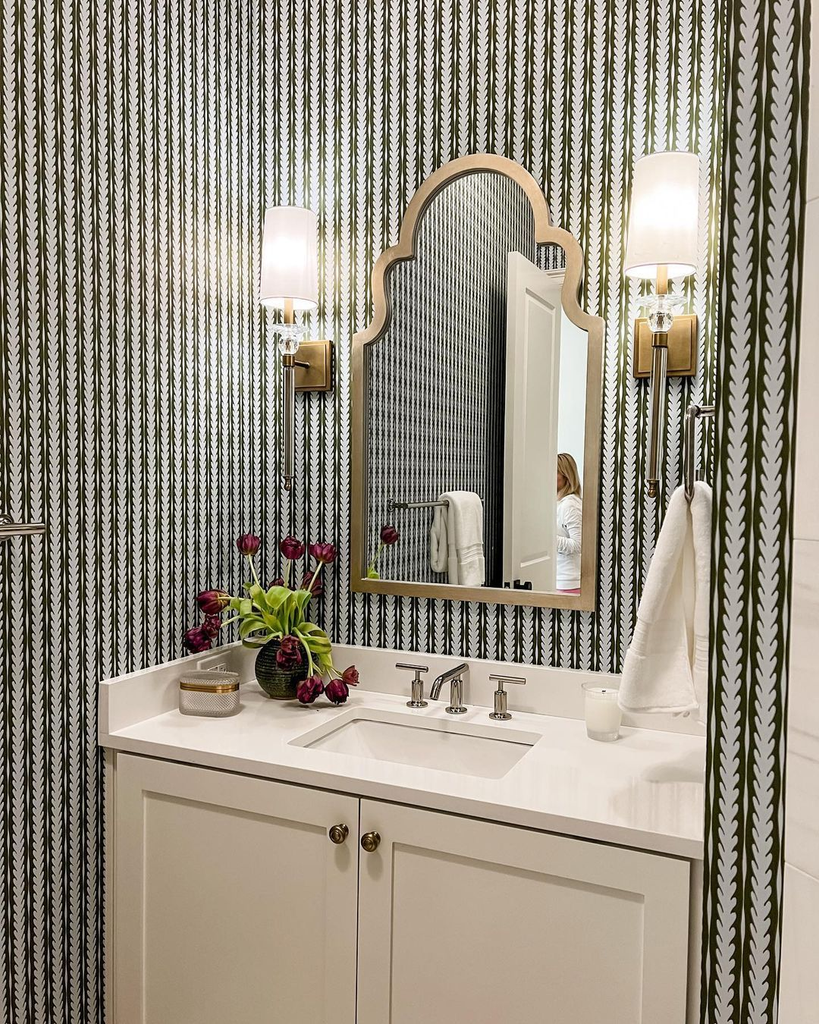
A patterned border or full section of wallpaper surrounding your bathroom mirror, rather than the whole wall, creates a framed effect that draws attention to the mirror itself as a design feature.
This is a smaller, more contained project than a half-wall treatment, and it’s genuinely one of the lower-risk bathroom applications since it’s usually further from direct shower steam.
9. Inside a medicine cabinet door
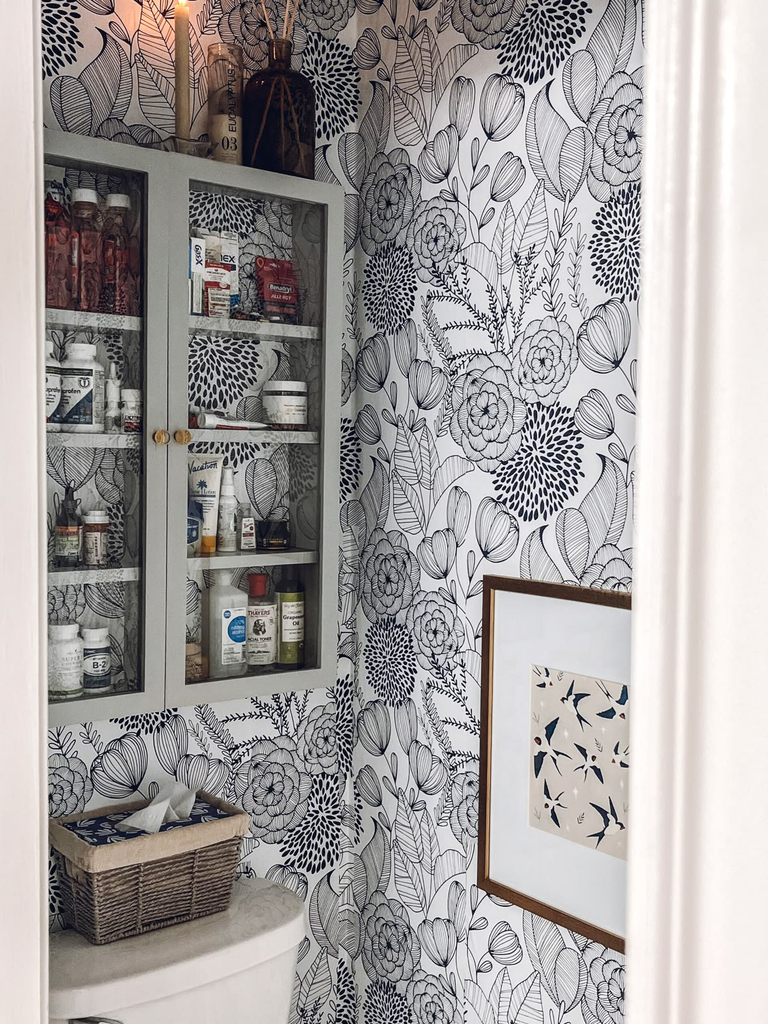
If your bathroom has a mirrored medicine cabinet, papering the interior shelving or back panel gives you a small, playful surprise every time you open it, similar to the closet idea in the bedroom section.
It’s a genuinely tiny amount of material and effort for a detail that consistently makes people smile when they notice it.
Kitchen: Small, Contained Applications
10. The interior of a pantry
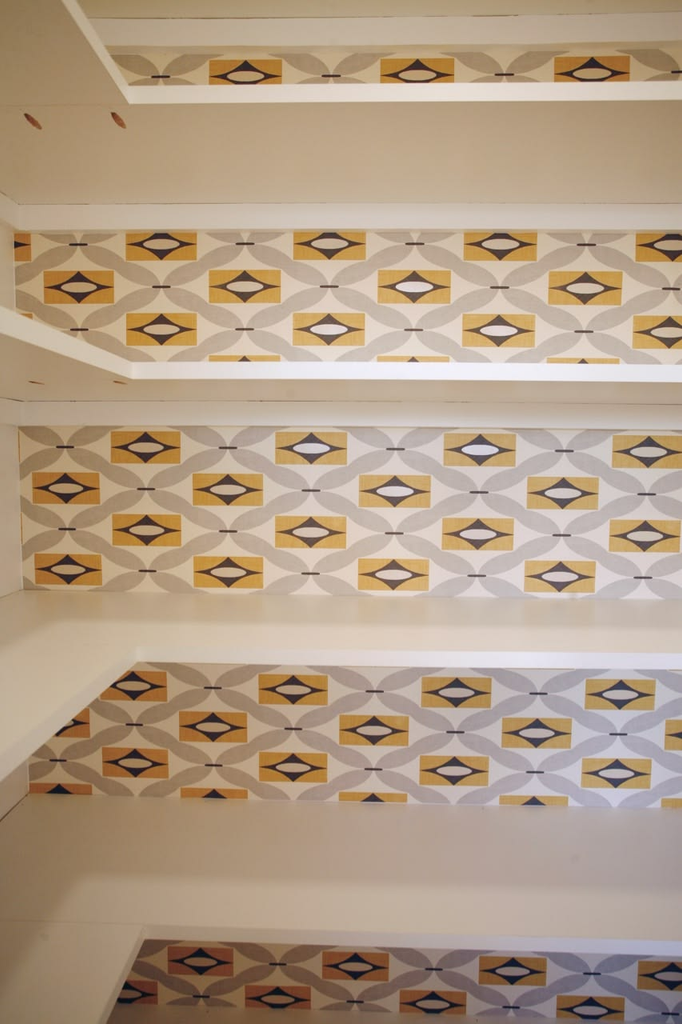
A patterned wallpaper on the back wall of a pantry, visible every time the door opens, turns a purely functional storage space into something with a bit of personality, the same way it works in a bedroom closet.
Kitchens tend to be higher humidity and grease-exposure environments than bedrooms, so keeping this application contained to the pantry interior, away from the stove, is the safer bet.
11. A small accent strip behind open shelving
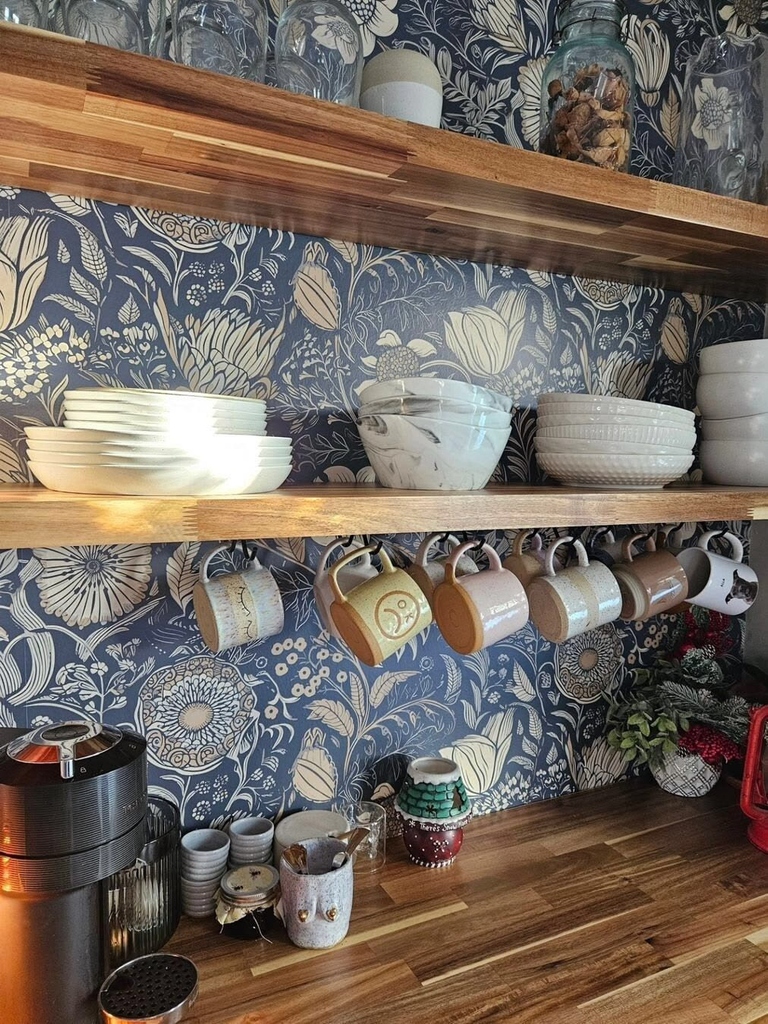
If you have open kitchen shelving rather than upper cabinets, wallpapering just the section of wall directly behind the shelves creates a backdrop for your displayed dishes and glassware, similar to how a bookshelf backing works in a living room.
Keep this well away from your stove or any direct heat source, since kitchen wallpaper applications are more vulnerable to grease and heat damage than almost any other room on this list.
| Temporary Wallpaper Type | Best Rooms | Durability | Ease of Removal |
|---|---|---|---|
| Peel-and-stick vinyl | Living room, bedroom, closets | Good, moderate humidity tolerance | Easy, minimal residue |
| Fabric-backed removable | Bedroom, home office | Good, softer texture, less shiny | Easy, very low residue risk |
| Static cling (no adhesive) | Low-commitment trial spots, rental-strict buildings | Lower durability, can lift at edges | Extremely easy, zero residue |
| Water-resistant peel-and-stick | Bathroom, kitchen | Best humidity/heat resistance | Moderate, check specific product |
| Traditional pre-pasted removable | Larger walls, ceilings | Good for large flat surfaces | Moderate, requires water to remove |
Entryway and Hallway: First Impressions
12. A full entryway accent wall
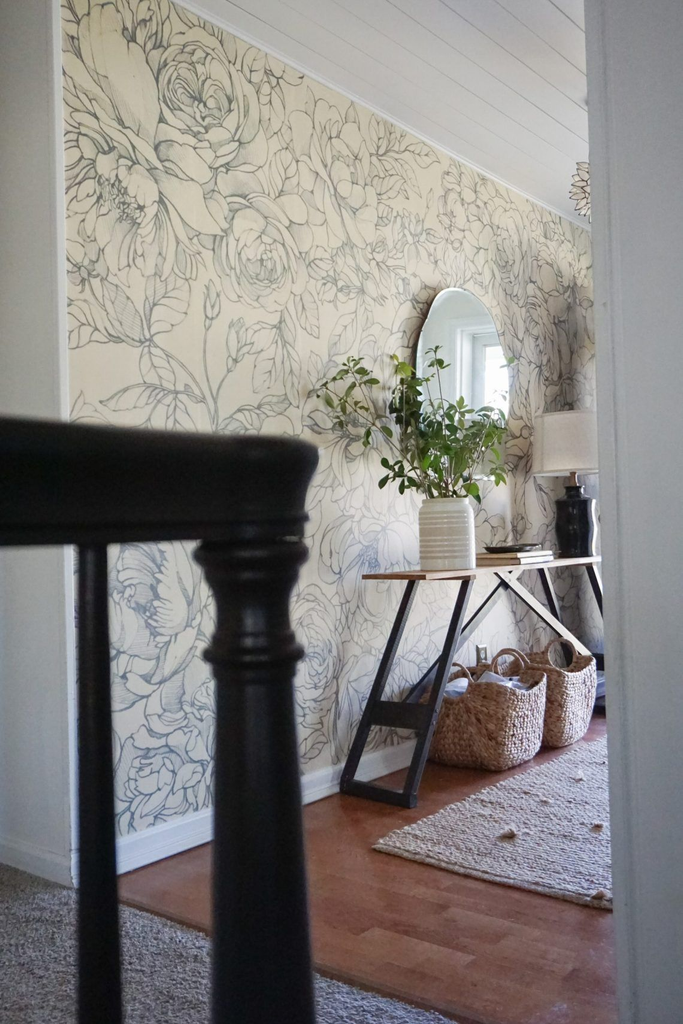
The wall you or a guest sees immediately upon walking in sets the tone for the whole apartment, and it’s one of the highest-visibility spots for a bold wallpaper choice since there’s usually minimal furniture to cover it.
This is a good spot for a pattern you love but might feel like “too much” in a room you spend hours sitting in, since an entryway is more of a passing-through space.
13. Wallpapered stair risers
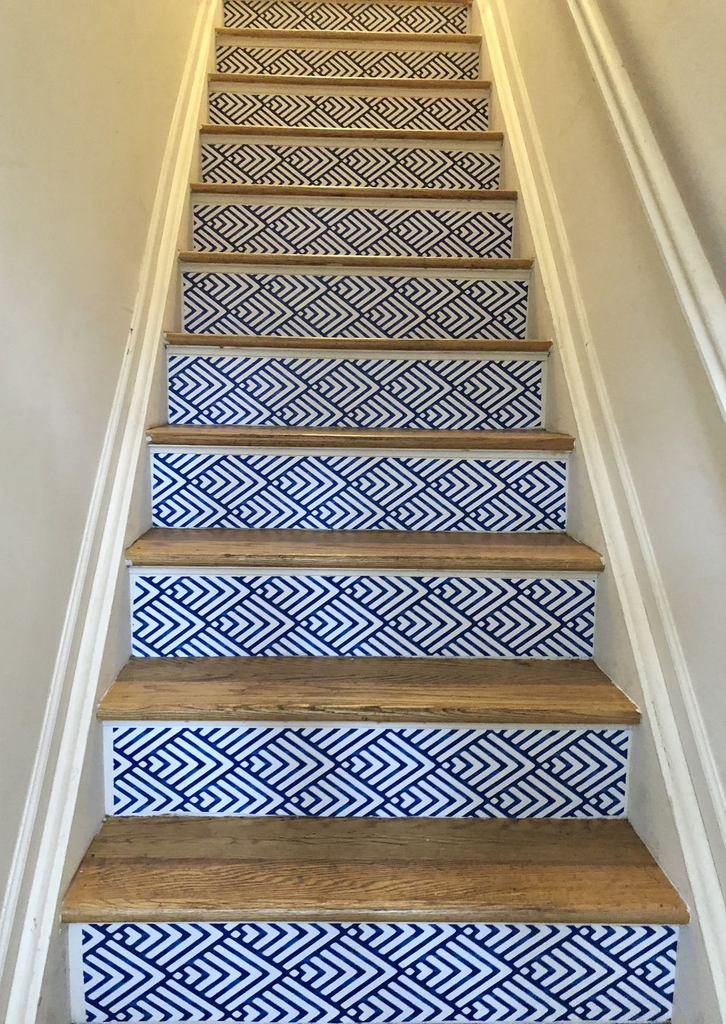
If your rental has an interior staircase, applying a different removable wallpaper pattern to each individual stair riser — the vertical part of each step — creates a genuinely striking visual effect that’s become a specific, identifiable trend rather than a generic “wallpaper accent.”
It’s a bigger project in terms of the number of individual pieces to cut and apply, but each piece is small and low-risk if you make a mistake on one.
Pro tip: Order a bit more wallpaper than your calculated square footage for a stair riser project specifically — the number of small individual pieces means more cutting and more chances for a small mistake or a piece that doesn’t quite line up, and running short mid-project is more disruptive here than on a single flat wall.
14. A gallery wall backdrop in a hallway
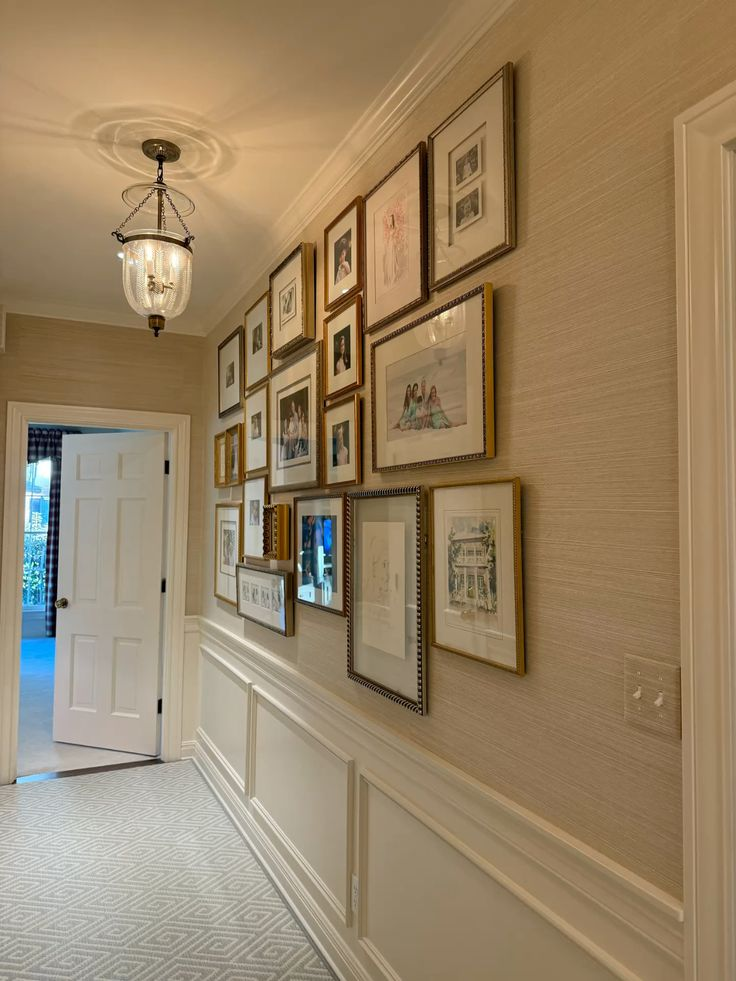
Applying a subtle, textured wallpaper behind a cluster of framed photos or art in a hallway adds depth and dimension that a plain painted wall can’t, without competing with the actual photos and art themselves for attention.
Choose something more textural or tonal here rather than a busy, colorful pattern, since the goal is a backdrop, not a second focal point.
Home Office: Function Meets a Little Personality
15. A video-call backdrop wall
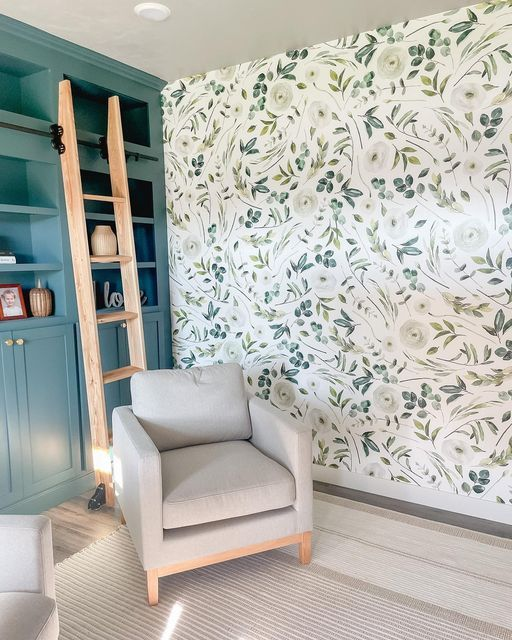
If you work from home, wallpapering the wall behind your desk — specifically the section visible in your webcam frame — gives your video calls a more polished, intentional background than a bare wall or a random bookshelf.
This is a genuinely practical application of temporary wallpaper that goes beyond pure decor, since it’s solving a real work-from-home problem.
Pro tip: Do a test video call with the wallpaper up before committing to it as your permanent backdrop — some patterns that look great in person can create a distracting moiré effect or look oddly busy through a webcam’s compression, which isn’t something you’d predict just by looking at the wall directly.
16. The interior of a closet converted into a workspace nook
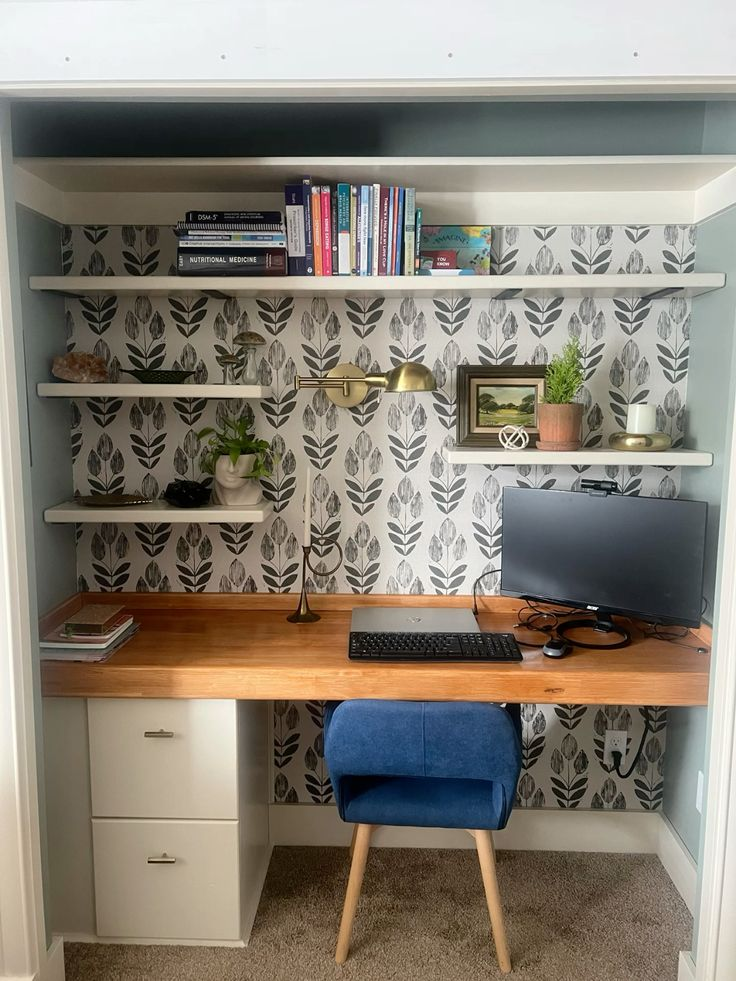
For anyone using a closet as a makeshift home office — a genuinely common setup in small apartments — wallpapering the interior back wall gives that tiny, enclosed workspace a sense of intentional design rather than feeling like you’re working out of a converted storage space.
Kids’ Room and Nursery: Playful and Low-Commitment
17. A playful mural-style accent wall
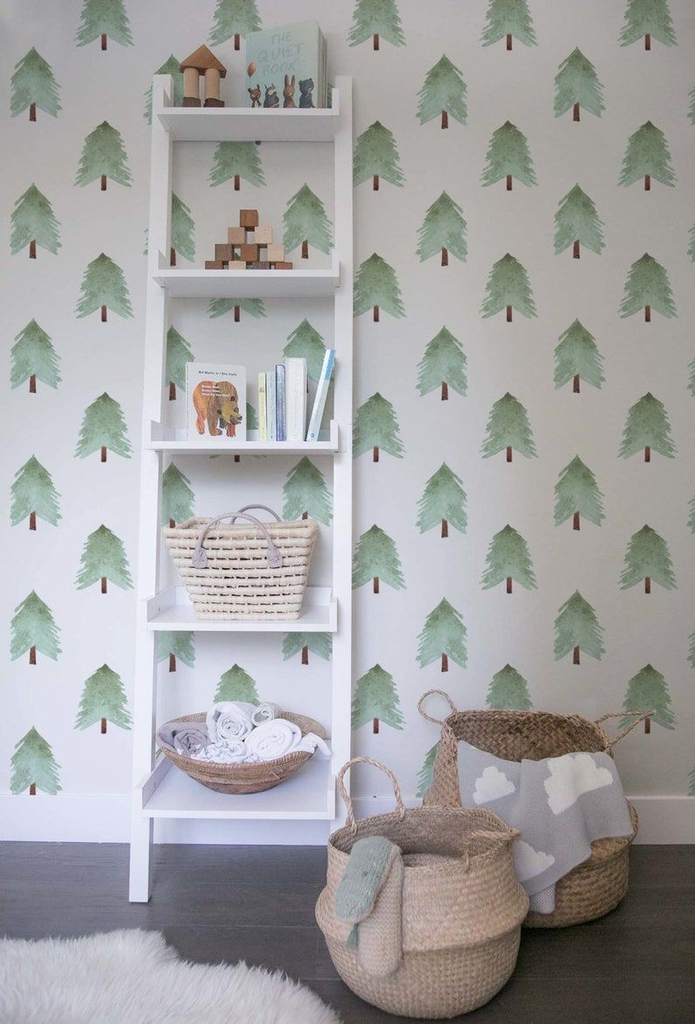
Temporary wallpaper murals — a cloud print, a simple forest scene, an abstract pattern in bright colors — give a kids’ room genuine visual interest without the commitment or cost of a hand-painted mural, and they’re easy to swap out entirely as your kid’s taste changes over a few years.
This is one of the more practical applications on this whole list specifically because kids’ preferences shift so much faster than an adult’s decor taste does.
18. A closet interior in a fun, contrasting pattern
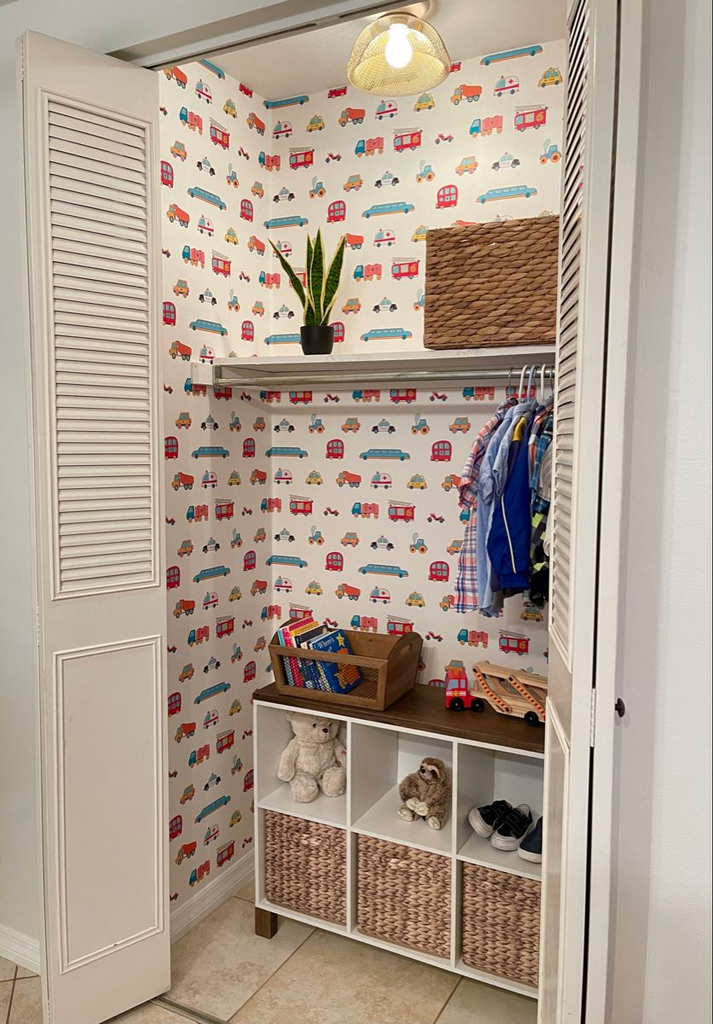
Similar to the bedroom and kitchen closet ideas, papering the inside of a kid’s closet in a bright, playful pattern turns a mundane storage space into a small delight every time the door opens, which is a detail that costs very little but that kids specifically tend to notice and enjoy.
Ceilings and Small Nooks: The Most Overlooked Surfaces
19. A “fifth wall” ceiling accent in a small room
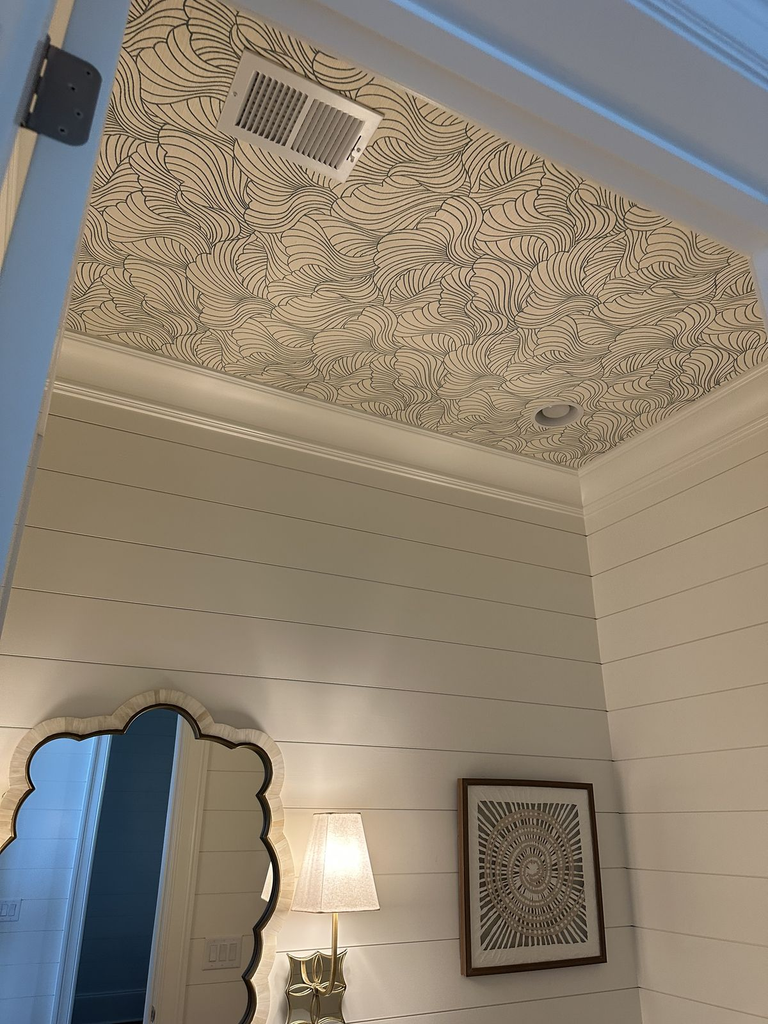
Beyond the bedroom canopy idea, any sufficiently small room — a powder room, a reading nook, a tiny home office — can handle a full ceiling wallpaper treatment as its own standalone design choice, independent of any bed or furniture below it.
Small rooms are the most forgiving place to try this because the ceiling square footage involved is genuinely manageable for a first attempt.
20. The ceiling of a built-in reading nook
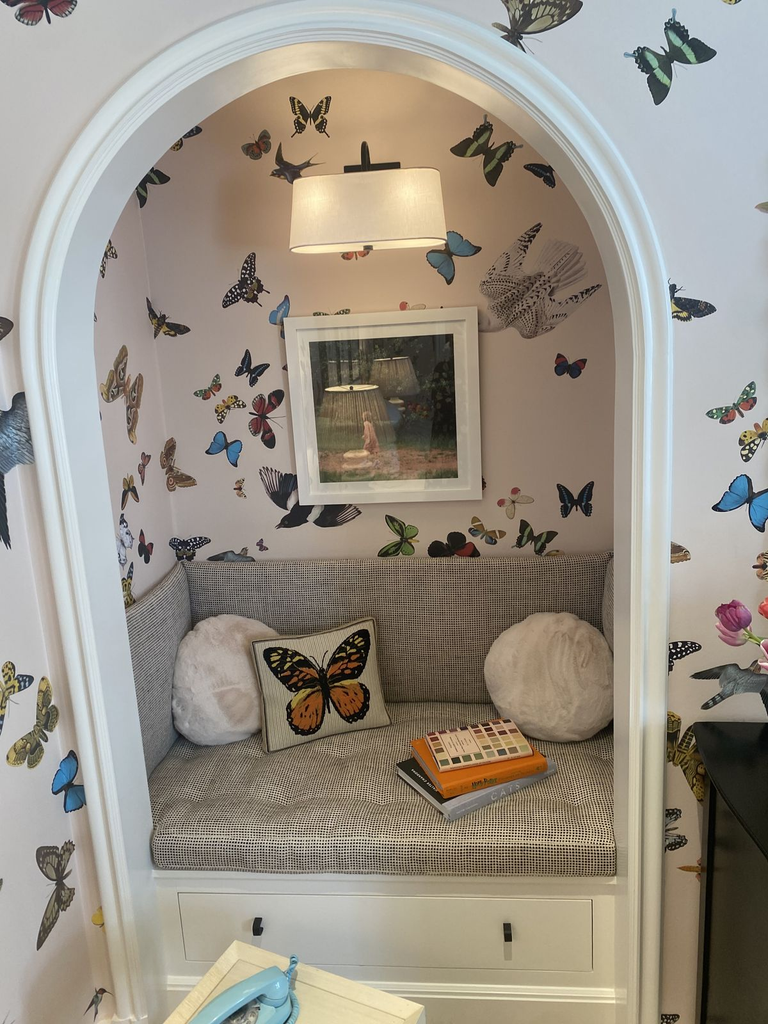
If your apartment has any kind of built-in nook or alcove, wallpapering just its ceiling section creates a cozy, enclosed feeling that makes the nook read as a distinct, designed space rather than an afterthought corner of a larger room.
21. Inside a linen closet or utility closet
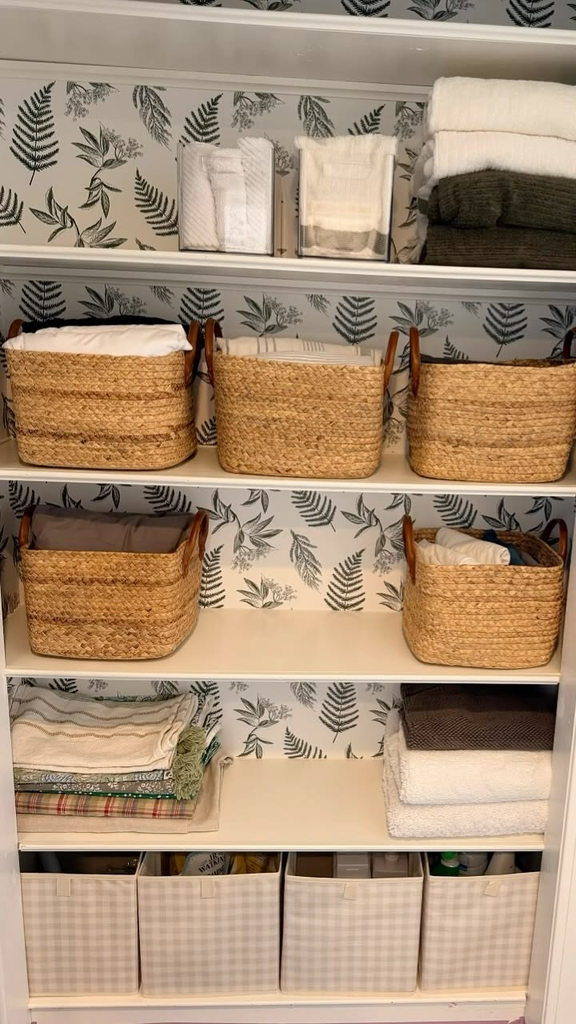
Even the most purely functional closets in your apartment — linen storage, a utility closet, wherever your vacuum lives — can get the same small wallpaper treatment as a bedroom or kitchen closet.
It’s genuinely one of the lowest-stakes places to use up leftover material from a bigger project elsewhere in the apartment.
22. A laundry nook or stacked washer-dryer closet surround
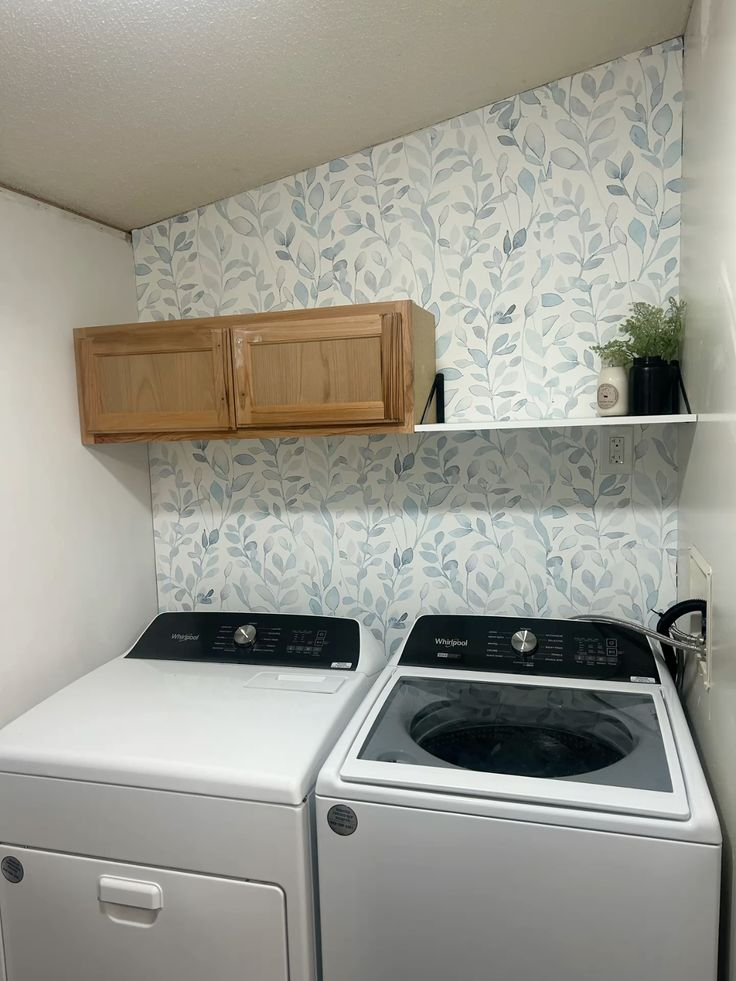
If your rental has an in-unit laundry nook, wallpapering the wall surrounding the washer and dryer turns a purely utilitarian corner into something with a bit of visual interest, similar to how the pantry idea works in the kitchen.
Keep it away from any direct heat vent from the dryer, and stick to a water-resistant option here given the moisture involved.
Where I’d Start If I Were Doing This All Over Again
If I were starting from a completely blank rental today, I’d begin with a closet interior somewhere low-stakes, specifically to build confidence with the actual application process, before committing to a full visible wall in the living room or bedroom.
Closets are forgiving practice spaces precisely because nobody but you sees the seams up close, and any small mistakes you make while learning stay hidden behind a door.
What changed my whole relationship with temporary wallpaper wasn’t finding the perfect pattern for my living room — it was realizing how many small, contained, low-risk spots exist throughout an apartment to use it well before you ever have to commit to a large, highly visible wall.
The closet I papered as an afterthought is still the thing I’m most fond of in that old apartment, more than the accent wall I’d actually planned.


Leave a Reply