
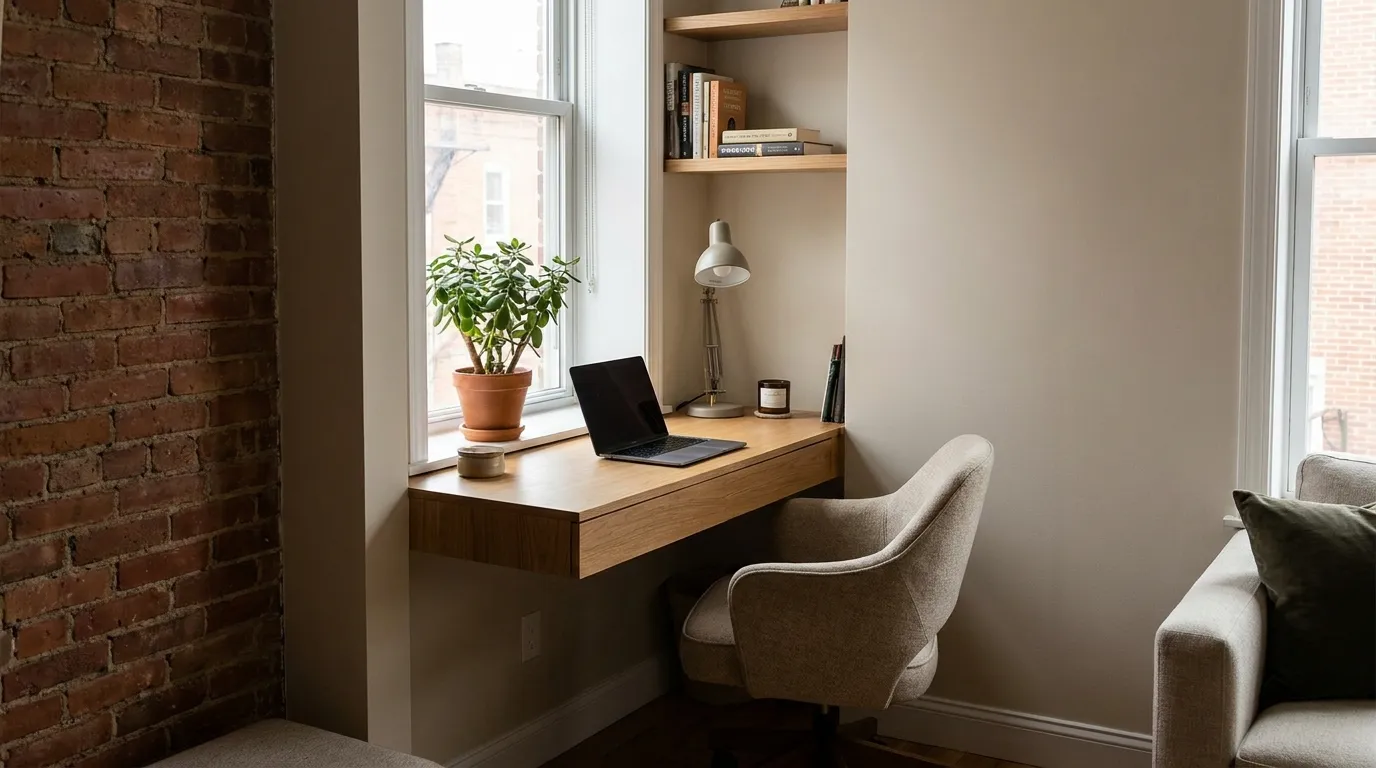
I worked from my kitchen table for two years before I finally admitted the problem wasn’t my laptop or my chair — it was that I didn’t have a real workspace. Just a table that turned into a office at 9am and a dinner spot at 6pm, with my charger cords and a stray stapler sliding into the fruit bowl every single day.
My apartment is 540 square feet. There was no spare room to sacrifice for an office. So I spent about four months (and way too many late-night Pinterest sessions) testing tiny home office nook ideas in literally every dead corner of my place — closets, hallway walls, the gap next to my dresser, even a windowsill — before I landed on a setup that actually stuck.
If you’re in the same boat — working from a small apartment, a studio, or a one-bedroom where “extra room” isn’t a thing — this is for you. You don’t need a spare bedroom to have a real home office. You need about 18 to 36 inches of underused space and a plan that fits how you actually work, not just how it photographs.
I’m going to walk through tiny home office nook ideas organized by where the space actually comes from: closets, walls, corners, and a few “you have GOT to be kidding me, that works?” spots that surprised me. Along the way I’ll flag which setups are genuinely worth the money, which ones I’d skip, and where you can save some cash without the workspace feeling like a compromise.
Quick Picks: Which Type of Nook Fits Your Space?
Before the full list, here’s how I’d sort these if you’re short on time and just need a direction.
| Nook Type | Best For | Typical Cost | Noise/Privacy | Setup Difficulty |
|---|---|---|---|---|
| Closet conversion (“cloffice”) | Apartments with a spare closet, need to hide work at day’s end | $150–$600 | Good — door closes | Medium (some DIY) |
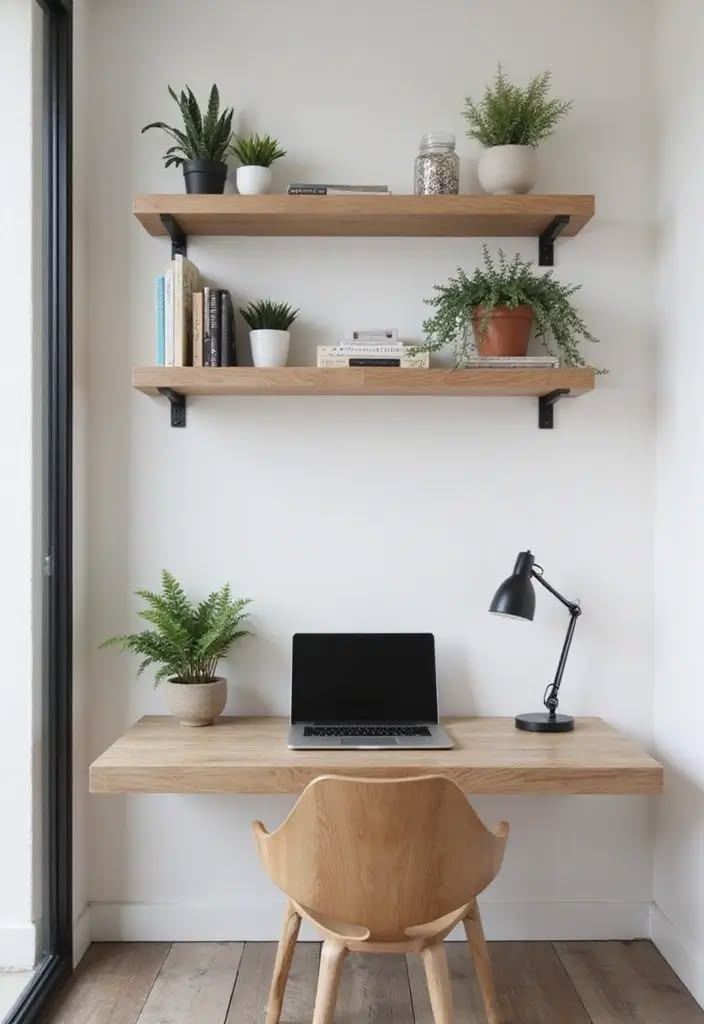
| Wall-mounted floating desk | Narrow hallways, tight bedrooms, renters who can’t lose floor space | $60–$300 | Low — open to room | Easy |
| Corner/nook desk | Awkward dead corners (behind a door, next to a window) | $80–$400 | Low to medium | Easy to Medium |
| Room divider workspace | Studios and open-plan one-bedrooms needing a visual “room” | $100–$450 | Medium — visual only | Easy |
| Under-stair or alcove build-out | Apartments with structural quirks (rare, but great when you have one) | $300–$1,200 | Good | Hard (often needs help) |
| Fold-down/Murphy desk | Studios where floor space has to serve double duty every day | $150–$700 | Low | Medium |
Okay, into the ideas.
Closet & Cloffice Ideas
1. The Full Closet-to-Office Conversion
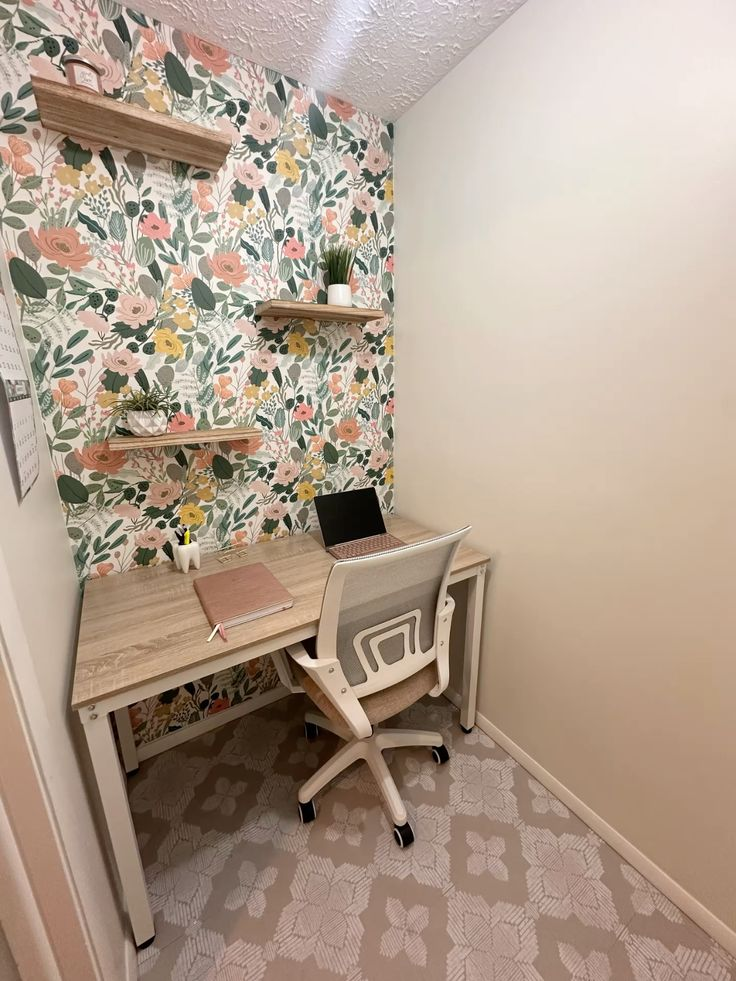
This is the big one people mean when they say “cloffice.” You pull everything out of a reach-in closet, remove the rod, and turn the whole cavity into a desk setup, shelves, and a chair that tucks flush inside.
The reason this works better than almost any other nook: when you close the door, the workday is literally out of sight. My friend Priya did this in her one-bedroom in a converted closet that used to hold coats, and she swears the psychological “closing the door on work” habit did more for her evening burnout than anything else she tried.
Measure twice before you buy a desk for this — closet depths vary wildly (16″ to 24″ is common), and a lot of pre-made desks are deeper than that. A custom-cut piece of plywood on brackets, sized to your exact closet, ends up cheaper and more useful than most closet office kits anyway.
Pro tip: Don’t forget ventilation and a power source before you commit — I’ve seen people convert a closet, load it with a laptop and two monitors, and then realize there’s no outlet inside and no airflow, so the whole thing runs hot within an hour.
2. Shallow Closet Ledge Desk
If your closet’s too shallow for a real conversion (some are only 14 inches deep), skip the full office and just mount a slim shelf-desk at the opening instead, using the closet as your “backdrop” for storage cubbies above.
This is the move for a linen closet or a narrow coat closet you don’t want to fully sacrifice. You keep some hanging storage on one side and gain just enough surface for a laptop and a notebook on the other.
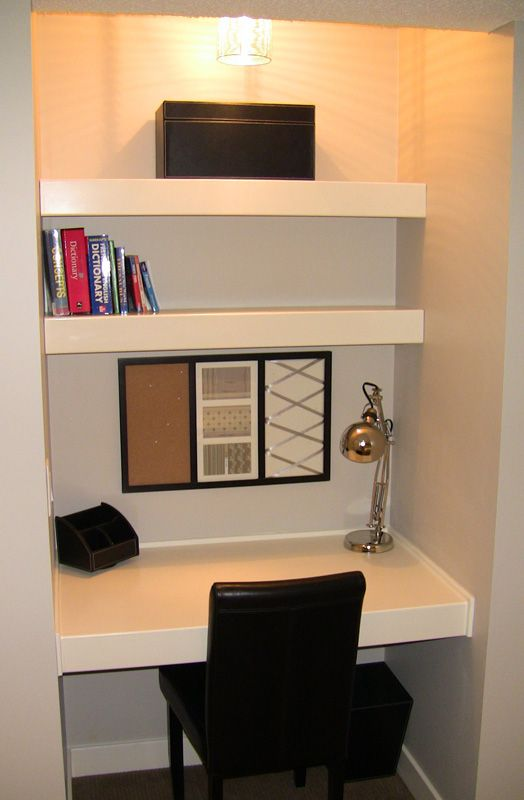
Pro tip: A 12-inch deep shelf is enough for a laptop stand and a lamp, but not much else — pair it with a wall-mounted keyboard tray that folds down when you need to type and folds back up when you don’t.
3. Sliding Door Cloffice (No Demo Required)
For renters who can’t remove closet doors or rods without losing a deposit, keep the sliding doors as-is and build your desk setup to sit just inside the track line, so the doors still glide shut over the whole thing.
I tried this in my last rental specifically because my lease said no permanent alterations. The trick is buying a desk about 2 inches shallower than your actual closet depth so the door tracks aren’t blocked.
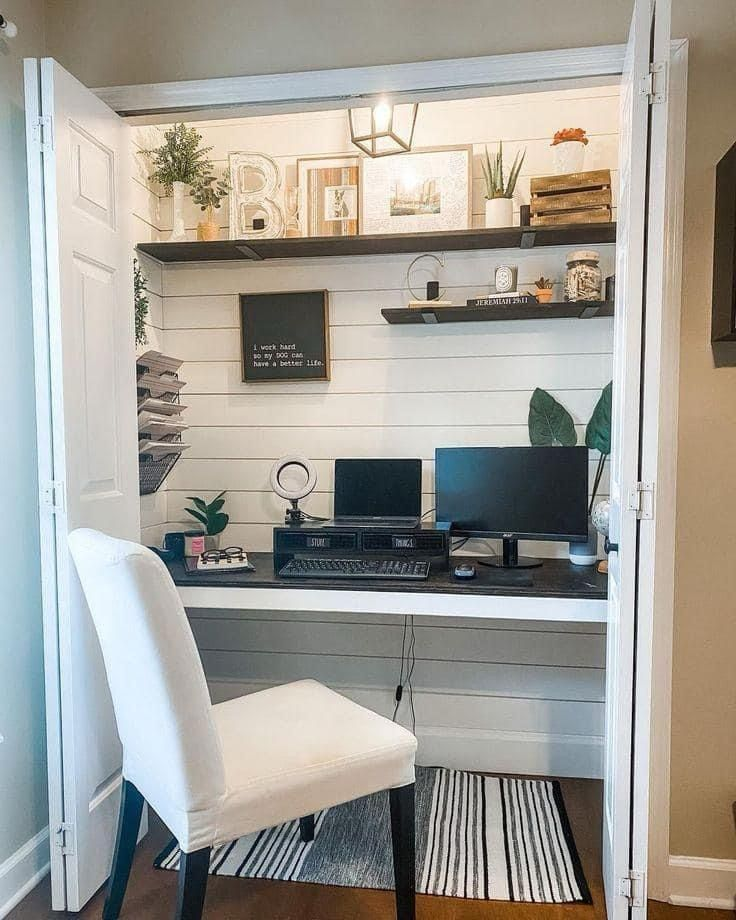
4. Closet Nook with a Pegboard Back Wall
Instead of shelves, mount a pegboard to the back wall of the closet. It’s cheap, it’s renter-friendly (small holes, easy patch job), and it reconfigures in five minutes when your storage needs change.
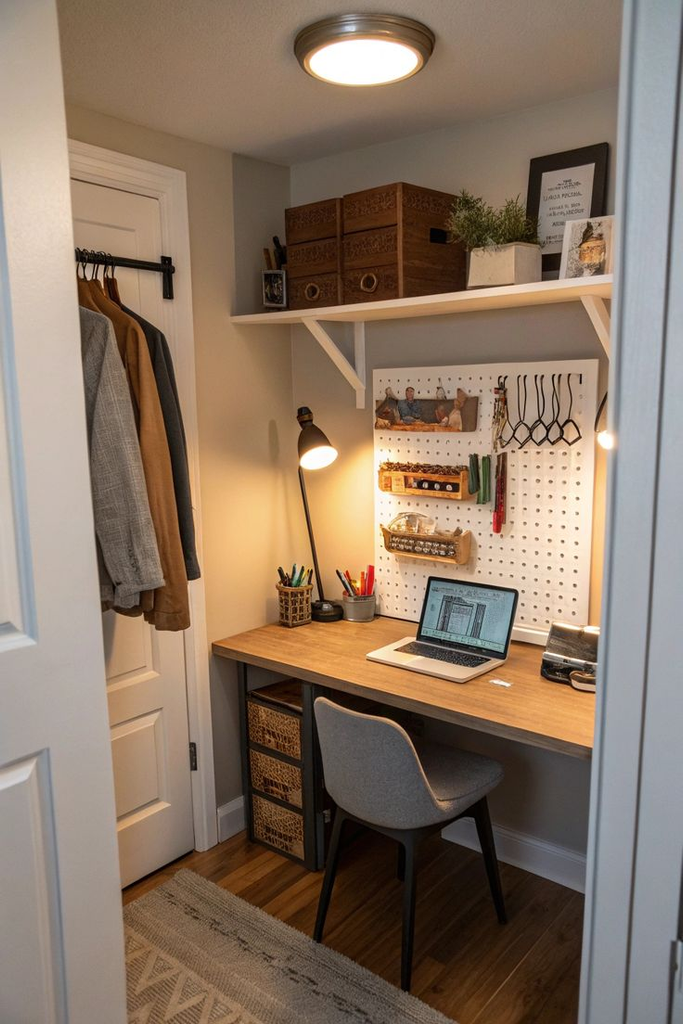
Pro tip: Painted pegboard in a color that matches your walls disappears into the room when the doors are open — plain unfinished pegboard reads “garage,” which isn’t the vibe most people want in a living space.
Wall-Mounted & Floating Desk Ideas
5. Floating Wall Desk in a Hallway
Hallways are the most overlooked home office real estate in small apartments, and a floating desk — just a slab mounted at desk height with hidden brackets — needs almost no floor space at all.
I put one in a 34-inch-wide stretch of hallway outside my bathroom. It fits a laptop, a small lamp, and literally nothing else, and that’s the point — it’s for quick tasks, not all-day work.
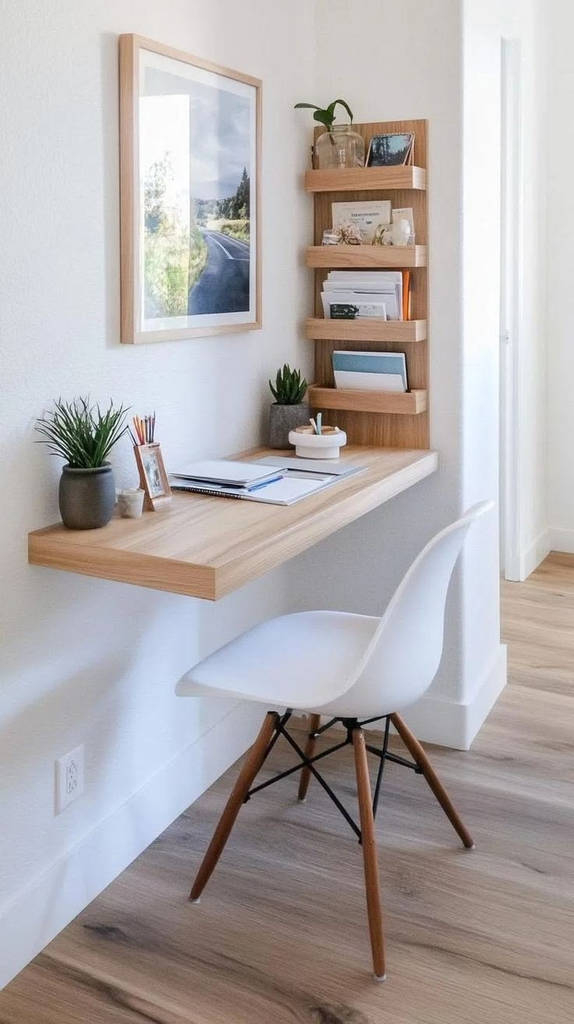
Pro tip: Check wall studs before mounting anything that’ll hold real weight (a monitor, a heavier laptop) — anchors alone in drywall will eventually sag under a monitor arm’s leverage, even if they hold fine for the first few weeks.
6. Fold-Down Wall Desk (Murphy Desk)
A hinged desk that folds flat against the wall when you’re done working is the single best option I’ve found for a studio apartment where the same six square feet needs to be an office by day and just… wall by night.
The trade-off is real: you can’t leave anything set up mid-task the way you can with a permanent desk. If you’re someone who leaves a project spread out overnight, this will frustrate you. If you close your laptop and log off cleanly most days, it’s close to perfect.
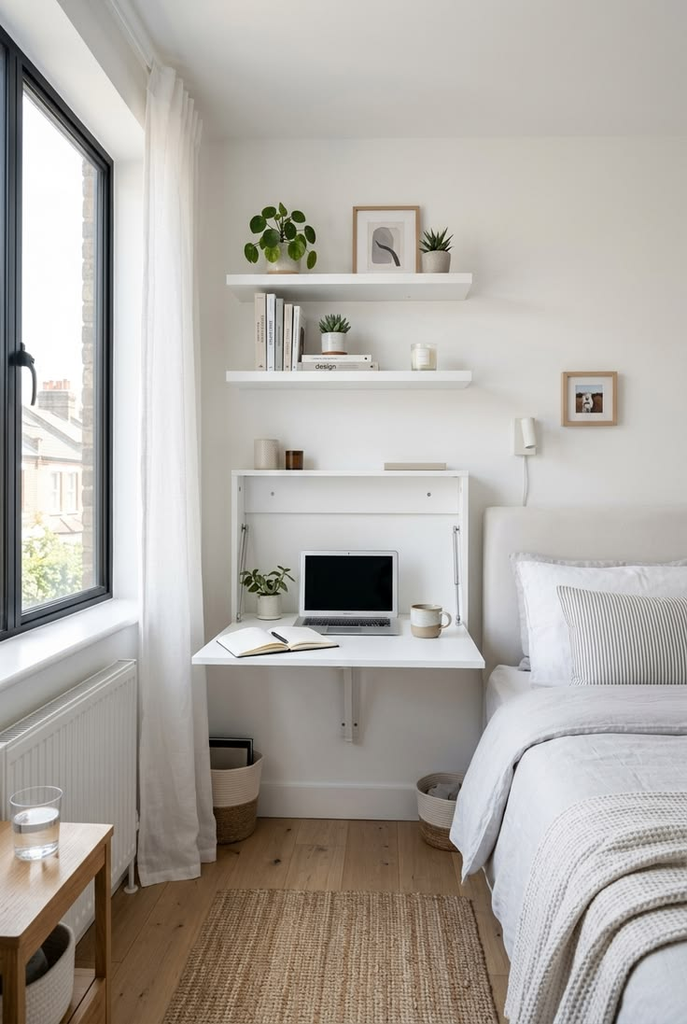
Pro tip: Buy one with a built-in leg or bracket that extends automatically when you unfold it — the cheaper models that rely purely on wall brackets tend to wobble under typing pressure within a few months.
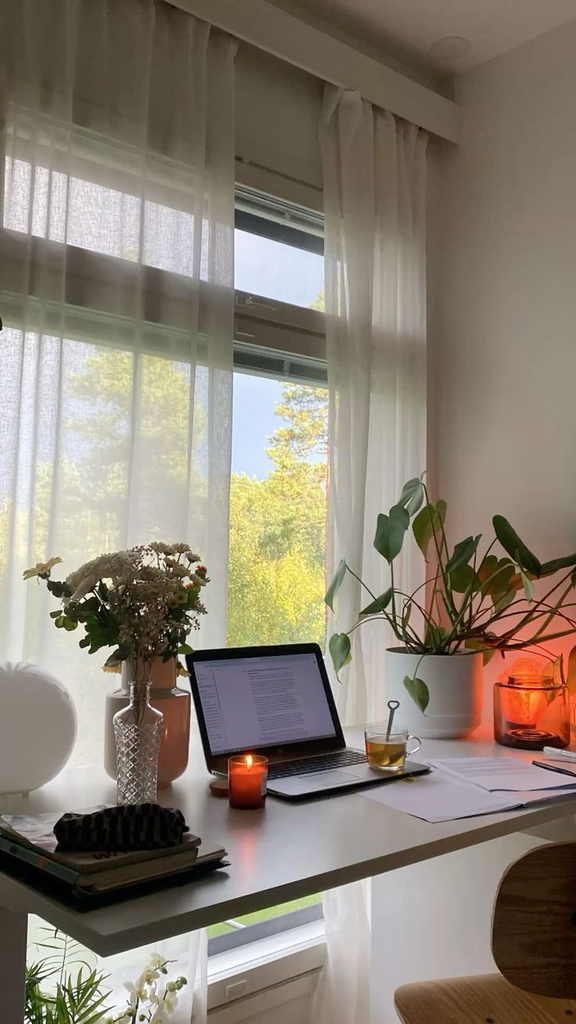
7. Narrow Ledge Desk Along a Window
A deep windowsill or a custom ledge built along a window wall turns “wasted light” into a workspace with natural light hitting your face on video calls instead of behind you.
8. Wall-Mounted Secretary Desk
Old-school secretary desks — the kind with a drop-front panel that closes over the whole workspace — are having a moment again, and for small apartments they solve the same “hide it at 6pm” problem as a cloffice without needing an actual closet.
Thrift and vintage stores are the move here over buying new; I paid $85 for mine at an estate sale versus the $400+ new versions I’d been eyeing online.
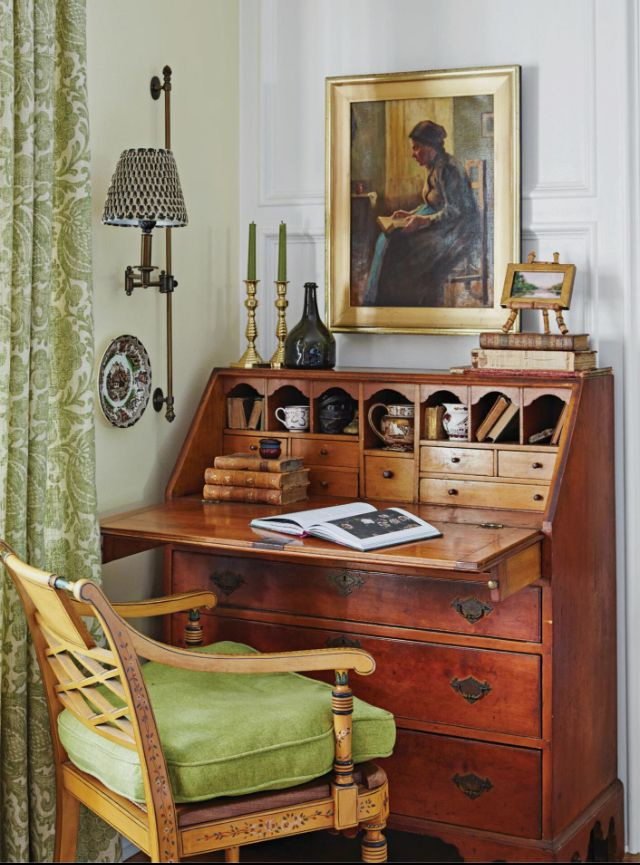
Pro tip: Check that the drop-front actually clears your keyboard and mouse before buying — older secretary desks were built for handwriting, not typing, and the depth can be tighter than you expect.
Corner & Dead-Space Ideas
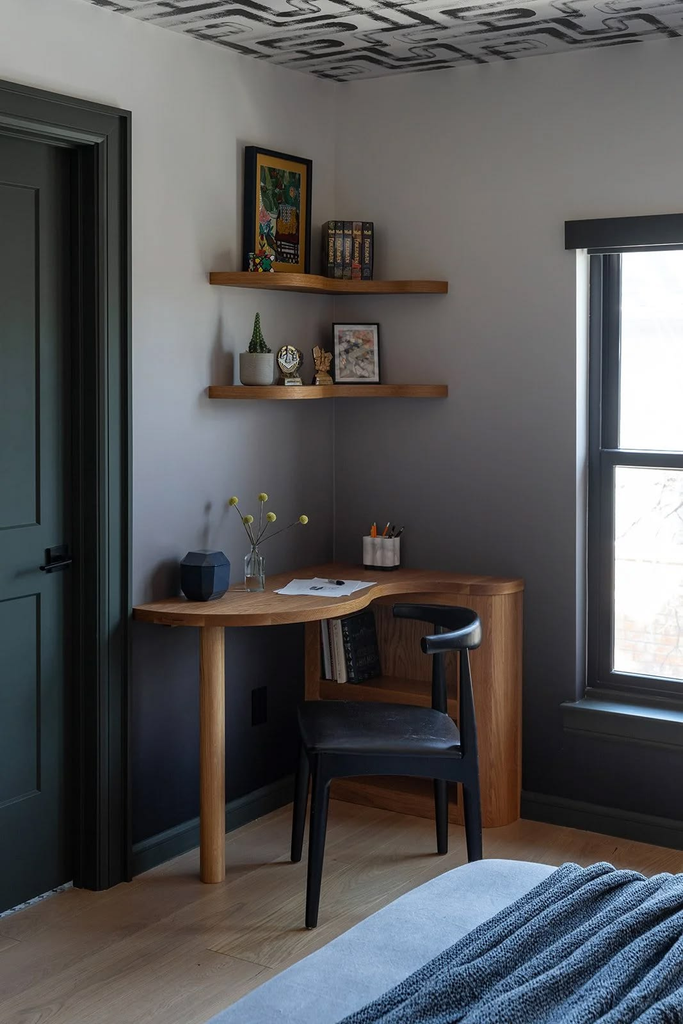
9. The Behind-the-Door Corner Desk
Every apartment has that patch of wall behind a door that swings open and just… sits empty. An L-shaped or corner desk tucked there uses space nobody else wants.
10. Bedroom Corner Nook (Foot of the Bed)
If your bedroom has a blank wall at the foot of the bed, a slim desk there means you’re not commandeering your living room at all — which matters more than people expect if you share your apartment with a partner or roommate who also needs the main space.
The honest downside: working where you sleep messes with some people’s ability to actually switch off at night.
If you’re prone to insomnia or already struggle separating “work mode” from “rest mode,” I’d try a different nook on this list before defaulting to the bedroom.
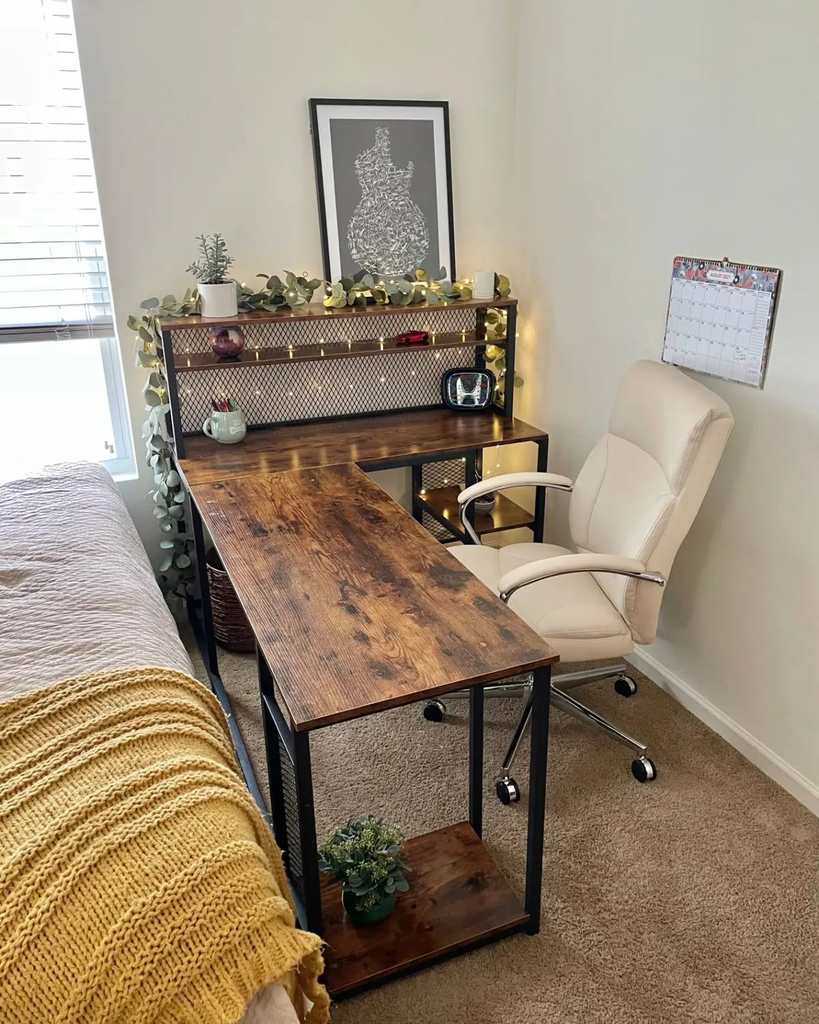
Pro tip: A room divider or curtain between the bed and the desk corner does more for that mental separation than you’d think, even in the same room.
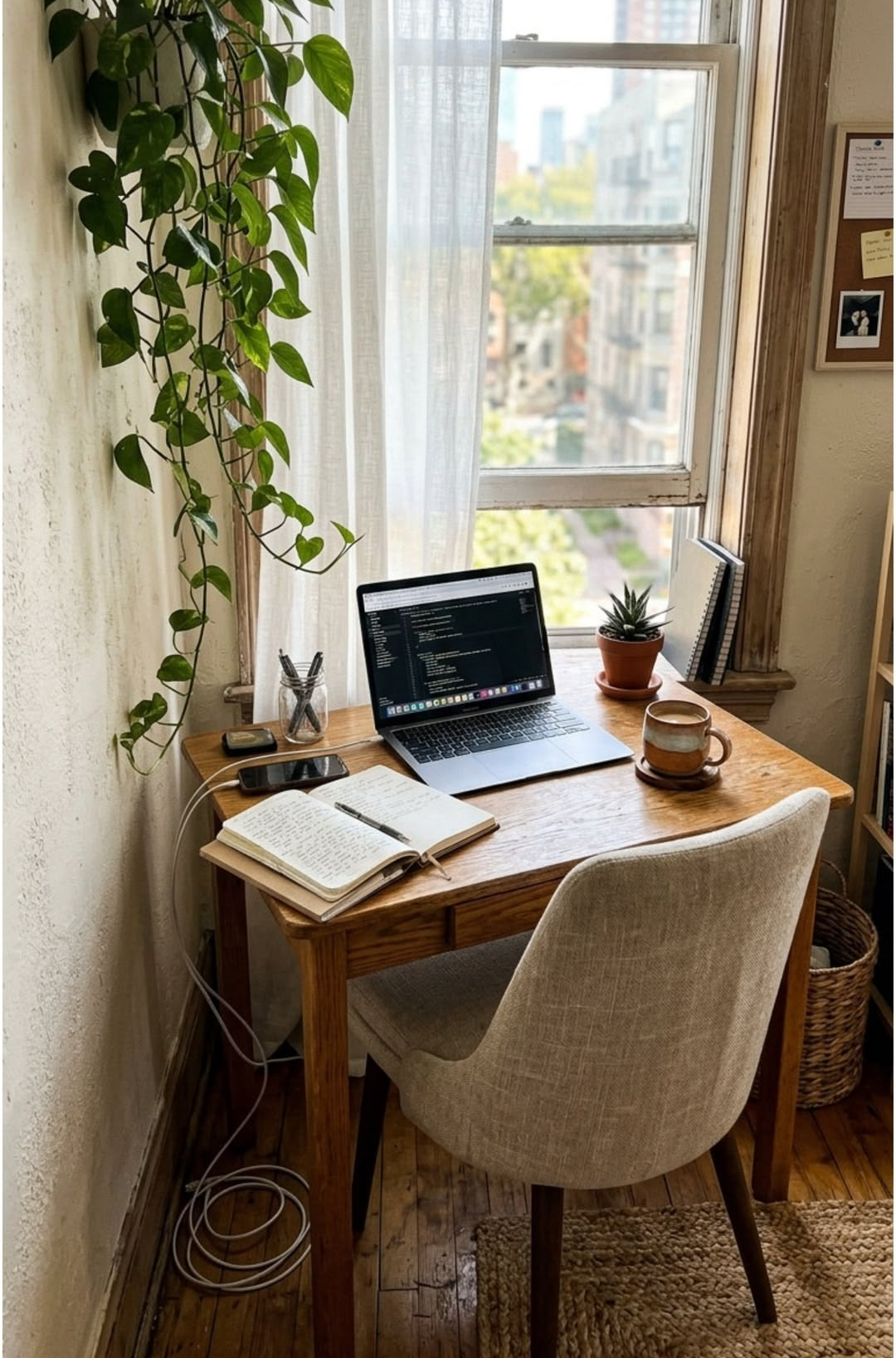
11. Window Nook Corner Desk
Pairing a corner desk with the one spot in your apartment that gets real afternoon light changes how the workspace feels more than almost any furniture choice does.
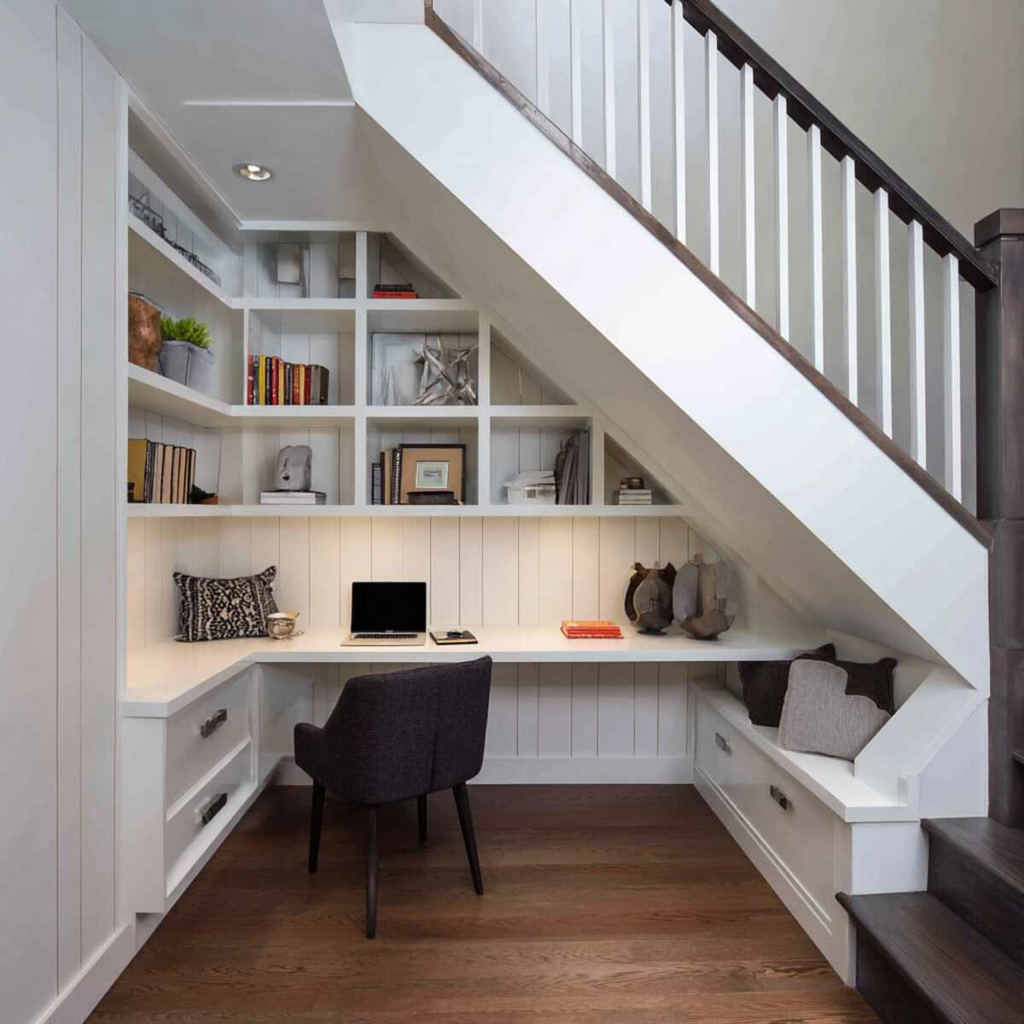
12. Under-the-Stairs Nook (If You Have Stairs)
Rare in most apartments, but if you’re in a loft-style unit, a townhouse-style rental, or a walk-up with interior stairs, the triangular space underneath is almost always empty and almost always big enough for a small desk.
This usually needs custom carpentry rather than an off-the-shelf desk, because the ceiling slope makes standard furniture dimensions useless. It’s the priciest option on this list for that reason, but it also reclaims space that would otherwise do nothing at all.
13. Awkward Alcove Between Furniture
That 20-inch gap between your bookshelf and your wall, or between your dresser and the window — measure it before you assume it’s too small. A lot of “dead” gaps in small apartments are exactly desk-width and just never got used because nobody thought to check.
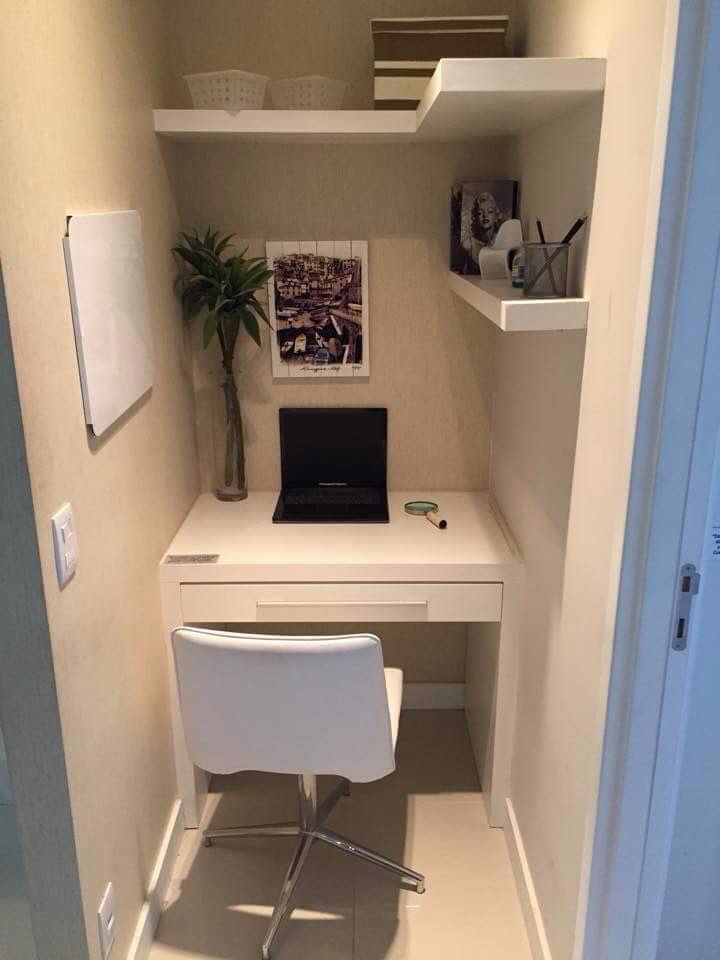
Pro tip: A tape measure and 10 minutes walking your apartment room by room will usually turn up at least one nook you didn’t know you had.
Room Divider & Studio-Specific Ideas
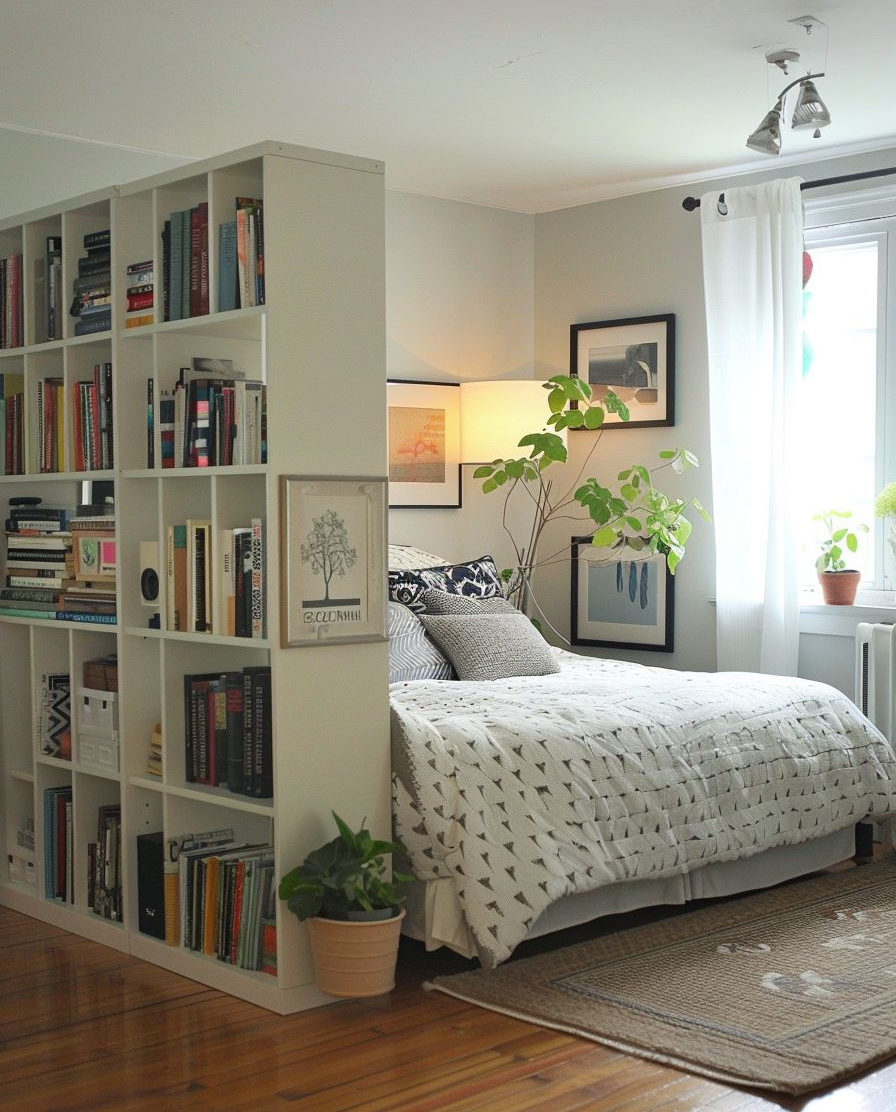
14. Bookshelf Room Divider with a Desk Built In
In a studio, a bookshelf that’s open on both sides and doubles as a room divider gives you a visual “office room” without adding a single wall, and a desk butted up against the back of it uses the divider as a partial enclosure.
I did a version of this in my first studio apartment using a $130 open-back bookshelf from a big-box store, and it was genuinely the best $130 I spent that year — it made the whole apartment feel like it had two rooms instead of one.
15. Curtain-Divided Office Corner
Cheaper and more flexible than a bookshelf divider: a ceiling-mounted curtain track that closes off a corner of your studio when you’re working and opens the space back up when you’re not.
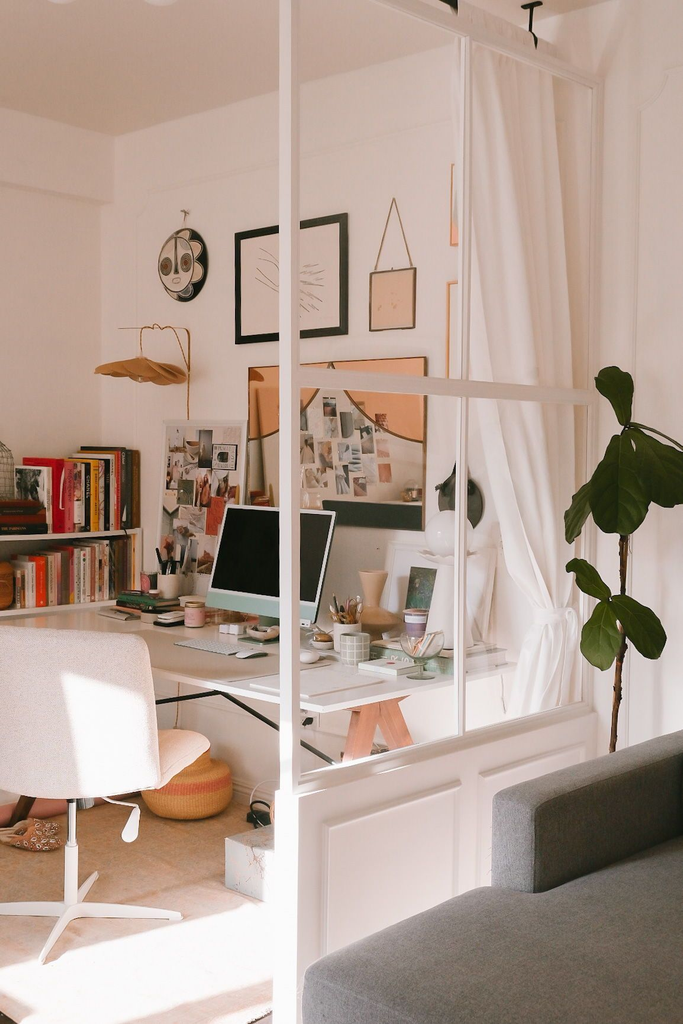
Pro tip: A blackout curtain does double duty here — it blocks visual clutter from video calls and also dampens sound a little, which matters if your studio has thin walls.
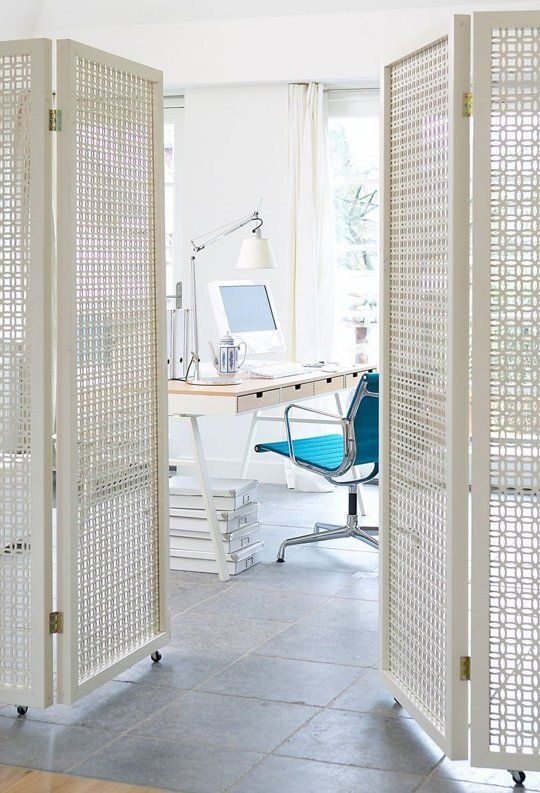
16. Folding Screen Divider
For renters who can’t mount anything to the ceiling or wall, a freestanding folding screen accomplishes almost the same visual separation as a curtain, with zero installation.
17. Loft Bed with Office Underneath
If your ceiling height allows it (and this is a real if — check before you buy), a loft bed frees up the entire footprint under the mattress for a desk setup, which is one of the biggest space wins on this whole list because you’re not choosing between “bed” and “office” at all.
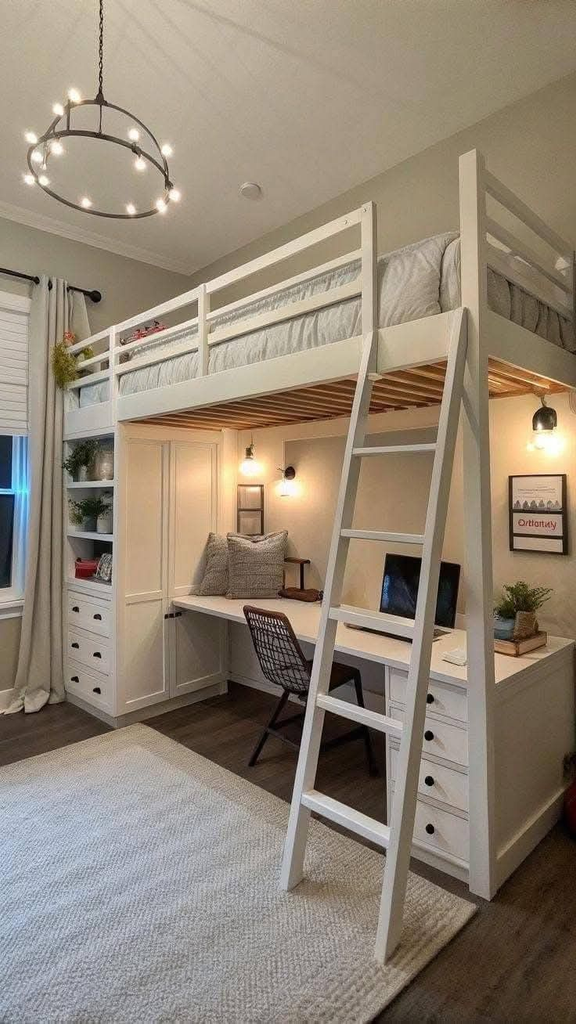
Pro tip: This only works if you can actually stand up straight under the loft — a lot of people buy a loft bed for the office space and then realize they’re hunching at the desk all day, which defeats the purpose fast.
Small But Mighty Micro-Desk Ideas
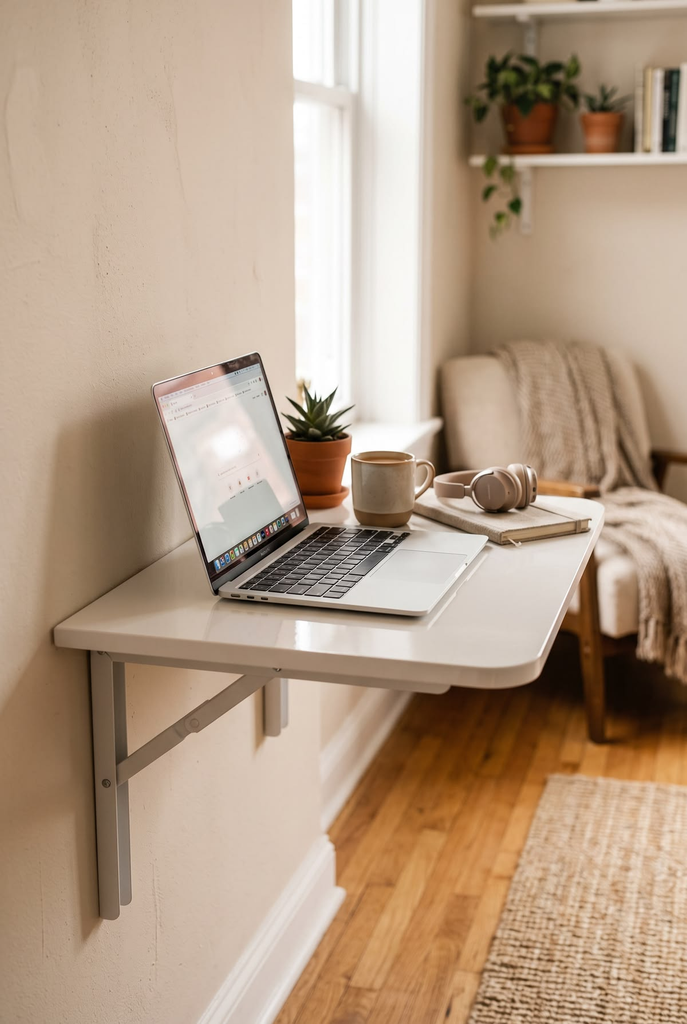
18. Wall-Mounted Fold-Up Laptop Tray
The smallest possible commitment on this list: a single hinged tray, barely 15 inches deep, that folds up flush to the wall. Good for a true micro-apartment or a secondary workspace you only need occasionally.
19. Rolling Cart Desk
A slim rolling cart with a laptop-sized top shelf means your “desk” can live in a closet overnight and roll out to wherever the light or the mood is best that day — by the window in the morning, next to the couch at night.
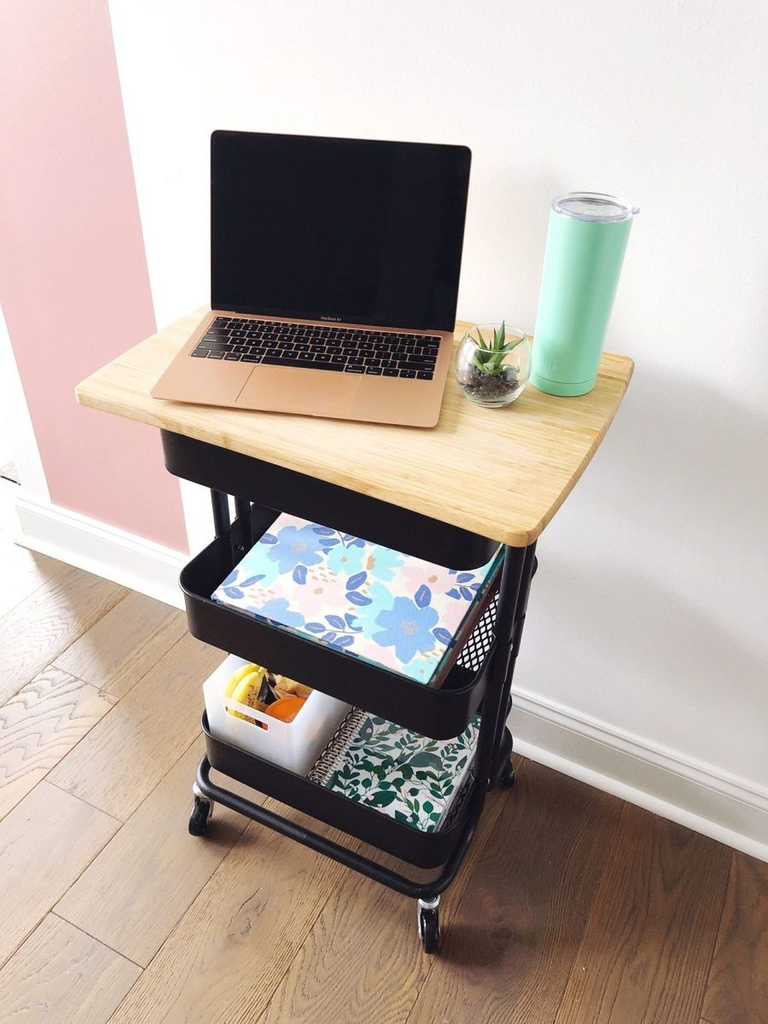
Pro tip: Look for one with a lip or raised edge on the top shelf — I learned the hard way that a flat top shelf with no lip means your laptop slides right off the second the cart hits an uneven floorboard.
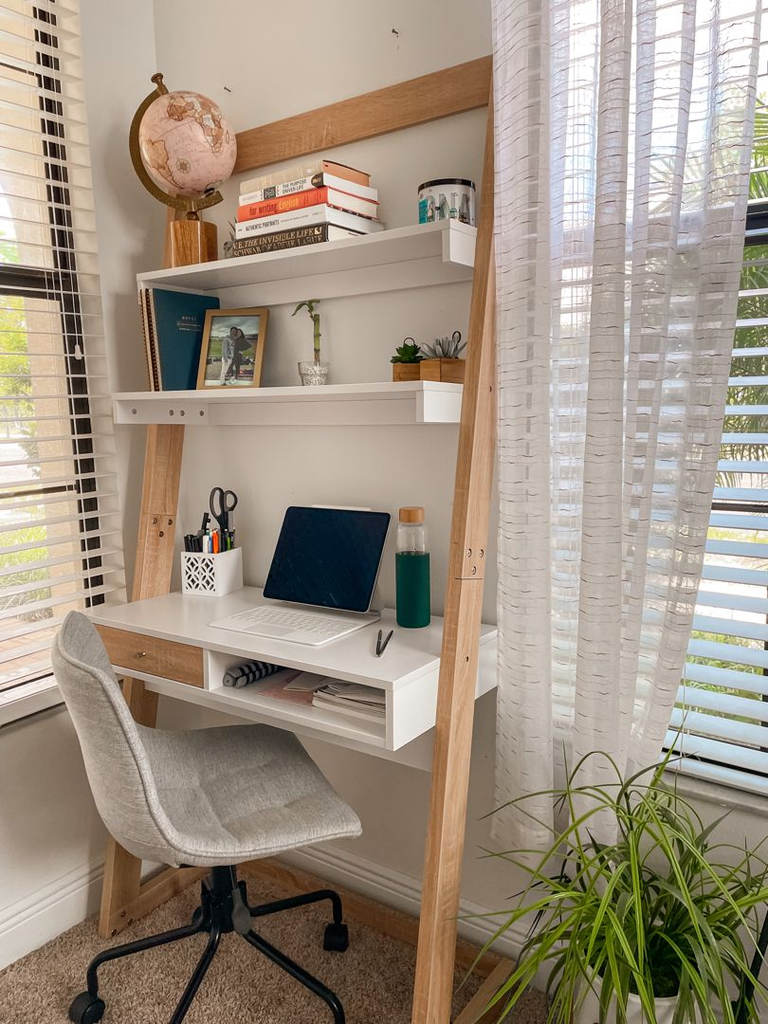
20. Ladder Desk
A ladder-style shelving unit with one tier flattened into a desk surface takes up almost no visual weight in a room, which matters if your apartment already feels crowded and you don’t want the office to add to that.
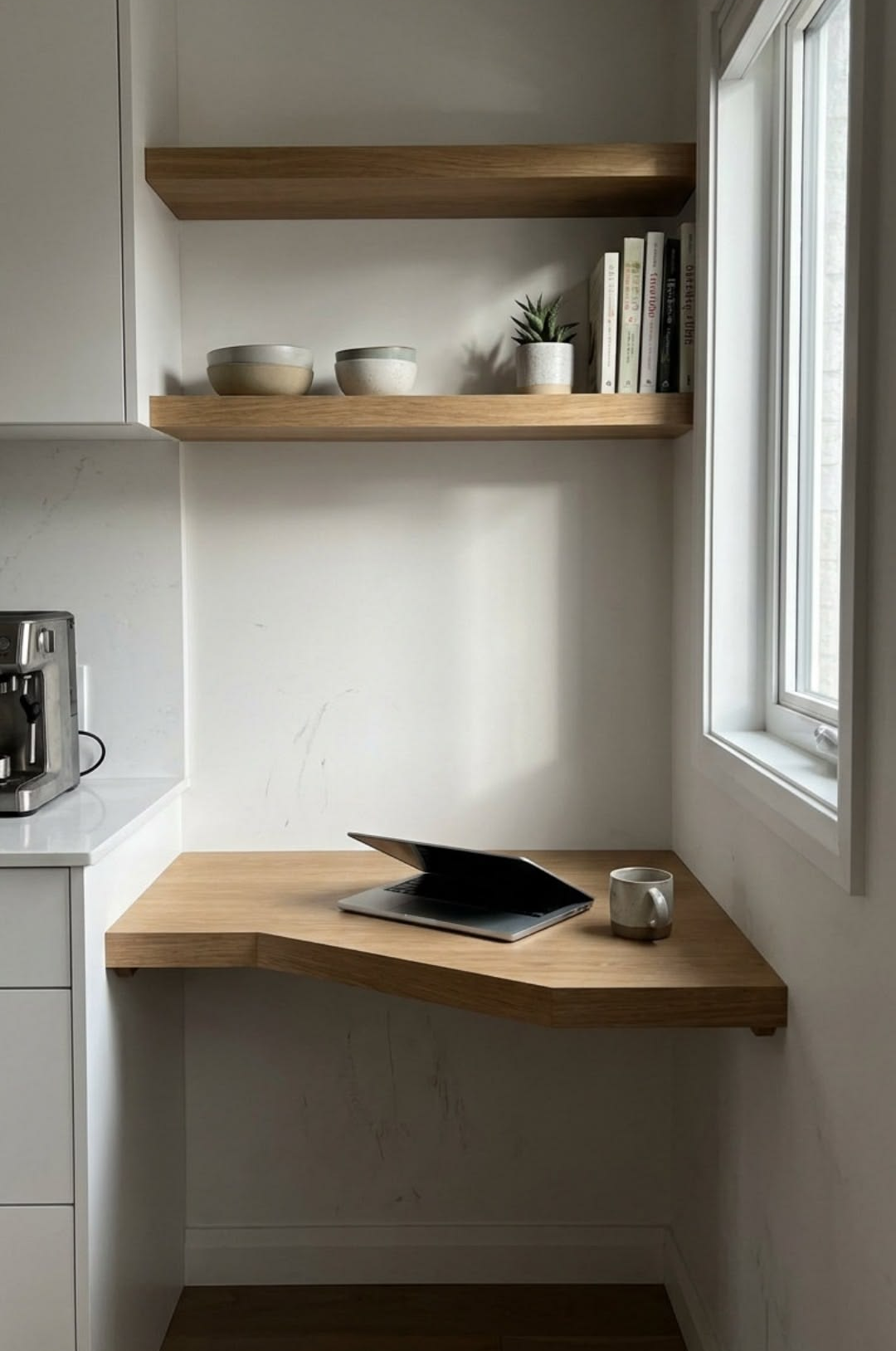
21. Floating Corner Shelf Desk
A single triangular floating shelf, mounted into a corner where two walls meet, is barely a desk at all — more like a perch — but it’s enough for a laptop if your work is mostly typing and video calls rather than spreading out paperwork.
Multi-Purpose & Dual-Use Ideas
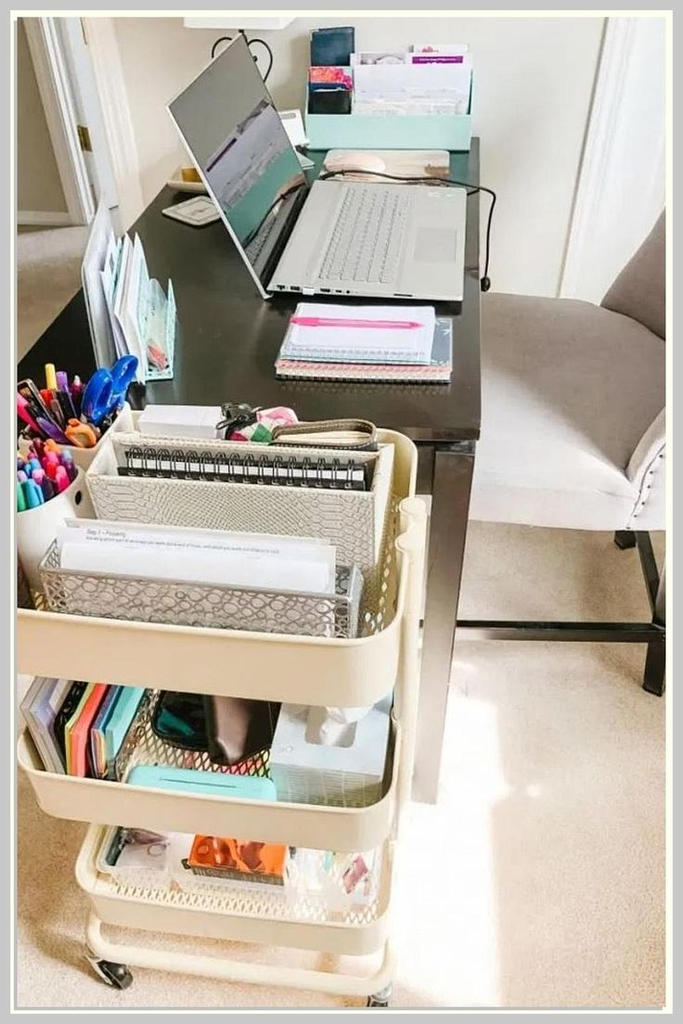
22. Dining Table Nook with Storage Cart
If you genuinely can’t carve out a dedicated nook, the honest fix isn’t pretending you don’t need one — it’s making your dining table a functional desk during the day with a rolling storage cart that holds everything office-related and rolls away at 5pm.
I did this for almost a year before my cloffice conversion, and it worked better than I expected as long as I was strict about the cart going back into the closet every single evening.
The failure mode is letting the cart just sit there — at that point you’ve built a permanent office in your dining room without admitting it.
23. Kitchen Peninsula or Counter Desk
An underused end of a kitchen counter or peninsula, especially in galley-style apartment kitchens, can hold a stool and a laptop for shorter work sessions without needing any new furniture at all.
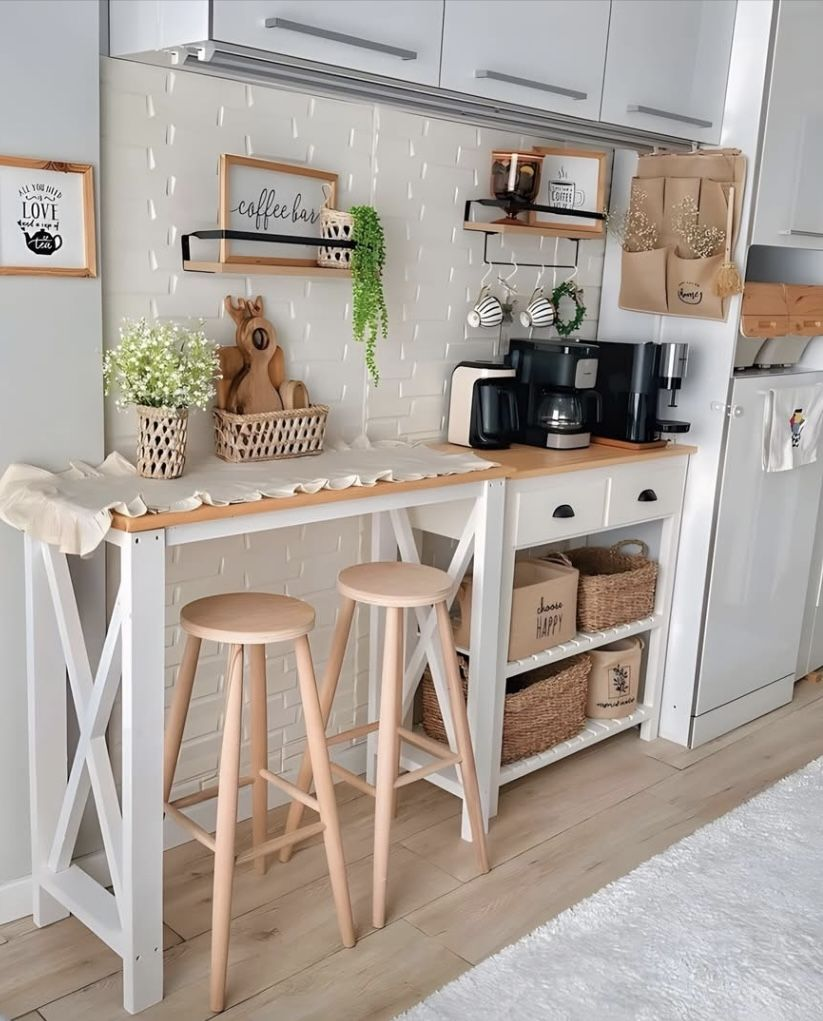
Pro tip: Counter height (usually 36″) is taller than standard desk height (28–30″), so you’ll want a stool rather than a regular chair, and this setup gets uncomfortable fast for more than a couple hours at a stretch.
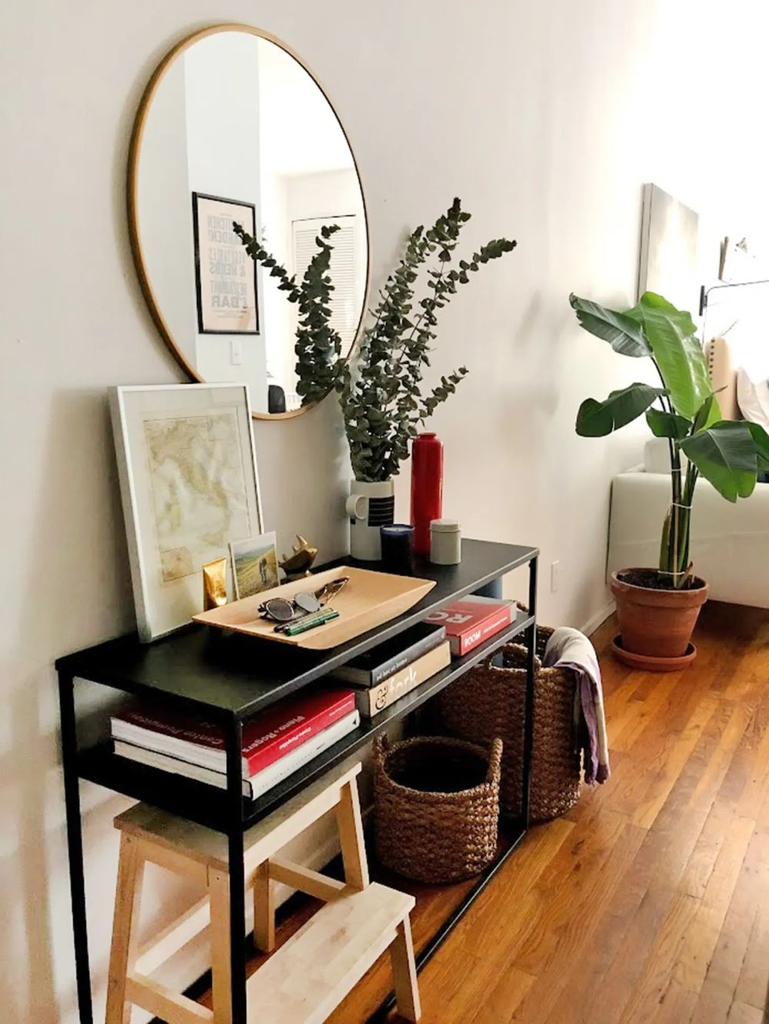
24. Entryway Console Table Desk
A slim console table by your front door does double duty as a catch-all surface and a stand-up or perch-height workspace for quick tasks — checking email, a fast video call — without permanently claiming space in your main living area.
25. Balcony or Patio Micro-Office (Seasonal)
If you have even a small balcony, a compact weatherproof desk and a laptop turn it into a seasonal workspace for the months your climate cooperates. Not an everyday solution, but a genuinely nice change of scenery a few times a month.
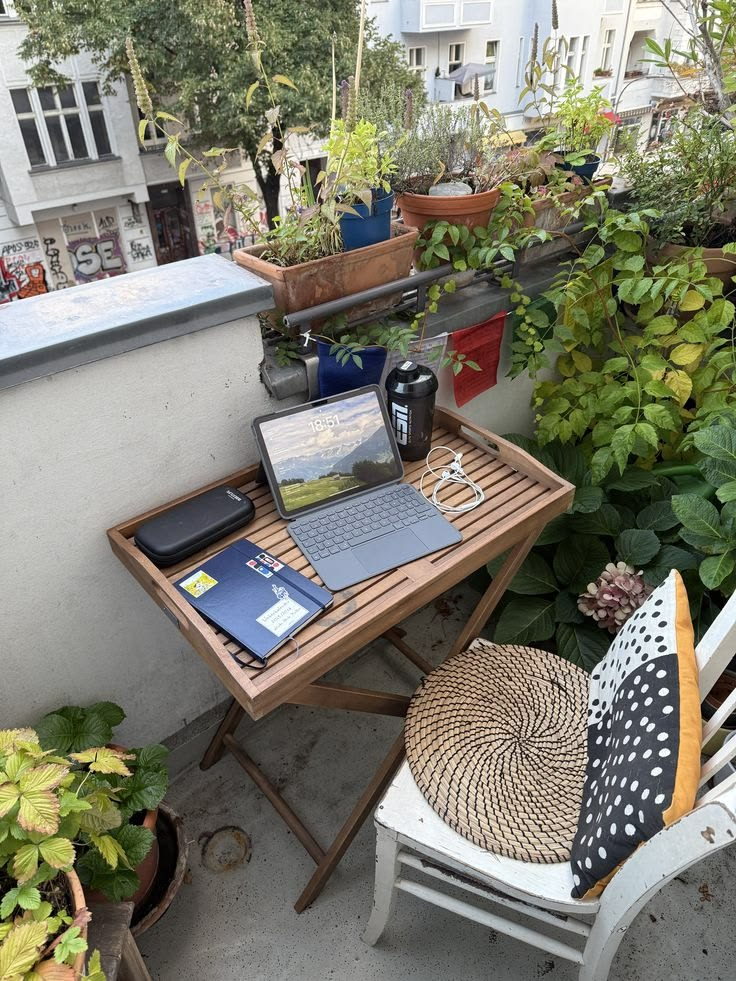
Pro tip: Glare on your laptop screen outdoors is a bigger problem than heat most of the year — an anti-glare screen protector is a five-dollar fix that makes this setup actually usable instead of just cute for photos.
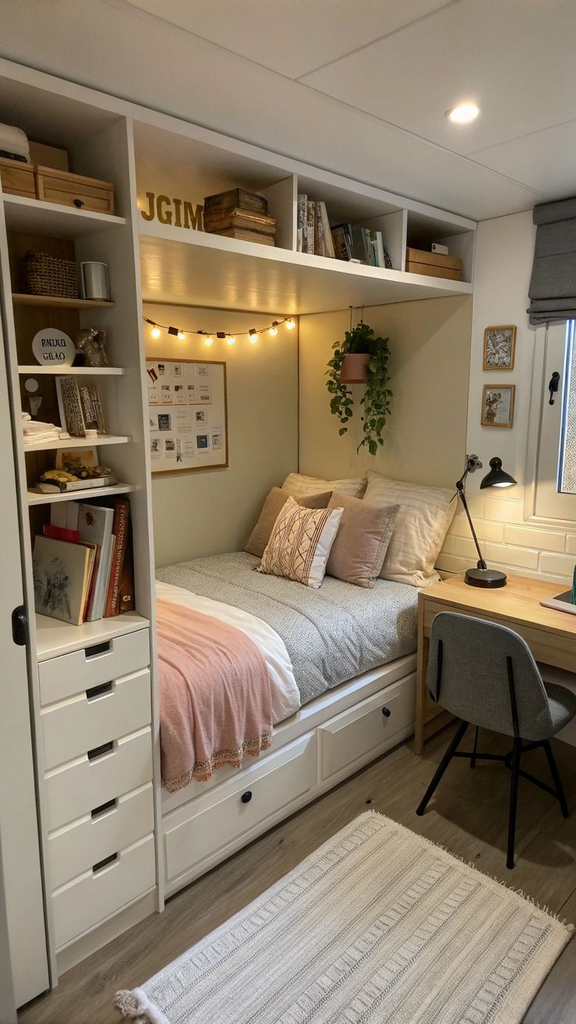
26. Under-Bed Storage Desk Combo
For the smallest apartments on this list, a bed frame with built-in under-bed storage drawers can house your office supplies, keyboard, and cables, while a slim fold-out or nearby wall desk handles the actual work surface — keeping your one piece of furniture doing triple duty.
What I’d Actually Do If I Were Starting Over
If I were setting up a tiny home office nook from scratch again, knowing what I know now, I’d skip the Pinterest-perfect floating shelf desk I originally wanted and go straight for the closet conversion — not because it’s the prettiest option on this list, but because being able to close a door on my workday turned out to matter more to how I actually felt at 7pm than any amount of natural light or open shelving ever did.
The right nook isn’t the one that photographs best. It’s the one that matches how you actually use your apartment once the desk is real and not just an idea.
Whatever you land on, measure your actual space before you buy anything — closets, alcoves, and “dead corners” vary more than you’d think, and the difference between a desk that fits and one that’s an inch too deep is the difference between a nook you use every day and one that becomes another pile of stuff by month two.


Leave a Reply