
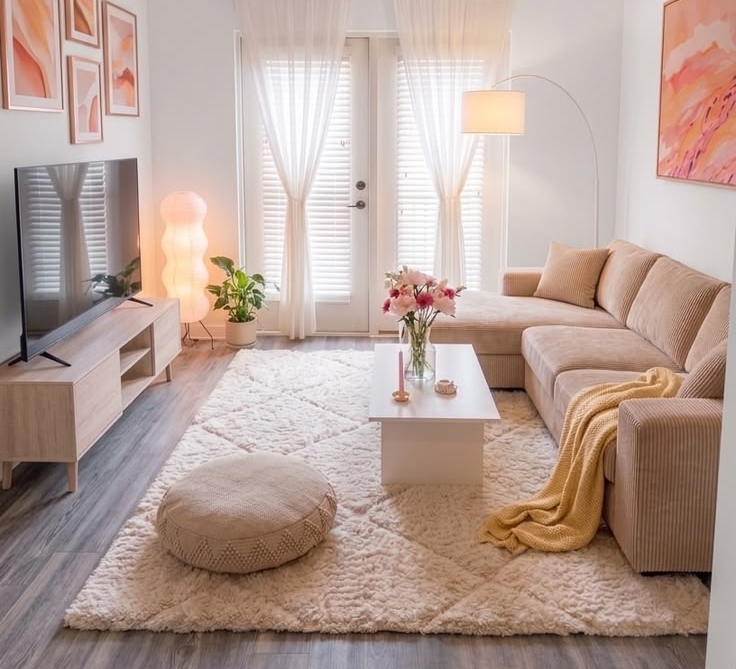
I used to have a 280-square-foot living room with a couch that was technically too big for it — I know this because when I measured after the fact, the couch alone ate up nearly 20% of the floor.
For almost a year I just lived with it, walking sideways past the armrest to get to the kitchen, and telling myself the room was “cozy.” It wasn’t cozy. It was cramped, and I’d just gotten used to apologizing for it every time someone came over.
What actually changed it wasn’t a renovation, and it wasn’t new furniture. It was one weekend where I rearranged what I already owned, swapped a few cheap things, and paid attention to stuff I’d been ignoring — like the fact that my rug was a full size too small and my lamp was casting a shadow across half the room every night.
None of it cost more than about $150 total, and the room looked and felt noticeably bigger by Sunday night.
This isn’t a “buy this stuff” list, though I’ll tell you what’s actually worth buying. It’s mostly a rearranging-and-fixing list, organized the way I’d actually tackle a weekend project: what to do Saturday morning, what to fix in the afternoon, and what to finish up Sunday.
If you’ve got a small living room — anywhere from a 200-square-foot apartment living room to an awkward 12×14 in an older house — this is the order I’d do it in.
Start With What’s Actually Making the Room Feel Small
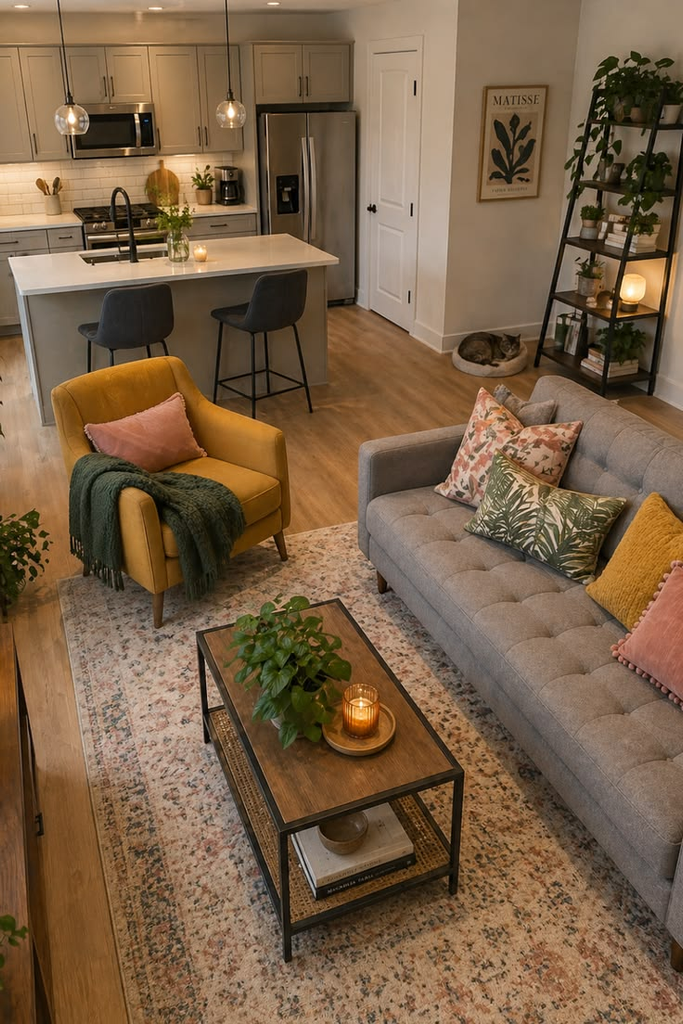
Before you touch anything, walk into your living room and figure out what’s actually causing the cramped feeling, because it’s usually not “the room is small” — it’s one or two specific, fixable things.
In my case it was furniture blocking the natural walking path and a rug that stopped short of every piece of furniture around it, which visually chops the floor into disconnected islands.
The most common culprits I see (and lived through myself): furniture that blocks a doorway or walkway, a rug that’s too small for the seating area, curtains hung too close to the window frame, and clutter at eye level — books, remotes, chargers — sitting out on every flat surface. None of these require money to fix. They require about twenty minutes of honest assessment.
Pro tip: Take a photo of your living room from the doorway before you start. It sounds unnecessary, but a photo shows you what your eye edits out automatically — the pile of mail on the console table, the cord snaking across the floor — in a way that just standing there doesn’t. I do this before every “does this feel different” comparison and it’s saved me from convincing myself nothing changed when actually the clutter crept back in.
Saturday Morning: Fix the Furniture Layout
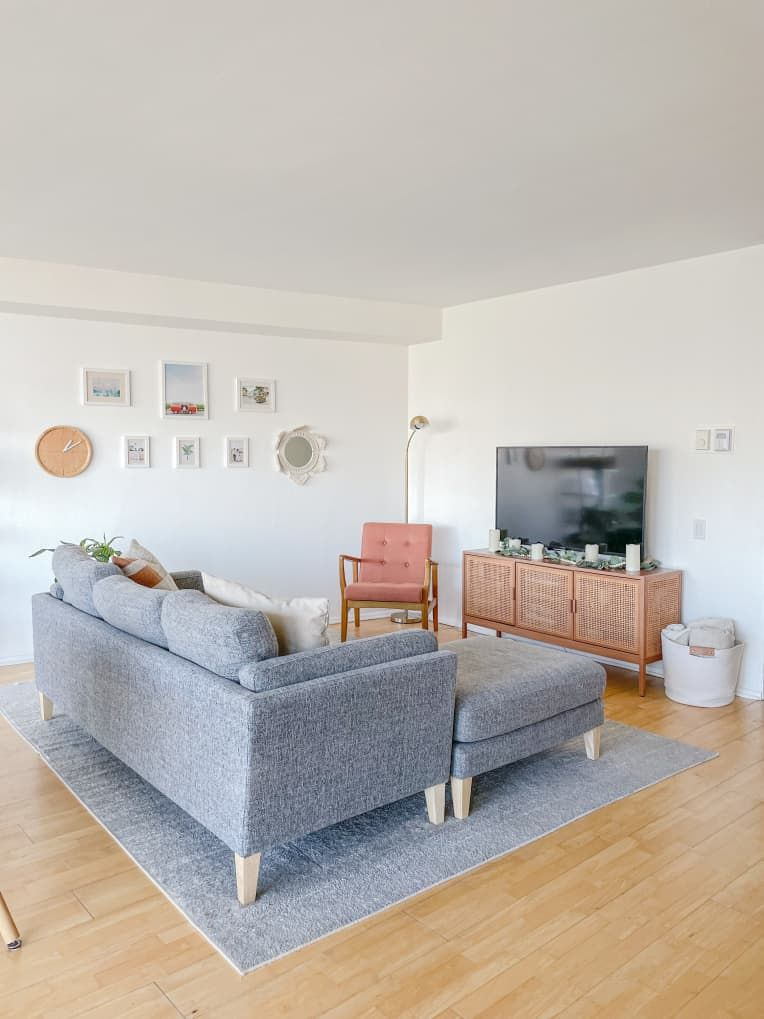
Pull everything at least a few inches off the walls
This one felt wrong to me the first time I did it — my instinct was always to push the couch flush against the wall to “save space.”
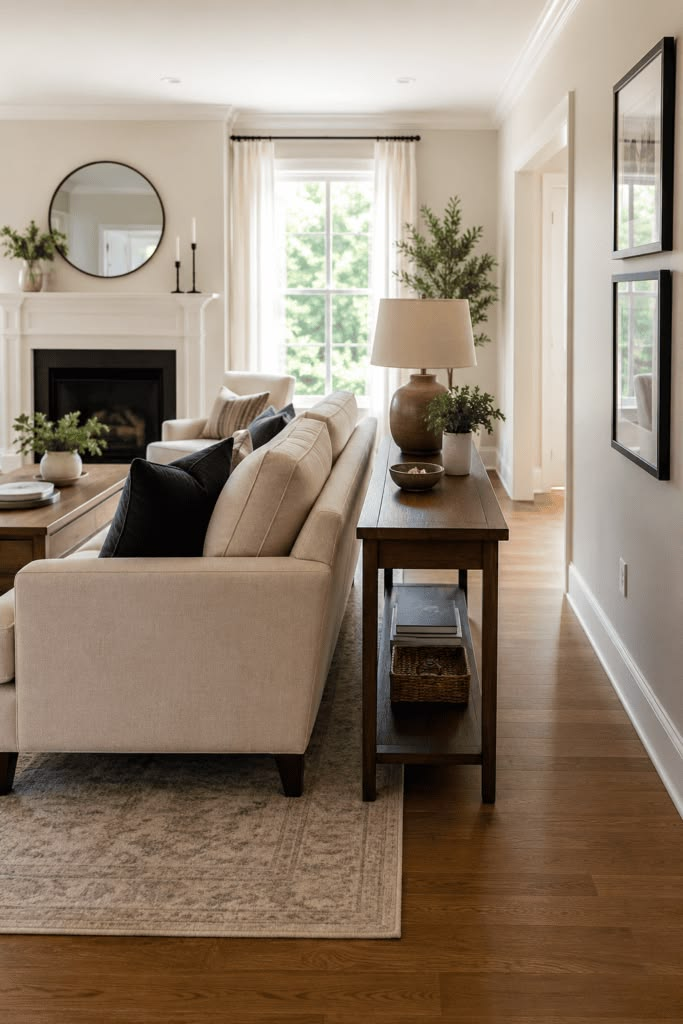
But a couch pushed flat against a wall with nothing behind it actually reads as smaller than one pulled a few inches out with, say, a thin console table or even just a lamp behind it. The gap creates depth, and depth is what makes a room feel like it has room to spare.
You don’t need much. Even 4-6 inches off the wall is enough to break the flush-against-the-wall look. In a genuinely tiny room, I get that every inch matters, so this is more of a “if you have 6+ inches to spare, use it” tip than a hard rule.
Create one clear walking path, and protect it
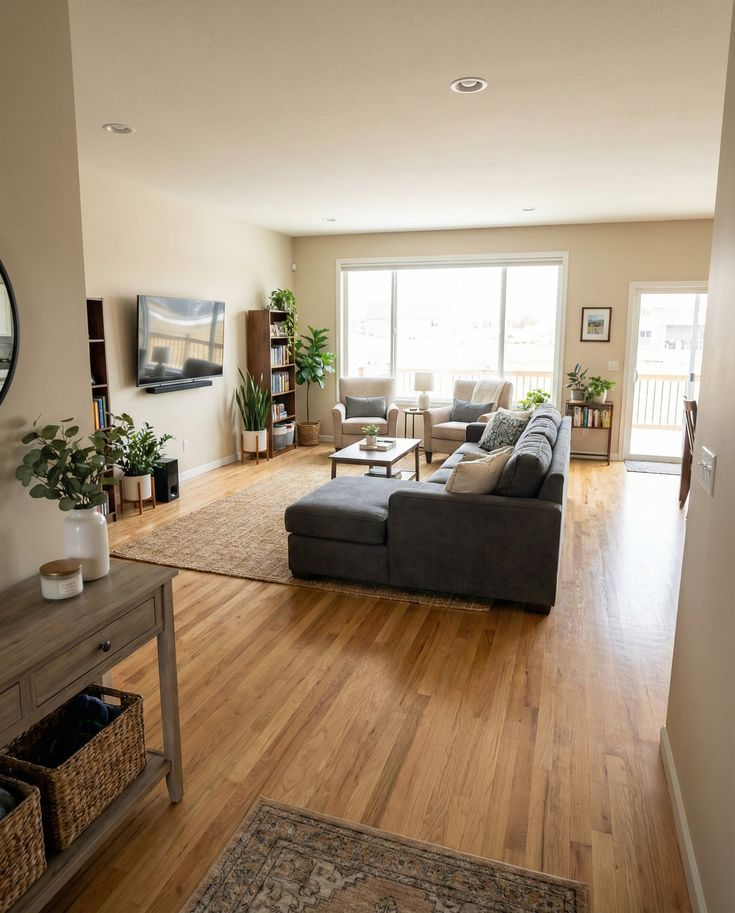
Every small living room needs one obvious, unobstructed path from the main entry point to the main exit point — usually doorway to hallway, or doorway to kitchen. Once that path exists, everything else can be arranged around it.
My mistake for a year was letting my coffee table creep into that path a little at a time, a few inches every time I moved it back after cleaning, until I was routinely stubbing my toe.
Walk the path yourself and see where your body naturally wants to go. That’s usually the correct path — not the one that looks best on paper.
Float furniture away from the walls in a small footprint, not against every wall
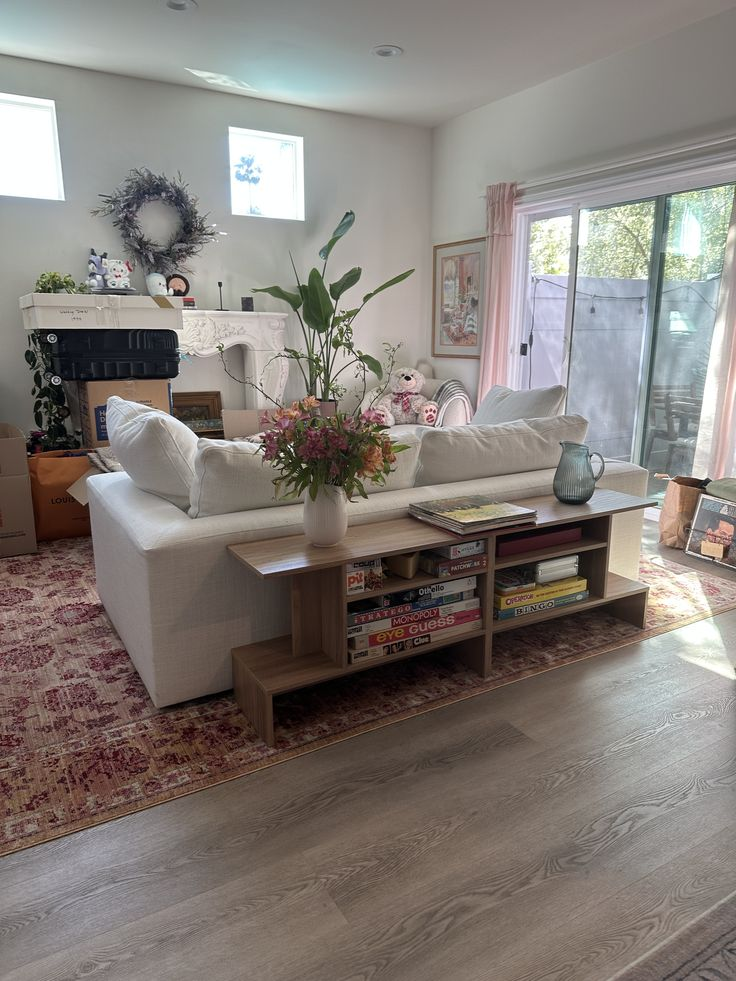
This sounds counterintuitive for a small room — shouldn’t everything hug the walls to leave the middle open? Actually, no, and this is the biggest layout mistake I made for a long time.
Pushing every single piece against a wall creates a “moat” of empty space in the dead center of the room that doesn’t do anything for you — you can’t really use it, and it doesn’t read as more spacious, just emptier.
Instead, pull your main seating into a cluster that’s a few feet from the walls, even if that “wastes” a strip of space behind the couch.
A room with a defined, cozy seating area and a little breathing room around it feels bigger than a room where furniture is scattered along the perimeter with a dead zone in the middle.
Pro tip: If your room is long and narrow rather than square, angle your rug and seating area on a slight diagonal, or at least pull it away from being perfectly parallel to the longest wall. A friend of mine, Priya, has a bowling-alley-shaped living room in an older triple-decker apartment, and squaring everything up to the walls made the narrowness painfully obvious. Angling the rug 10-15 degrees broke up that tunnel effect more than any other single change she made.
Saturday Afternoon: Fix the Rug and the Sightlines
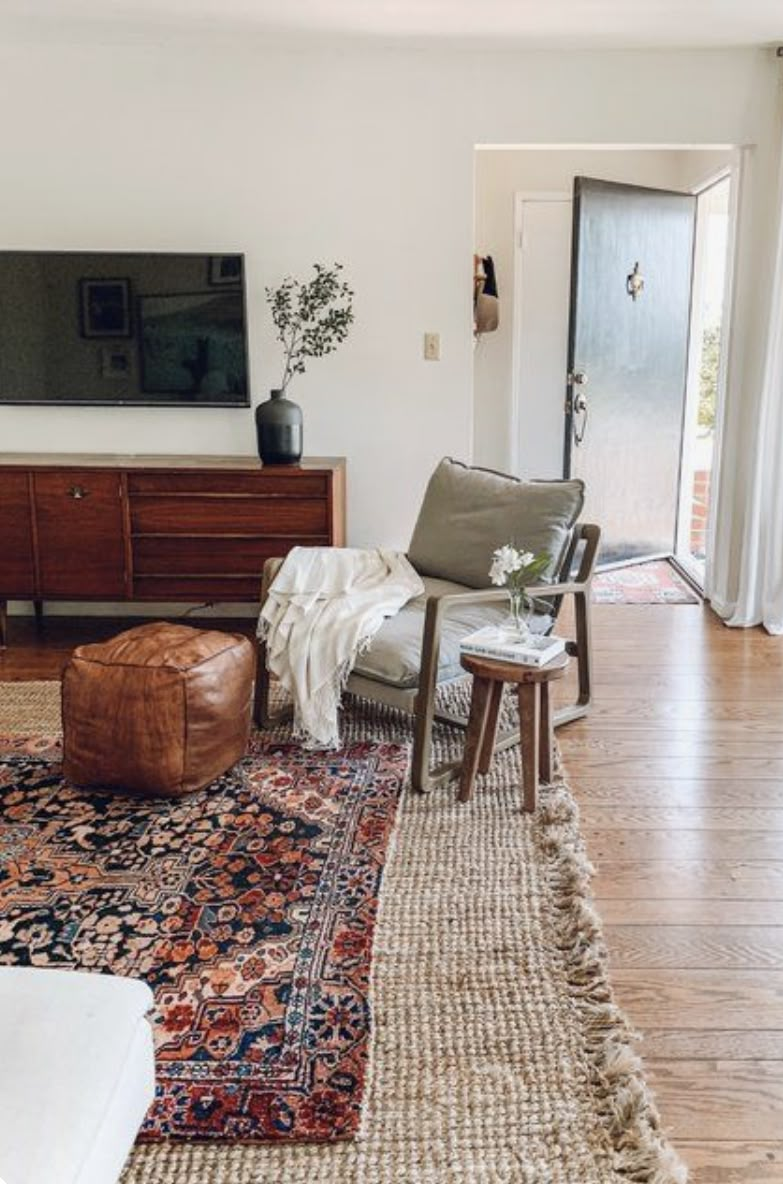
Size your rug up — probably bigger than you think
This is the single most common small-living-room mistake, and I made it too: buying a rug that’s too small for the seating area.
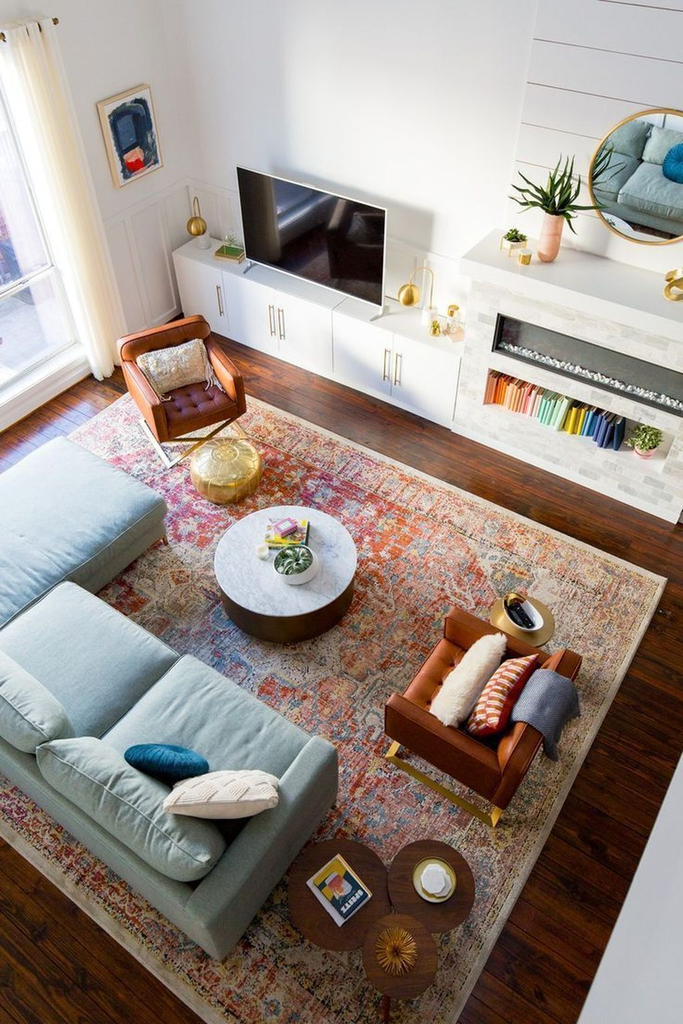
When a rug only fits under the coffee table, or has a gap of a foot or more before it reaches the front legs of the couch, it visually shrinks the room by drawing a hard boundary in the middle of the floor.
The rule of thumb that actually works: at minimum, the front legs of every major seating piece should sit on the rug. Ideally, all four legs of the couch and chairs sit on it.
I know that sounds like it means buying a rug that feels “too big” for a small room, but it’s the opposite — a larger rug that anchors the whole seating area reads as one cohesive, generous space, while a small rug reads as a rug floating in a room that dwarfs it.
| Room Size | Minimum Rug Size | Rug Placement Rule |
|---|---|---|
| Under 150 sq ft | 5′ x 7′ | Front legs of couch + chairs on rug |
| 150-250 sq ft | 6′ x 9′ | All furniture legs on rug if possible |
| 250-350 sq ft | 8′ x 10′ | All furniture legs on rug |
| Long/narrow layout | Runner-style 5′ x 8′ or larger, angled | Rug oriented with the seating cluster, not the walls |
Pro tip: If a properly-sized rug is out of budget right now, a cheap flatweave or jute rug in the correct larger size beats an expensive plush rug in the wrong small size, every time, for this specific goal. I bought a $60 jute rug from a big box store as a stopgap two years ago and honestly never replaced it, because it did the sizing job the fancier smaller rug never could.
Clear your sightlines, especially at the doorway
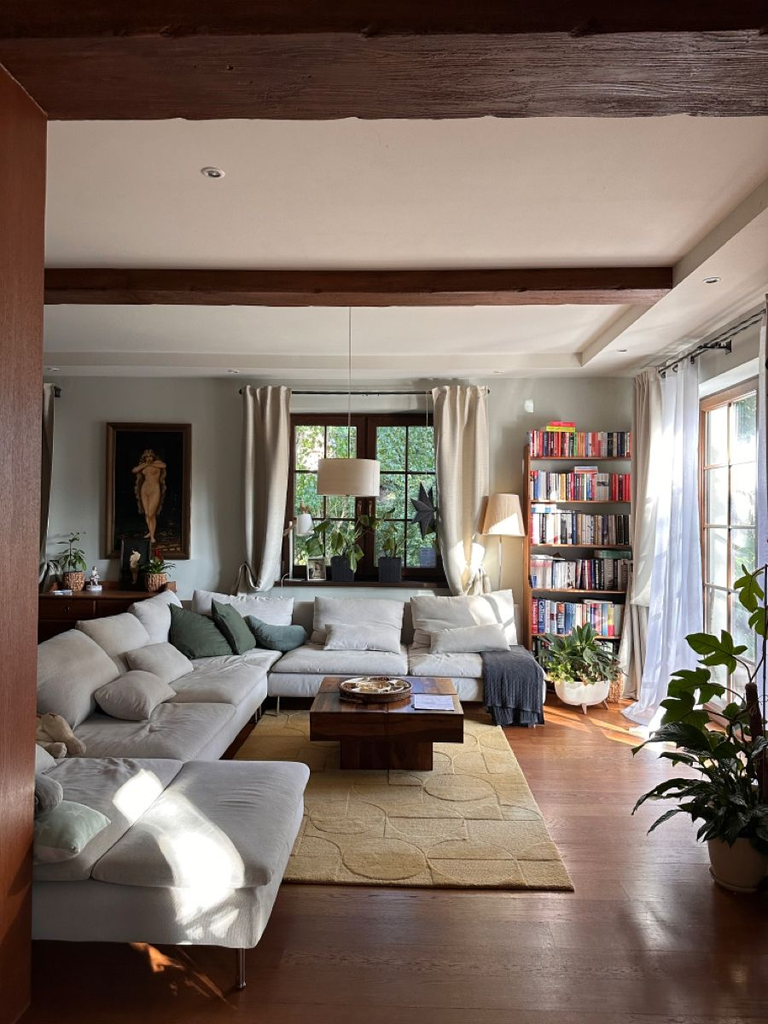
Stand at the main entrance to the room and look straight across it. Whatever your eye hits first sets the tone for the whole space. If it’s a stack of boxes, the back of a bookshelf, or a tangle of cords, that’s the “small room” signal your brain gets before it even registers the furniture layout.
Move the tallest, bulkiest piece of furniture out of that direct sightline if you can, even if it means it’s slightly less convenient to reach.
I moved a bookshelf from directly across my entryway to a side wall, and it was honestly one of the more noticeable single changes I made — more noticeable than the rug, if I’m being fully honest, even though the rug gets more attention online.
Saturday Evening: Fix the Light
Layer at least three light sources, not just an overhead fixture
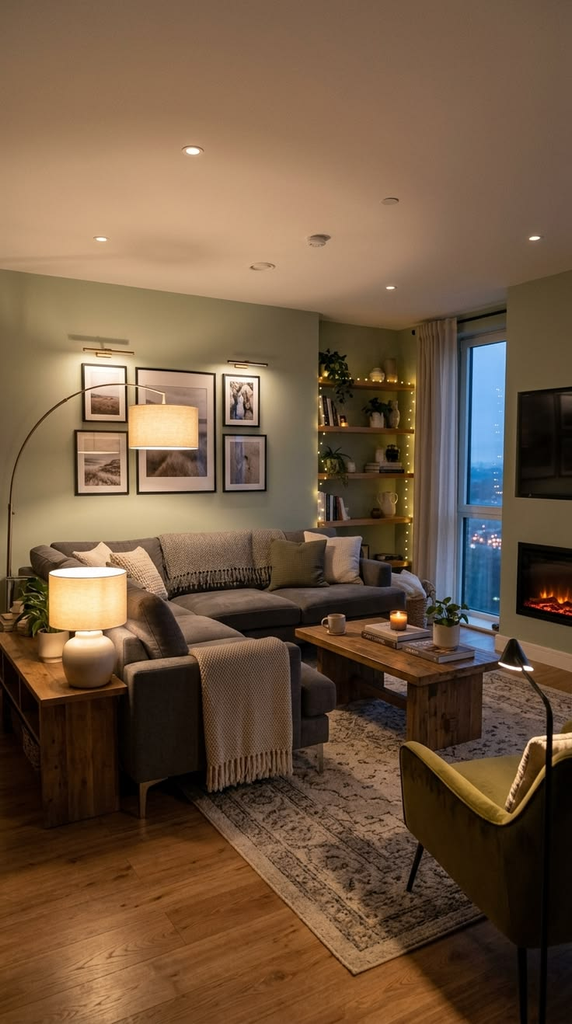
A single overhead light in a small room creates flat, even light with no depth — everything gets the same amount of light, so nothing pops and the whole room reads as one flat plane, which paradoxically makes it feel smaller, not bigger.
What actually works is layering: overhead, plus a floor or table lamp, plus something smaller like a plug-in sconce or accent lamp.
This was the fix that surprised me most. I added a $25 floor lamp in the corner behind my reading chair, angled to bounce light off the ceiling rather than straight down, and the room felt taller that same night — not bigger in floor space, obviously, but taller, which does a lot of the same psychological work.
Get your lamp shadows out of the walking path
Check where your lamps actually throw shadow at night, not just where they look good during the day.
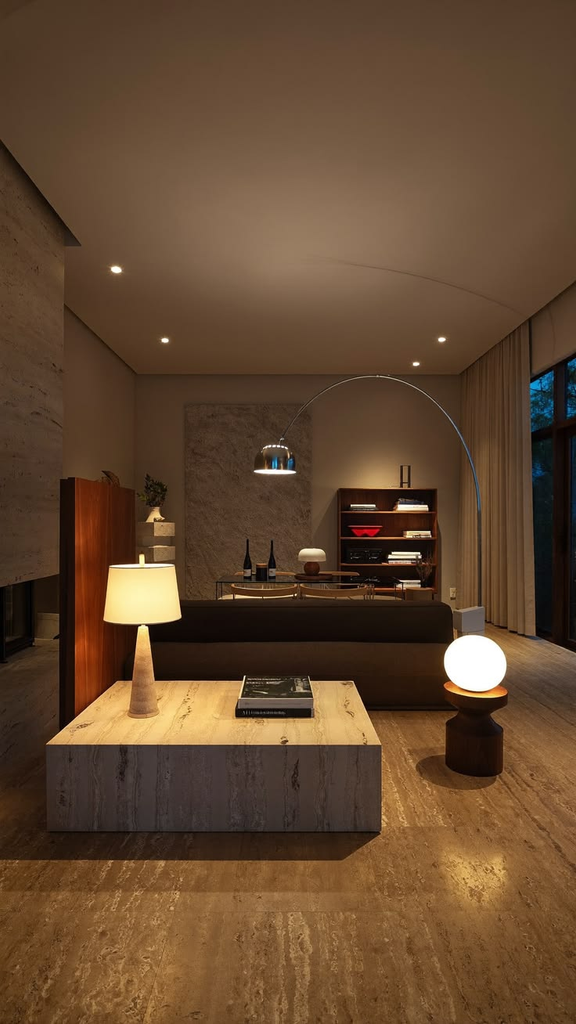
My old lamp placement threw a long shadow directly across my walking path every evening, which — combined with the furniture creep I mentioned earlier — meant I was navigating a genuinely dim, obstructed strip of floor every single night without realizing that’s what was bothering me about the room after dark.
Pro tip: Warm bulbs (2700K-3000K) read as cozier in a small space than cool white bulbs (4000K+), but cooler bulbs can make a room feel more open and daylight-like. If your goal is specifically “feels bigger” over “feels cozier,” don’t default to warm just because that’s the popular advice — try a 3500K bulb in at least one lamp and see if you prefer it. I switched one lamp to a cooler bulb and left the rest warm, and that mix works better for me than an all-warm room did.
Sunday Morning: Fix the Walls and Vertical Space
Go vertical instead of wide
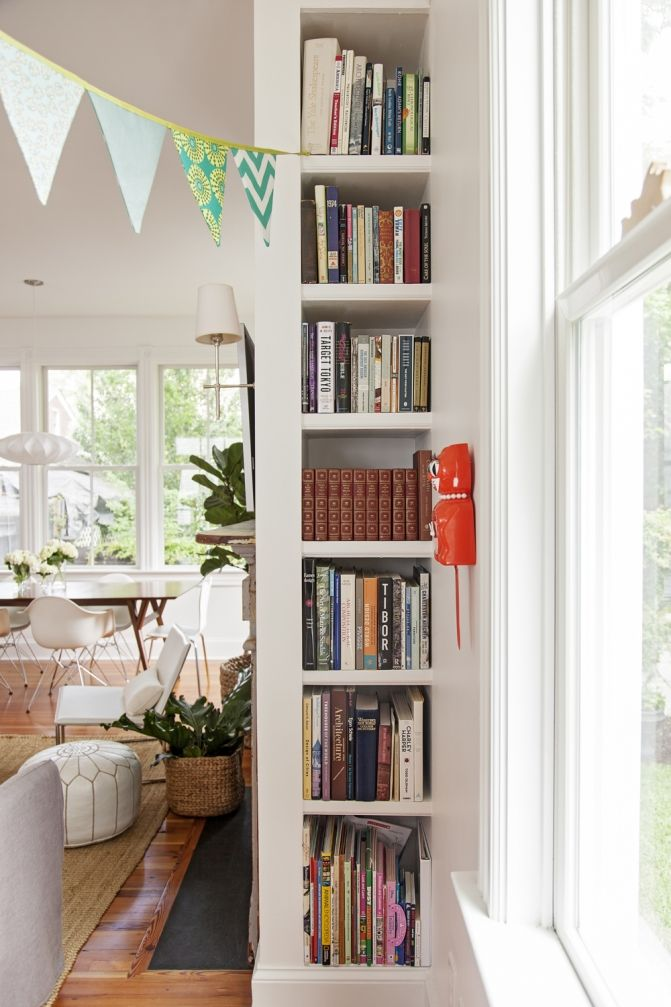
Small rooms have a horizontal problem — not enough floor space — but usually plenty of unused vertical space.
Tall, narrow furniture (a bookshelf that’s 24″ wide and 6′ tall instead of one that’s 48″ wide and 3′ tall) stores the same amount of stuff in a fraction of the floor footprint, and it draws the eye upward, which makes the ceiling feel higher and the room feel bigger by extension.
This is also where floating shelves earn their reputation. A floating shelf at eye level or above holds books, plants, or décor without eating any floor space at all, and it’s a genuinely easy weekend install — most kits are a stud finder, a level, and about 20 minutes per shelf.
Hang curtains higher and wider than the window frame
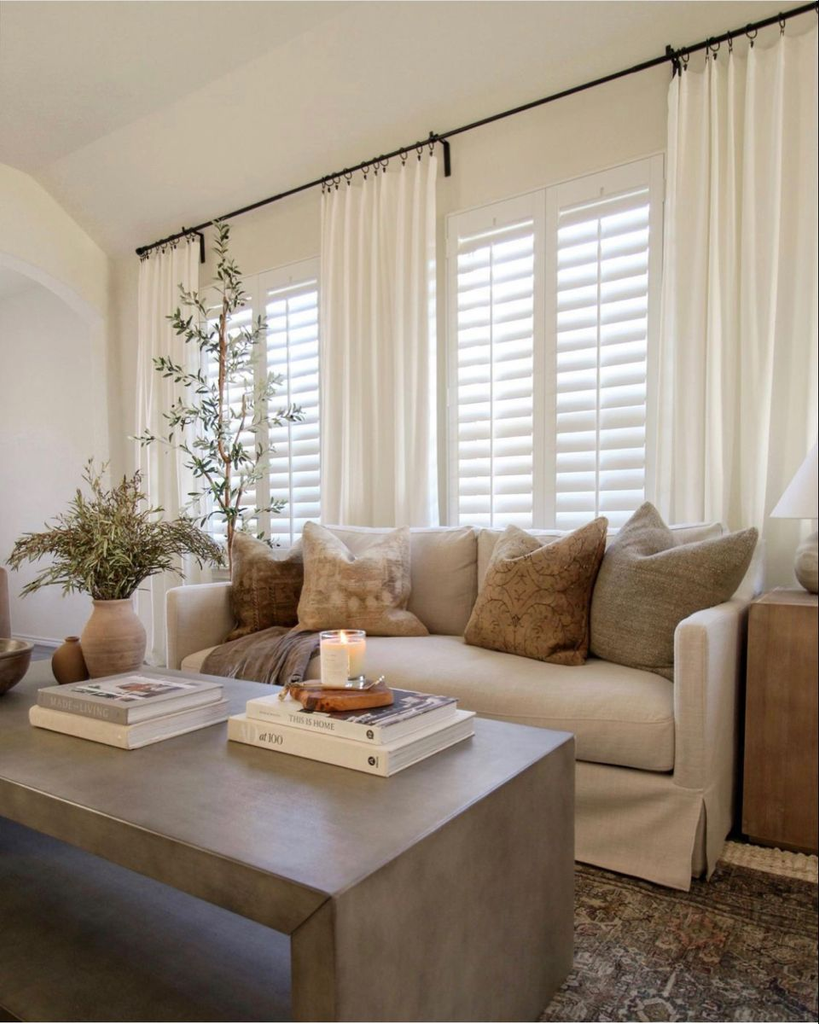
If you do nothing else on this list and you have curtains, do this one. Hang the curtain rod as close to the ceiling as you reasonably can — a few inches below the ceiling line, not right on top of the window frame — and extend it 4-8 inches past each side of the window.
This makes the window itself look larger, which makes the wall look taller, which makes the whole room read as more spacious, and it’s maybe a 15-minute fix if you already own curtains and just need to move the rod.
I didn’t believe this one until I did it. My windows are genuinely small and slightly awkwardly placed, and moving the rod up and out made a bigger visible difference than I expected from something that costs zero dollars if you’re just relocating existing hardware.
Use mirrors, but place them with intention
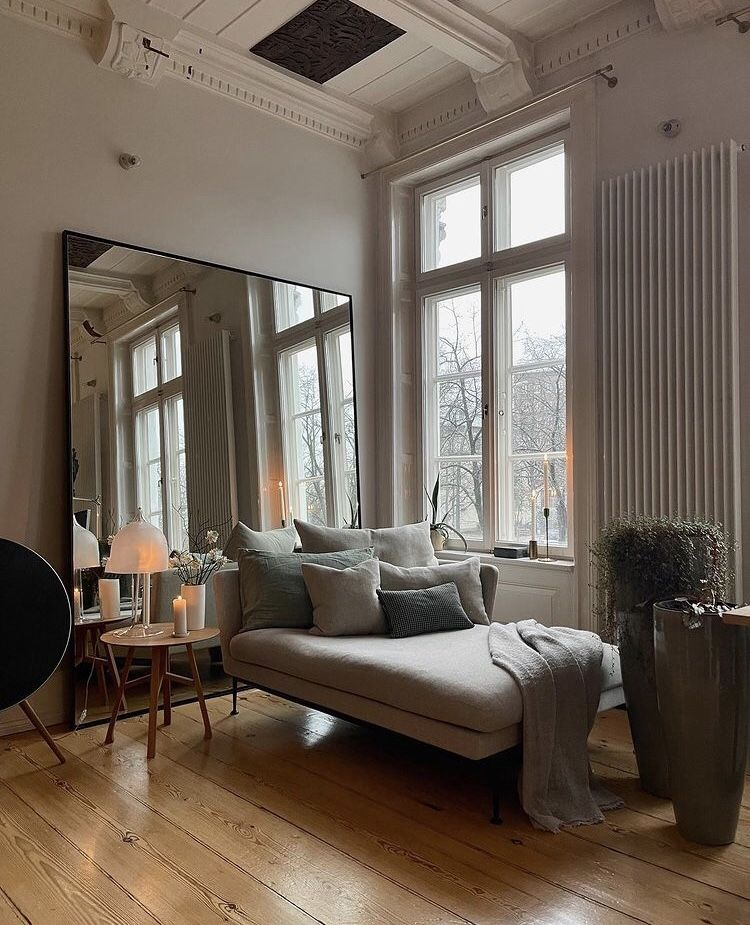
Yes, mirrors bounce light and create the illusion of more space — this part of the advice is real, not just a decorating cliché. But where you put the mirror matters more than the fact that you have one.
A mirror that reflects a window or an open sightline does real work. A mirror that reflects a wall, a closet door, or clutter just doubles the thing you didn’t want to look at in the first place.
I have a large leaning mirror positioned to reflect my window, and on an overcast day you can genuinely feel the difference in how much light is bouncing around the room compared to before I repositioned it from a wall that was catching the back of my TV stand instead.
Sunday Afternoon: Fix the Clutter and Color
Get flat surfaces down to two or three objects, max
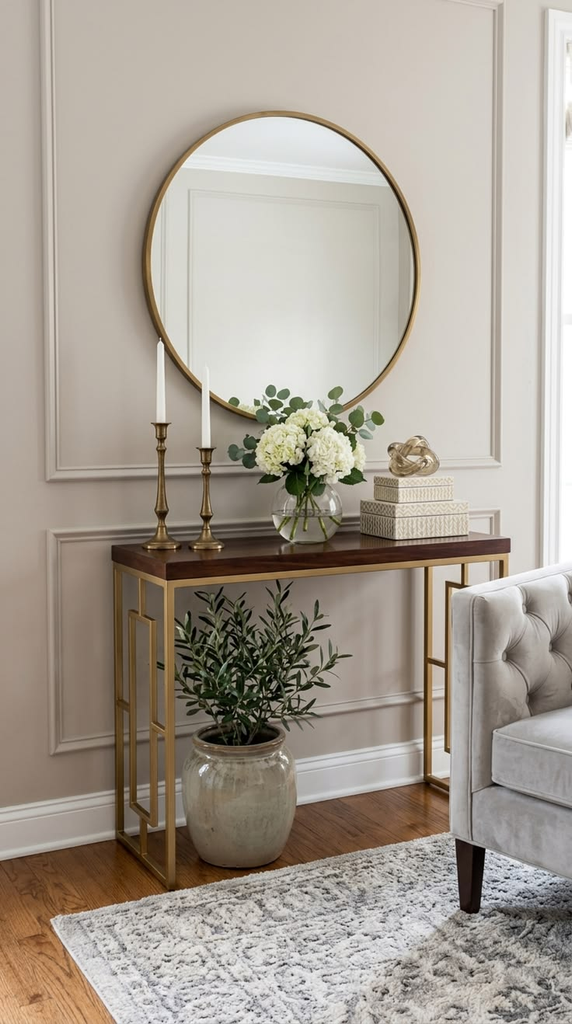
This is the least glamorous fix on this whole list and it’s also one of the most effective. Every flat surface in a small room — coffee table, console, side tables — should have a hard limit of two or three objects on it.
Not because minimalism is inherently better, but because visual clutter at eye level is one of the fastest ways to make a small room feel chaotic and smaller than it is.
I keep a small basket under my console table specifically for the stuff that used to live on top of it — mail, chargers, the random things that accumulate. It’s not glamorous, but it’s the reason my console table actually looks intentional now instead of like a landing pad.
Pick a lighter, cohesive color story if you’re willing to paint or swap textiles
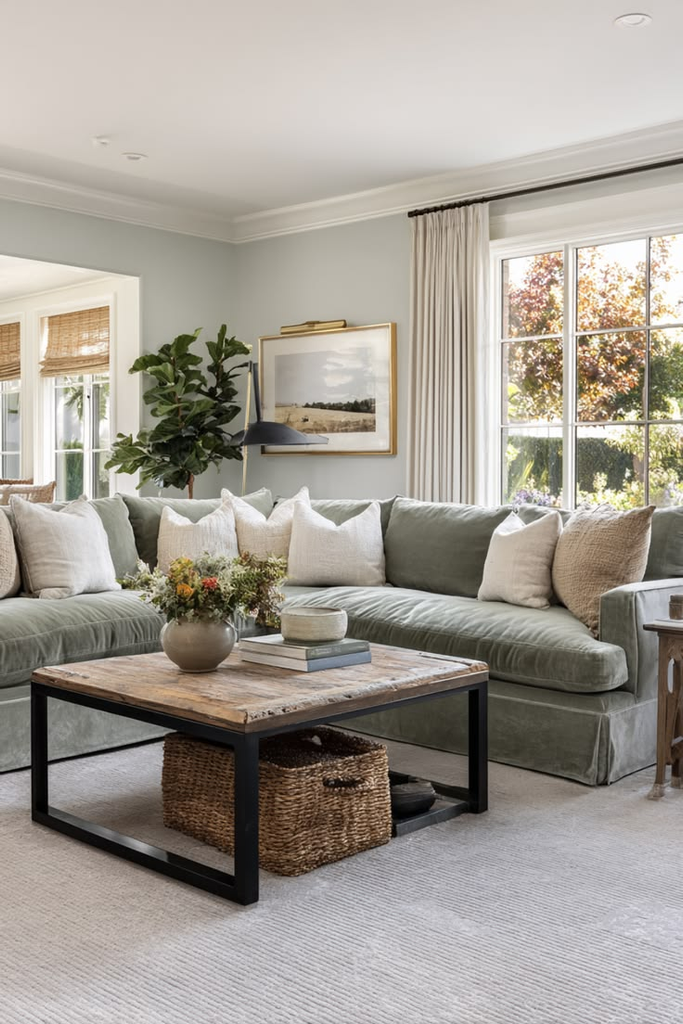
This is the one item on the list that costs real time or money, so I’d only put it on your weekend if you’ve got the bandwidth, or save it for a second weekend. Lighter wall colors reflect more light and read as more expansive, but more important than “light vs.
dark” is cohesion — a room where the walls, big furniture pieces, and rug are all in a similar tonal family reads as bigger than a room with the same square footage split into visually competing zones of color.
You don’t have to go all-white. I kept my walls a soft sage and just made sure my rug and couch throw pillows stayed in the same warm-neutral-to-sage family instead of introducing a jarring navy or black accent piece, and the room still reads as cohesive rather than choppy.
| Fix | Cost | Time | Impact |
|---|---|---|---|
| Rearrange furniture layout | $0 | 1-2 hours | High |
| Right-size the rug | $60-250 | 30 min to place | High |
| Add a second/third light source | $20-60 | 30 min | High |
| Hang curtains higher + wider | $0-30 | 15-30 min | Medium-High |
| Floating shelves for vertical storage | $30-80 | 1-2 hours | Medium |
| Reposition a mirror | $0-100 | 15 min | Medium |
| Declutter flat surfaces | $0 | 1-2 hours | Medium |
| Repaint or unify color story | $100-300+ | Full second weekend | High, but time-intensive |
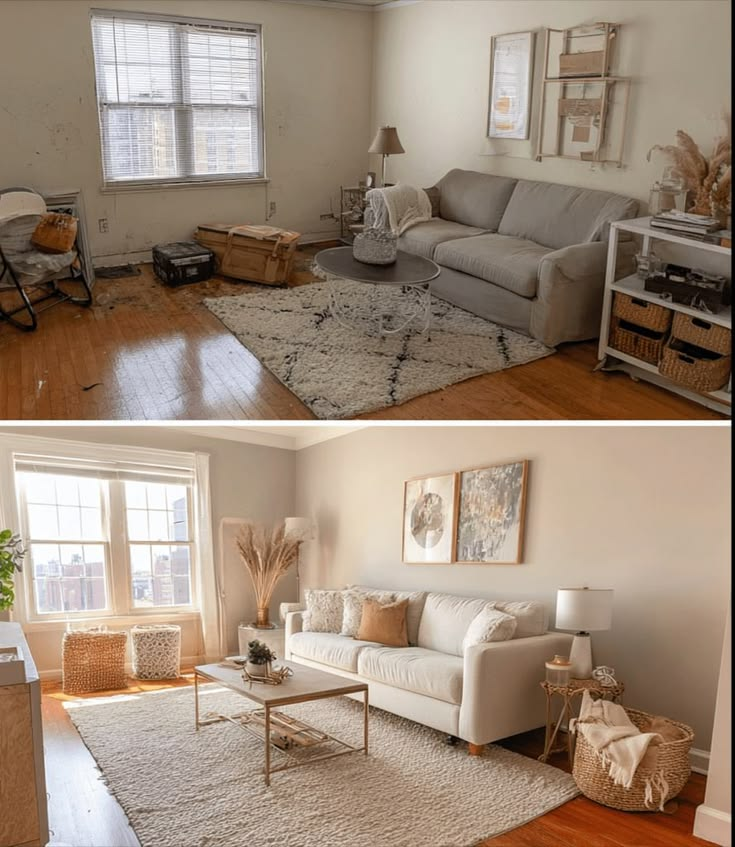
What I’d Do First If I Were Starting Over
If I only had one day instead of a full weekend, I’d do the furniture layout and the rug sizing and stop there.
Those two changes did more for how my living room actually felt than the lighting, the mirror, and the decluttering combined — not because those things don’t matter, but because layout and rug size are the two things your eye registers before it even gets to the details.
The version of this project that actually works isn’t the version where you buy a bunch of new stuff. It’s the version where you spend a Saturday morning being honest about what’s blocking your walking path, and a Saturday afternoon making sure your rug is doing its job. Everything else is a bonus on top of that.


Leave a Reply