
I redid one wall of my living room in a color-drenched deep terracotta back in January, mostly because I’d seen it enough times scrolling that I got curious, and I fully expected to hate it within a month.
I didn’t. Almost a year later it’s still my favorite thing about the room, and it’s the reason I’ve started actually paying attention to small space living trends again instead of dismissing them as things that only photograph well and never hold up in a real, lived-in apartment.
Small space living trends for 2026 are a genuinely mixed bag this year — some of them are legitimately useful shifts in how people are approaching compact homes, and a couple are the kind of thing that looks incredible in a professionally styled photo and falls apart the second real life happens in the room.
I’ve tried to separate which is which as I go, because a trend roundup that just tells you everything is great isn’t actually helping you decide what to spend money or effort on.
I’m going through these roughly in order of how much they’re actually about function versus purely about aesthetics, since in a small space, that distinction matters more than it does in a bigger home where you have more room for things that are simply nice to look at.
1. “Subtle Storage” That Doesn’t Look Like Storage
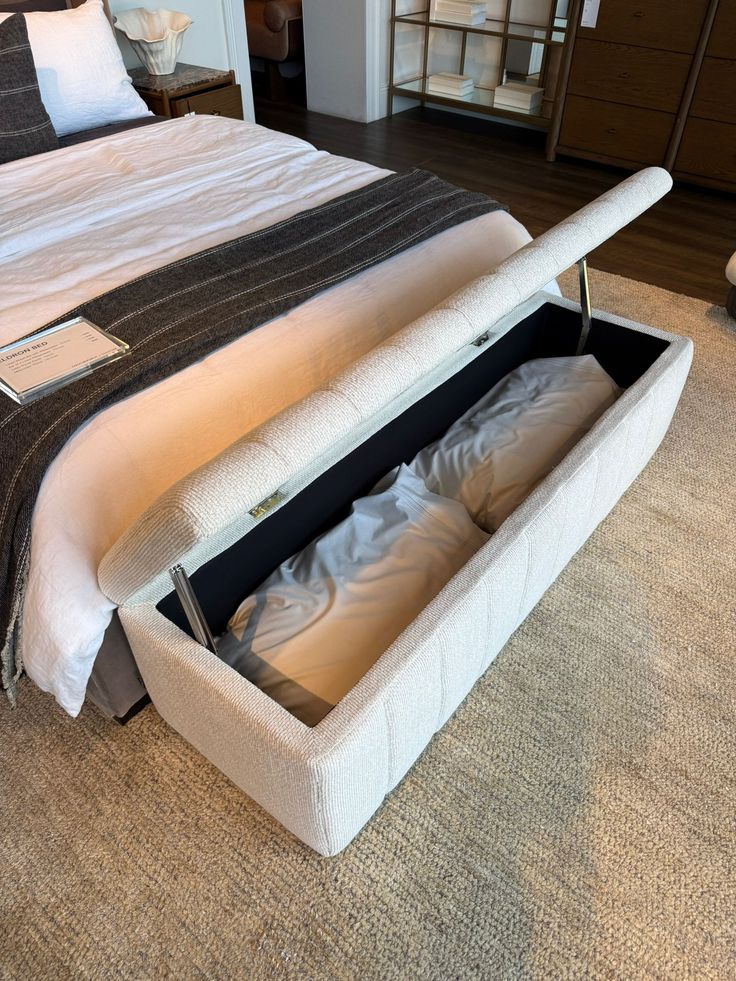
This is the trend I’d actually put my money on for 2026, because designers keep flagging it as the most consistent thing they’re seeing across small apartments right now. The idea is storage that’s disguised as something else or quietly doing more than one job, rather than storage that announces itself as storage.
Think a bench that’s also a bootroom, a headboard with hidden compartments, or a piece of art that swings open to reveal shelving.
The appeal for small space living is obvious: you get the storage capacity without the room reading as more cluttered, since nothing about the piece visually signals “organizer” the way a stack of labeled bins does. My own version of this is a bench at the end of my bed that looks like upholstered furniture and happens to hold every off-season sweater I own.
Pro tip: If you’re shopping this trend, prioritize pieces where the storage mechanism is smooth and doesn’t require you to move other things out of the way to access it — a “subtle” storage piece that’s actually annoying to open defeats the purpose, and you’ll stop using it within a few months.
2. Color-Drenching, Ceiling Included
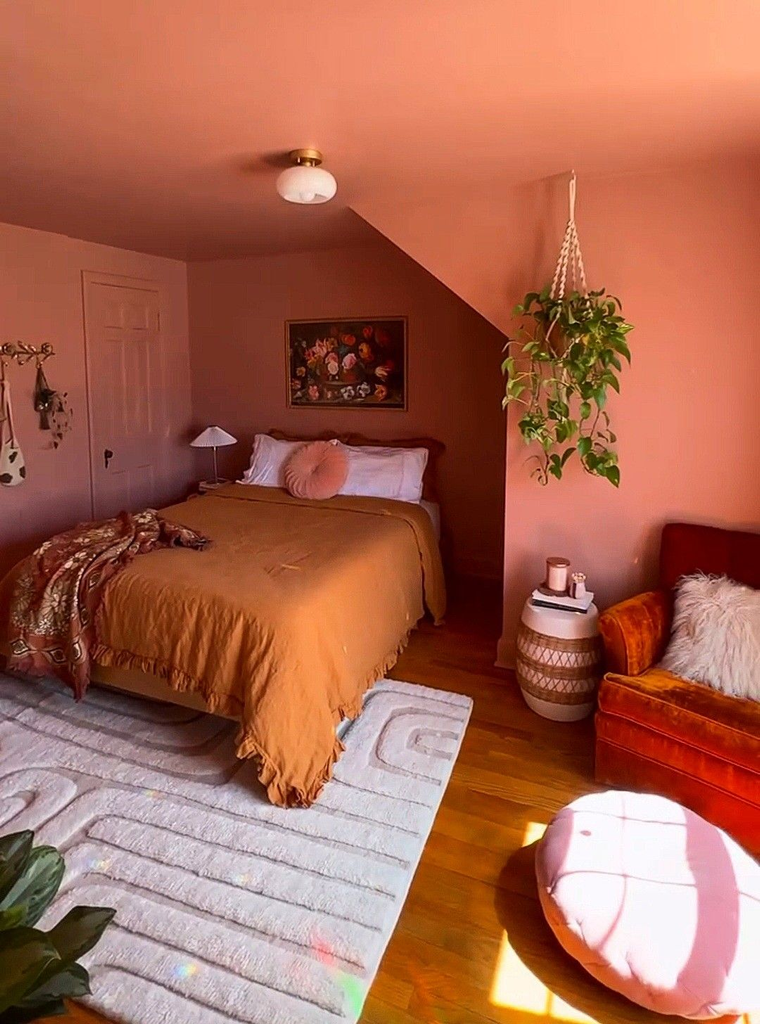
Color drenching — taking one saturated color across the walls, trim, and ceiling of a room instead of stopping at the walls — was already having a moment, and it’s continuing to be a major small-space design trend into 2026.
Taking the color all the way to the ceiling changes the whole feel of a compact room, making it read as more immersive and cocooned rather than chopped up into separate white-ceiling, colored-wall zones.
This is genuinely the trend I have personal, tested experience with, and I’d recommend it, with one caveat: it works best in a room you’re deliberately going for cozy and enveloping in, like a bedroom or a small den, and less well in a room where you specifically want an airy, open feeling, like a small living room that’s also your main entertaining space.
Pro tip: Test your color on the ceiling specifically before committing to the whole room — ceiling paint reflects light differently than wall paint, and a color that looks rich on a sample card can read noticeably darker once it’s overhead and getting less direct light than a wall would.
3. Mirrors and Reflective Surfaces Making a Real Comeback
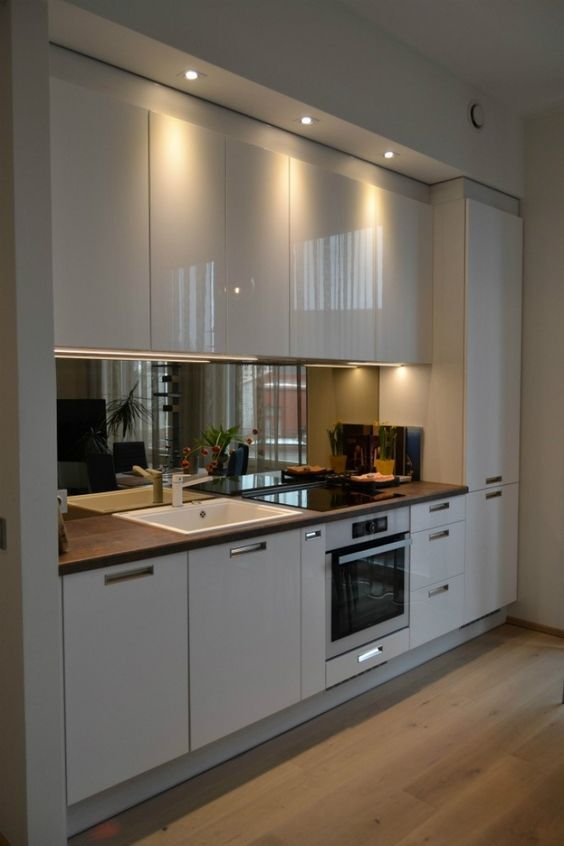
Mirrored panels, backsplashes, and even full mirrored ceilings are back as a legitimate small space living trend for 2026, not just as a single accent mirror leaned in a corner. Mirrored backsplashes, panelling, and ceilings are being used again specifically to create the illusion of more space in tighter rooms.
This shows up especially in small kitchens and bathrooms, where reflective surfaces do real, measurable work opening up a room that otherwise has four close walls and not much natural light.
Pro tip: If a full mirrored wall feels like too much commitment, start with a mirrored backsplash behind a stove or vanity — it’s a smaller, cheaper test of the effect, and it’s easier to reverse in a rental than a full mirrored panel installation would be.
4. Wallpaper and Fine Pattern Instead of Flat Color Blocks
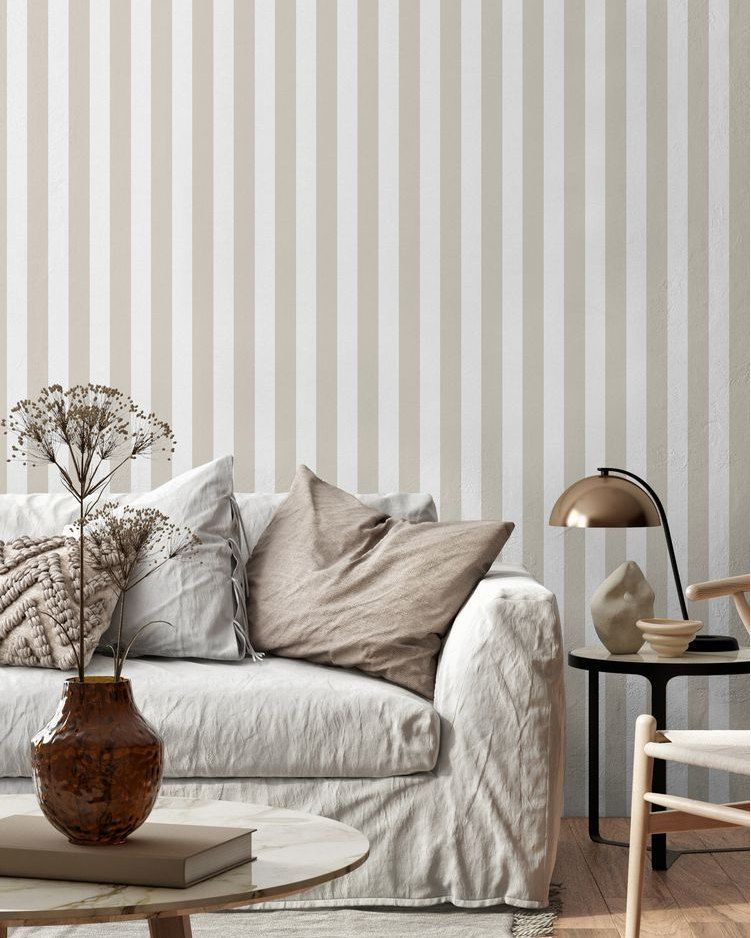
Pattern is edging out flat, bold color blocking as the more sophisticated small-space choice for 2026, particularly fine prints and narrow stripes carried from the walls up onto the ceiling.
Designers are specifically drawn to very fine prints or narrow stripes that create a gentle, enveloping effect similar to color drenching, but with more texture and a longer shelf life since pattern tends to age better than a bold color block.
This is a good trend for renters specifically, since a lot of the current wallpaper options are peel-and-stick and fully reversible, which means you can commit to the pattern without the security-deposit anxiety a poor paint color choice can create.
Pro tip: A narrow stripe pattern specifically tends to visually elongate a small room’s walls, so it’s worth considering over a busier print if your actual goal is making a cramped room feel taller rather than just more decorated.
5. Small Wellness “Sanctuary” Nooks
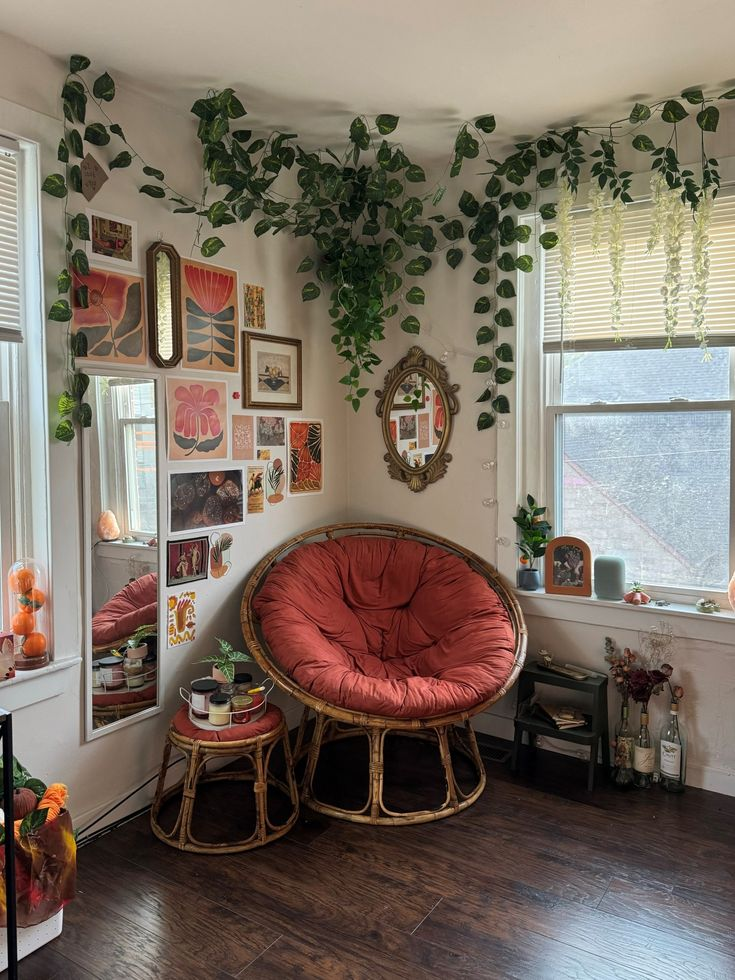
Rather than dedicating an entire room to wellness, 2026 is seeing a rise in small, carved-out pockets specifically designed for rest within an otherwise multi-purpose home.
This includes at-home pilates corners, small meditation spots, or spa-style bathroom moments — spaces meant to encourage slowing down rather than serving as another functional zone to power through.
In a small apartment, this usually means claiming one chair, one corner, or even one end of a windowsill and deliberately keeping it free of the multi-tasking that happens everywhere else in the room.
It’s a low-cost trend to try, since it’s more about restraint — not filling that one spot with more stuff — than it is about buying anything specific.
Pro tip: Pick a spot near a window if you have one, even if it’s not the most “efficient” use of that light — natural light is doing a lot of the actual calming work in these nooks, more than any specific chair or cushion you put there.
6. Moody, Jewel-Box Micro-Moments in Transitional Spaces
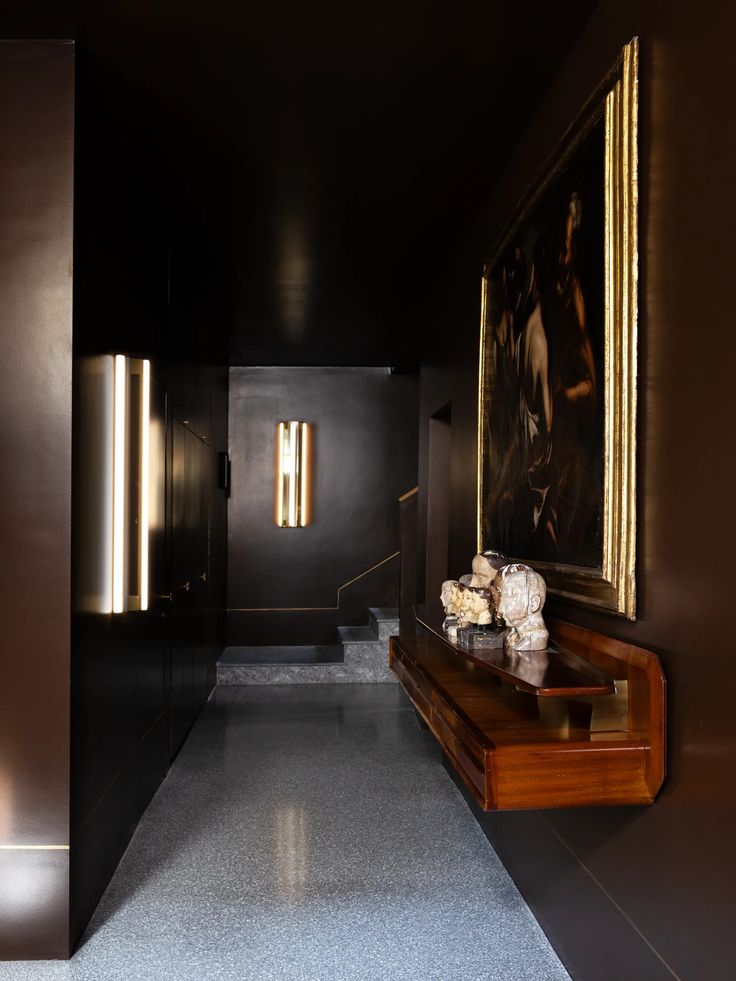
Hallways, entryways, and other small transitional spots that used to get ignored are getting deliberate design attention in 2026, styled as small, intense, almost jewel-box-like moments rather than left as an afterthought.
Designers describe this as a shift toward smaller “moments” within a home — a styled hallway nook or a moody vestibule that feels intentional and considered, proving that impact doesn’t require square footage.
This is a smart trend specifically for small apartments, since it takes a space you already have and weren’t really using decoratively — a hallway, an entry — and turns it into something with real character, instead of requiring you to find or create additional square footage you don’t have.
Pro tip: A darker, saturated paint color works especially well in these small transitional spots precisely because you’re only in them briefly — a color choice that might feel too intense for a room you sit in for hours can feel dramatic and fun in a hallway you pass through in ten seconds.
7. Warmer, More Personal Decor Replacing Strict Minimalism
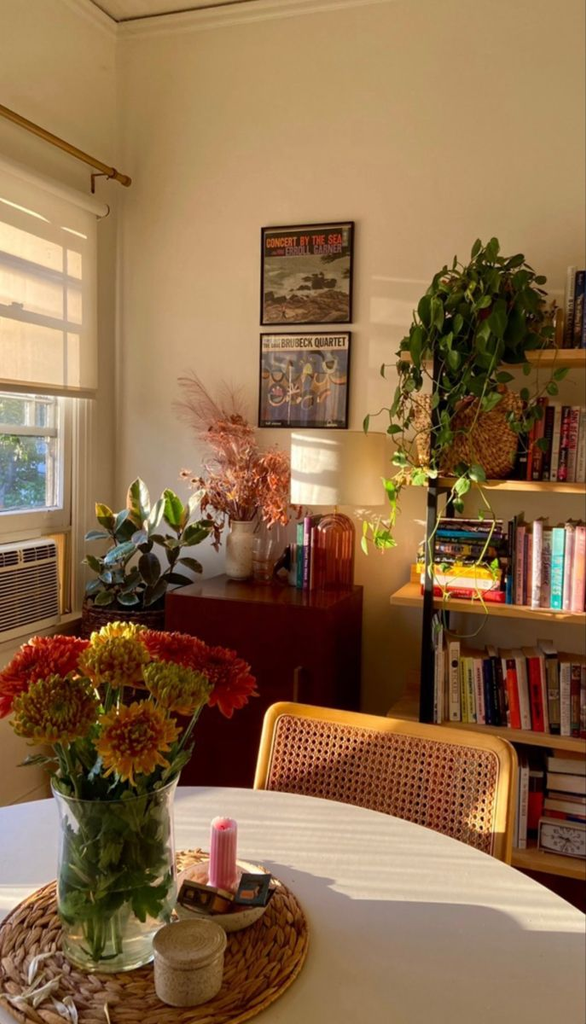
The pared-back, perfectly curated minimalism that dominated small-space advice for years is giving way to something warmer and more individual in 2026.
Homes are trending toward feeling composed yet lived-in — inviting you to actually touch, sit, and spend time in a space rather than simply admire it from a doorway — with tactile materials and personally meaningful pieces taking priority over whatever the fastest-moving trend happens to be.
For small space living specifically, this is a genuinely welcome shift, because strict minimalism in a compact home can sometimes tip into feeling sterile or temporary, like you’re staging the apartment rather than living in it.
A little more personality and a few more meaningful objects, chosen deliberately rather than accumulated randomly, doesn’t have to mean more clutter.
Pro tip: If you’re moving away from minimalism, add personality through a small number of larger, more meaningful pieces rather than many small trinkets — in a small space, fewer larger personal pieces read as curated, while lots of small ones read as clutter regardless of how much you love each individual item.
8. Natural, Tactile Materials Over Sleek and Synthetic
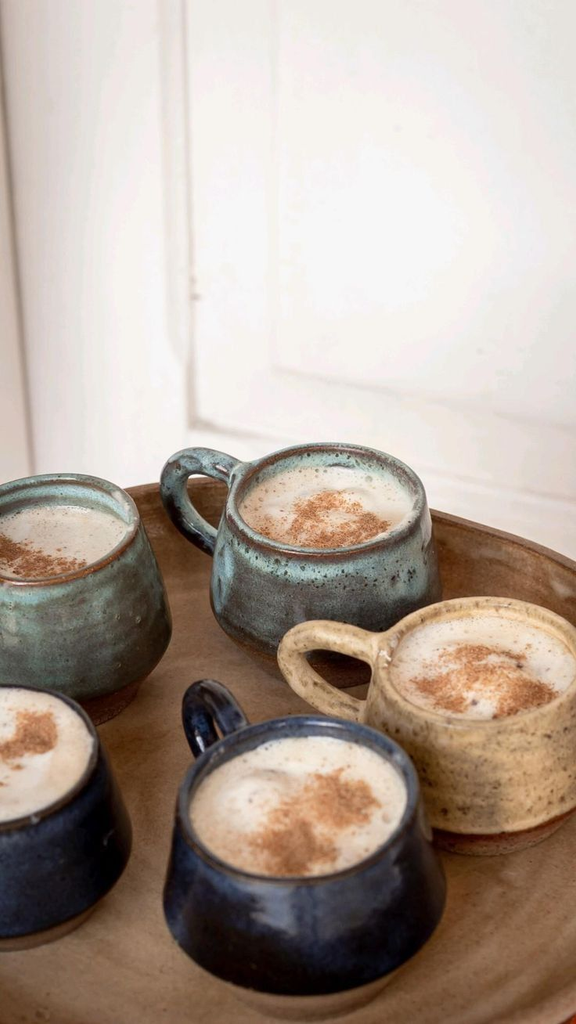
Natural wood finishes, linen upholstery, and handmade tiles are showing up more in small-space design for 2026, replacing some of the sleeker, more synthetic materials that dominated smaller, budget-conscious spaces for a while.
The goal is a more sensory-rich, calming experience, where every material choice is intentional rather than just functional or cheap.
This is a trend that costs real money to fully commit to, which is worth being honest about — solid wood and handmade tile aren’t the budget option.
But even one or two natural-material pieces, like a linen throw or a set of handmade ceramic mugs on open shelving, brings a bit of that texture into a small space without a full material overhaul.
9. Vertical Space as a Default Design Strategy, Not an Afterthought
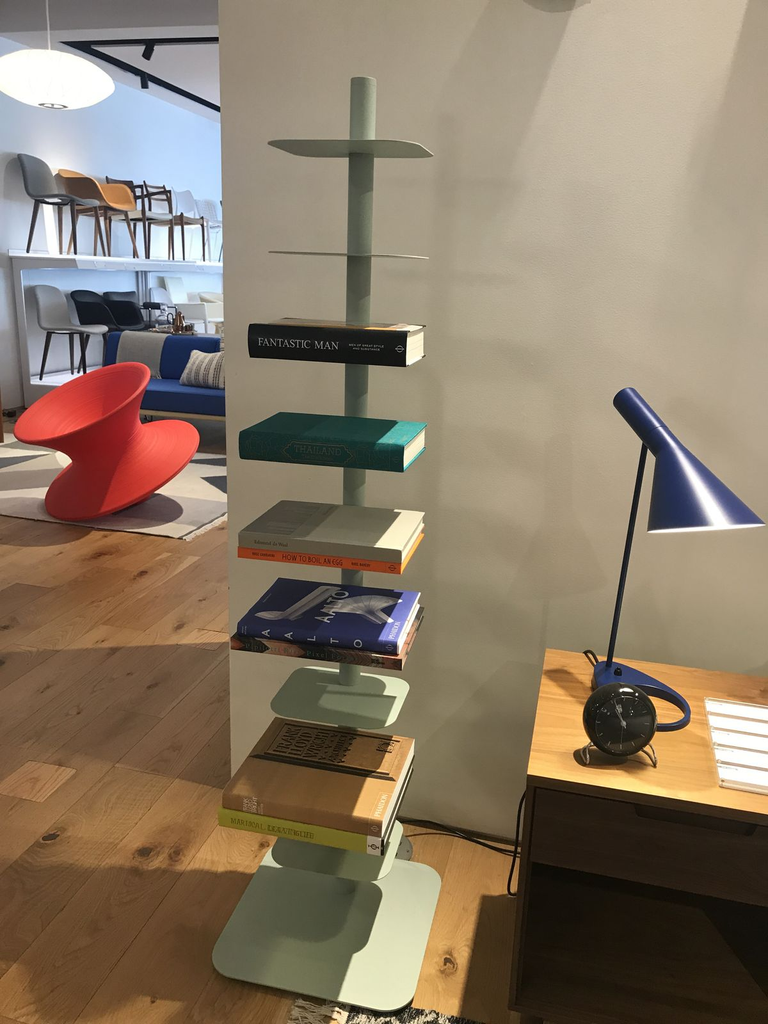
Vertical space strategies are increasingly treated as a core part of small-home design rather than a workaround people reach for once they’ve run out of floor space. This shows up in multifunctional layouts and vertical storage strategies being built into small homes from the start, rather than added on later.
This is less a single purchasable item and more a mindset shift — tall, narrow furniture, wall-mounted everything, curtains hung near the ceiling — that a lot of small-space dwellers have been doing instinctively for years, but that’s now getting treated as an intentional design philosophy rather than just a scrappy workaround.
10. Slim, Streamlined Furniture as the New Small-Space Default
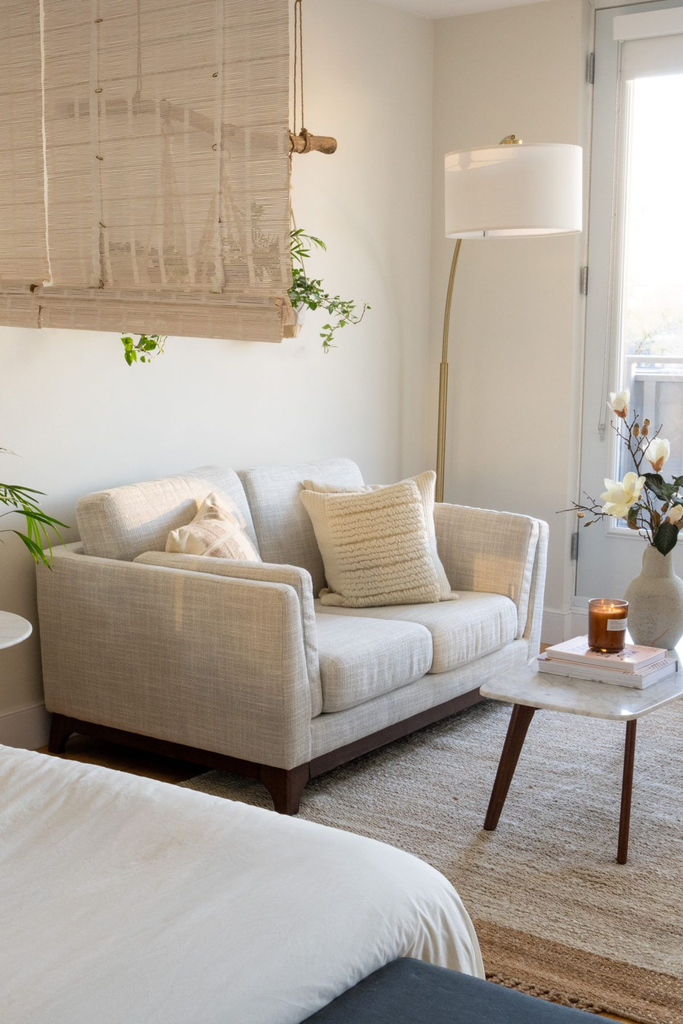
Furniture silhouettes are trending narrower and more streamlined specifically for small living rooms in 2026 — rectangular coffee tables over rounder bulky ones, loveseats instead of full sofas where space is tight, and narrow accent chairs replacing wider armchairs.
The goal across these pieces is furniture that doesn’t take up unnecessary floor space, which matters more in a limited living room than matching a specific style trend does.
| Trend | Effort/Cost to Try | Rental-Friendly? | Best For |
|---|---|---|---|
| Subtle disguised storage | Moderate — new furniture piece | Yes, no installation | Bedrooms, entryways |
| Color-drenched ceiling | Low-moderate — paint only | Depends on lease | Bedrooms, small dens |
| Mirrored backsplash accent | Moderate | Sometimes — check lease | Small kitchens, bathrooms |
| Peel-and-stick pattern wallpaper | Low | Yes, fully removable | Accent walls, closets |
| Wellness sanctuary nook | Very low — mostly restraint | Yes | Any small apartment |
| Streamlined narrow furniture | Higher — furniture purchase | Yes | Small living rooms |
Pro tip: If you’re picking just one or two trends from this whole list to actually commit to this year, go with the streamlined furniture and the subtle storage — they’re the two on this list that solve a real everyday function problem, not just a look, which means you’ll still be glad you did it even after the trend itself has moved on.
Which of These I’d Actually Recommend Trying First
If I had to rank these small space living trends for 2026 by which are worth your money versus which are worth skipping unless you’re genuinely drawn to them, I’d put subtle disguised storage and streamlined furniture at the top, since both solve real, ongoing problems rather than just refreshing a look.
Color drenching and pattern wallpaper are my next picks, mostly because I’ve tested one myself and the low commitment (a can of paint, a peel-and-stick roll) makes them low-risk enough to just try.
The trends I’d treat more cautiously are the ones that are purely aesthetic without much functional upside for a small space specifically — natural materials and jewel-box moody nooks are lovely, but they’re the kind of thing you should do because you genuinely want that specific look in your home, not because a trend list told you it’s what’s happening in 2026.
A small space rewards function first, and the best version of any of these trends is the one that actually makes your daily life in that apartment a little easier, not just prettier in photos.


Leave a Reply